Peripheral Populations and Lineages
Why Do Tibetans Have ‘Negrito Genes’?
Yes. According to the famous haplogroup homology-equivalence keyhole principle of molecular anthropology, Tibetans possess 100% pure “Negrito genes.” There are, however, ethnic groups that are even “purer” than Tibetans. All one needs to do is:
- Compile a list of the marginal Negrito tribes presently known around the world.
- Record the paternal haplogroups found among these tribes.
- Apply the famous haplogroup homology-equivalence keyhole principle to rank the “Negrito purity” of populations worldwide.
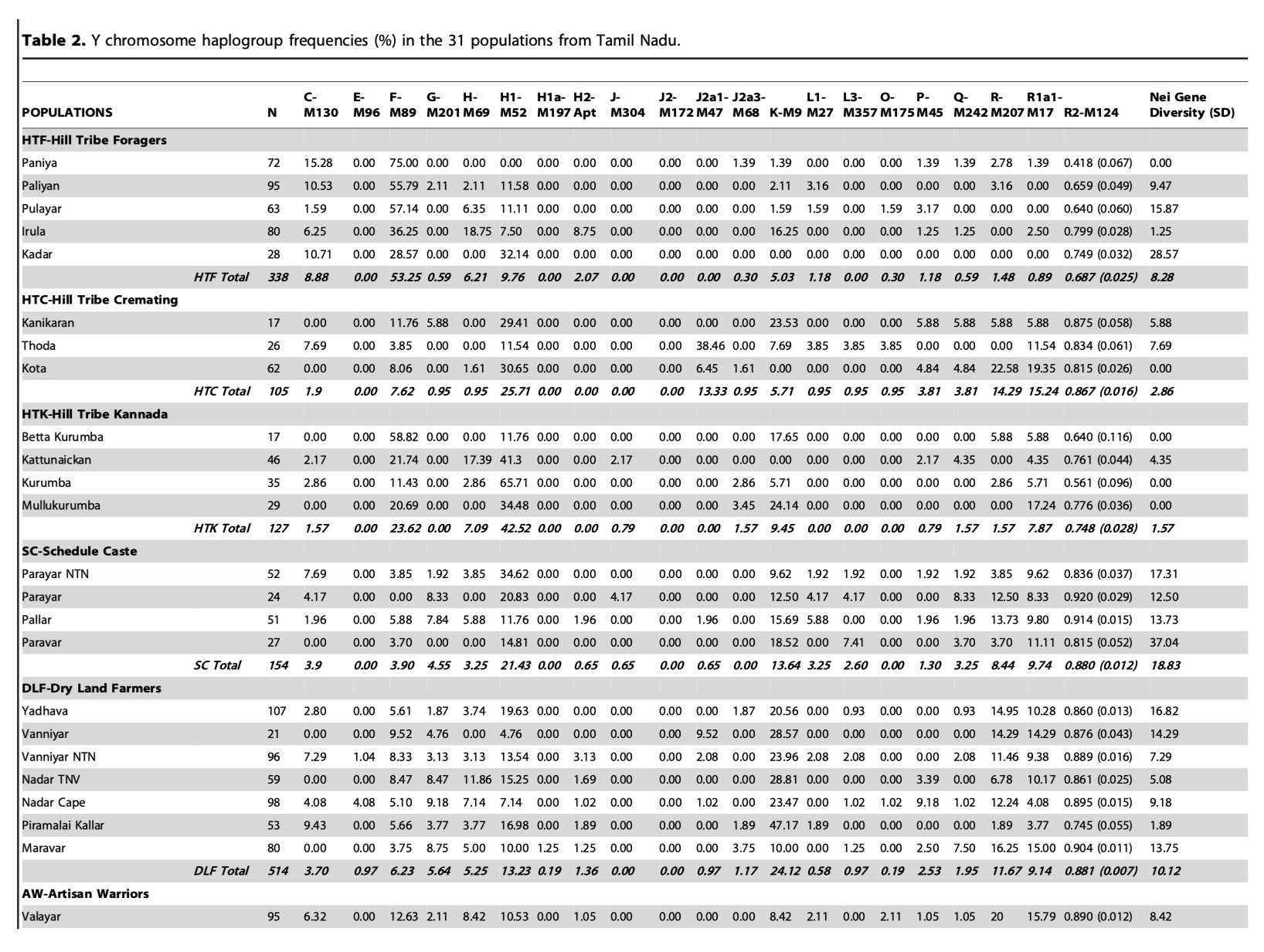
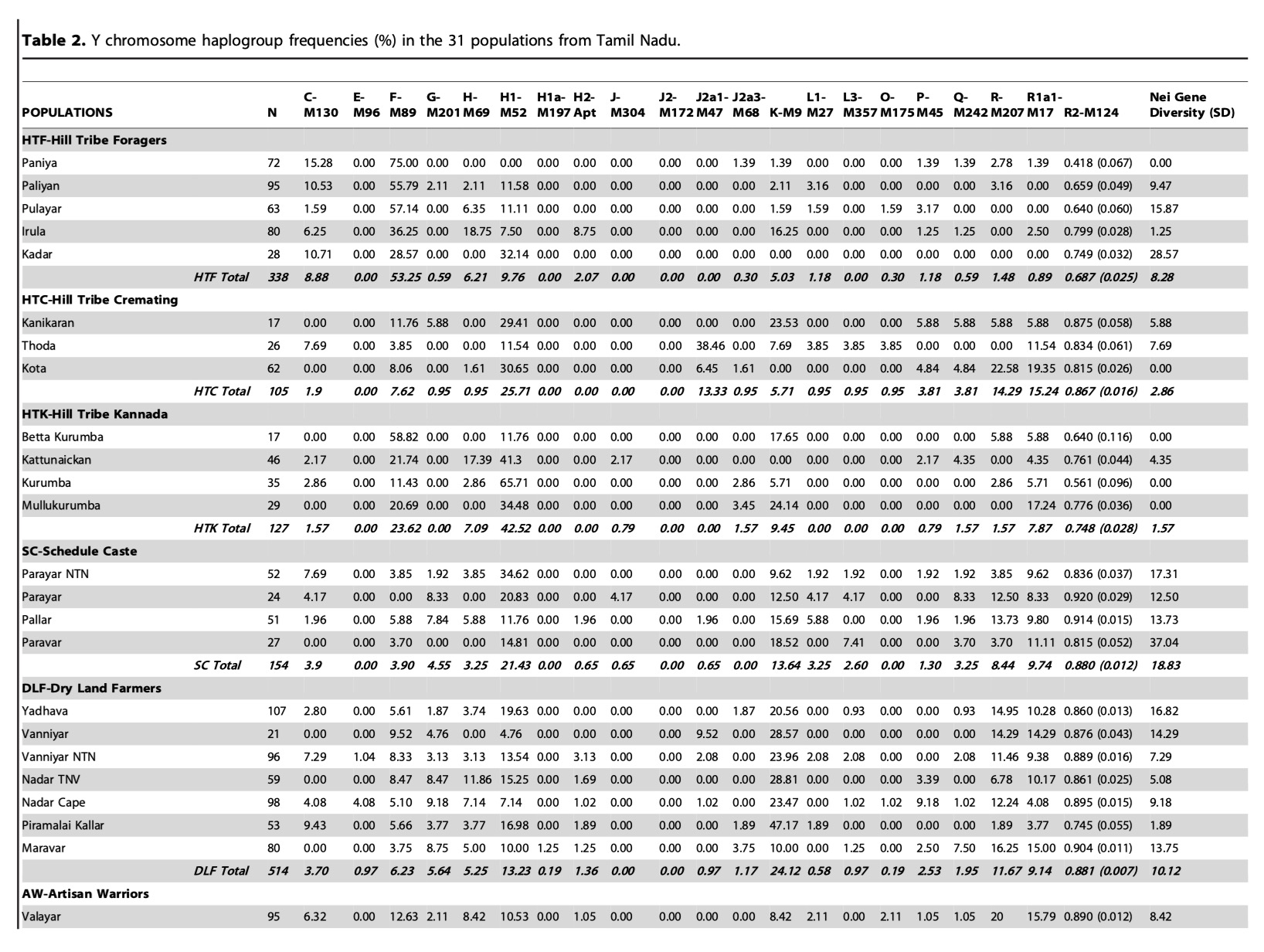
Because most people do not have the ability to collect and access English-language literature, I will not only list the references but also place screenshots of the relevant data tables from those publications directly in this answer.
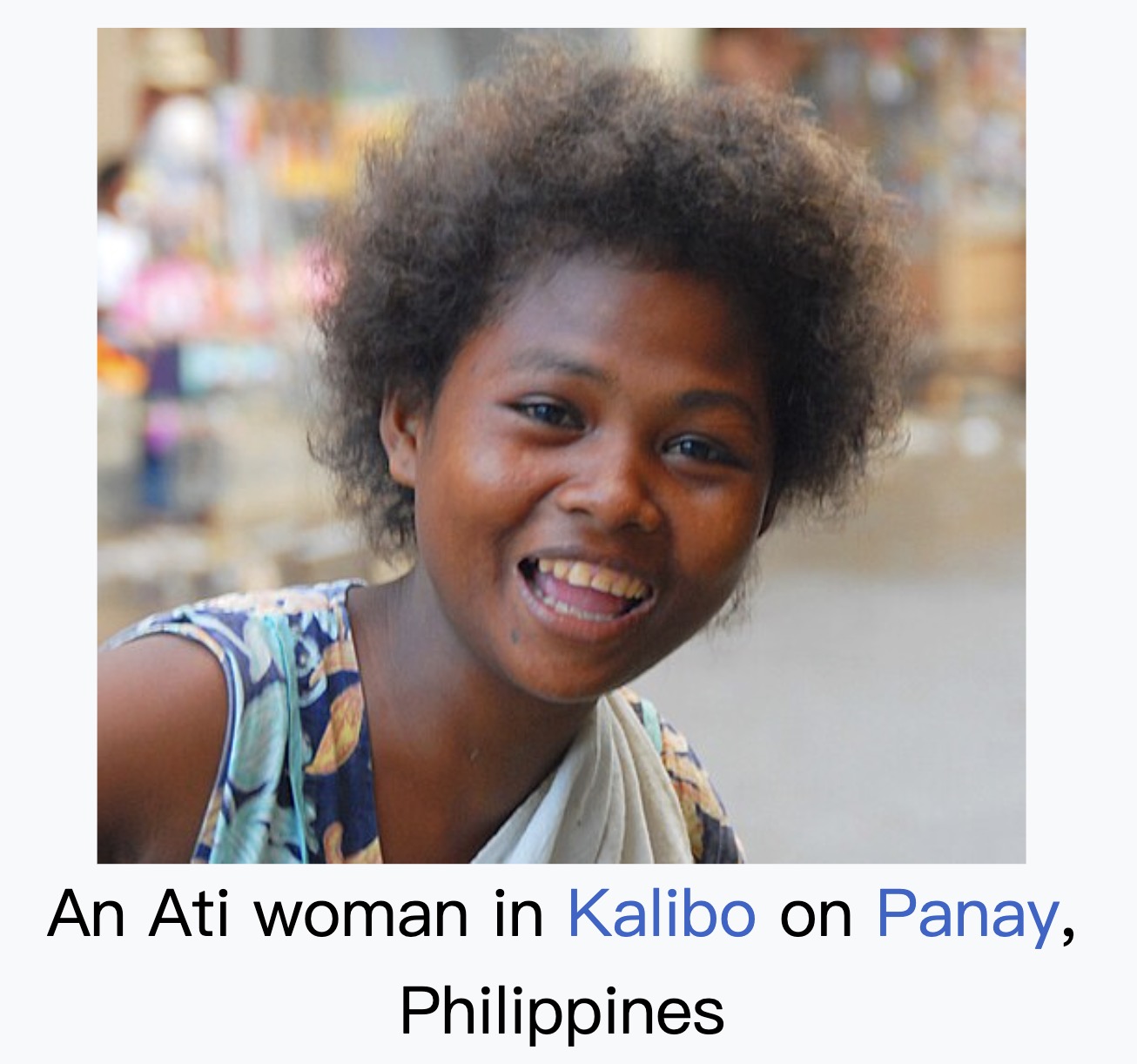
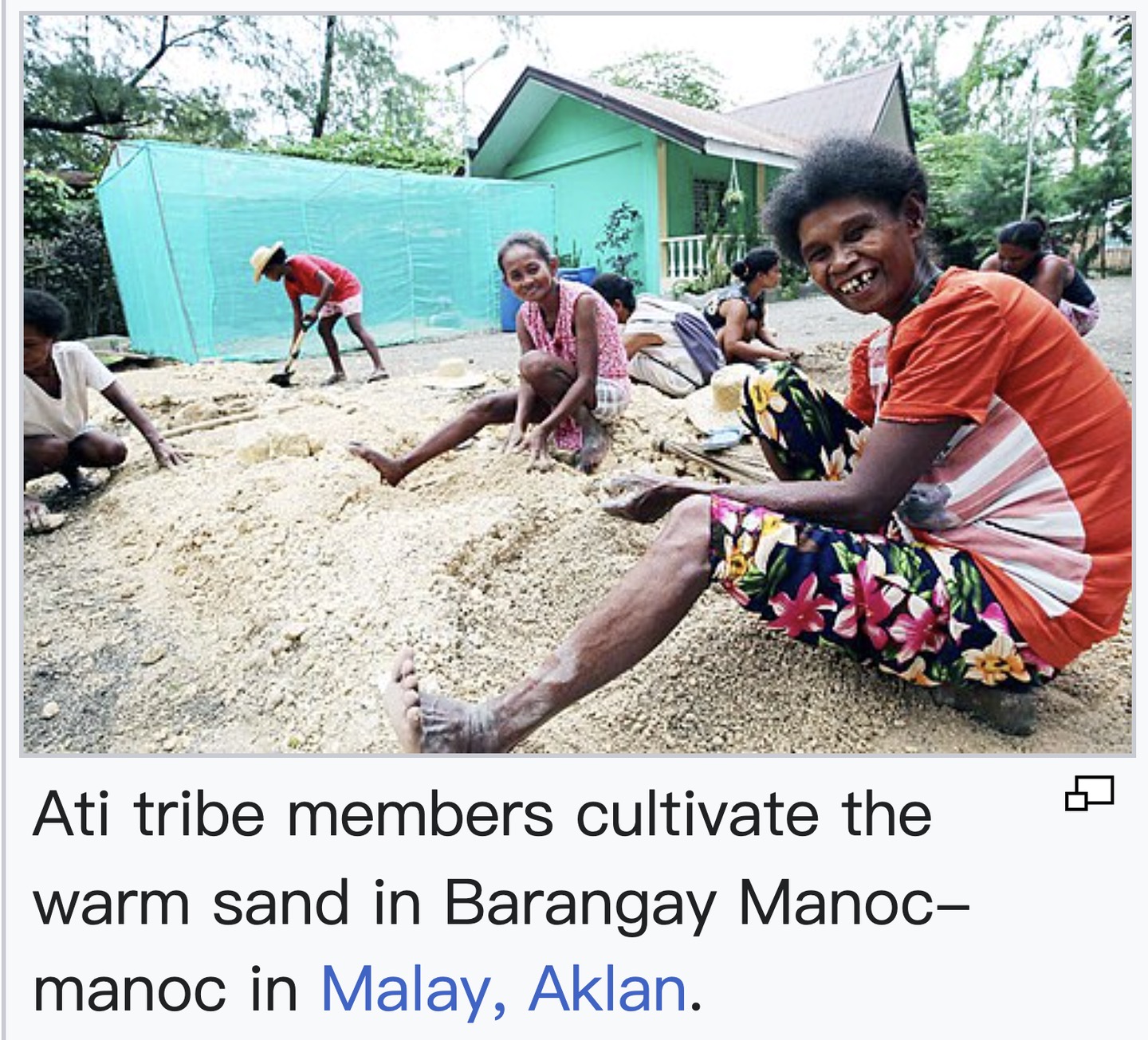
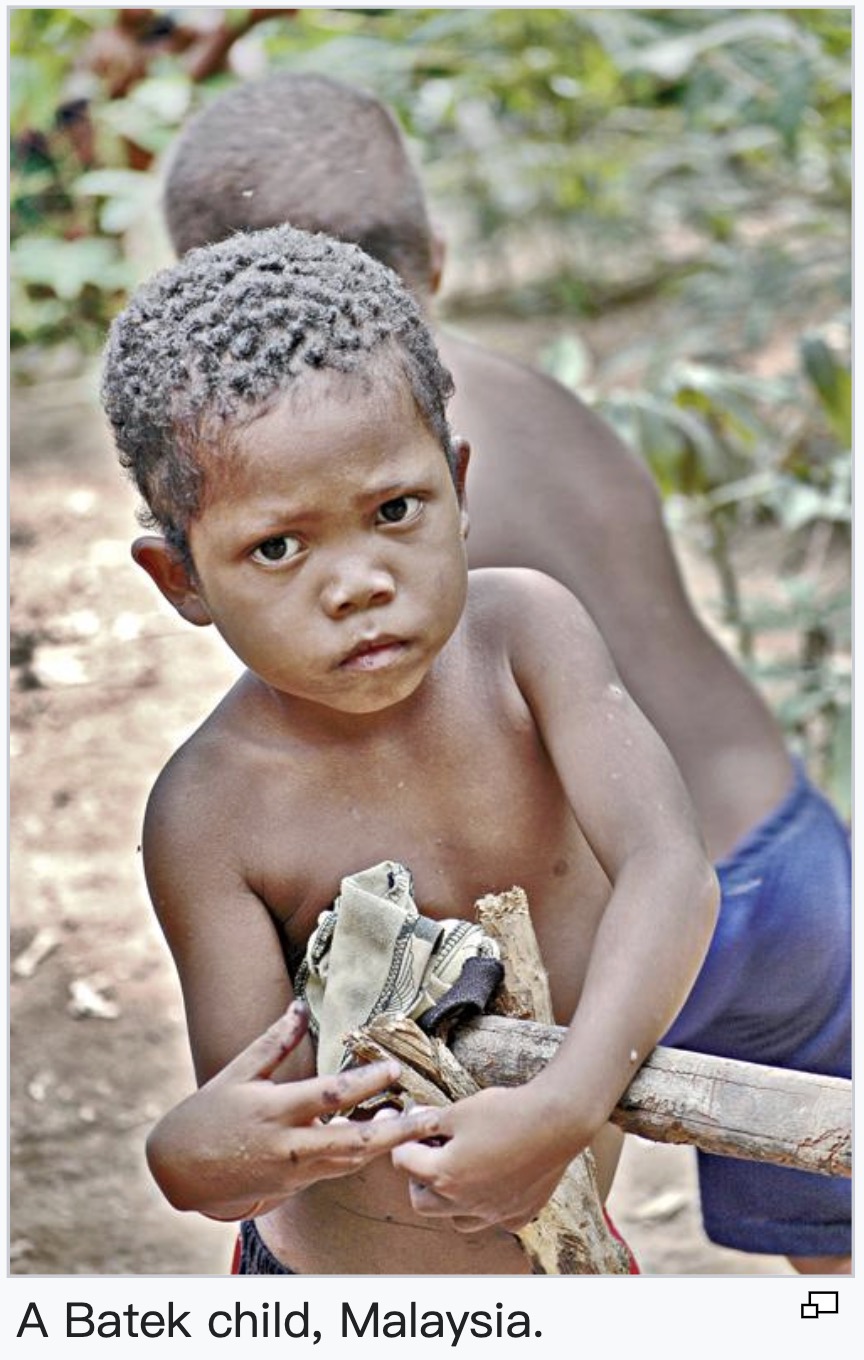
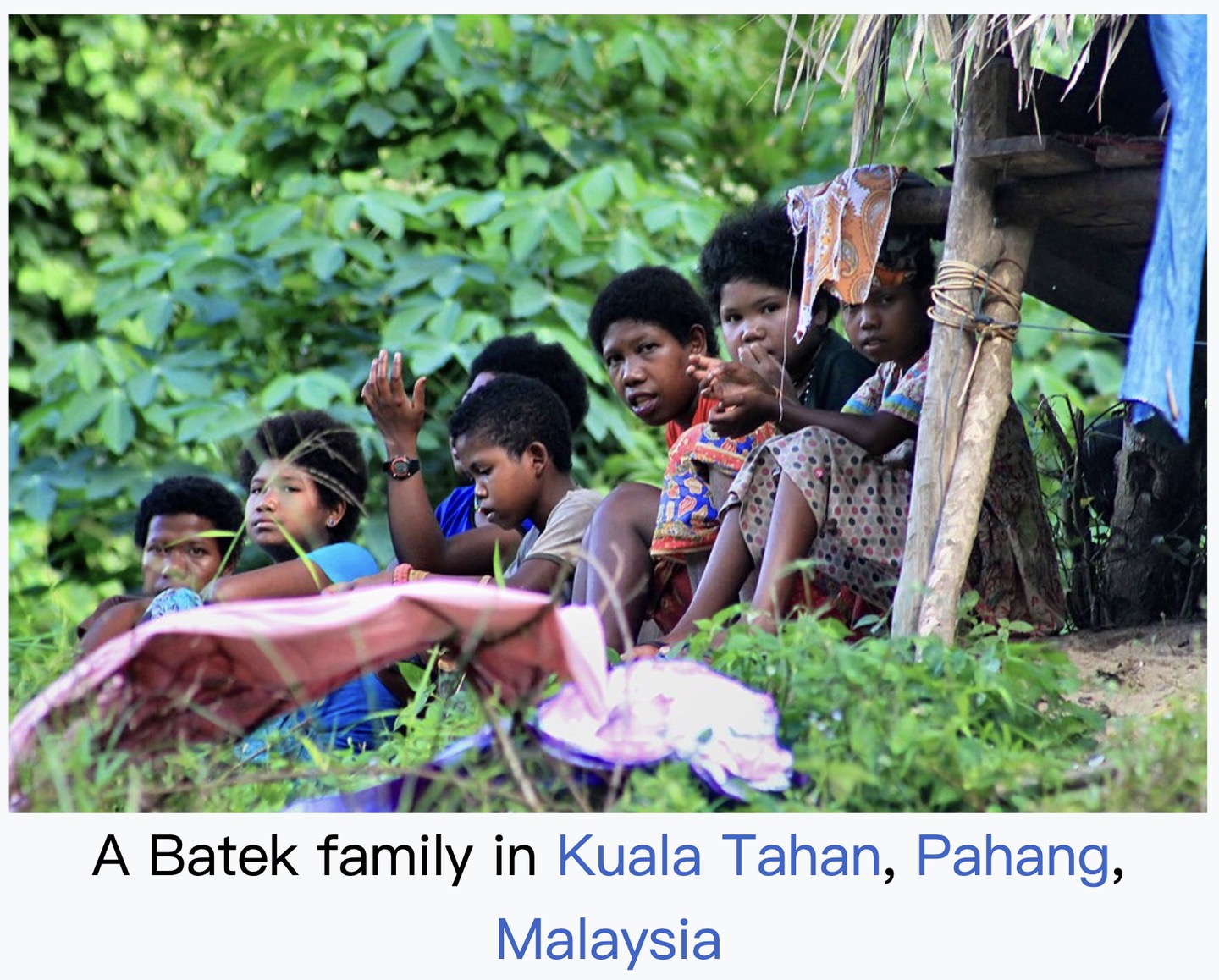
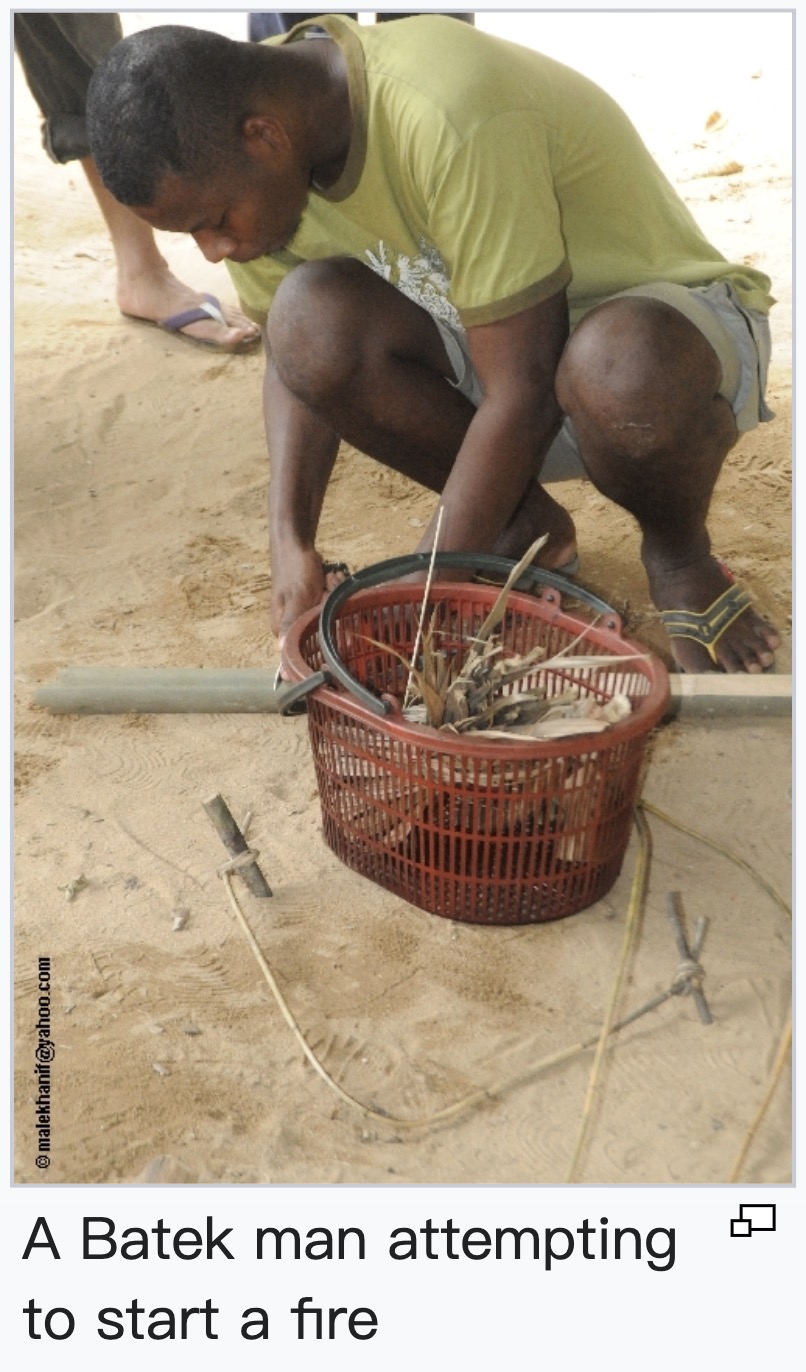
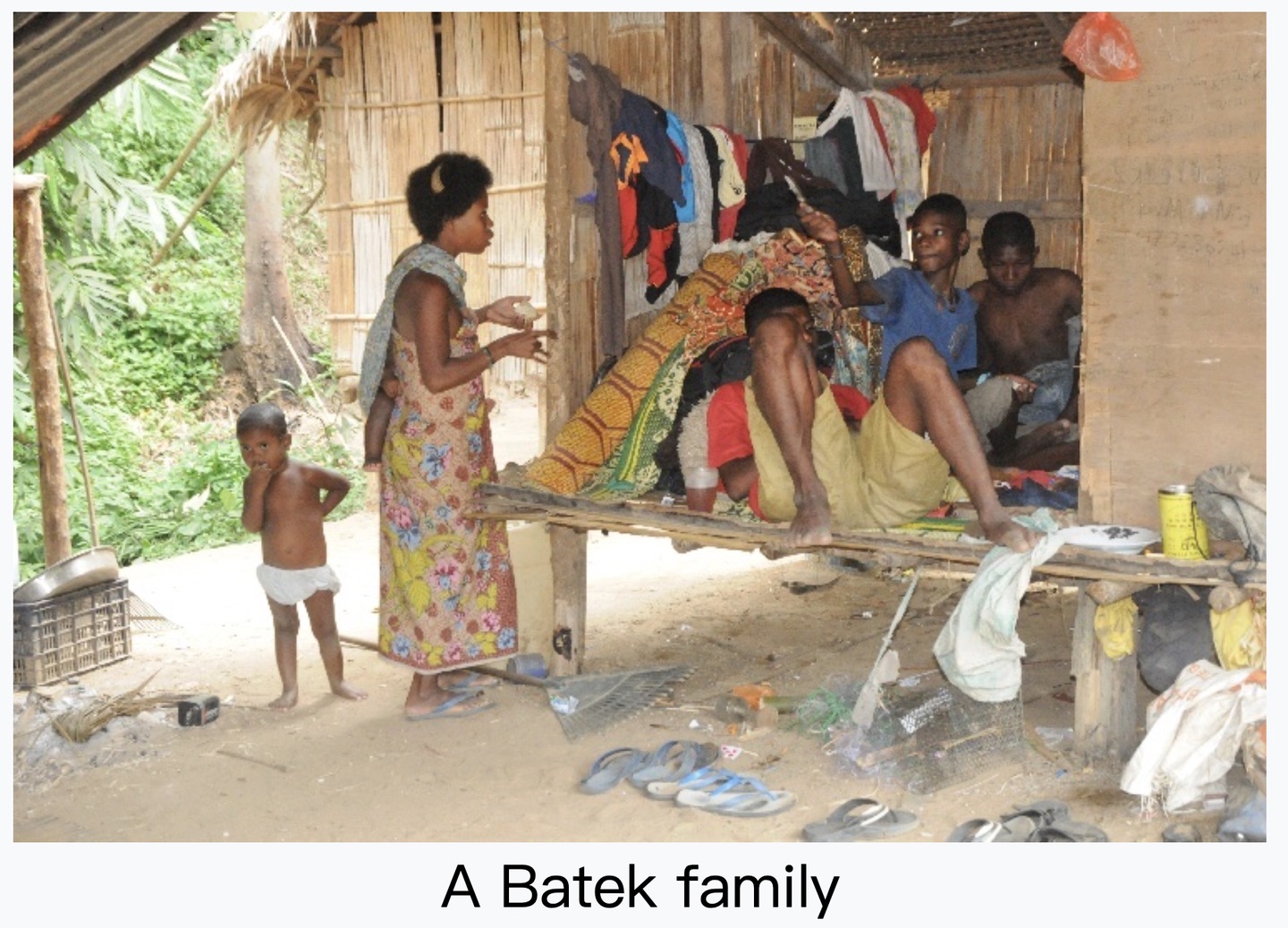
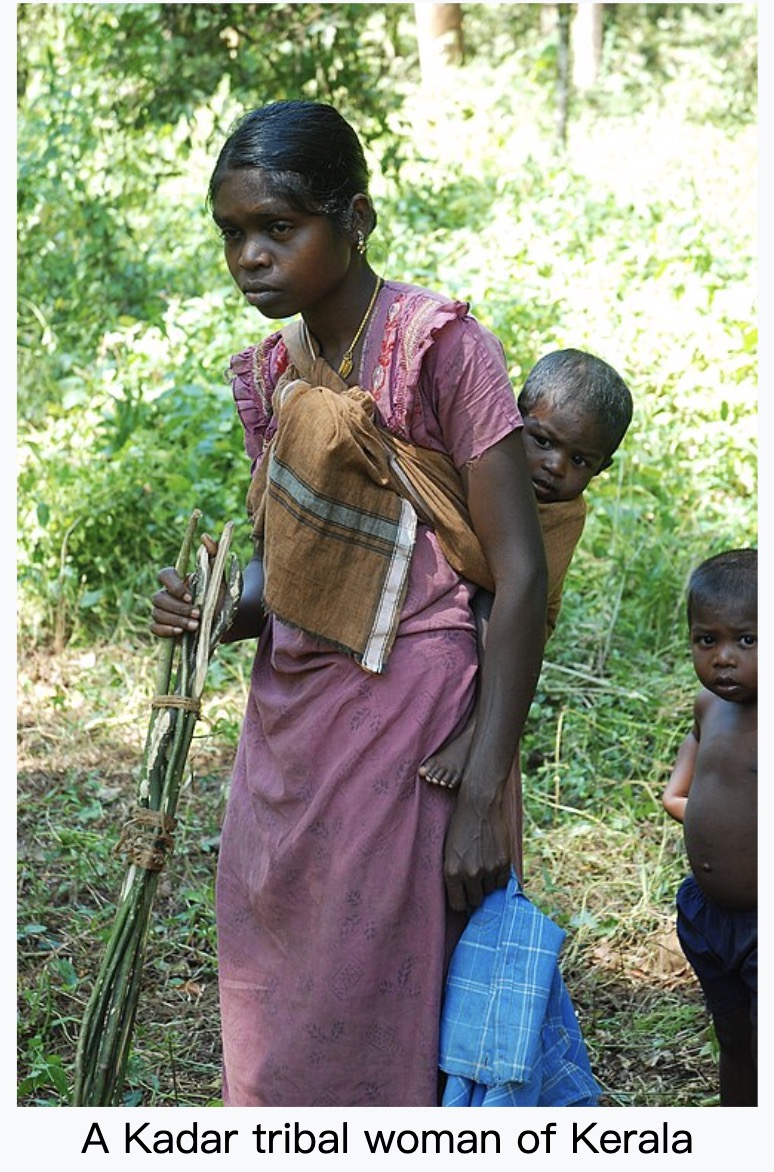
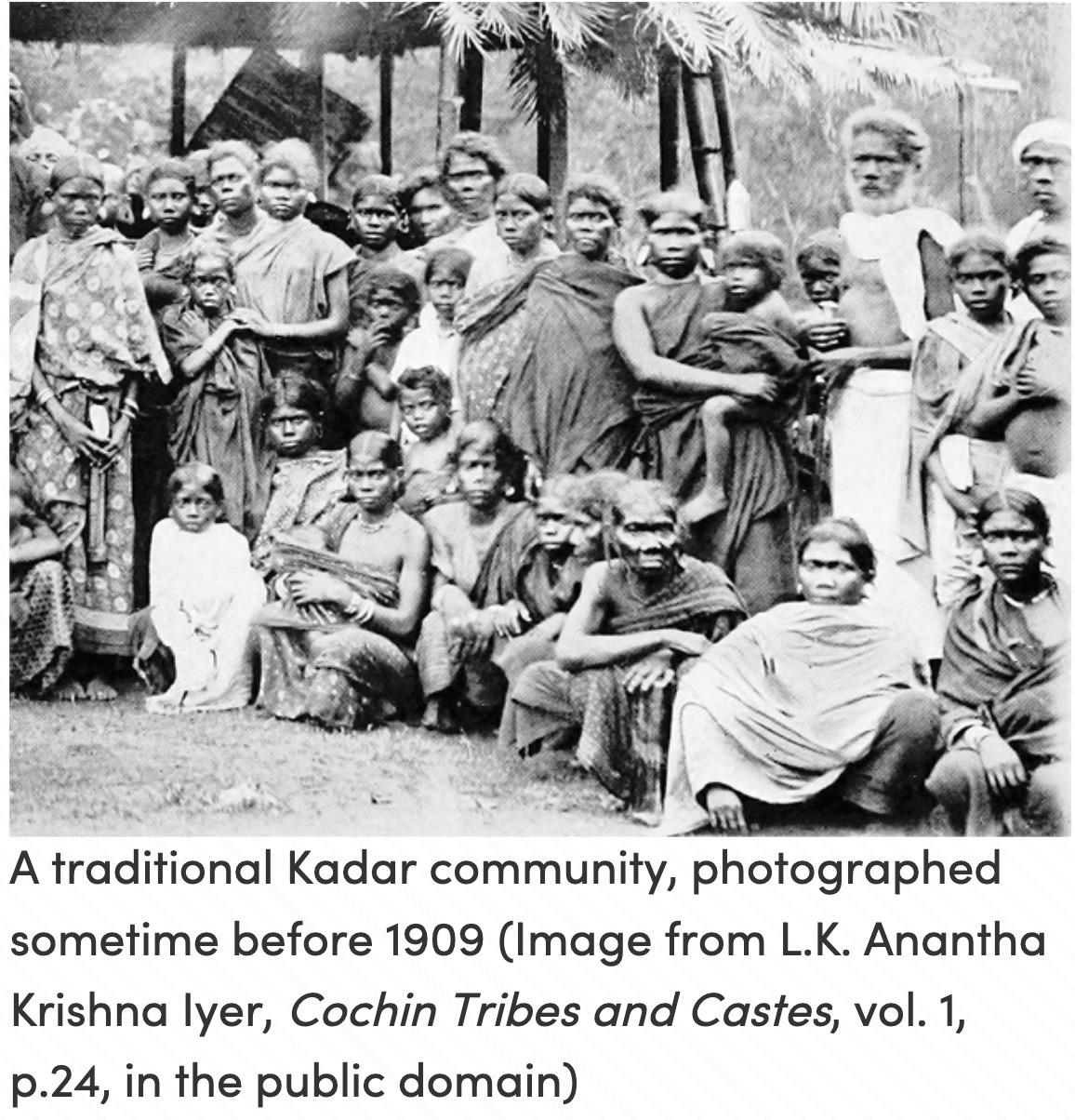
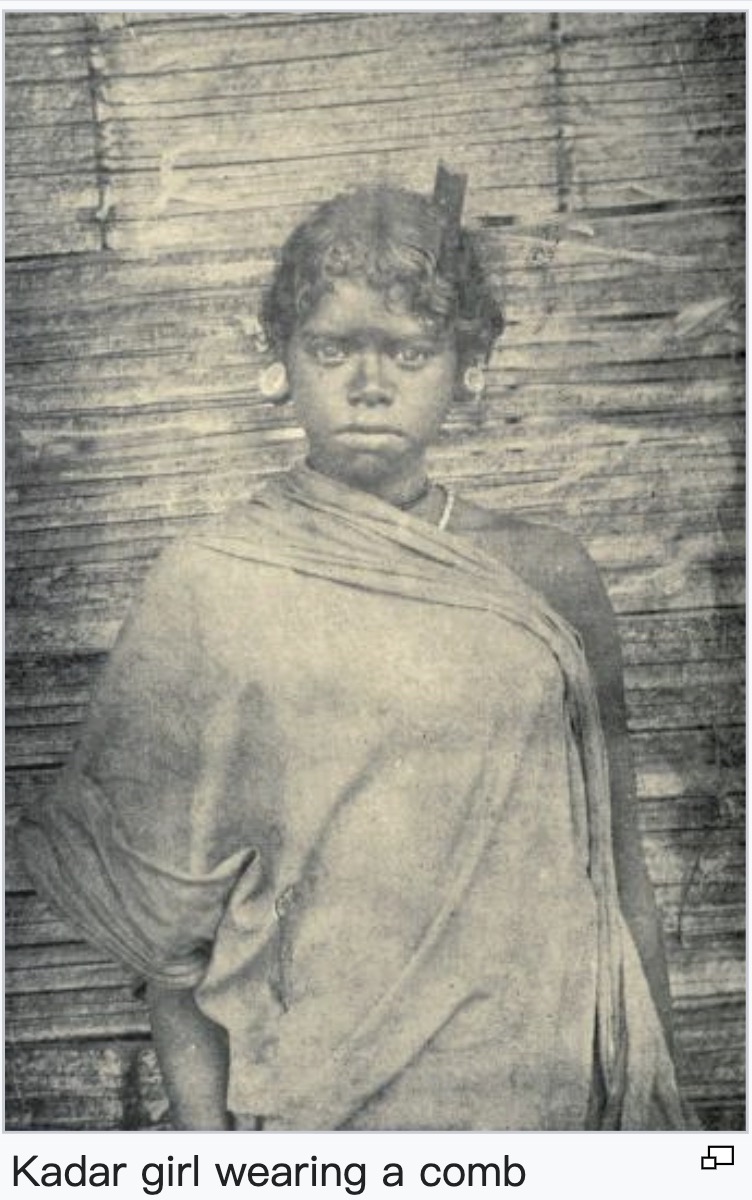
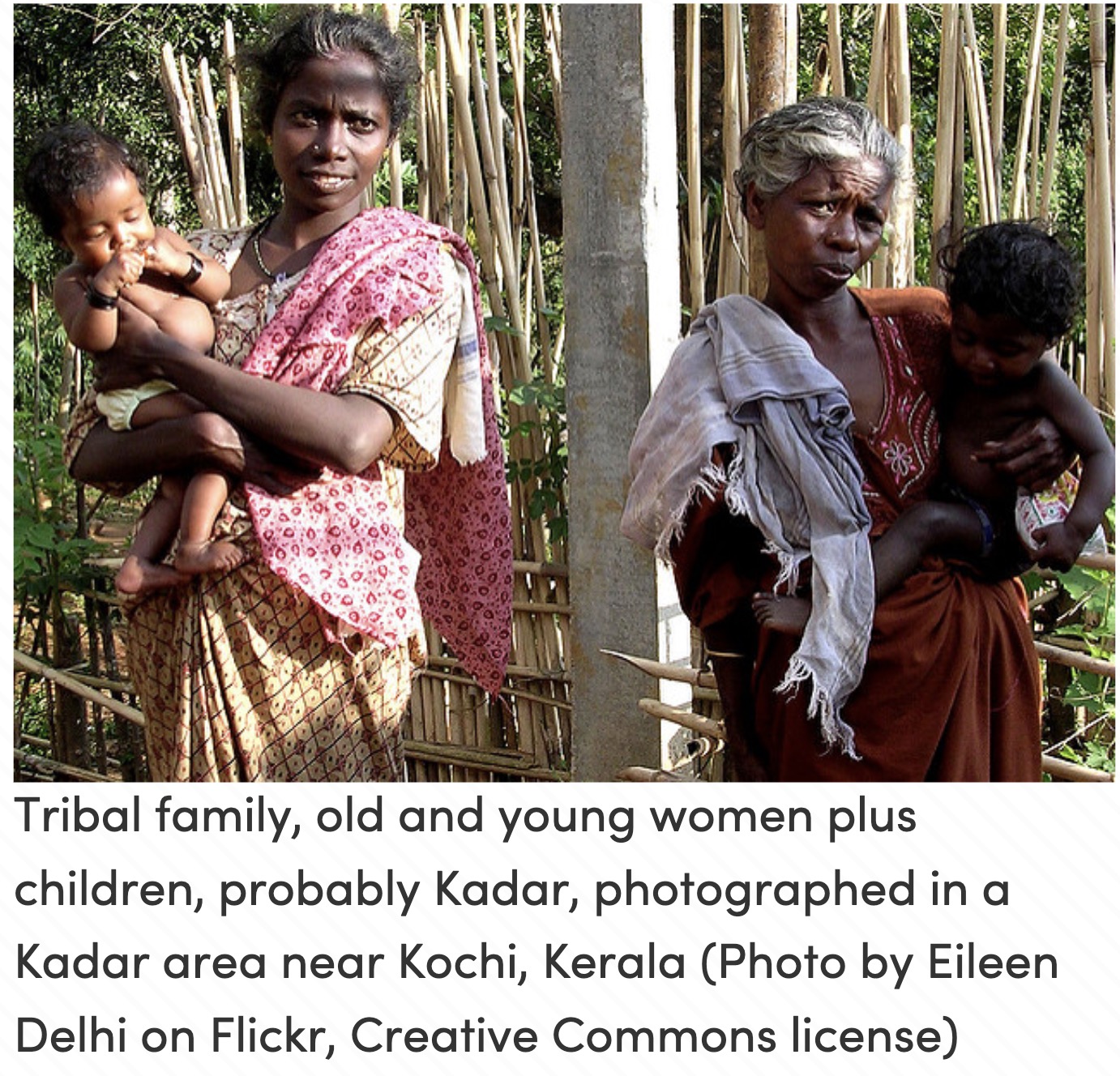
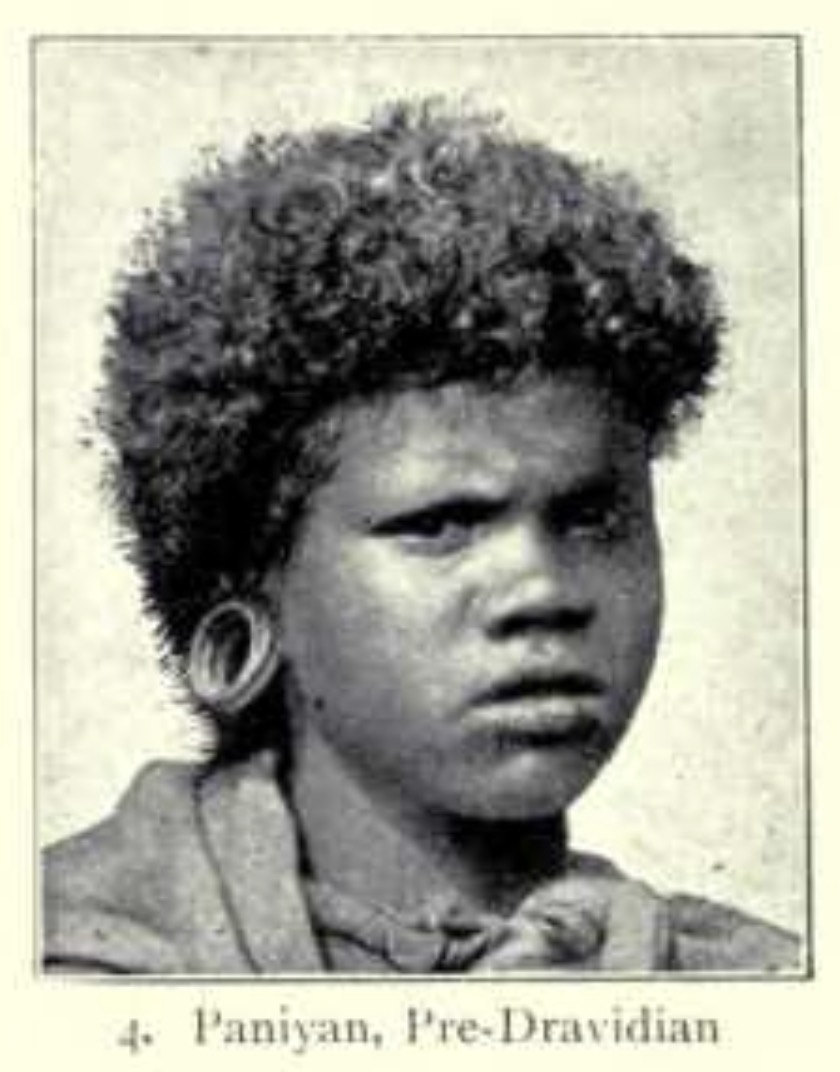
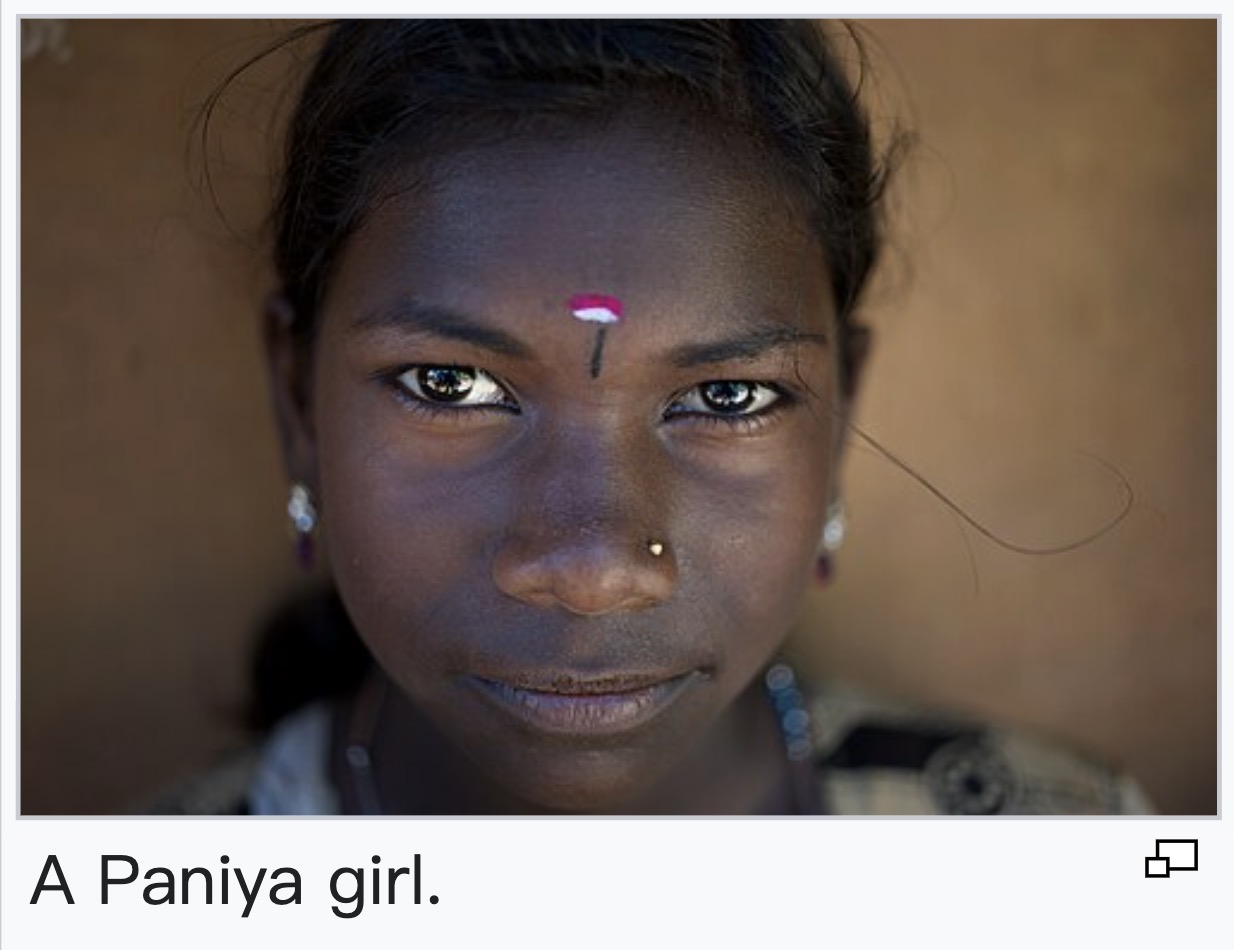
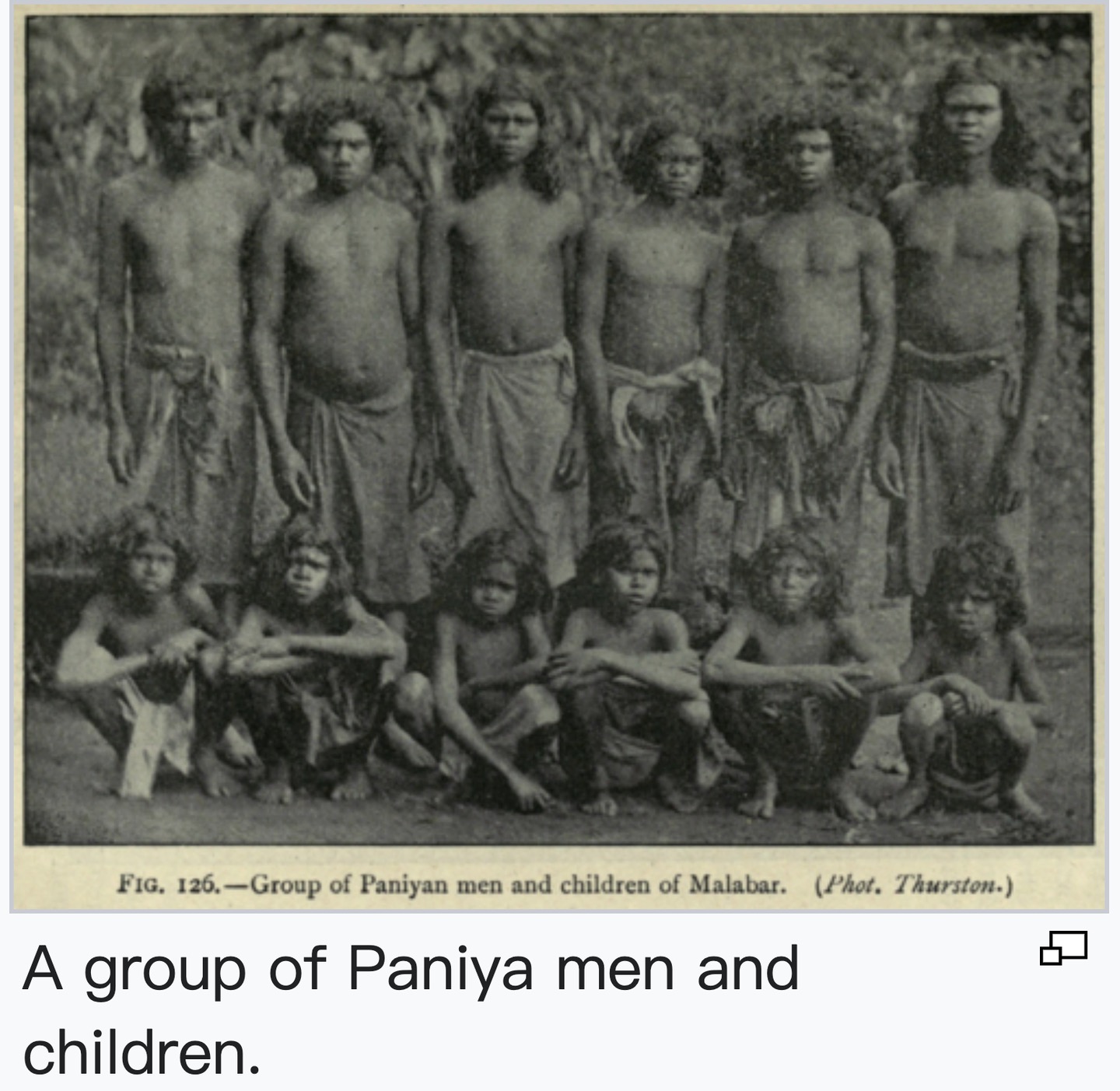
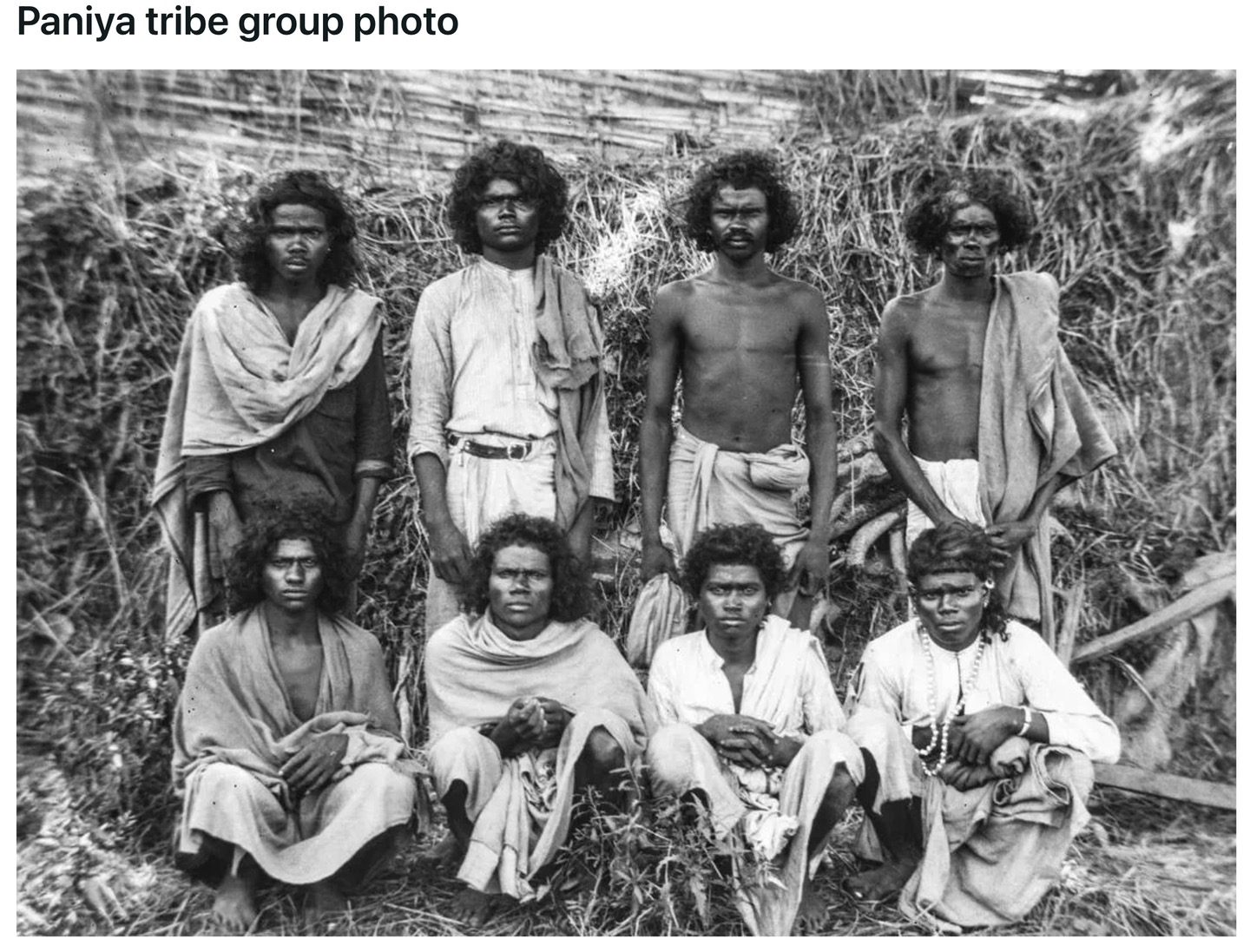
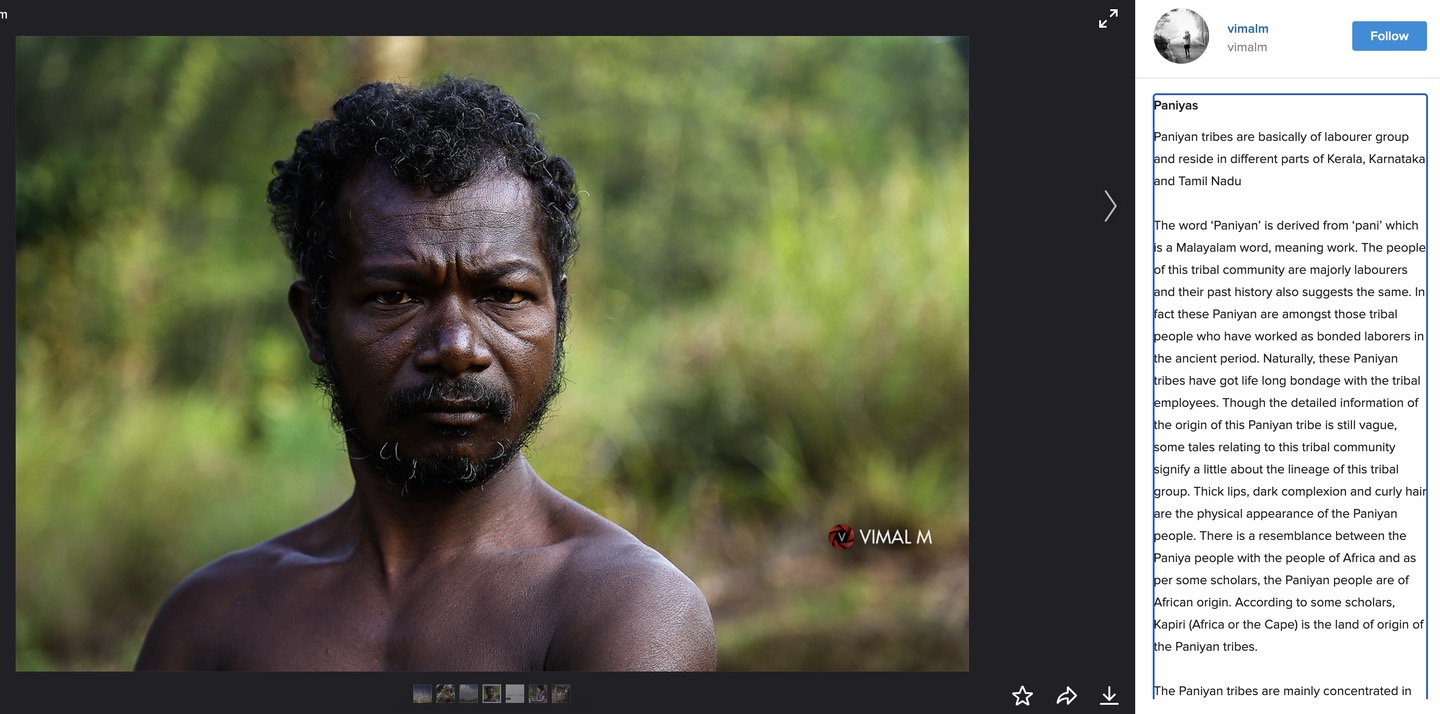
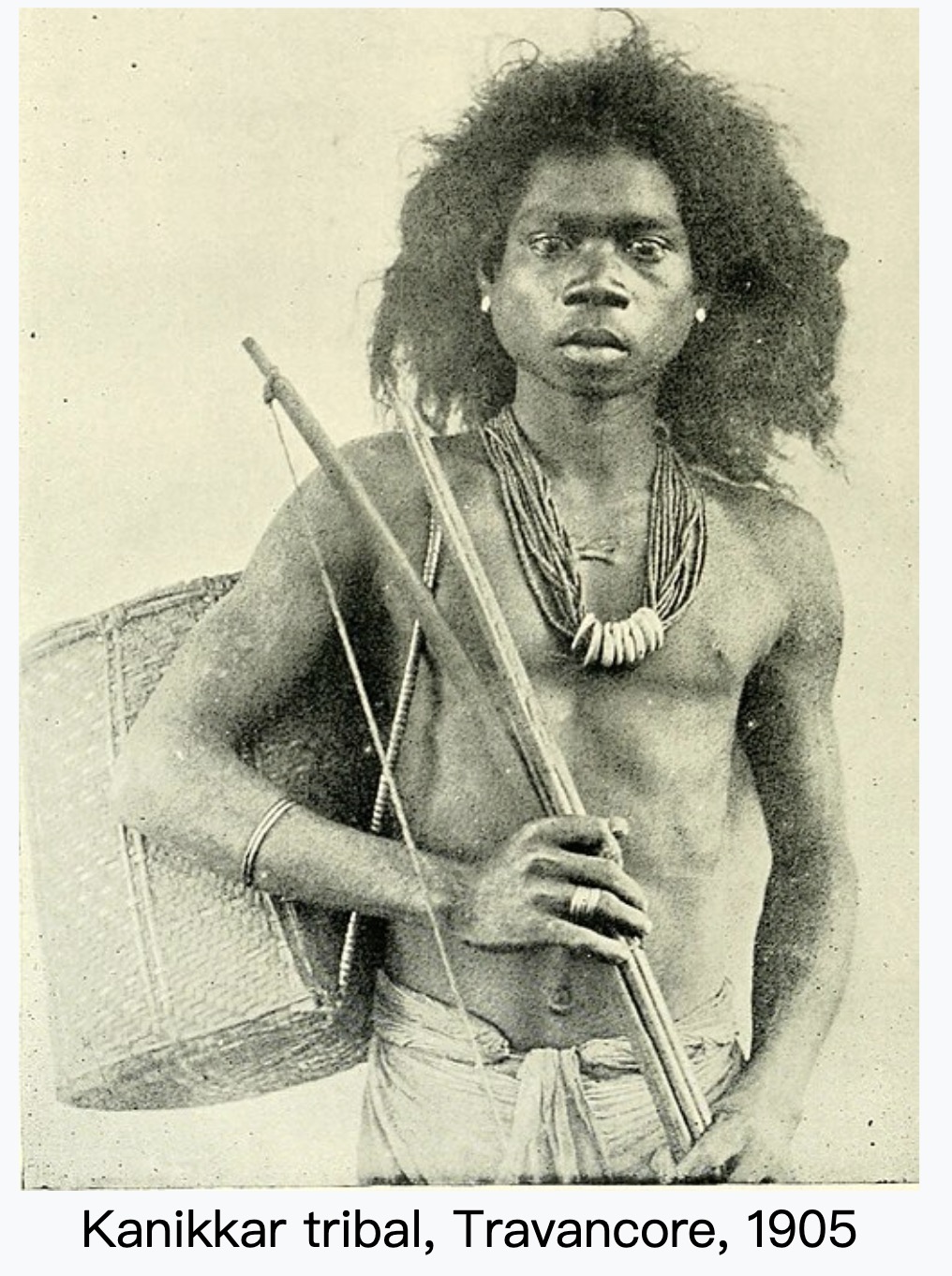
As for portraits, I include only photographs that are highly likely to depict the population being discussed. Negrito populations are a relatively obscure subject, and few people know much about them; many images returned by casual online searches have nothing to do with the population named in their descriptions. I therefore try to obtain photographs from Wikipedia—although it may also be unreliable—and from anthropological books, followed by modern field-interview and documentary photography with a clear provenance. Where verified modern photographs exist, I give them priority because they are in colour and generally clearer. For images found online, I have taken screenshots that retain the original captions, allowing interested readers to search the relevant keywords and locate the original source themselves.
There is also a distinction between populations and tribes. Anyone familiar with the Negrito category will know that one population may contain several constituent tribes. The Aeta people of the Philippine archipelago, for example, constitute a broader population that includes the Ambala Aeta, Abellen Aeta, Magbukún Aeta, and others. When a reliably identified tribal-level photograph is available, I use it first. For many obscure tribes, however, no dependable source can be found, and in such cases I can provide only a photograph of the broader population.
The term “Negrito” arose in the context of Spanish colonialism. It originally described indigenous hunter-gatherer populations of the Philippine archipelago characterized by short stature, dark skin, and curly hair, and was later extended to peoples of the Andaman Islands, the Malay Peninsula, and other parts of Southeast Asia. South Asia and New Guinea also contain little-known populations that are not conventionally classified as Negrito but display similar phenotypic traits. This answer discusses the following examples:
Philippine archipelago
- Aeta people: Ambala Aeta, Abellen Aeta, Magbukún Aeta, Mag-antsi Aeta, and Mag-indi Aeta
- Agta people: Alabat Agta, Agta Cimarron, Manide, Rinconada Agta, Tabangnon, Dupaningan Agta, Casiguran Agta, Labin Agta, and Maddela Agta
- Others: Dumagat, Ati, Batak, Mamanwa, Arta, Atta, and others
Andaman Islands
- Great Andamanese: Aka-Cari, Aka-Cora, Aka-Bo, Aka-Jeru, Aka-Kede, Aka-Kol, Oka-Juwoi, Aka-Pucikwar, Aka-Bale, and Aka-Bea
- Ongan peoples: Jangil, Jarawa, Onge, and Sentinelese
Malay Peninsula
- Semang peoples: Batek, Jahai, Lanoh, Kensiu, Maniq, Mendriq, and Kintak
New Guinea
- Aiome, Fore, and Yali
South Asia
- Kadar, Paniya, and Kanikkaran
I. The Philippine Archipelago
Aeta People
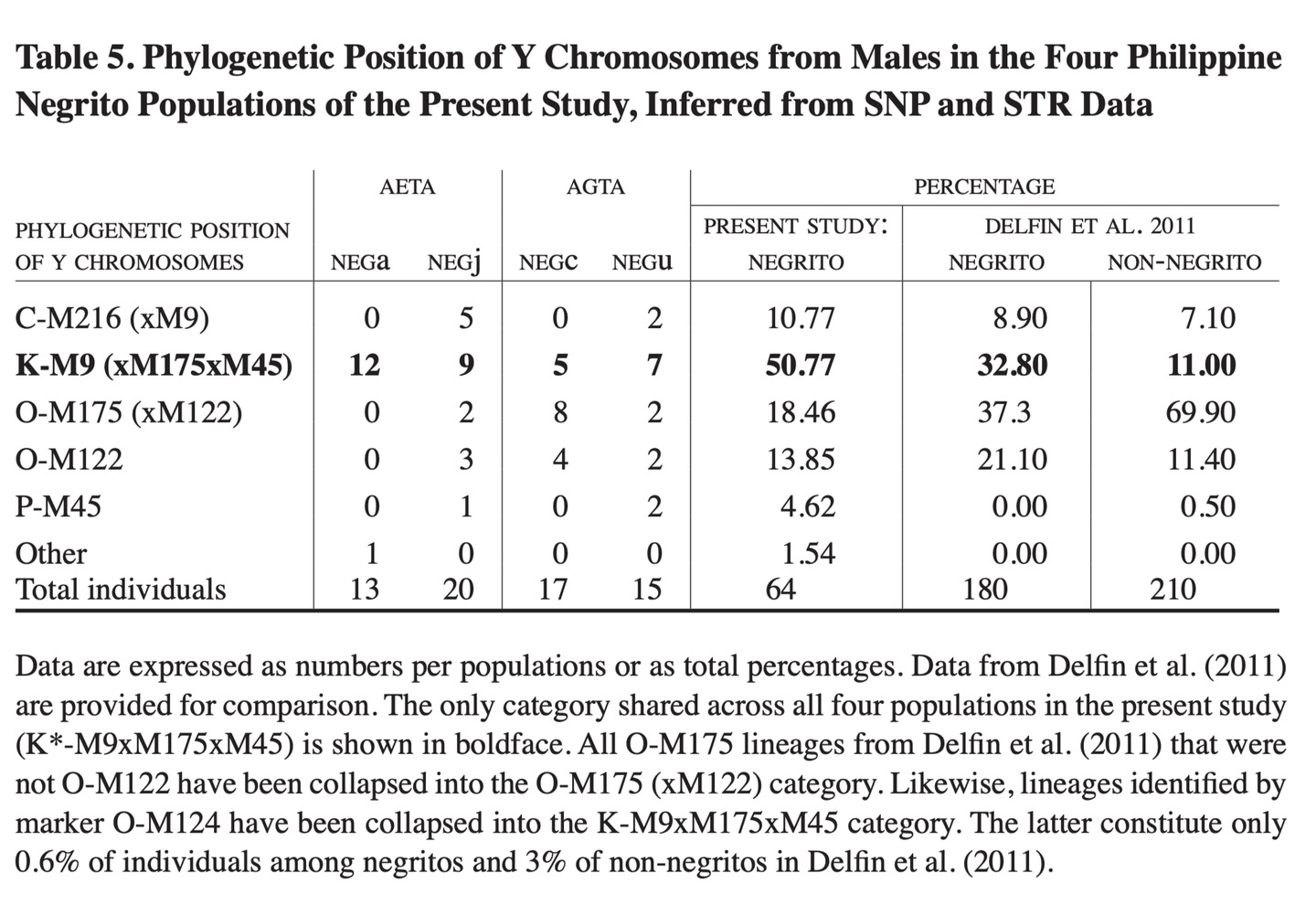
The Negrito populations of the Philippine archipelago are usually divided into northern and southern groups. The northern region primarily means Luzon, which is further divided into western and eastern parts. The western populations are collectively called Aeta and include the Ambala Aeta, Abellen Aeta, Magbukún Aeta, Mag-antsi Aeta, and Mag-indi Aeta. The eastern populations are collectively called Agta and include the Alabat Agta, Agta Cimarron, Manide, Rinconada Agta, Tabangnon, Dupaningan Agta, Casiguran Agta, Labin Agta, and Maddela Agta. The southern region refers chiefly to areas south of Luzon, including the Batak of Palawan, the Ati of the Cebu region and Panay, and the Mamanwa of Mindanao. Genetic surveys of Aeta and Agta populations as a whole have reported paternal lineages K‑M9*, O‑M175, C‑M216, and P‑M45.
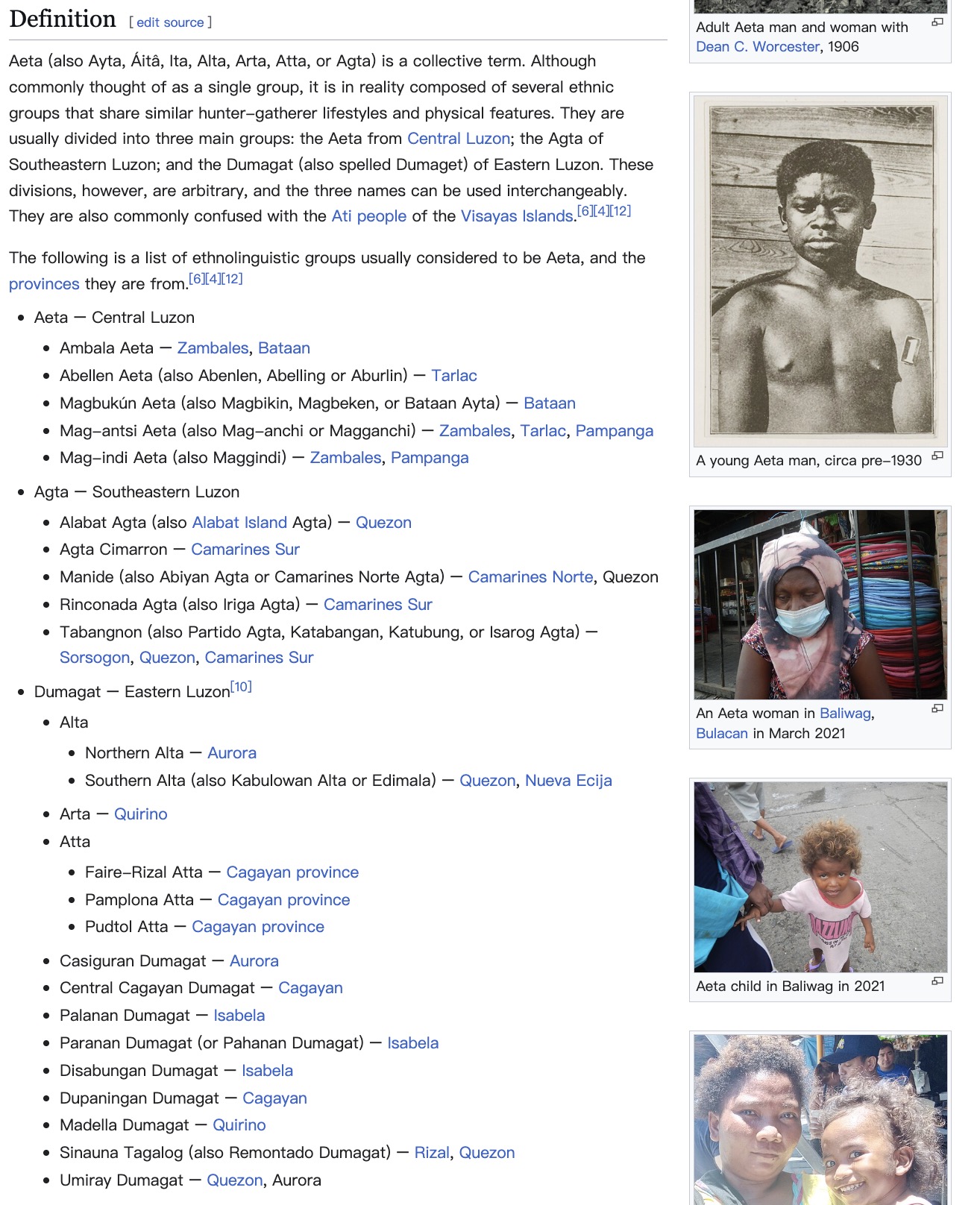
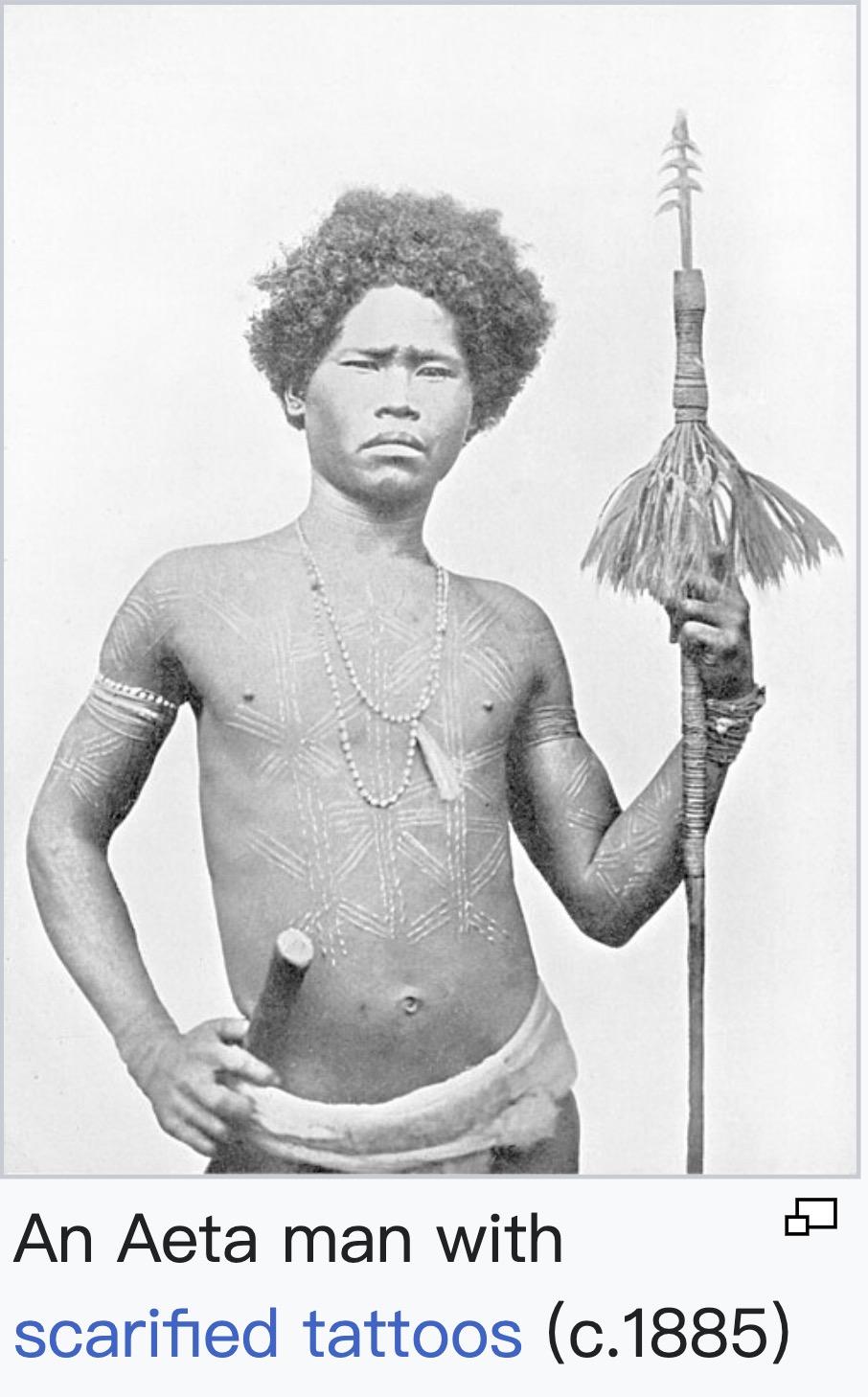
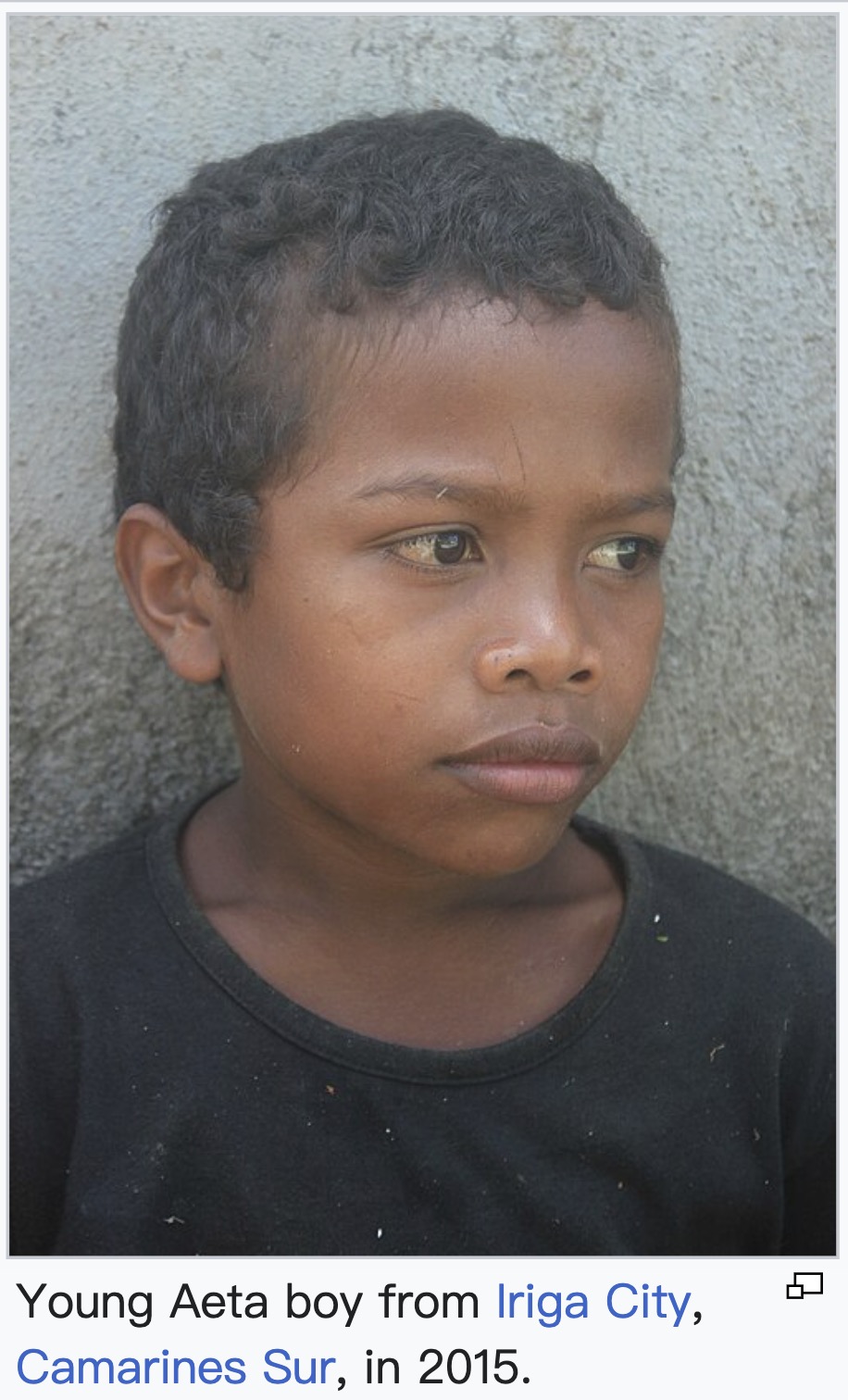
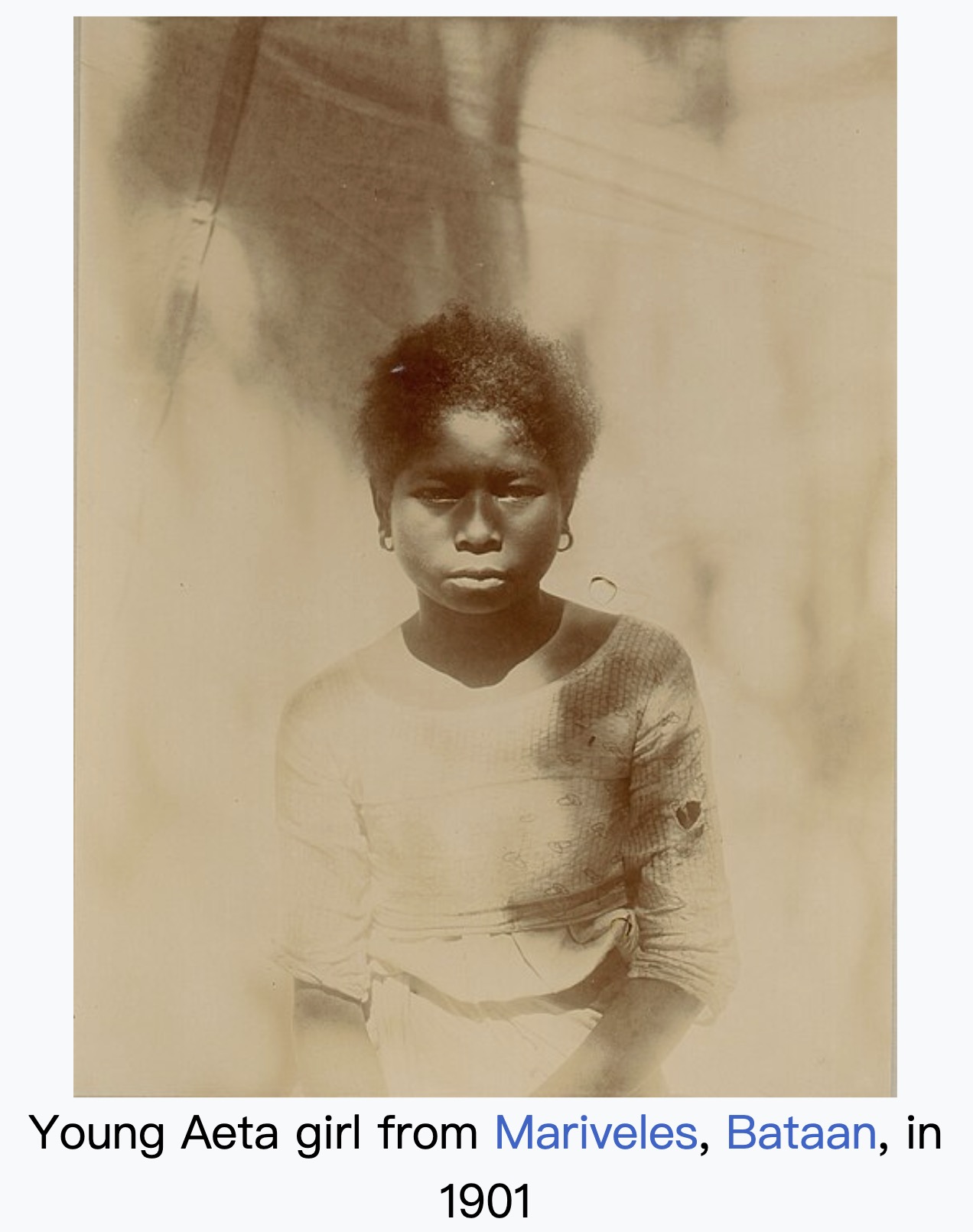
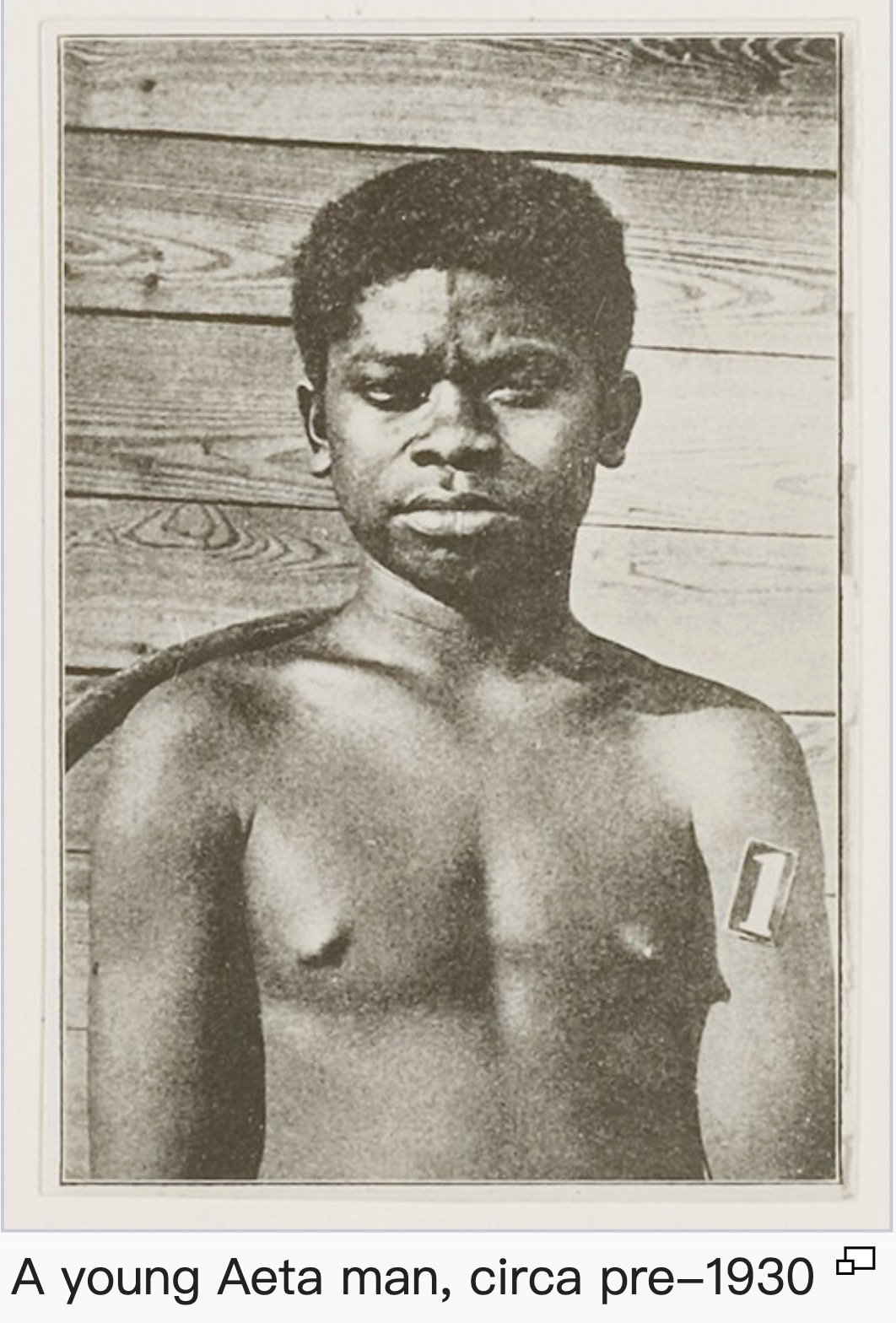
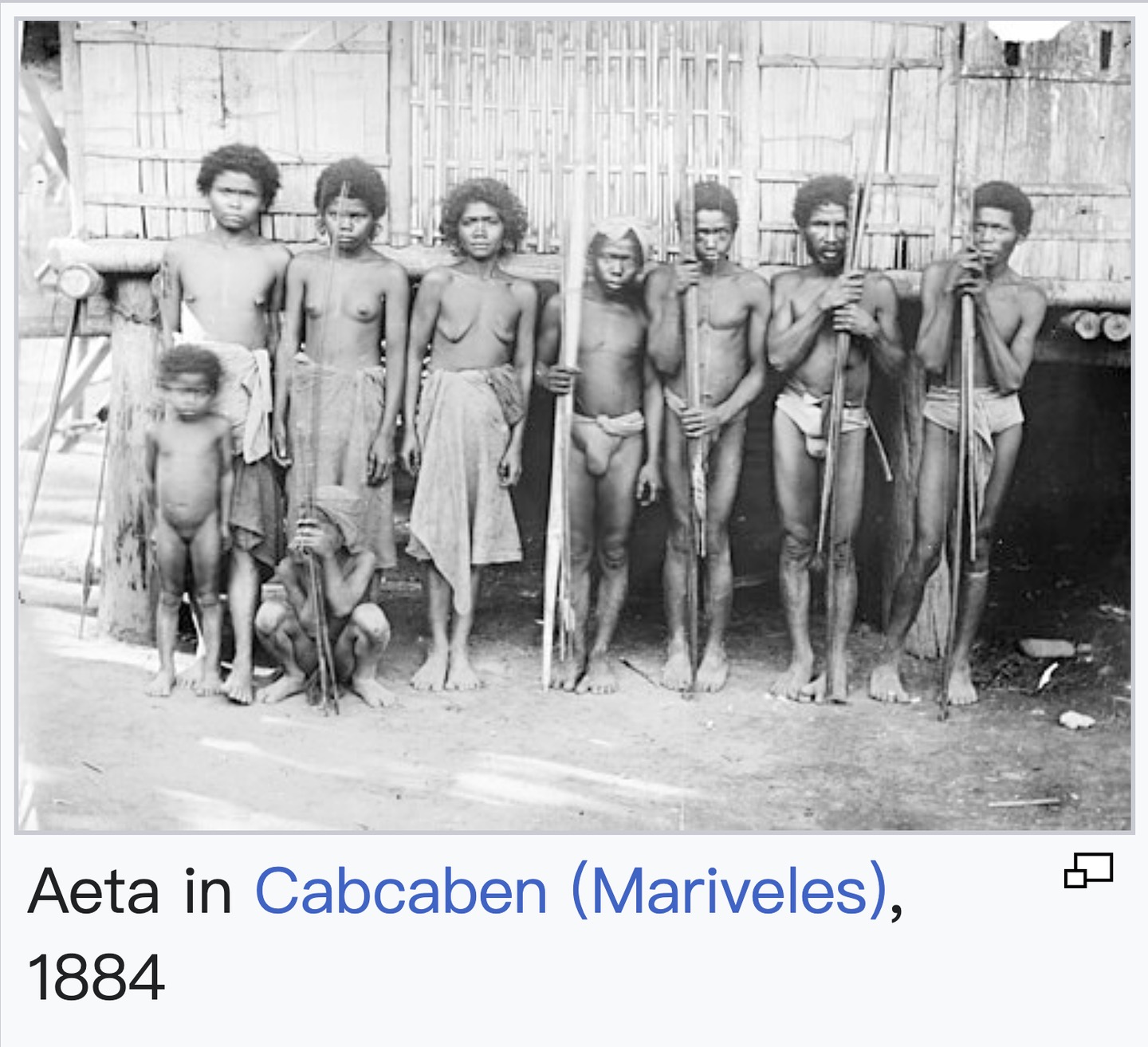
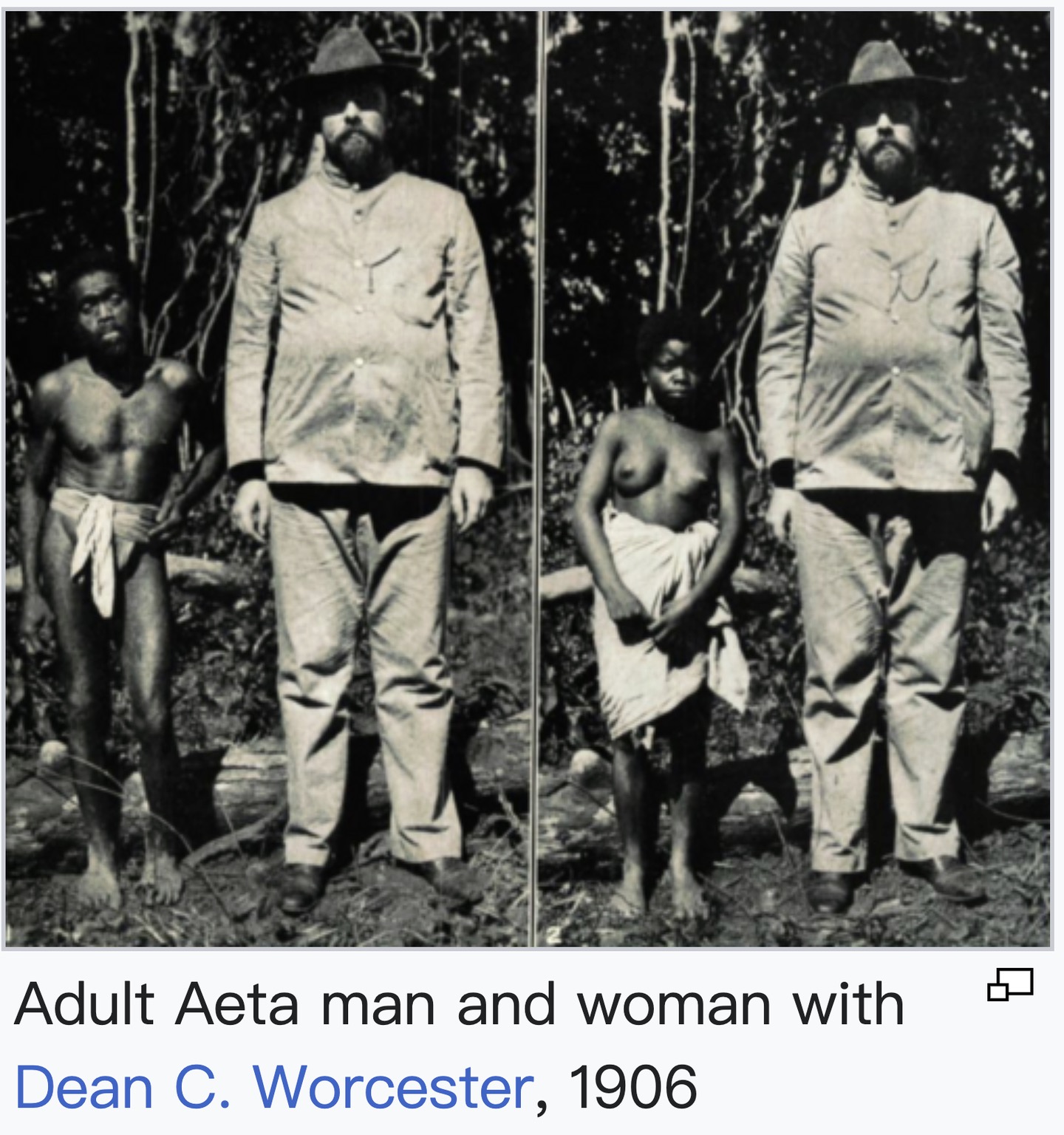
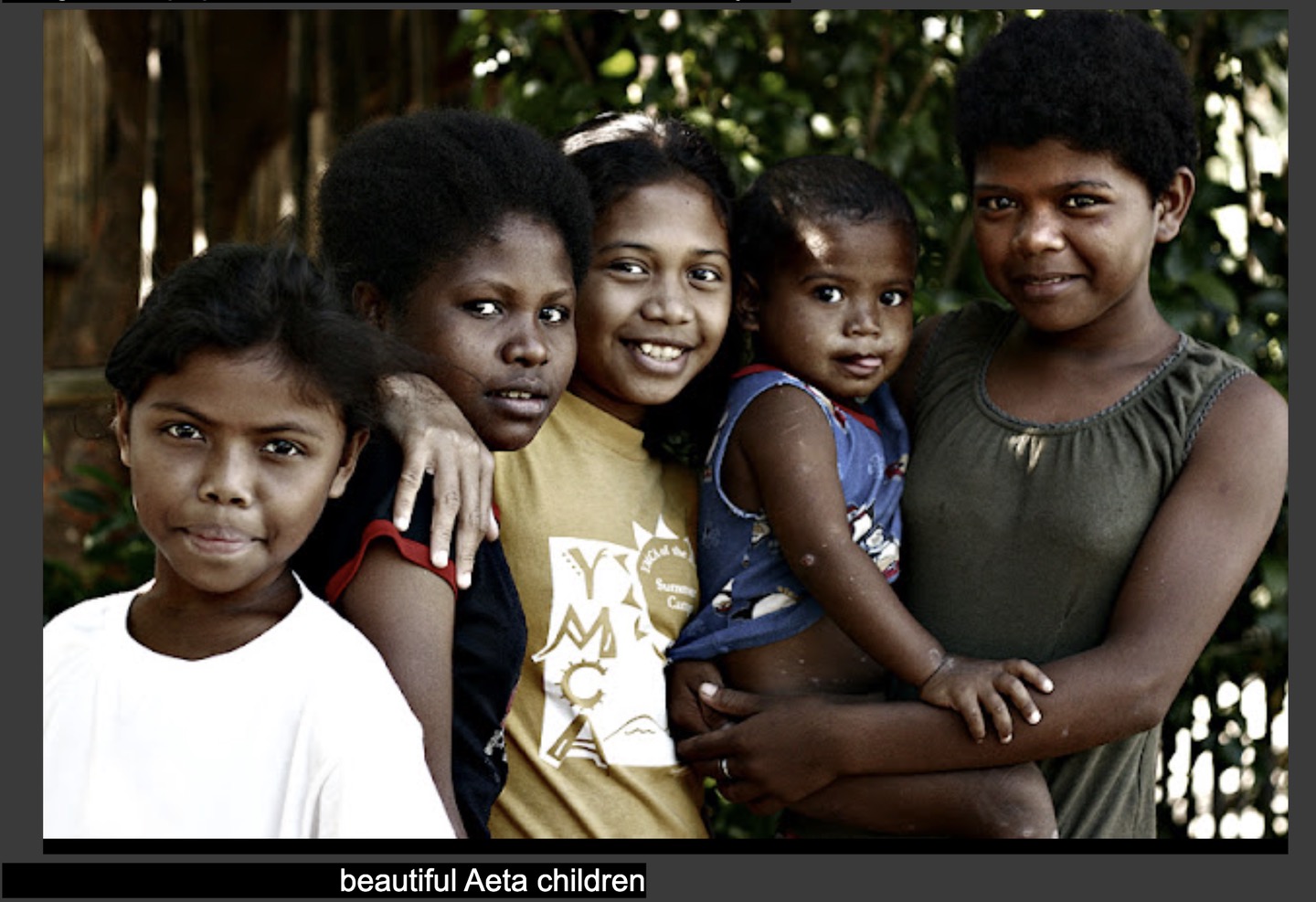
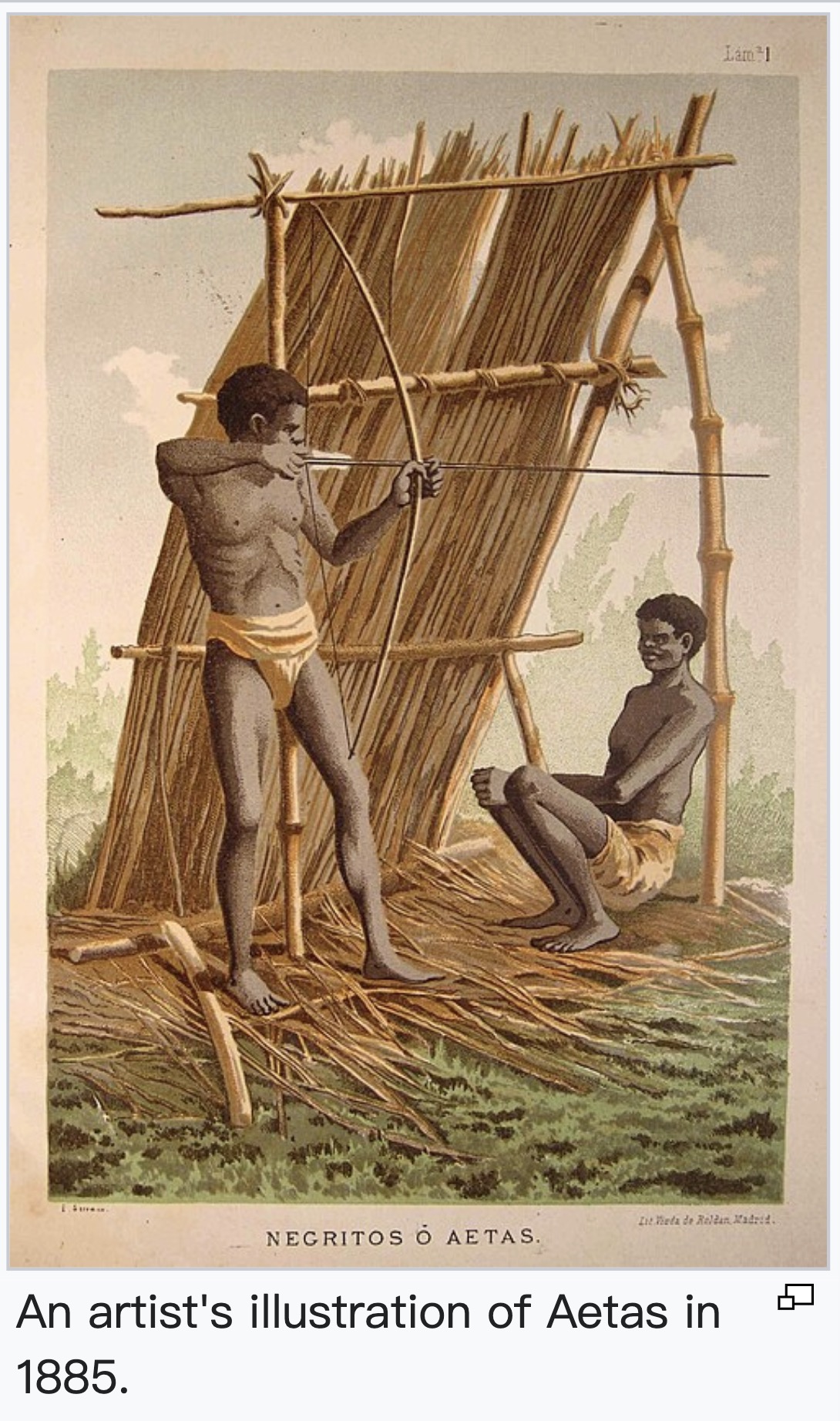
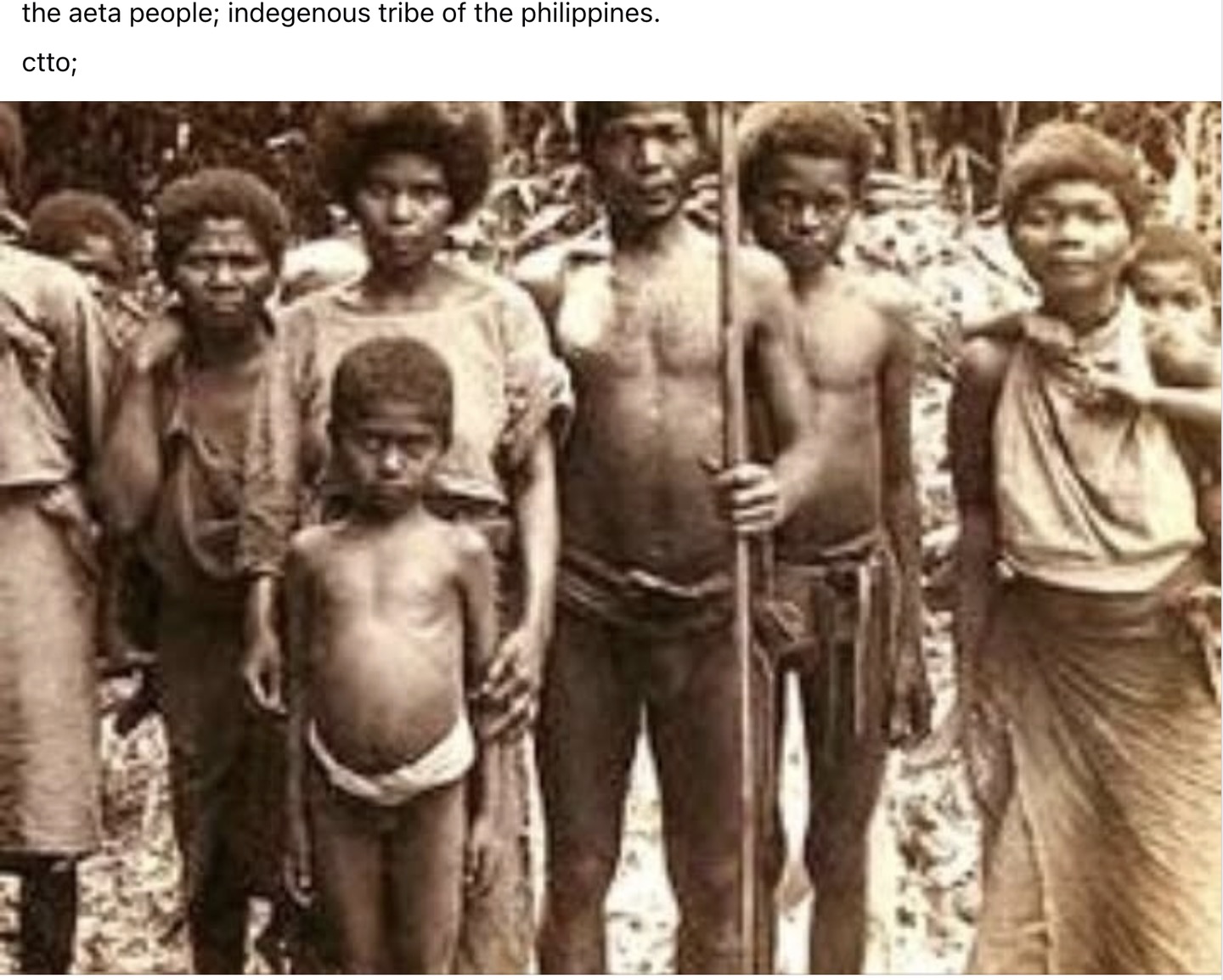
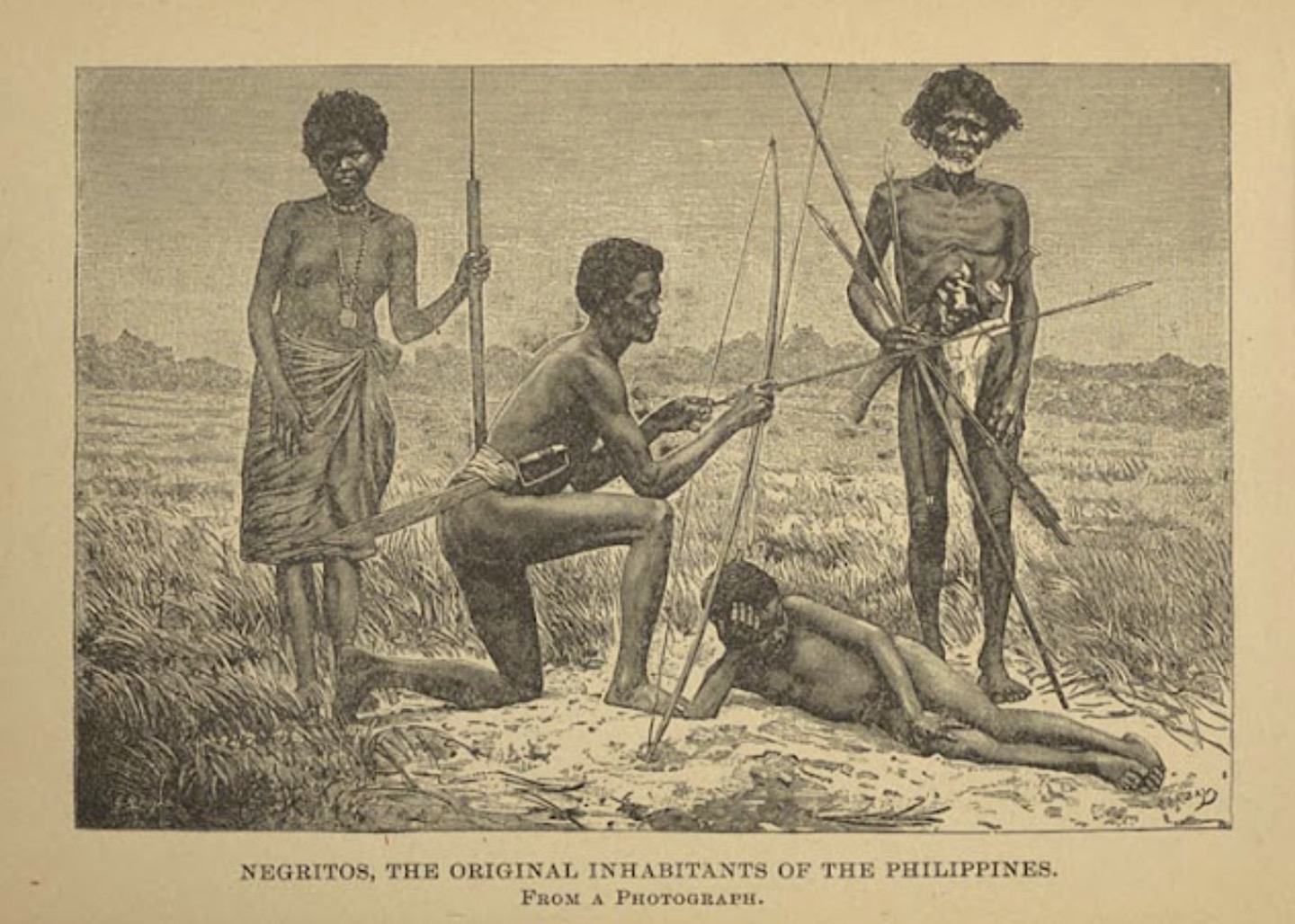
Ambala Aeta
The Ambala Aeta live at the southern end of the Zambales Mountains in central Luzon, principally in southern Zambales Province, northern Bataan, and southwestern Pampanga.
Paternal lineages: No specific data are available. On the basis of genetic surveys of Aeta populations as a whole, possible lineages include K‑M9*, O‑M175, C‑M216, and P‑M45, all downstream of F‑M89.
According to the famous haplogroup homology-equivalence keyhole principle, the Ambala Aeta Negritos of the Philippine archipelago are therefore pure paternal F, G, I, J, H, K, L, T, R, Q, O, N, M, and S, since all of these belong—together with the Ambala Aeta—to the major F‑M89 branch.
Abellen Aeta
The Abellen Aeta are found mainly in Tarlac Province in central Luzon, especially around Mayantoc, San Jose, and Capas, with smaller groups extending into Botolan in Zambales Province.
Paternal lineages: No specific data are available. Surveys of Aeta populations as a whole suggest K‑M9*, O‑M175, C‑M216, and P‑M45 downstream of F‑M89.
By the same principle, the Abellen Aeta are pure paternal F, G, I, J, H, K, L, T, R, Q, O, N, M, and S, since all belong to the major F‑M89 branch.
Magbukún Aeta
The Magbukún Aeta live mainly on the Bataan Peninsula in southwestern Luzon, particularly around Mariveles and Morong, and are consequently also known as the Bataan Ayta.
Paternal lineages: No specific data are available. Surveys of Aeta populations as a whole suggest K‑M9*, O‑M175, C‑M216, and P‑M45 downstream of F‑M89.
By the same principle, the Magbukún Aeta are pure paternal F, G, I, J, H, K, L, T, R, Q, O, N, M, and S, since all belong to the major F‑M89 branch.
Mag-antsi Aeta
The Mag-antsi Aeta are distributed in and east of the Zambales Mountains of central Luzon, in Zambales, Tarlac, and Pampanga provinces, including Botolan, San Marcelino, Capas, Bamban, and Mabalacat.
Paternal lineages: No specific data are available. Surveys of Aeta populations as a whole suggest K‑M9*, O‑M175, C‑M216, and P‑M45 downstream of F‑M89.
By the same principle, the Mag-antsi Aeta are pure paternal F, G, I, J, H, K, L, T, R, Q, O, N, M, and S, since all belong to the major F‑M89 branch.
Mag-indi Aeta
The Mag-indi Aeta live mainly along the southern and eastern Zambales Mountains in central Luzon, especially around Floridablanca and Porac in Pampanga, with a further presence around San Marcelino in Zambales.
Paternal lineages: No specific data are available. Surveys of Aeta populations as a whole suggest K‑M9*, O‑M175, C‑M216, and P‑M45 downstream of F‑M89.
By the same principle, the Mag-indi Aeta are pure paternal F, G, I, J, H, K, L, T, R, Q, O, N, M, and S, since all belong to the major F‑M89 branch.
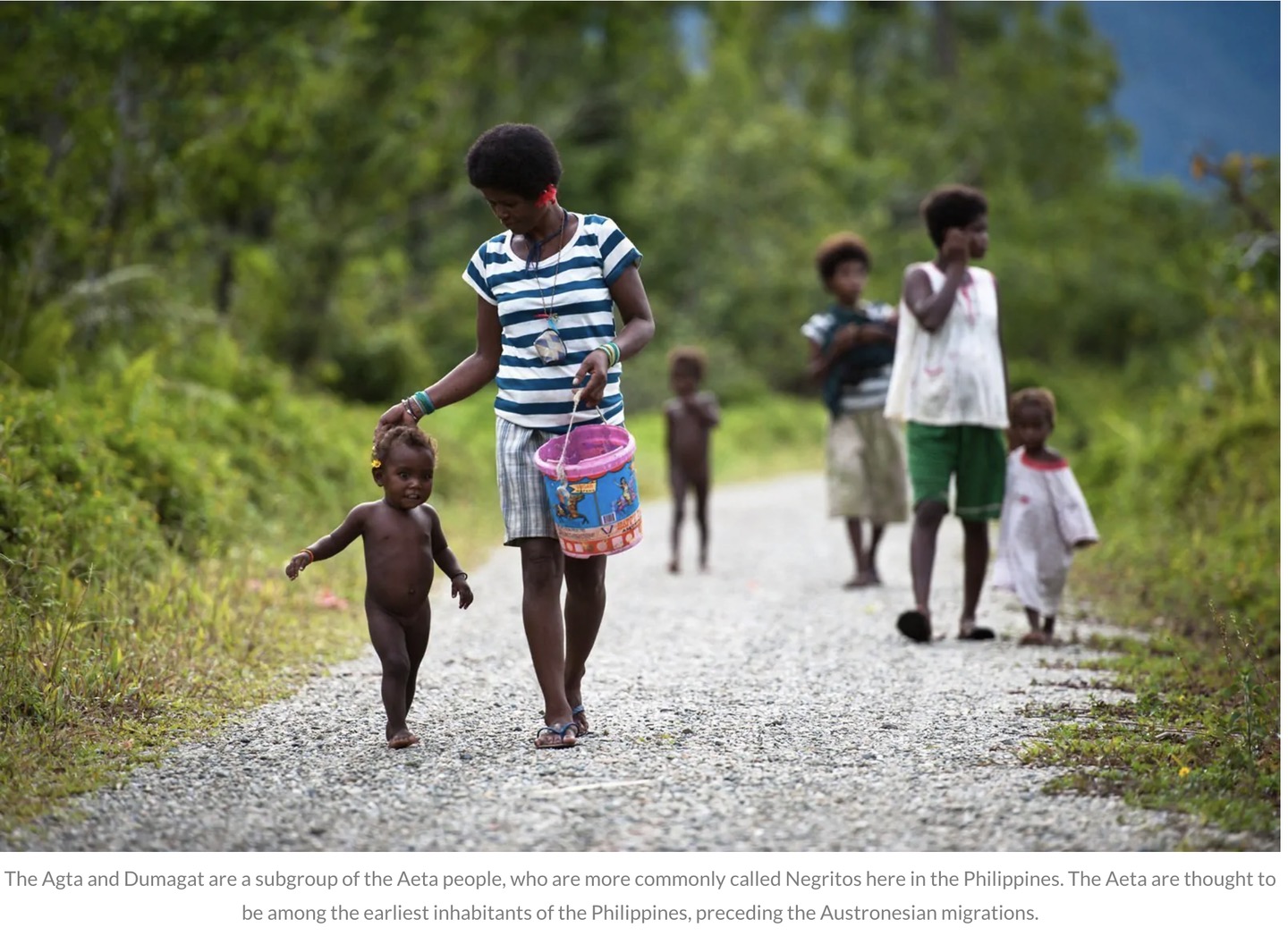
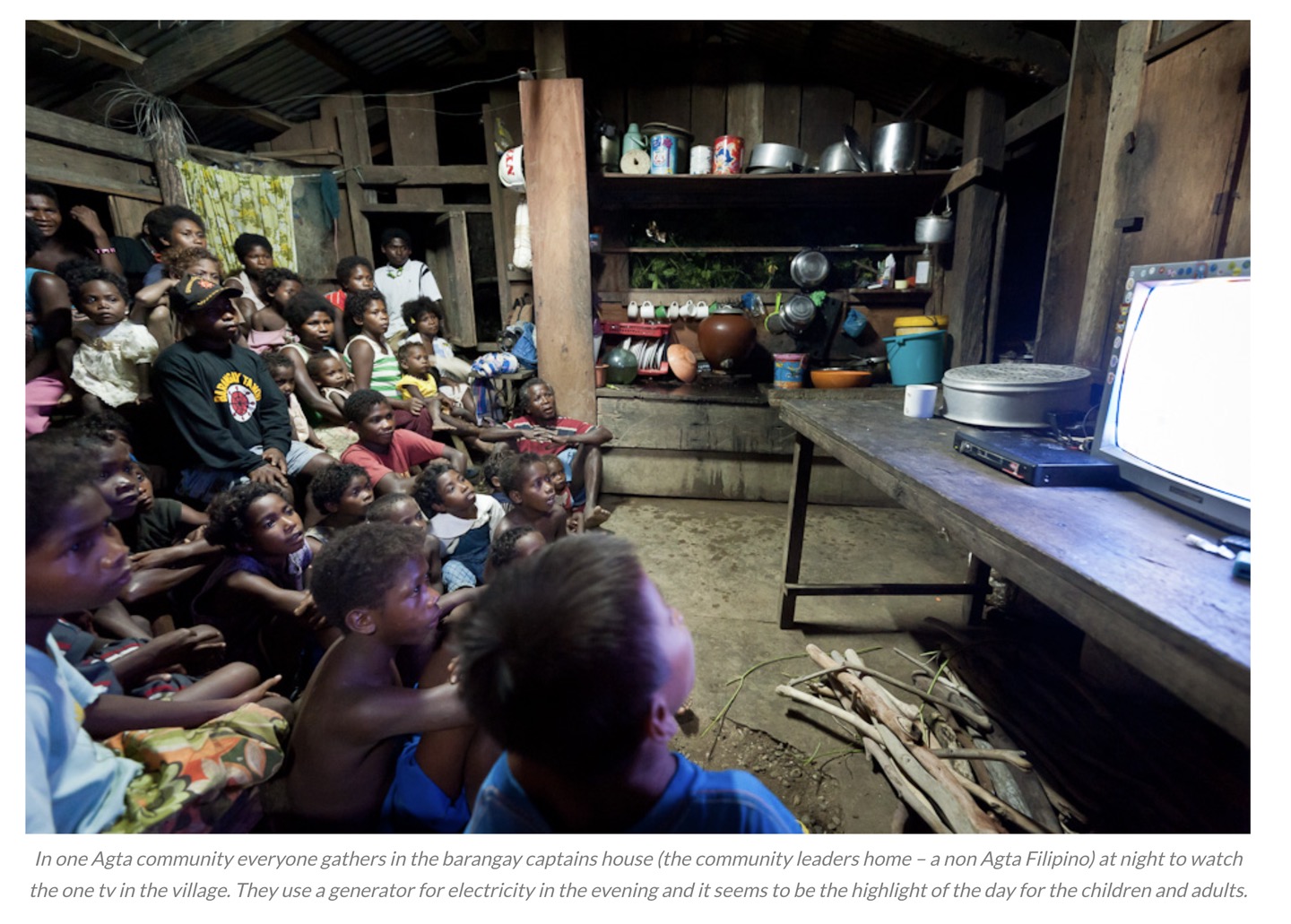
Agta People
As noted above, Aeta and Agta are essentially distinguished by geography. Genetically, too, their paternal and maternal structures do not differ greatly.
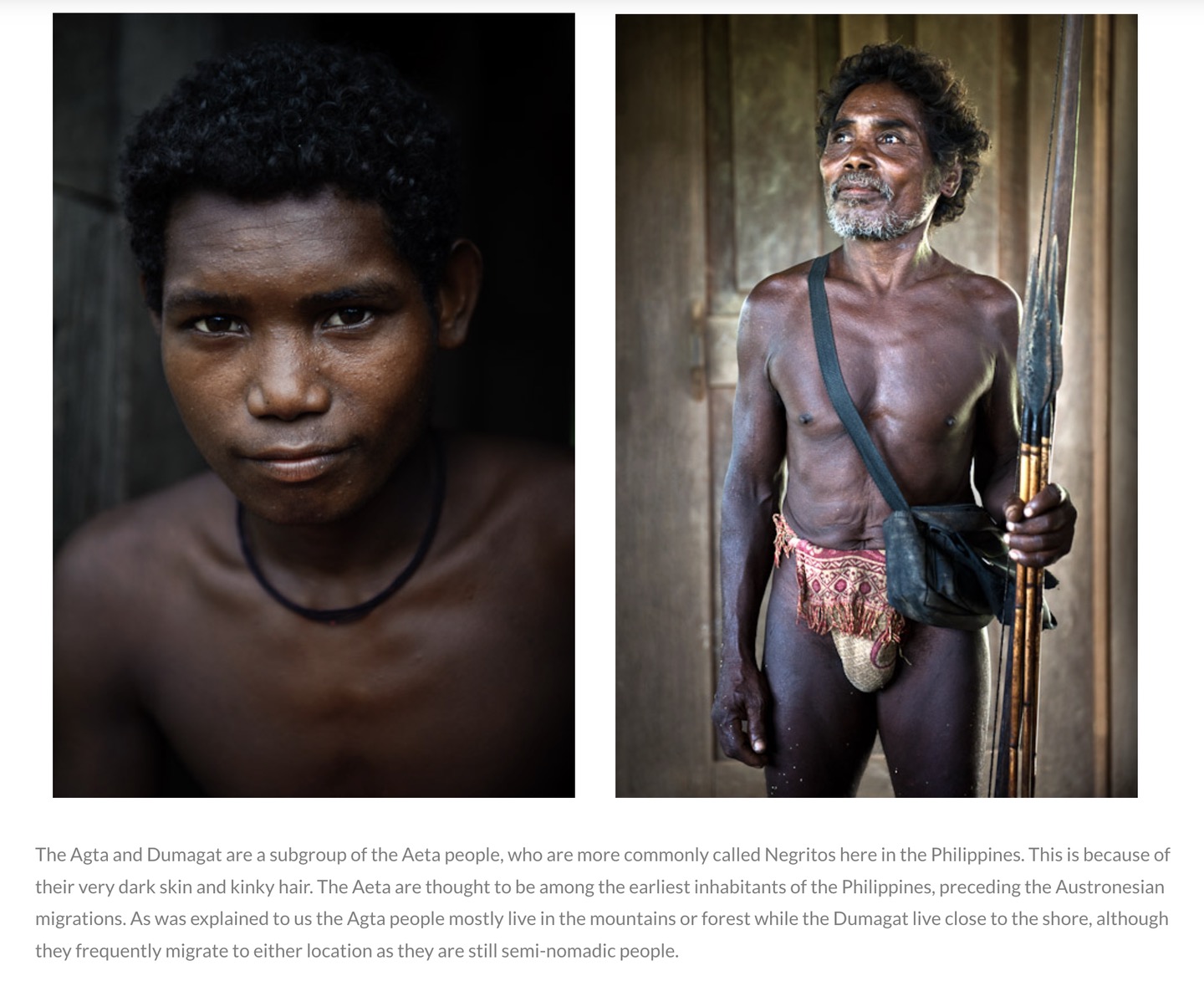
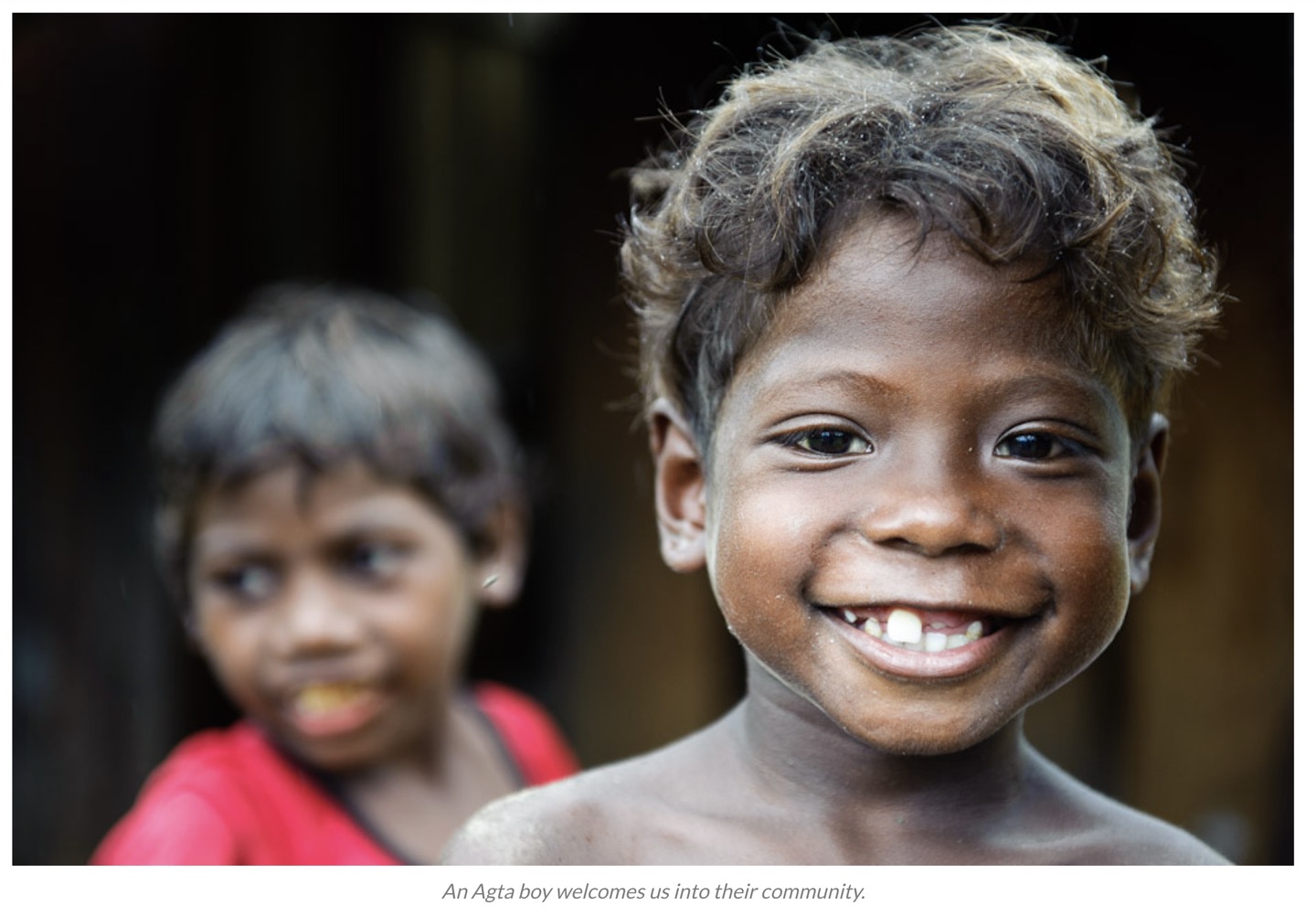
Alabat Agta
The Alabat Agta live mainly on Alabat Island and along the neighbouring coast of Quezon Province in southeastern Luzon. They belong to the Agta/Negrito populations of southern Luzon’s eastern coast.
Paternal lineages: No specific data are available. Agta-wide surveys suggest K‑M9*, O‑M175, C‑M216, and P‑M45 downstream of F‑M89.
By the same principle, the Alabat Agta are pure paternal F, G, I, J, H, K, L, T, R, Q, O, N, M, and S, since all belong to the major F‑M89 branch.
Agta Cimarron
The Agta Cimarron live mainly around the Bicol Peninsula in southeastern Luzon, particularly in mountainous districts and along forest margins in Camarines Norte and Camarines Sur.
Paternal lineages: No specific data are available. Agta-wide surveys suggest K‑M9*, O‑M175, C‑M216, and P‑M45 downstream of F‑M89.
By the same principle, the Agta Cimarron are pure paternal F, G, I, J, H, K, L, T, R, Q, O, N, M, and S, since all belong to the major F‑M89 branch.
Manide People
The Manide are found chiefly in the Bicol region of southeastern Luzon, concentrated in Camarines Norte and the neighbouring parts of Quezon and Camarines Sur. They are one of the more important Negrito populations of southern Luzon.
Paternal lineages: No specific data are available. Agta-wide surveys suggest K‑M9*, O‑M175, C‑M216, and P‑M45 downstream of F‑M89.
By the same principle, the Manide are pure paternal F, G, I, J, H, K, L, T, R, Q, O, N, M, and S, since all belong to the major F‑M89 branch.
Rinconada Agta
The Rinconada Agta are found mainly in the Rinconada district of Camarines Sur in southeastern Luzon, especially around Mount Iriga and neighbouring inland areas.
Paternal lineages: No specific data are available. Agta-wide surveys suggest K‑M9*, O‑M175, C‑M216, and P‑M45 downstream of F‑M89.
By the same principle, the Rinconada Agta are pure paternal F, G, I, J, H, K, L, T, R, Q, O, N, M, and S, since all belong to the major F‑M89 branch.
Tabangnon People
The Tabangnon live mainly on the Bicol Peninsula in southeastern Luzon, with a concentration in Camarines Sur.
Paternal lineages: No specific data are available. Agta-wide surveys suggest K‑M9*, O‑M175, C‑M216, and P‑M45 downstream of F‑M89.
By the same principle, the Tabangnon are pure paternal F, G, I, J, H, K, L, T, R, Q, O, N, M, and S, since all belong to the major F‑M89 branch.
Dupaningan Agta
The Dupaningan Agta are found chiefly in Cagayan Province in northeastern Luzon, particularly in the northern Sierra Madre and along the eastern edge of the Cagayan Valley. They are among the better-preserved Agta communities of northeastern Luzon.
Paternal lineages: No specific data are available. Agta-wide surveys suggest K‑M9*, O‑M175, C‑M216, and P‑M45 downstream of F‑M89.
By the same principle, the Dupaningan Agta are pure paternal F, G, I, J, H, K, L, T, R, Q, O, N, M, and S, since all belong to the major F‑M89 branch.
Casiguran Agta
The Casiguran Agta live mainly around Casiguran in Aurora Province, eastern Luzon, concentrated along the eastern foothills of the Sierra Madre and the Pacific coast.
Paternal lineages: No specific data are available. Agta-wide surveys suggest K‑M9*, O‑M175, C‑M216, and P‑M45 downstream of F‑M89.
By the same principle, the Casiguran Agta are pure paternal F, G, I, J, H, K, L, T, R, Q, O, N, M, and S, since all belong to the major F‑M89 branch.
Labin Agta
The Labin Agta live mainly in Cagayan Province and the Sierra Madre of northeastern Luzon, in an area extending approximately from the eastern Cagayan Valley to the Pacific coast.
Paternal lineages: No specific data are available. Agta-wide surveys suggest K‑M9*, O‑M175, C‑M216, and P‑M45 downstream of F‑M89.
By the same principle, the Labin Agta are pure paternal F, G, I, J, H, K, L, T, R, Q, O, N, M, and S, since all belong to the major F‑M89 branch.
Maddela Agta
The Maddela Agta are distributed around Maddela in Quirino Province and the neighbouring Sierra Madre. They are an inland Agta/Negrito population of northeastern Luzon.
Paternal lineages: No specific data are available. Agta-wide surveys suggest K‑M9*, O‑M175, C‑M216, and P‑M45 downstream of F‑M89.
By the same principle, the Maddela Agta are pure paternal F, G, I, J, H, K, L, T, R, Q, O, N, M, and S, since all belong to the major F‑M89 branch.
Other Philippine Populations
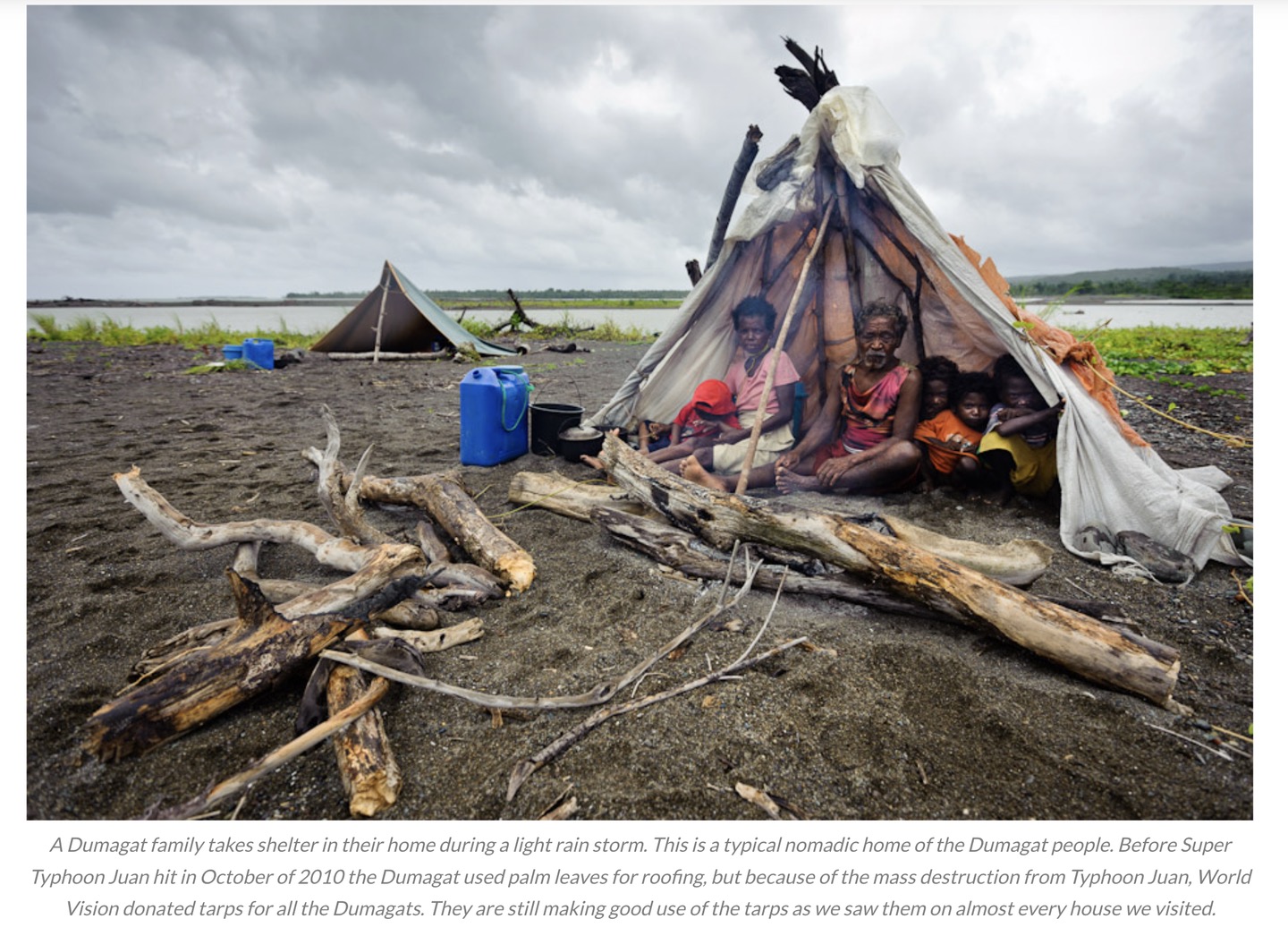
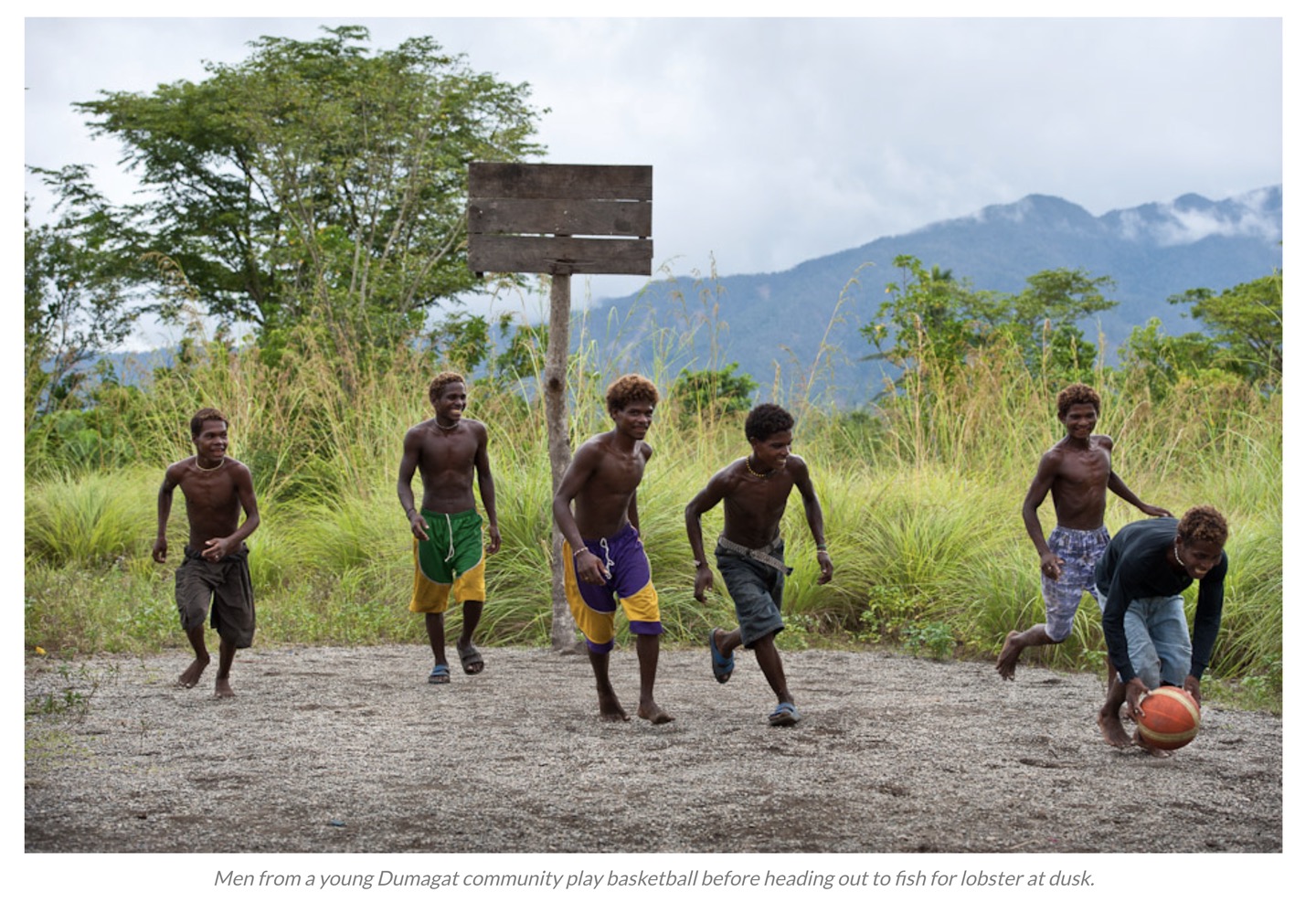
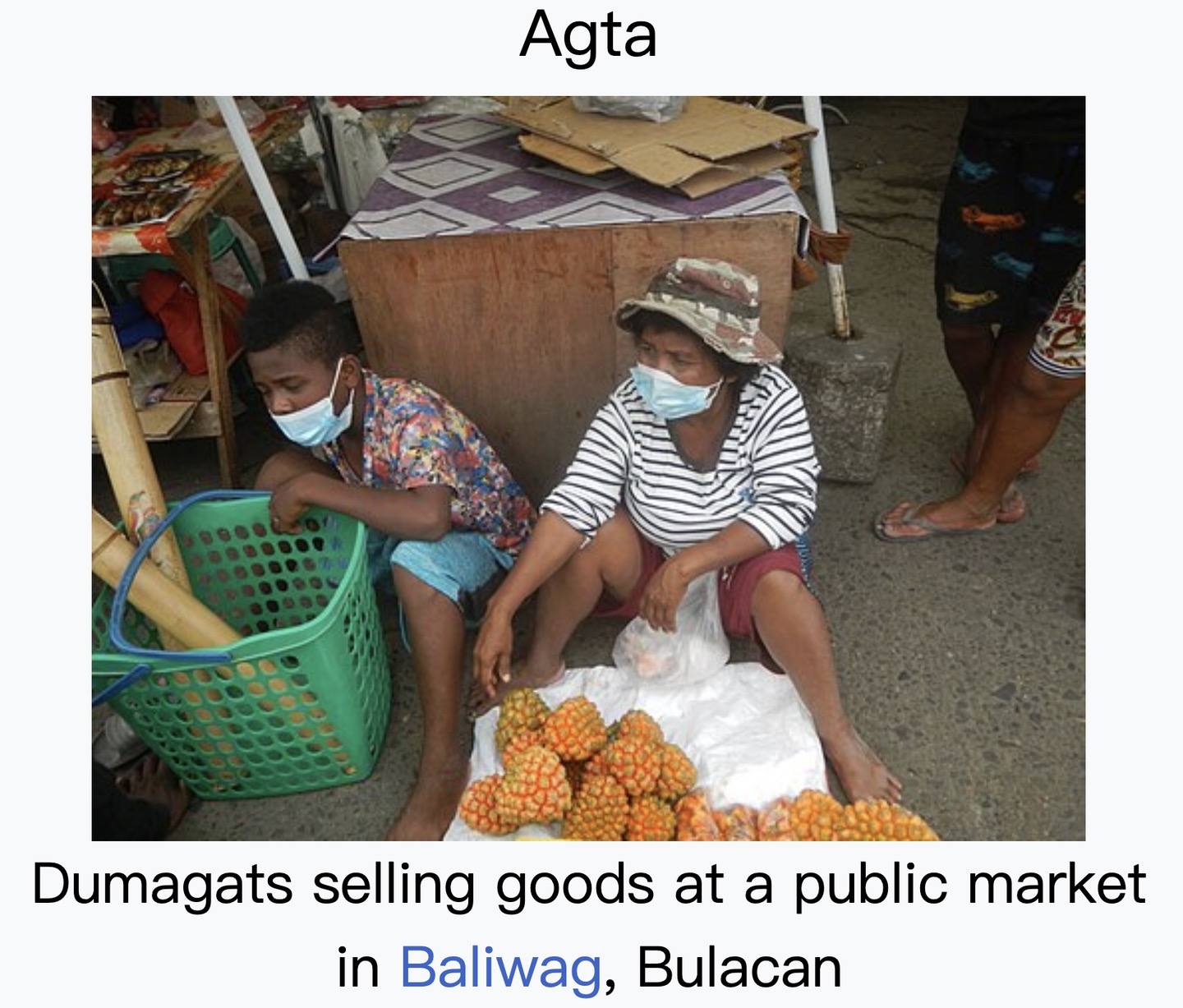
Dumagat People
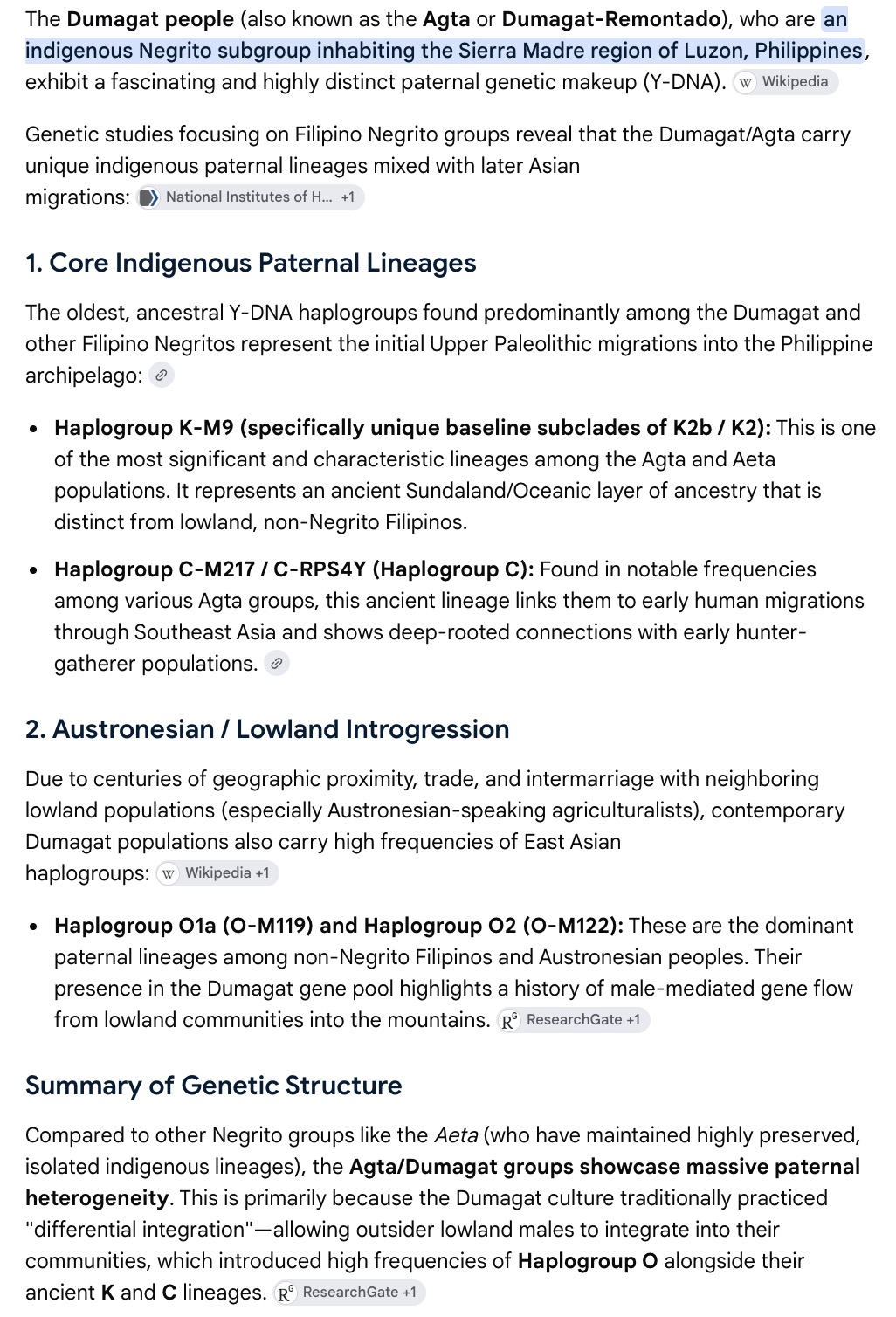
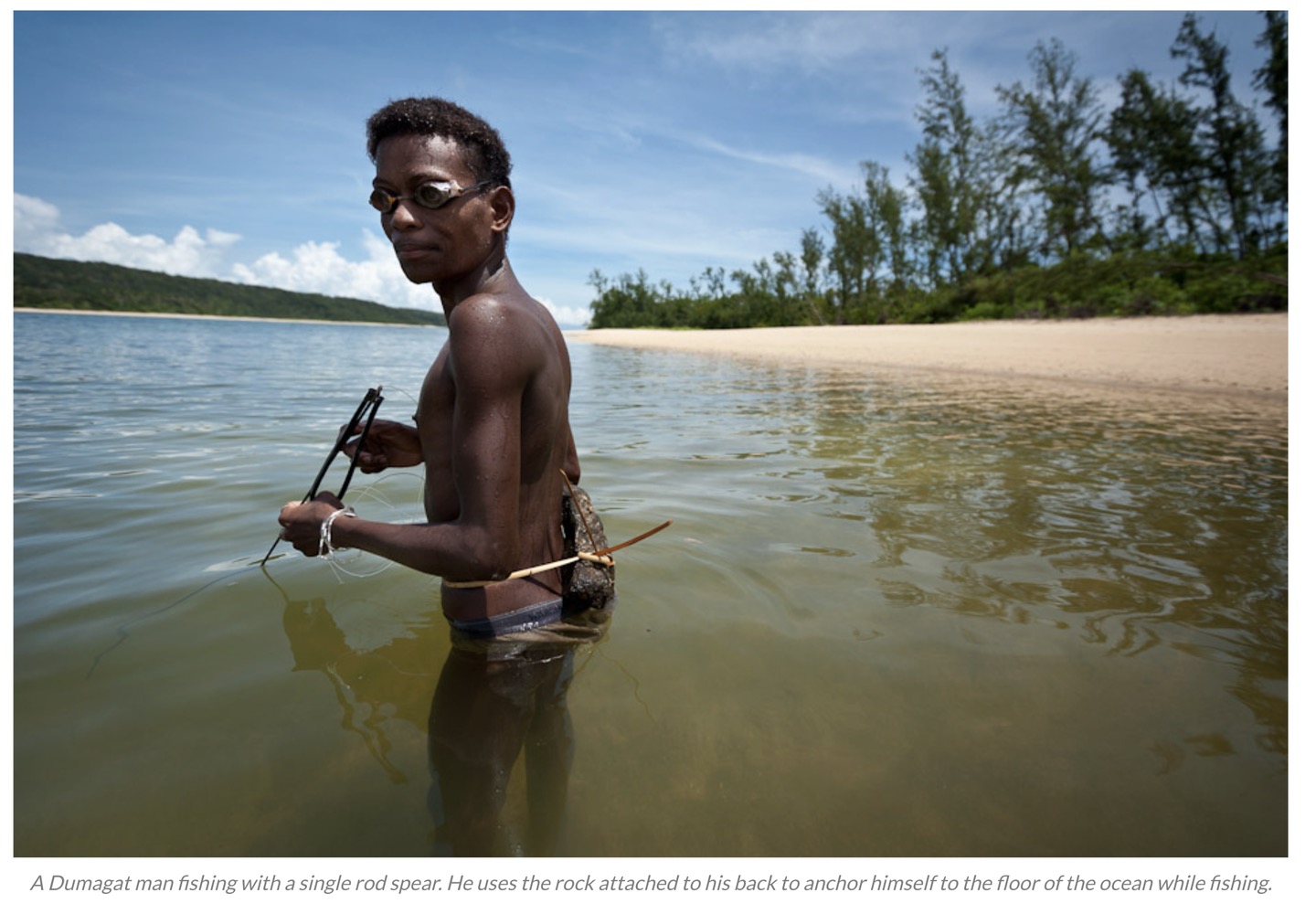
The Dumagat live mainly in and along the Pacific side of the Sierra Madre in eastern and southeastern Luzon, concentrated in Aurora, Quezon, Rizal, Bulacan, and Nueva Ecija. Like “Aeta” and “Agta,” “Dumagat” actually denotes a collection of populations; because they are less widely known than the Aeta and space is limited, I discuss them together here.
Paternal lineages: I found no direct data. Indirect results returned by browser searches suggest mainly K‑M9, O‑M175, and C‑M217.
By the same principle, the Dumagat are pure paternal F, G, I, J, H, K, L, T, R, Q, O, N, M, and S, since all belong to the major F‑M89 branch.
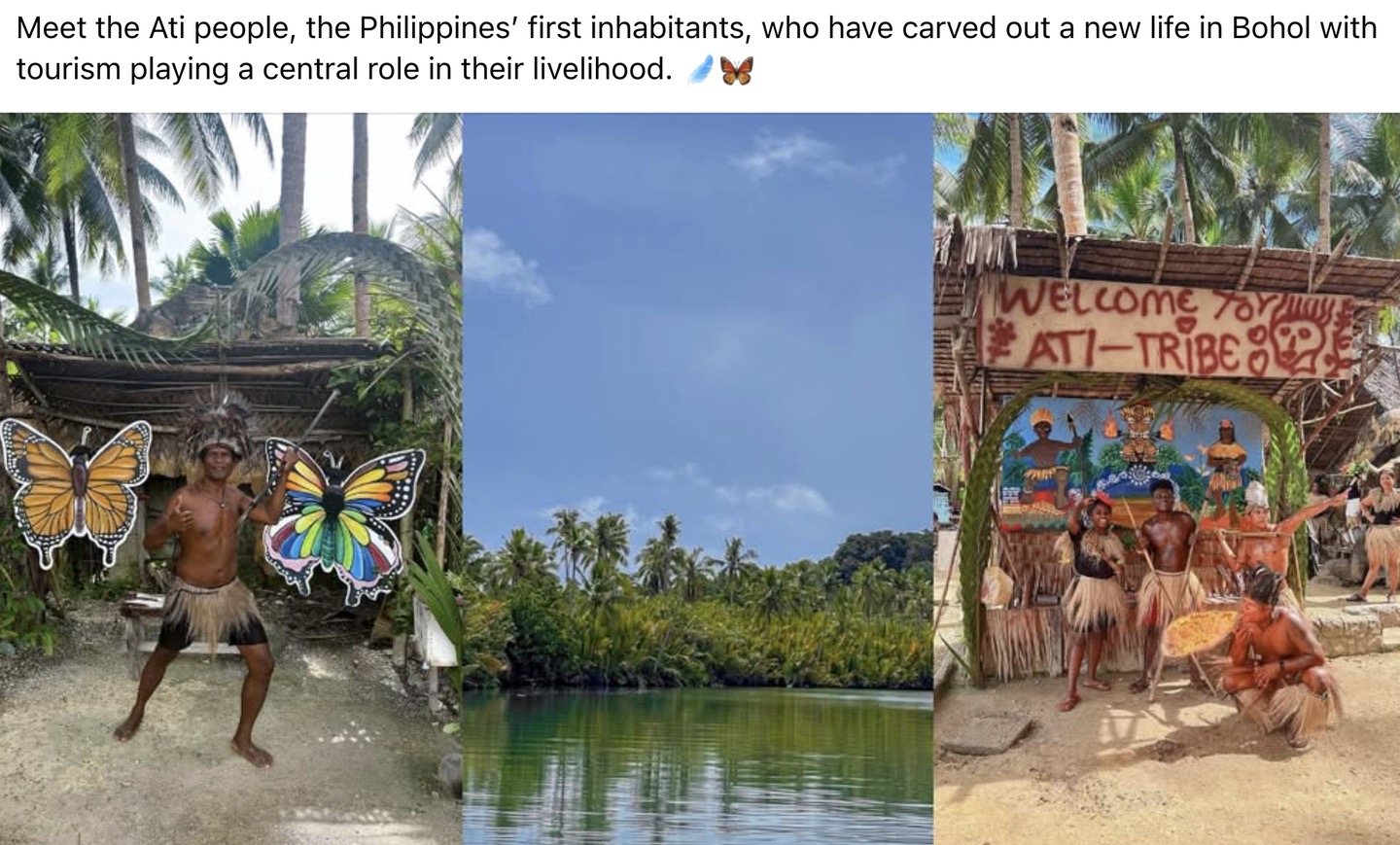
Ati People
The Ati live mainly in the Visayas of the central Philippines, especially on Panay, Boracay, and Negros.
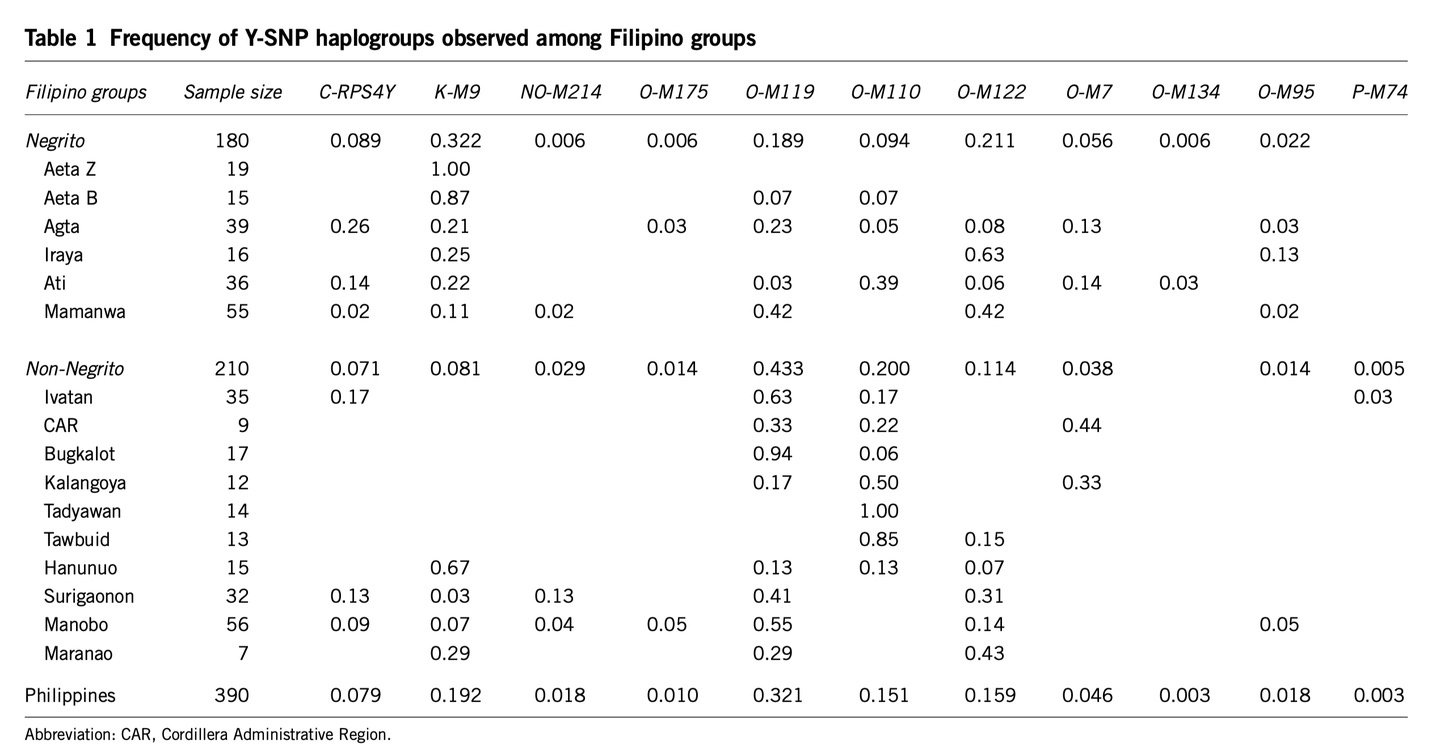
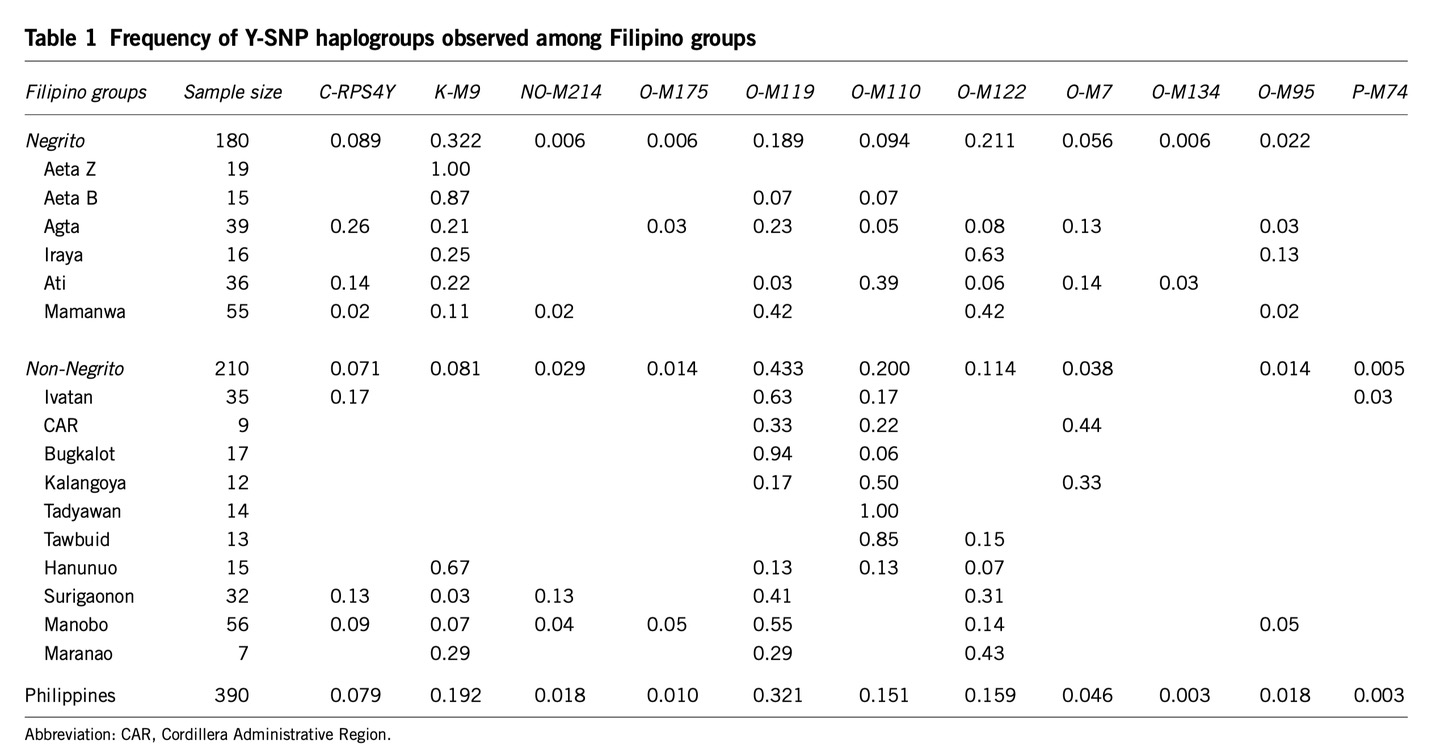
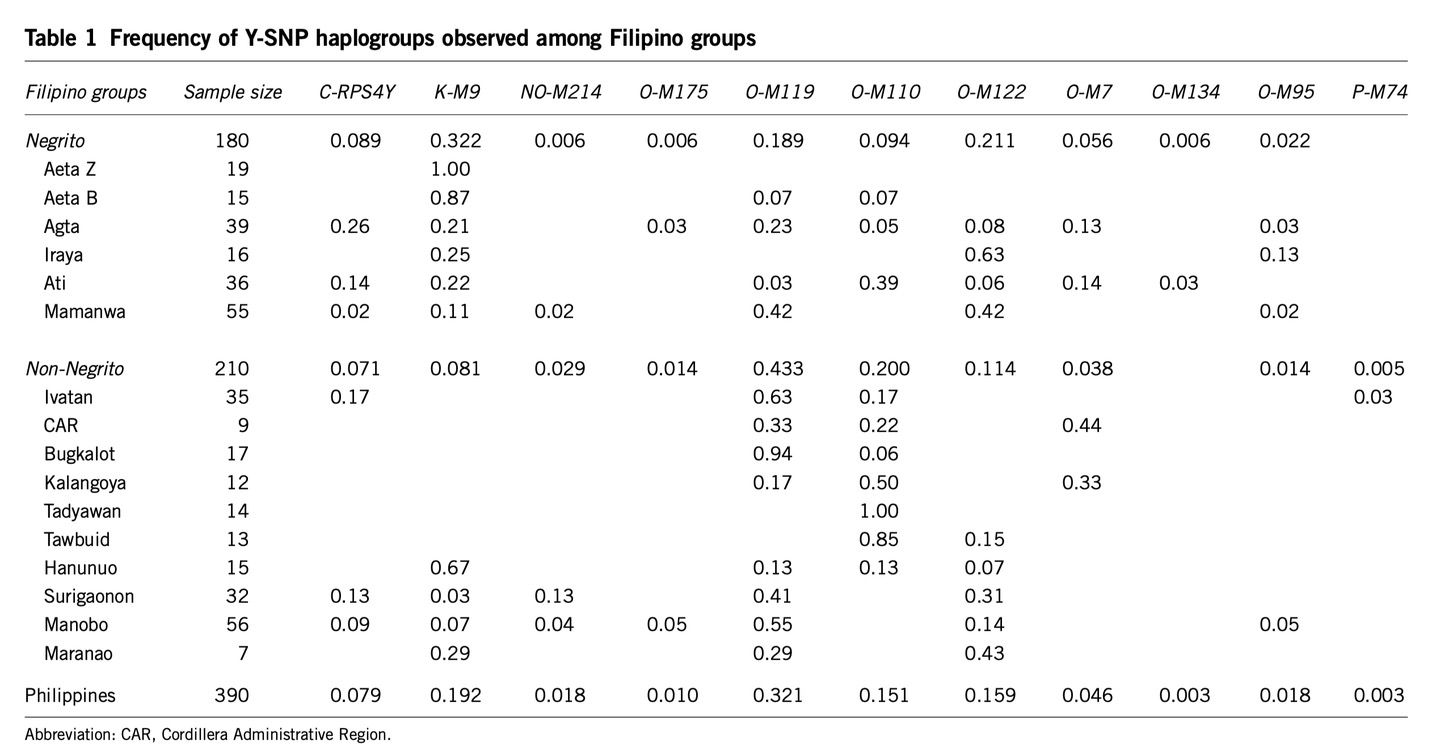
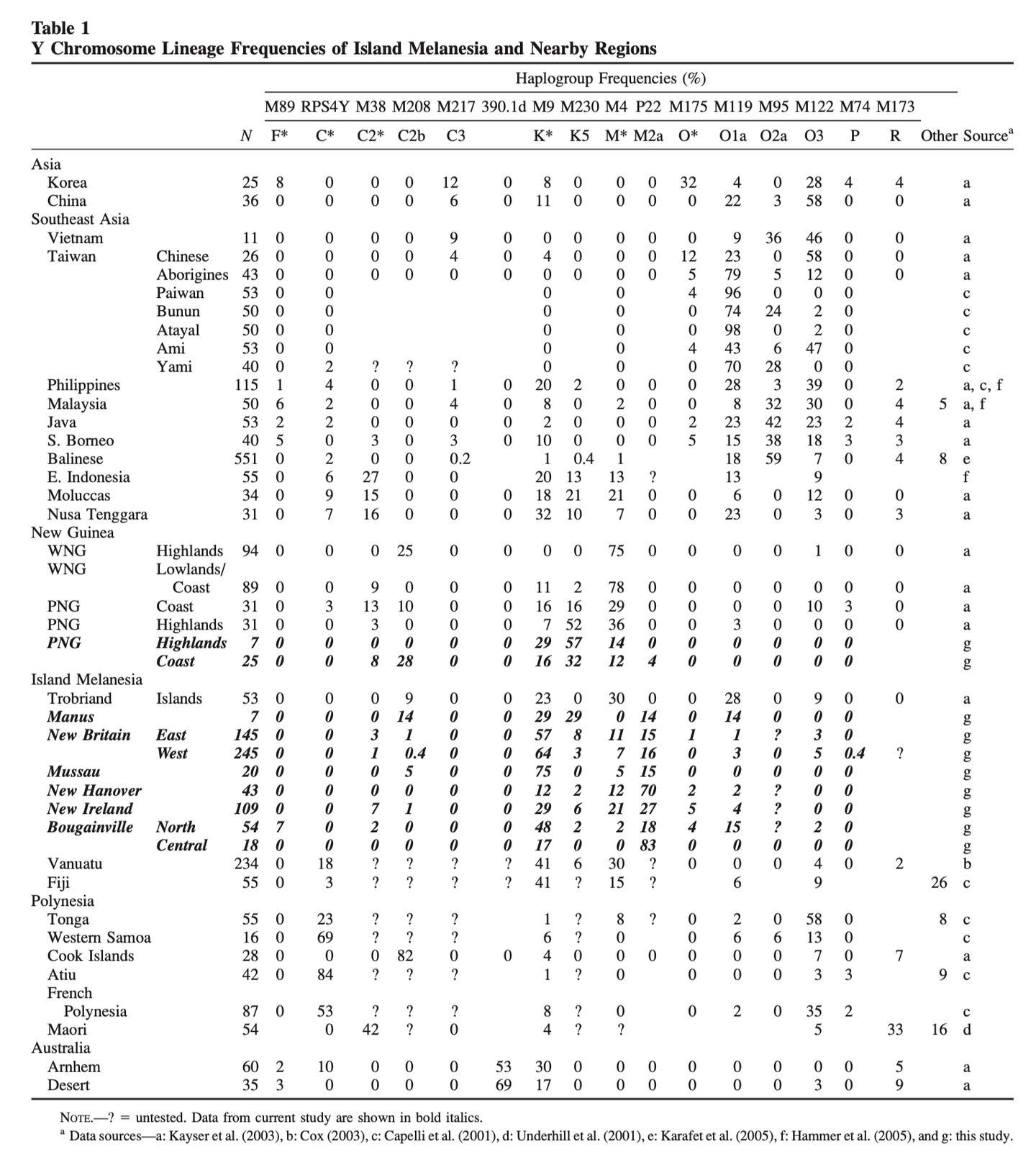
Paternal lineages: Direct data report 14% C‑RPS4Y (M130), 22% K‑M9, 3% O‑M119, 39% O‑M110, 6% O‑M122, 14% O‑M7, and 3% O‑M134.
By the same principle, the Ati are pure paternal F, G, I, J, H, K, L, T, R, Q, O, N, M, S, and C, since all belong to the major CF‑P143 branch.

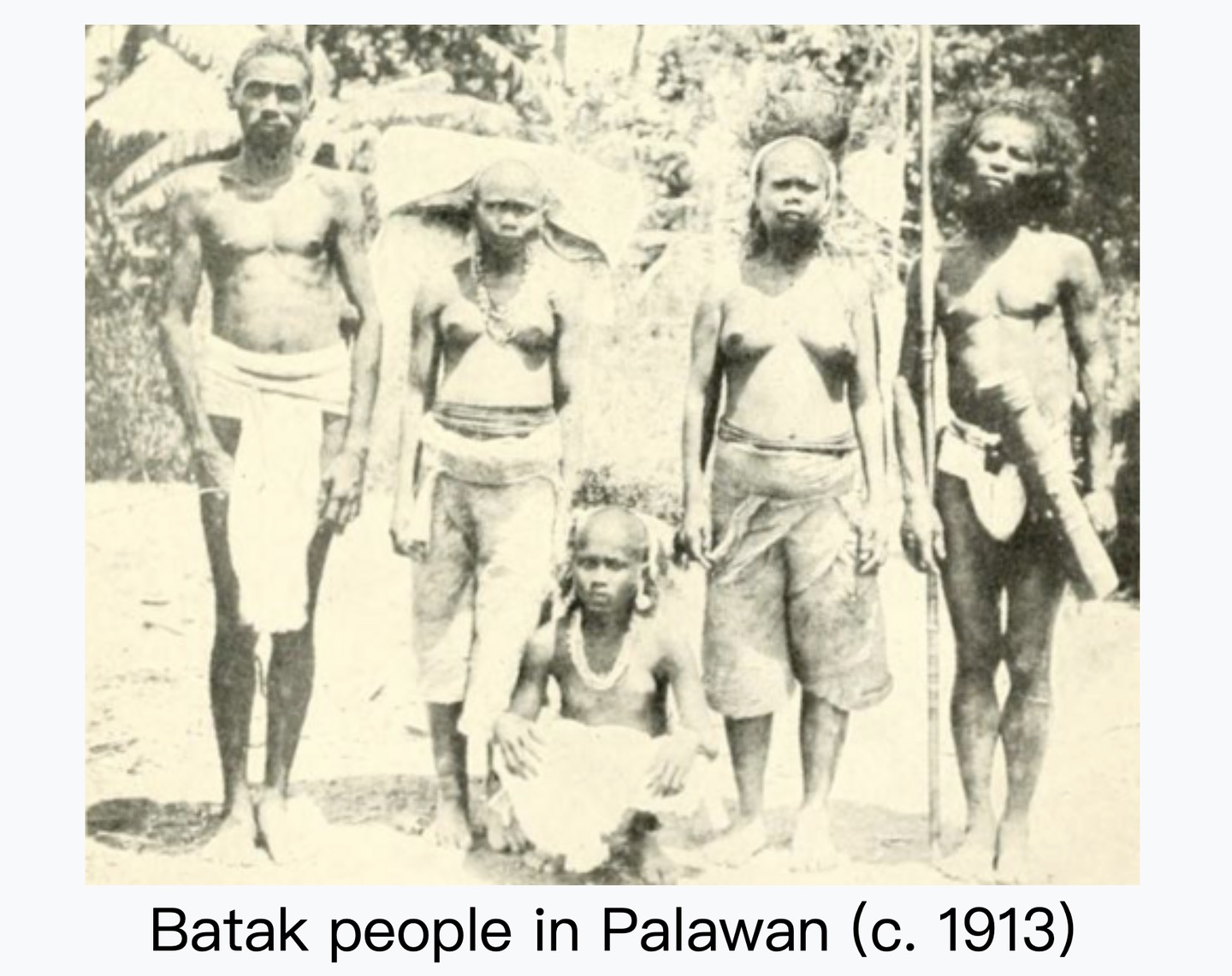
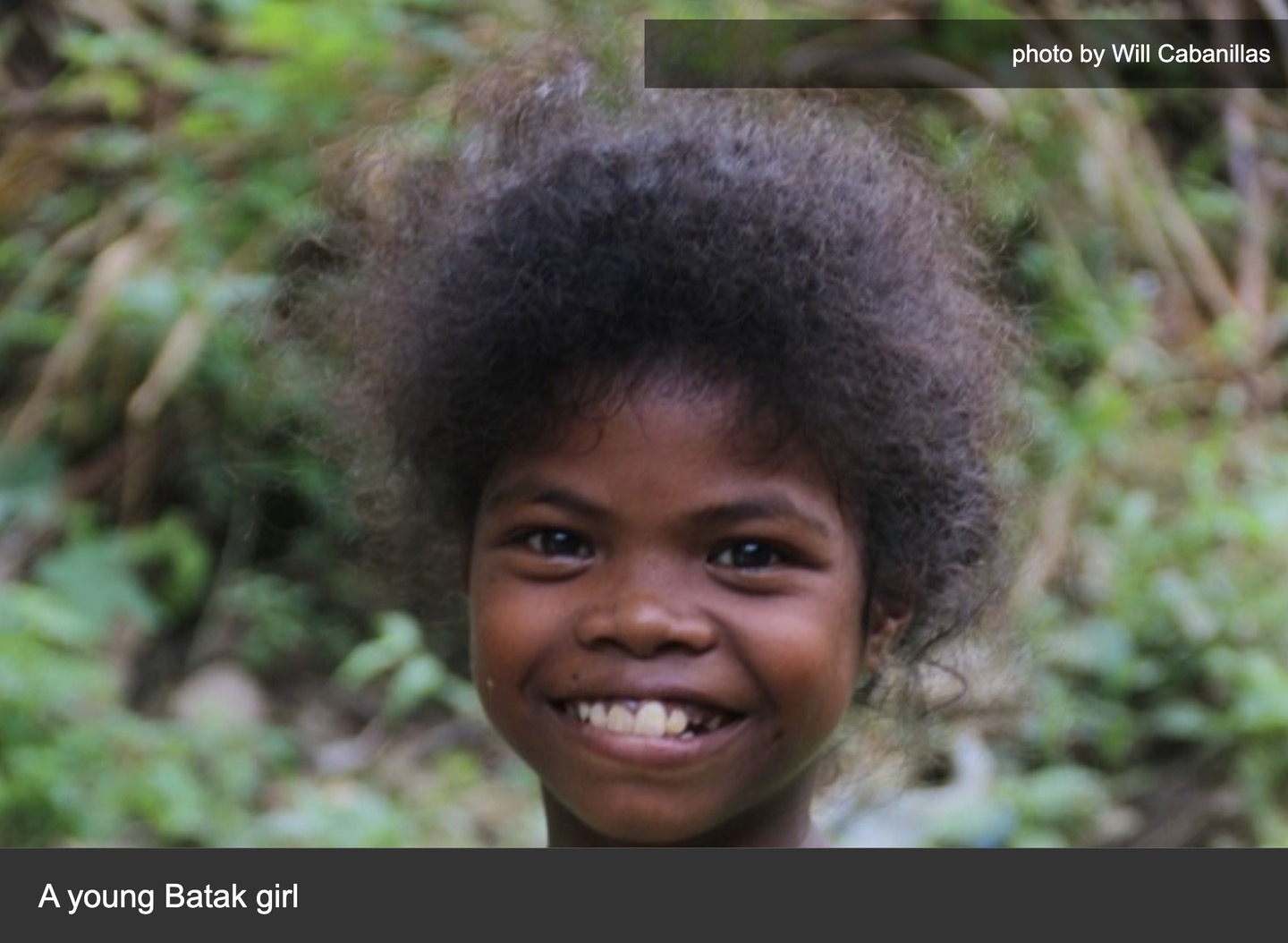
Batak People
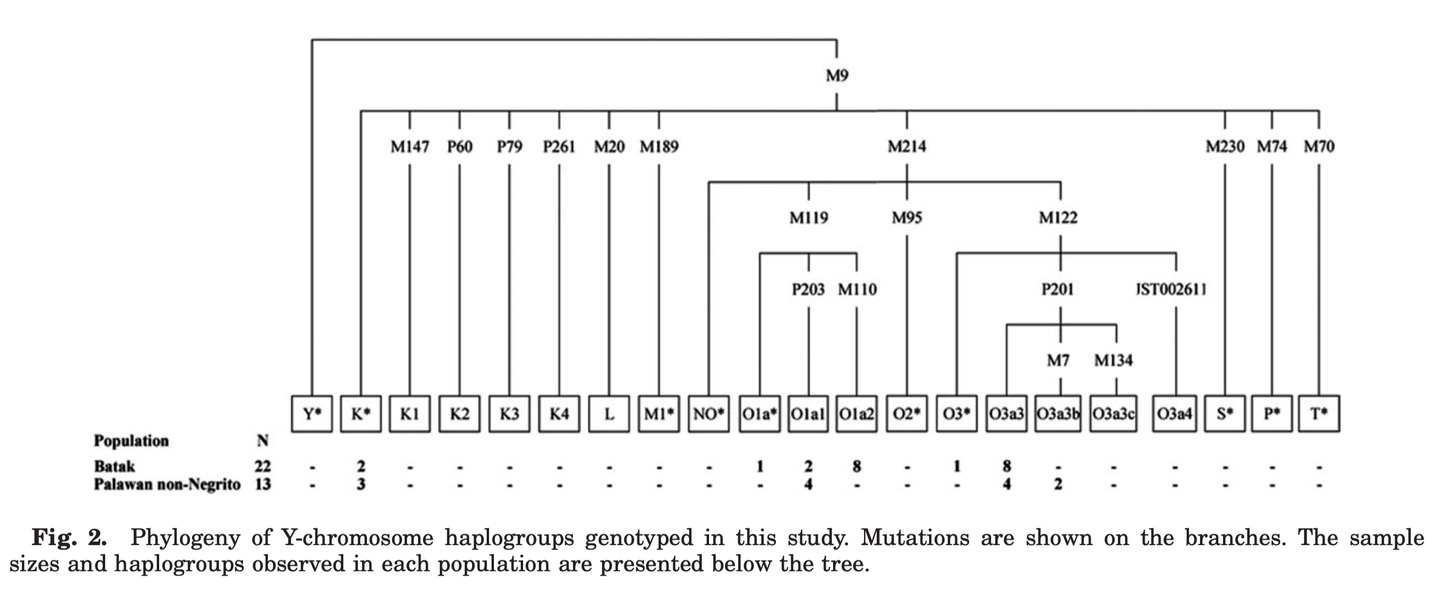
The Batak live mainly in the north-central part of Palawan in the western Philippines, especially in the mountains and river valleys north of Puerto Princesa. They are usually called the Palawan Batak.
Paternal lineages: Direct data report low-frequency K‑M9* together with high-frequency O‑M119 and O‑M122.
By the same principle, the Batak are pure paternal F, G, I, J, H, K, L, T, R, Q, O, N, M, and S, since all belong to the major F‑M89 branch.
Mamanwa People
The Mamanwa live primarily in northeastern Mindanao, with their greatest concentrations in Surigao del Norte, Surigao del Sur, and Agusan del Norte, particularly around Lake Mainit.
Paternal lineages: Direct data report 2% C‑RPS4Y (M130), 11% K‑M9, 2% NO‑M214, 42% O‑M119, 42% O‑M122, and 2% O‑M95.
By the same principle, the Mamanwa are pure paternal F, G, I, J, H, K, L, T, R, Q, O, N, M, and S, since all belong to the major F‑M89 branch.
Arta People
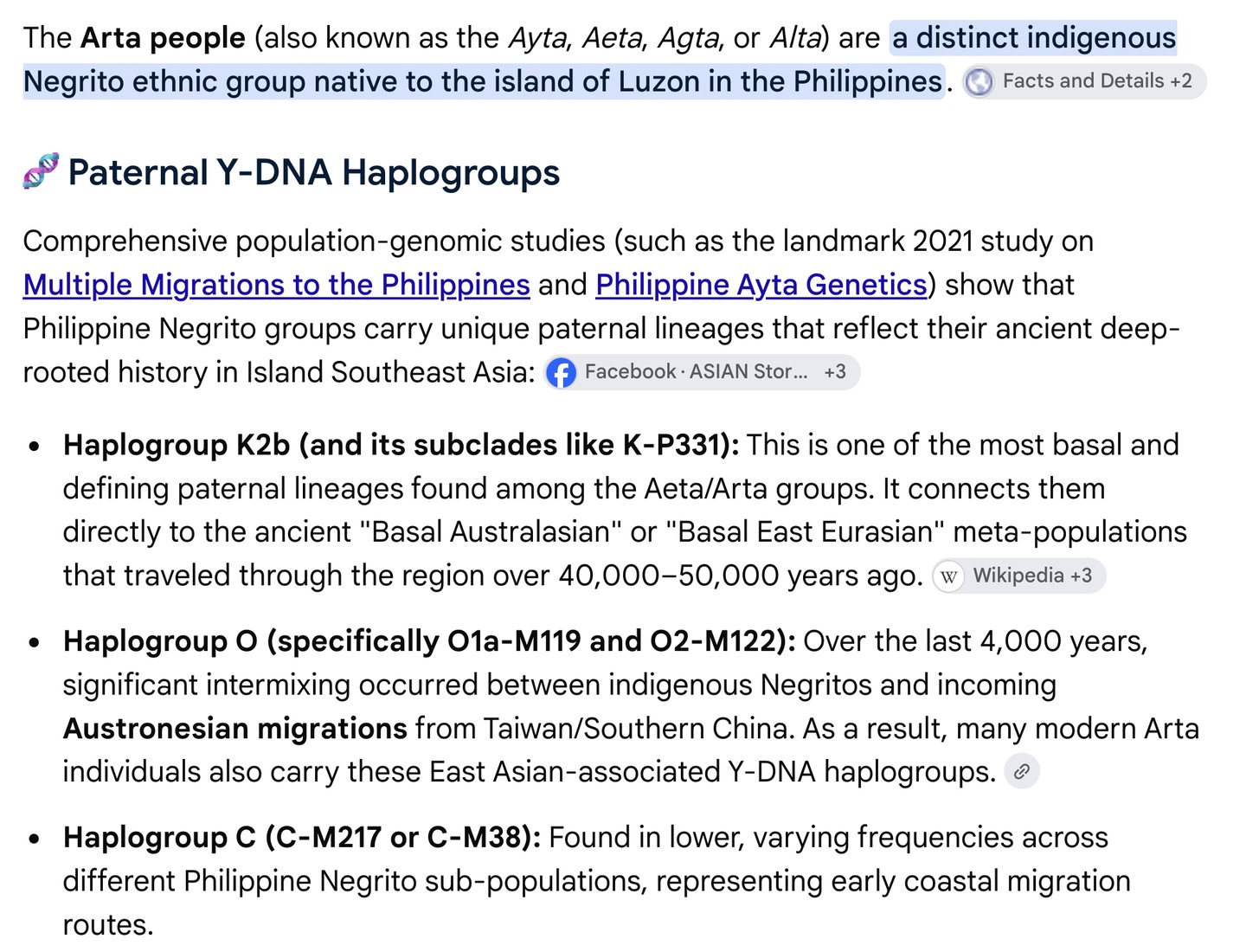
The Arta live principally in Quirino Province in northeastern Luzon and today are especially concentrated around Nagtipunan.
Paternal lineages: I found no direct data. Indirect browser results suggest mainly O‑M175, K‑M9, and C‑M217, broadly consistent with the data for other Negrito populations of Luzon—which is unsurprising given their shared geographic setting.
By the same principle, the Arta are pure paternal F, G, I, J, H, K, L, T, R, Q, O, N, M, S, and C, since all belong to the major CF‑P143 branch.
Atta People
The Atta live chiefly in the Cagayan Valley and neighbouring mountains at the northern end of Luzon, especially in Cagayan Province and around Apayao. They can be further divided into local groups such as the Faire-Rizal Atta, Pamplona Atta, and Pudtol Atta.
Paternal lineages: I found no direct data. On the basis of the preceding material, the principal lineages are probably again K‑M9, O‑M175, and C‑M217.
By the same principle, the Atta are pure paternal F, G, I, J, H, K, L, T, R, Q, O, N, M, and S, since all belong to the major F‑M89 branch.
II. The Andaman Islands
The Negrito populations of the Andaman Islands are principally divided between two language families. The first is Great Andamanese, which accounted for most of the population before British colonization in the eighteenth century. Ten tribes are known, most of which are now extinct. The second is Ongan, historically distributed around the southern Andamans and Little Andaman. Four tribes are known. Compared with Great Andamanese peoples, they had less contact with British colonists; with the exception of the extinct Jangil, each retains some population today, and more modern photographic material is available.
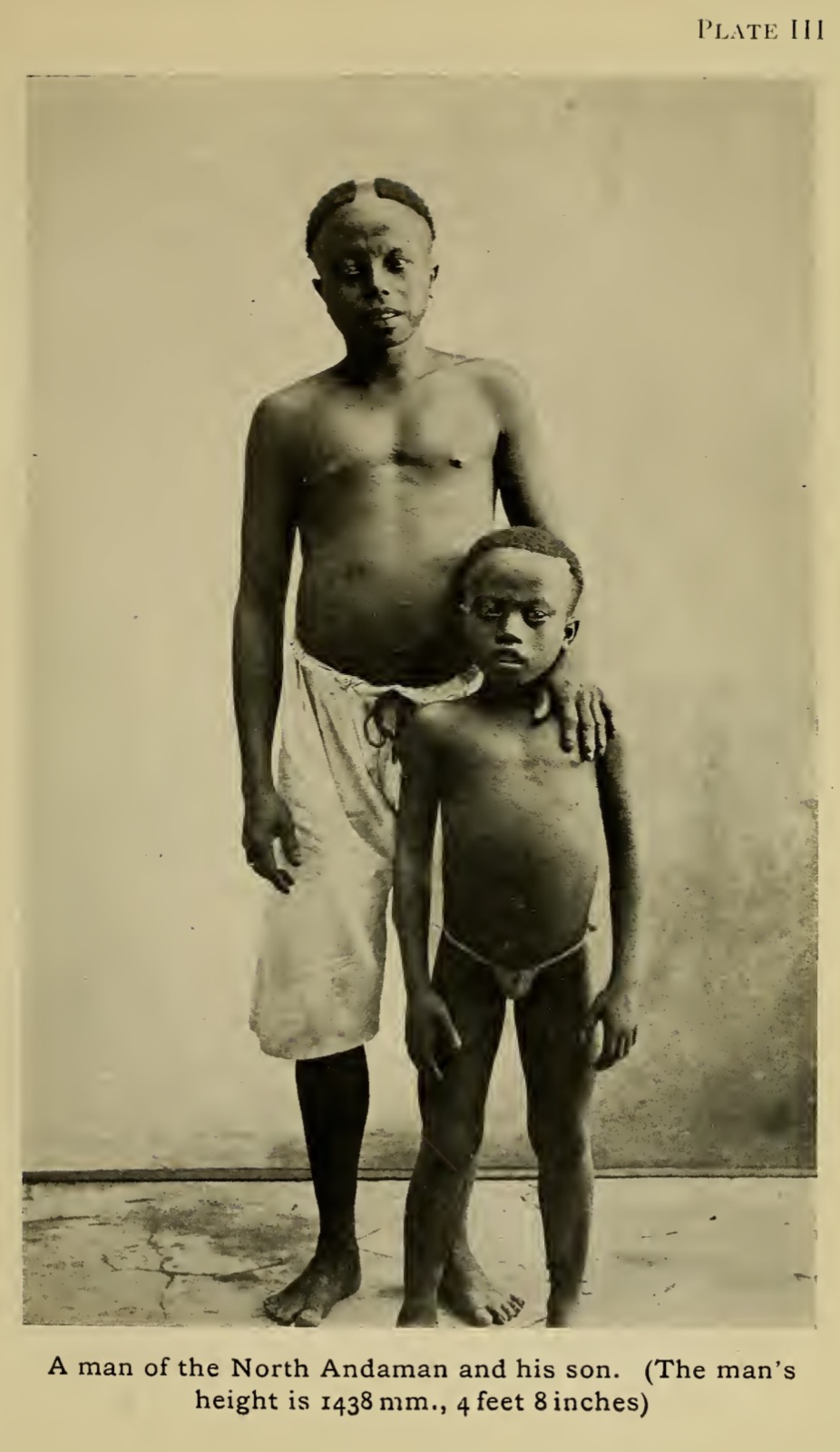
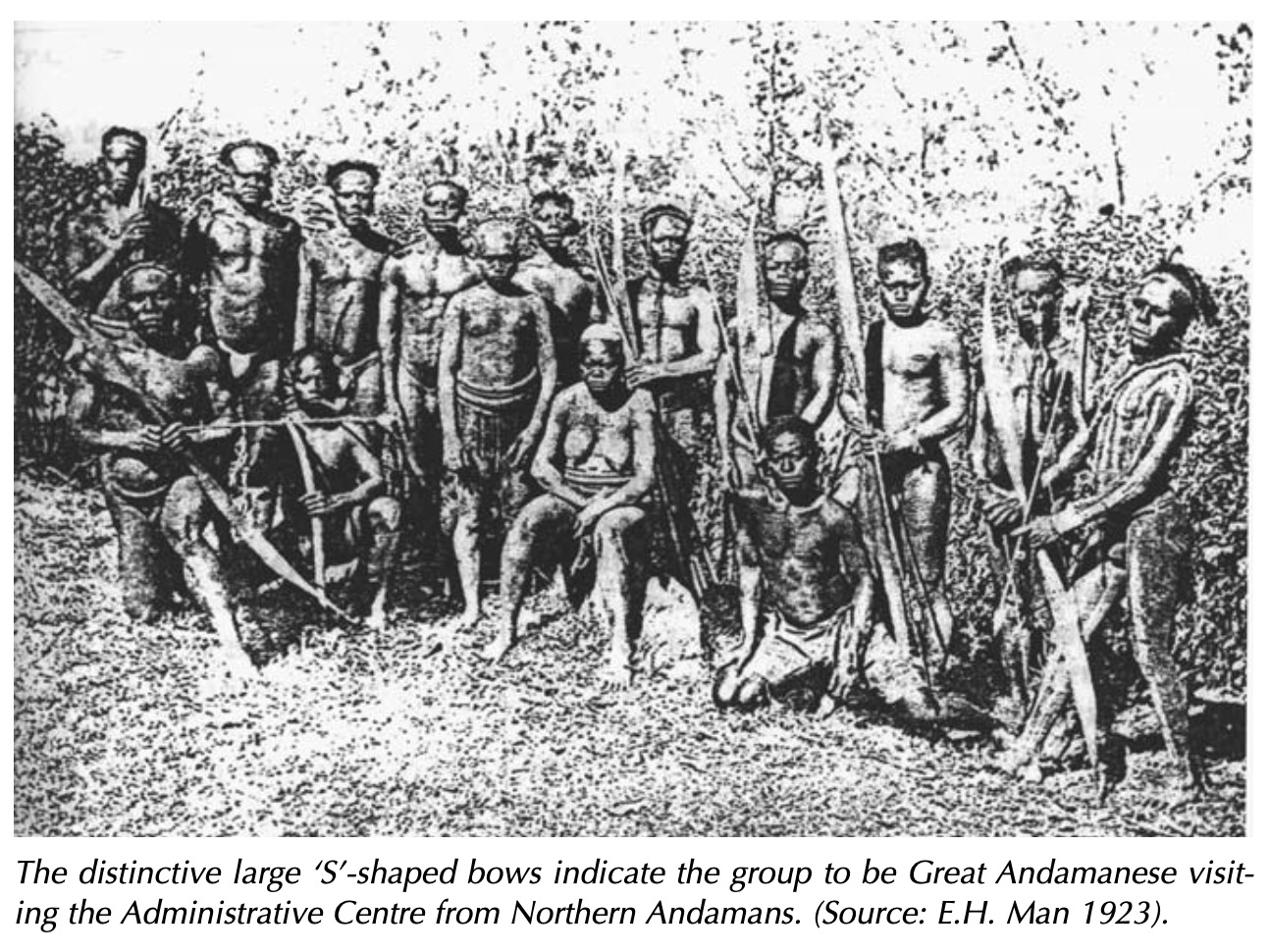
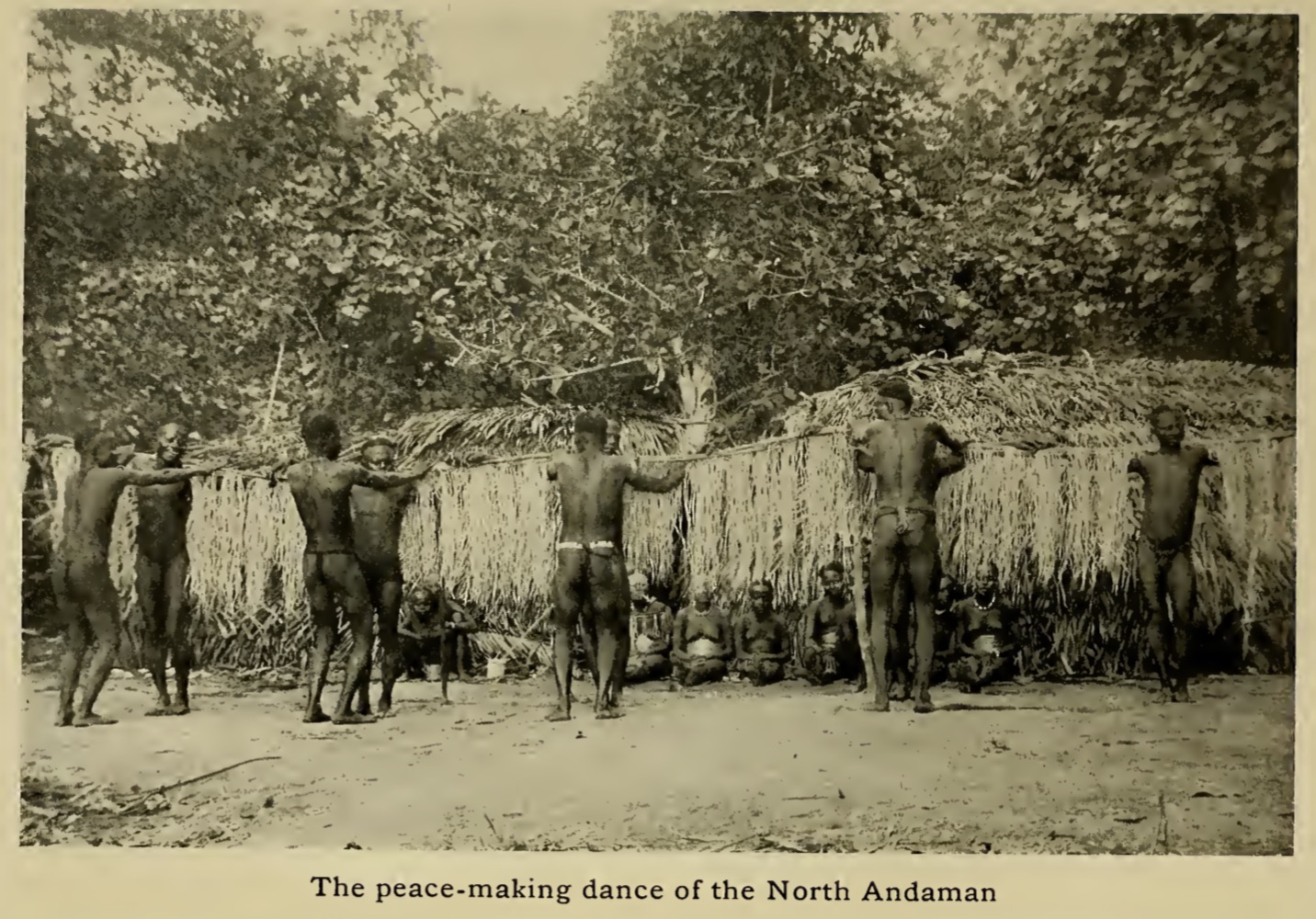
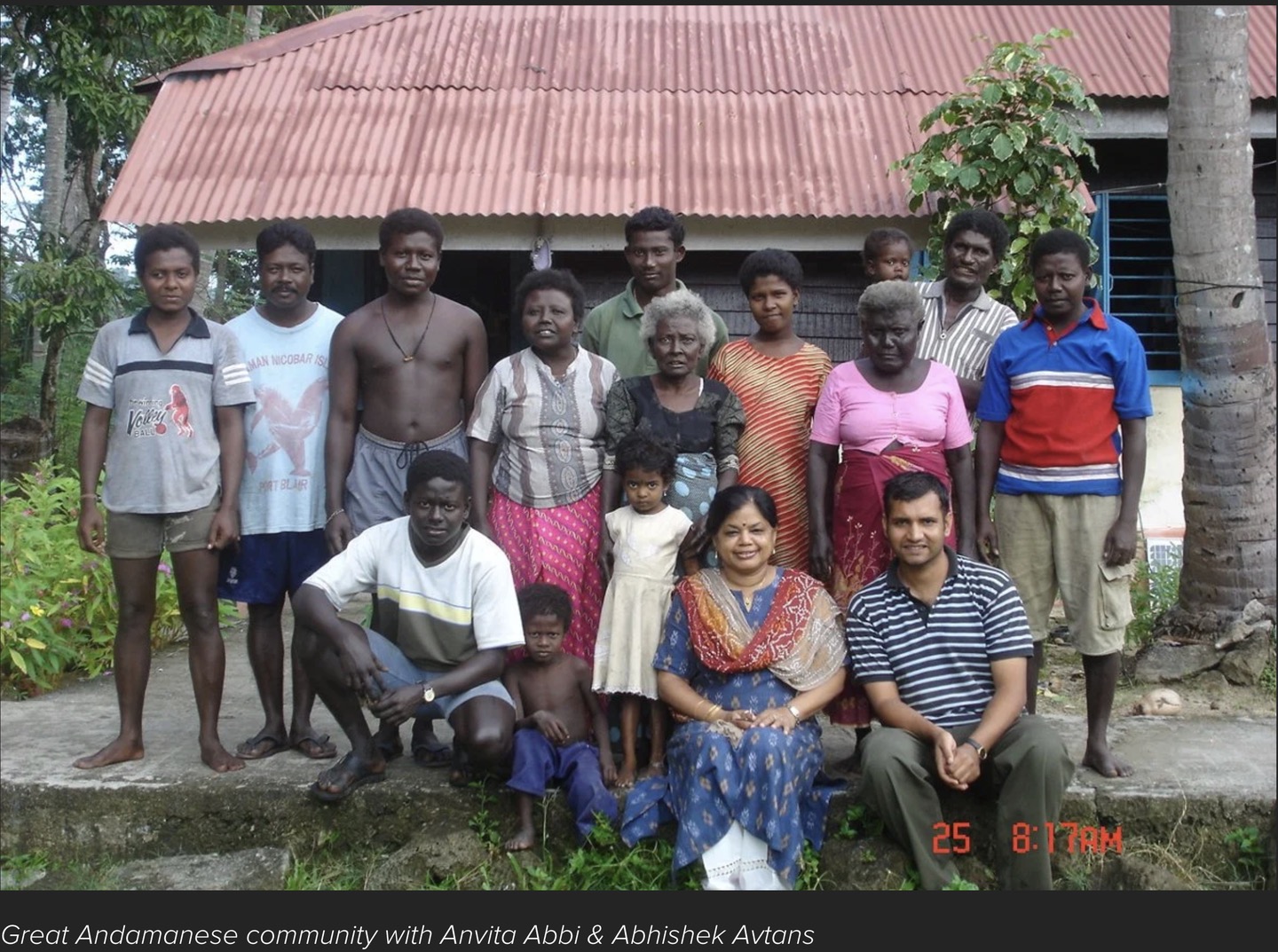
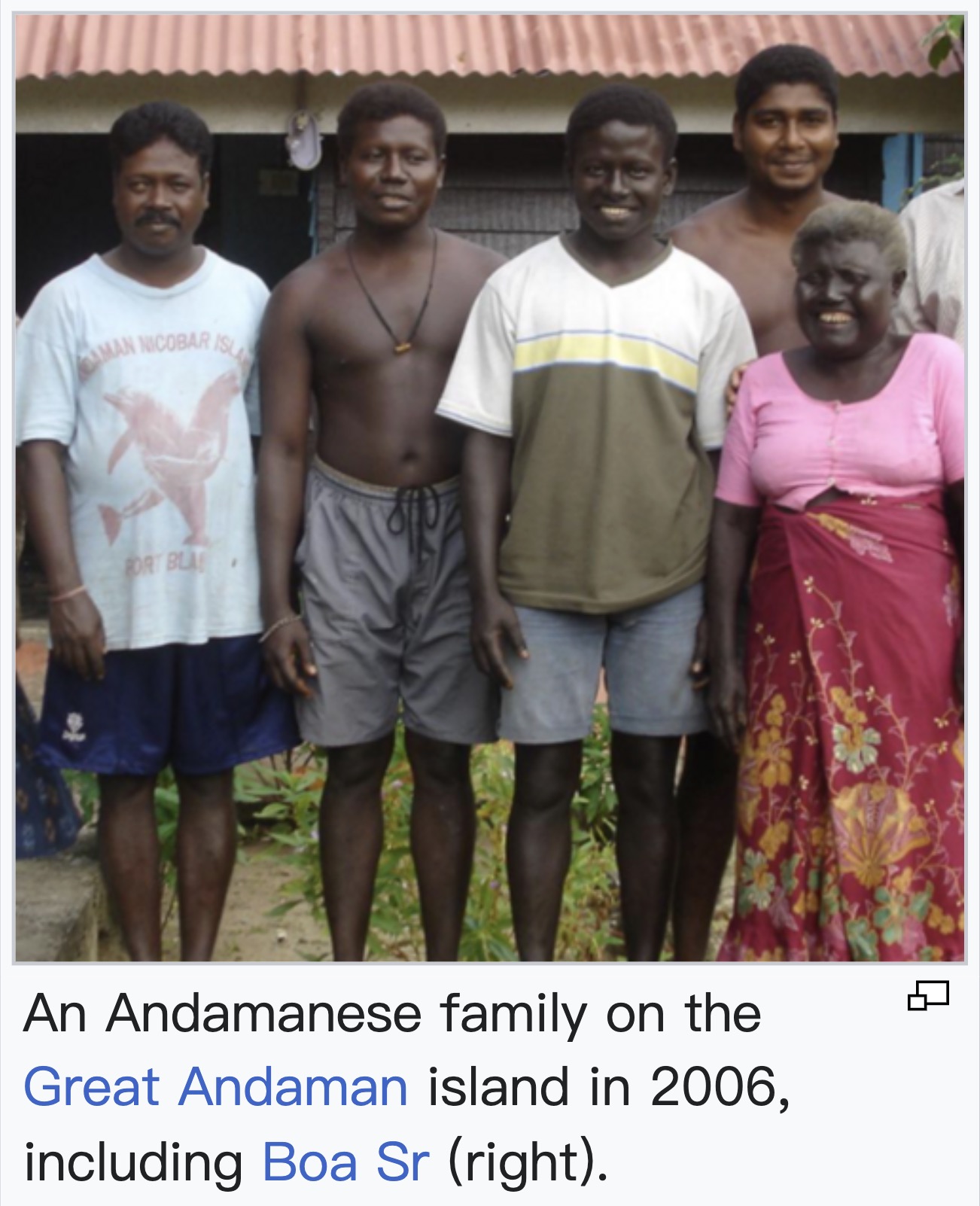
Because many Great Andamanese tribes became extinct, modern research usually combines their descendants under the collective name “Great Andamanese.” It is important to remember that this category represents what were formerly numerous distinct tribes. Consequently, few modern portrait photographs can be assigned to a specific Great Andamanese tribe; most are captioned only as “North Andamanese” or “Great Andamanese.” In the images below, I have tried wherever possible to use photographs explicitly identified by tribe or at least differentiated between northern and southern Andamanese populations.
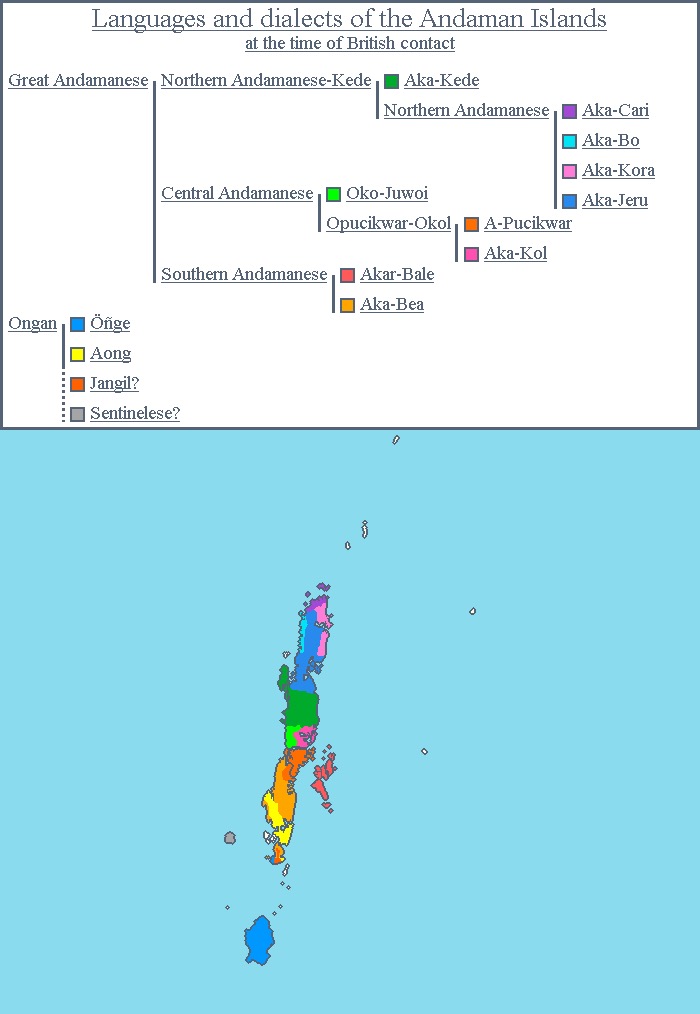
Great Andamanese
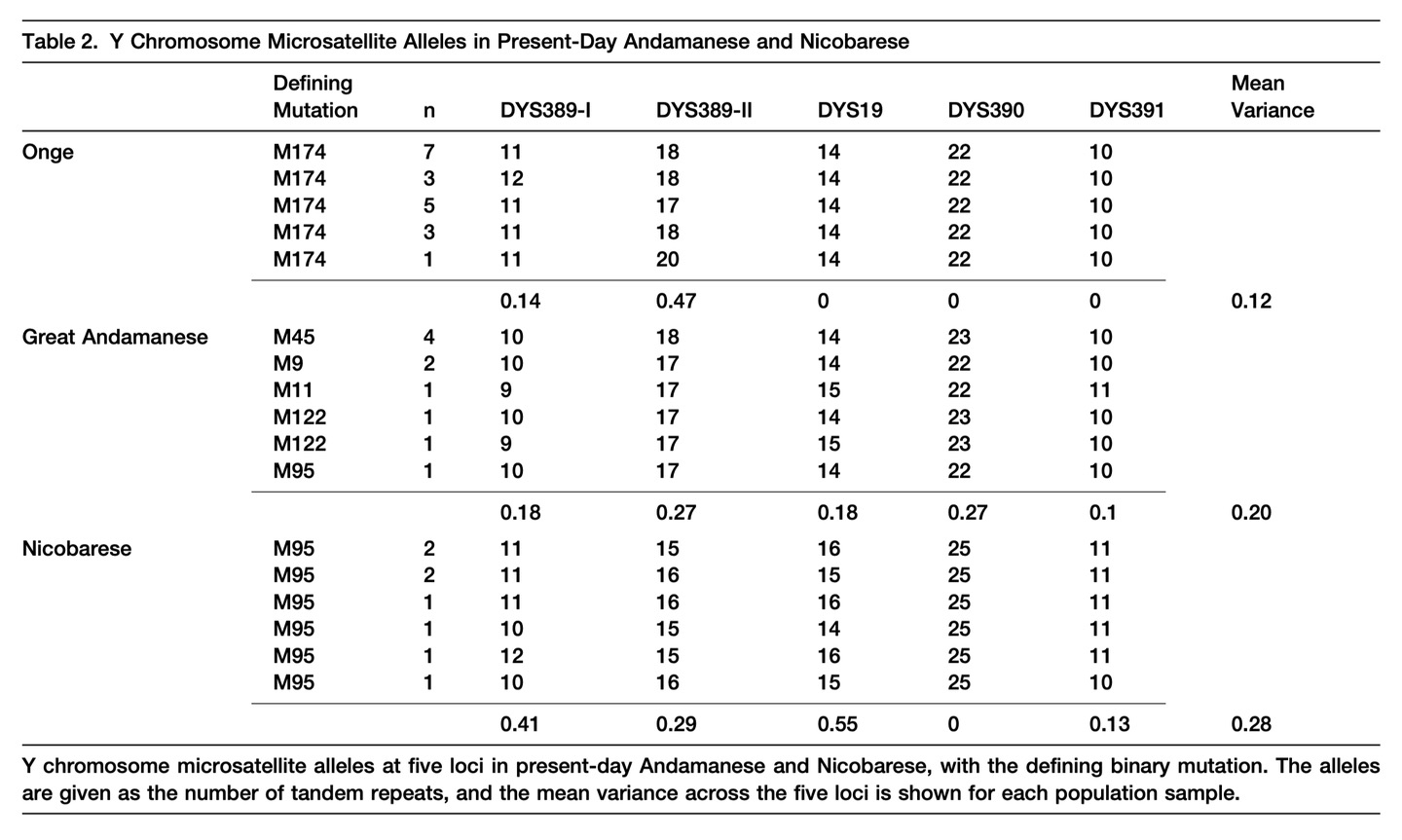
No Great Andamanese tribe has yet received a tribe-specific survey of paternal haplogroups. Existing genetic tests of a small number of descendants drawn collectively from several Great Andamanese tribes report paternal P‑M45, K‑M9, L‑M20, O‑M122, and O‑M95, all downstream of F‑M89. (Recent literature generally uses L‑M20 in place of L‑M11, so I use L‑M20 here.) The Great Andamanese paternal lineages within F‑M89 share a common ancestor about 40,000 years ago, using the coalescence age of K1 and K2 as a reference.
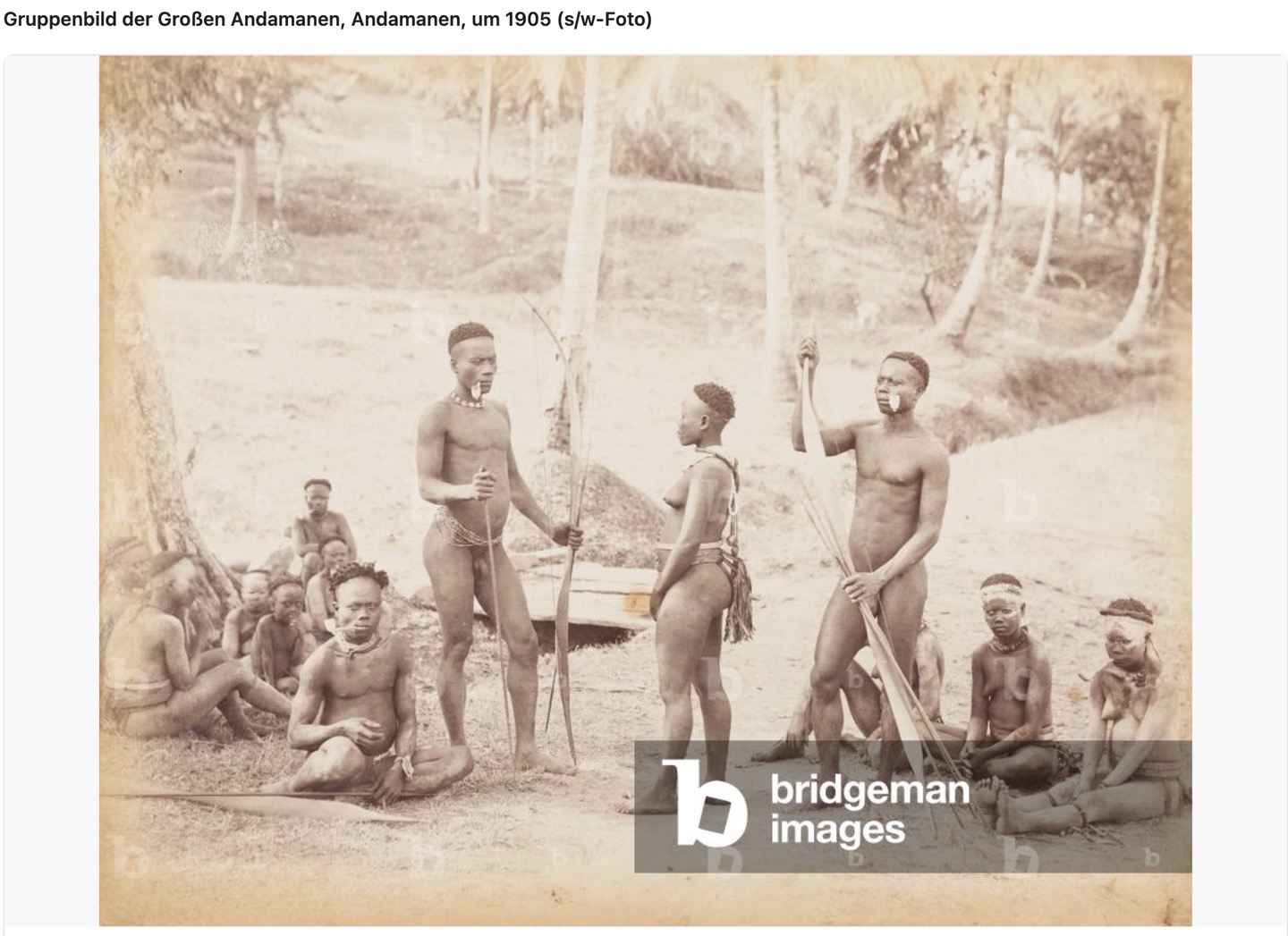
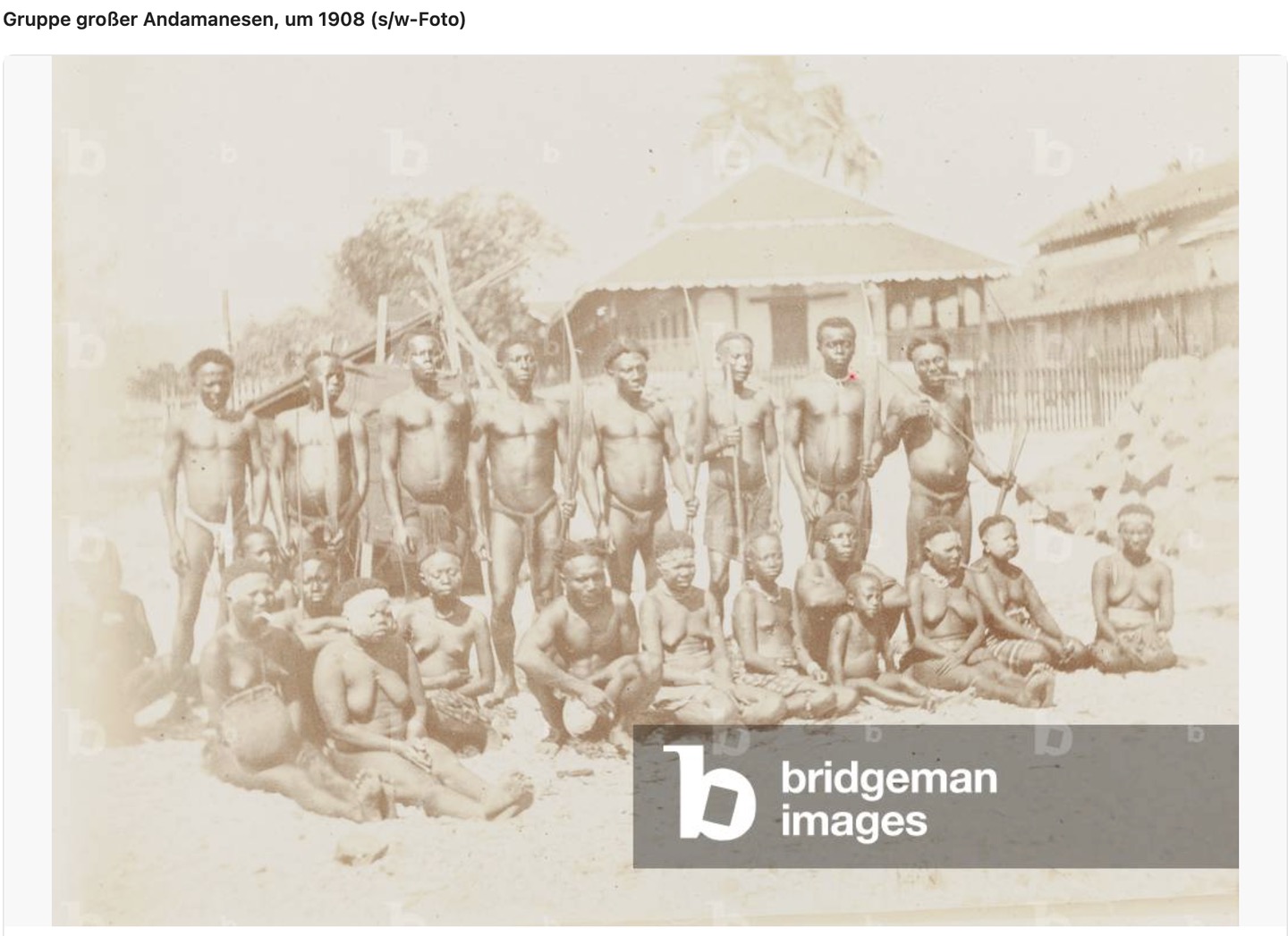
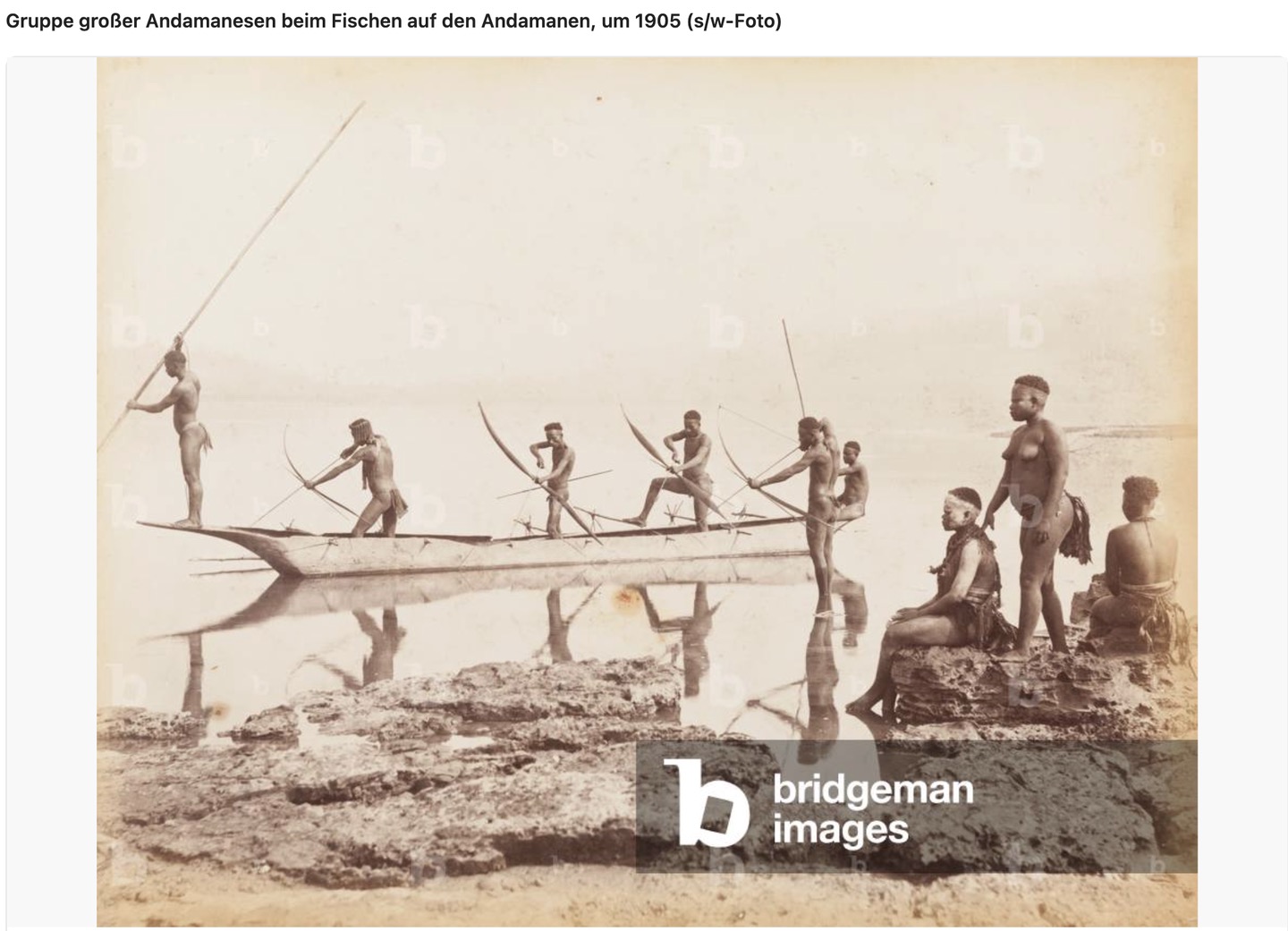
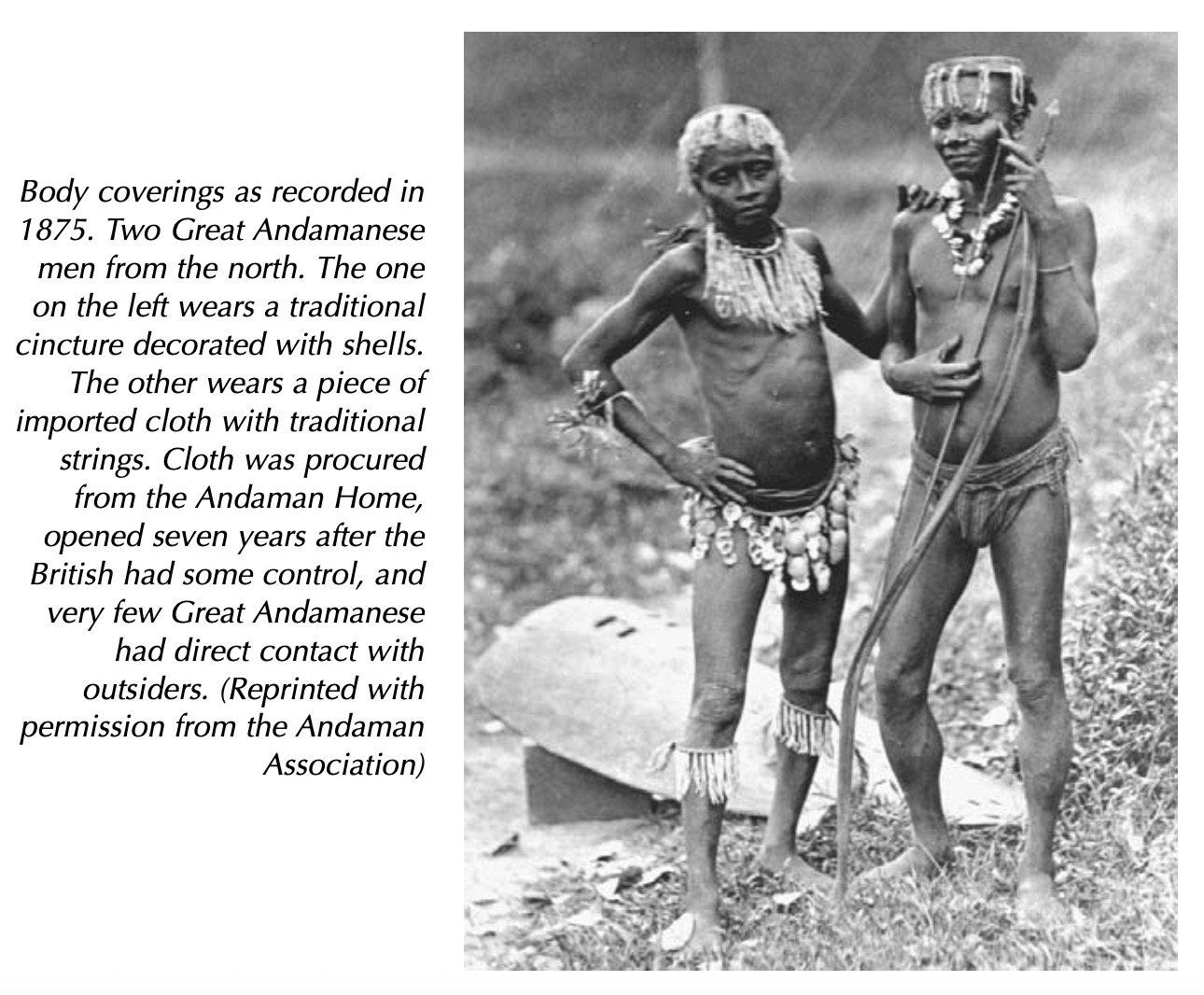
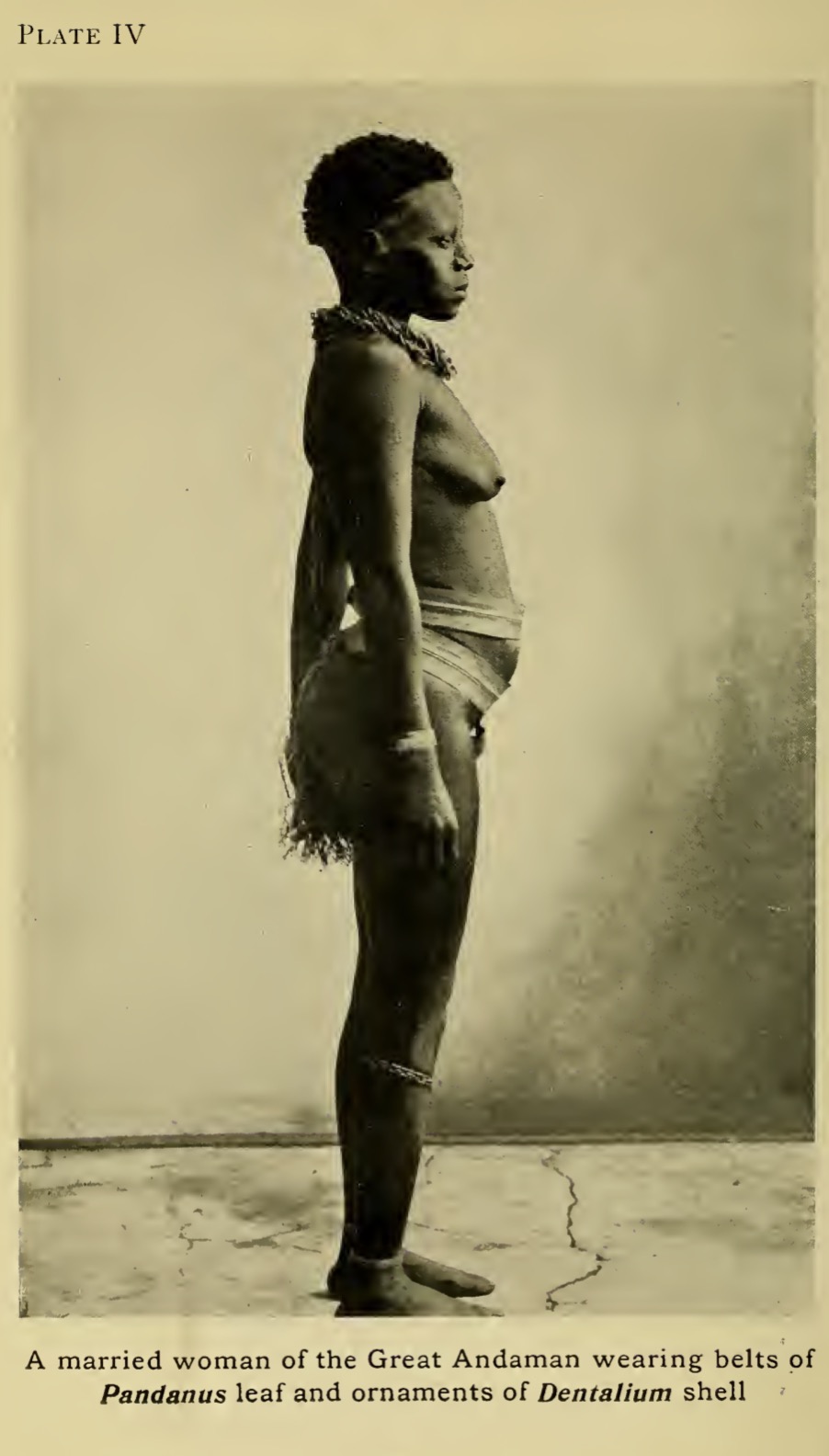
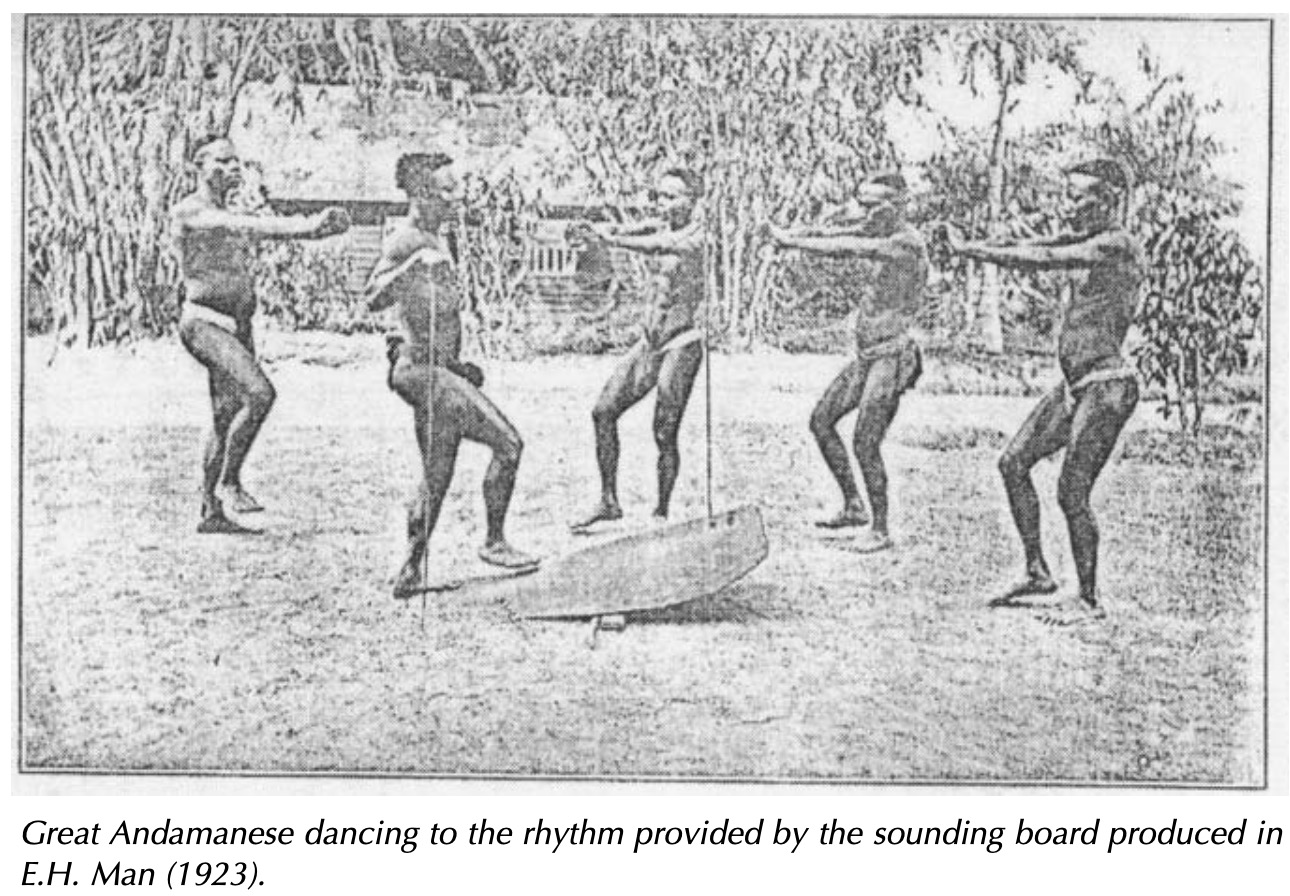
Great Andamanese Tribes
Aka-Cari People
Also known as Aka-Kari, this Great Andamanese tribe lived in the northern Andaman Islands. Approximately two people were recorded in 1994.
Paternal lineages: No specific data are available. Tests of surviving Great Andamanese descendants suggest possible P‑M45, K‑M9, L‑M20, O‑M122, and O‑M95 downstream of F‑M89.
By the same principle, the Aka-Cari are pure paternal F, G, I, J, H, K, L, T, R, Q, O, N, M, and S, since all belong to the major F‑M89 branch.
Aka-Cora People
Also known as Aka-Kora, this Great Andamanese tribe inhabited the eastern Andaman Islands and was recorded as extinct by 1994.
Paternal lineages: No specific data are available. Tests of surviving Great Andamanese descendants suggest possible P‑M45, K‑M9, L‑M20, O‑M122, and O‑M95 downstream of F‑M89.
By the same principle, the Aka-Cora are pure paternal F, G, I, J, H, K, L, T, R, Q, O, N, M, and S, since all belong to the major F‑M89 branch.
Aka-Bo People
The Aka-Bo inhabited western North Andaman. Approximately fifteen people were recorded in 1994.
Paternal lineages: No specific data are available. Tests of surviving Great Andamanese descendants suggest possible P‑M45, K‑M9, L‑M20, O‑M122, and O‑M95 downstream of F‑M89.
By the same principle, the Aka-Bo are pure paternal F, G, I, J, H, K, L, T, R, Q, O, N, M, and S, since all belong to the major F‑M89 branch.
Aka-Jeru People
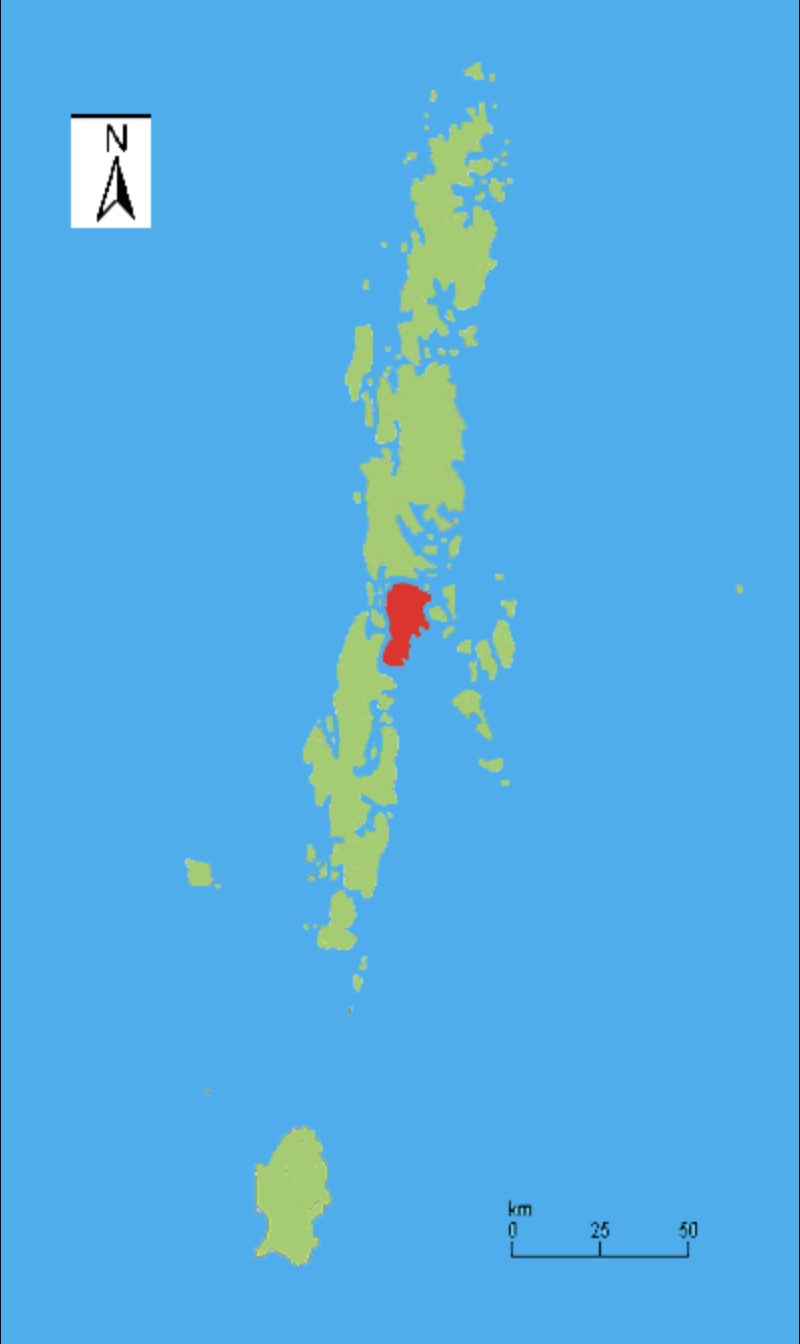
The Aka-Jeru inhabited the southern and central Andaman Islands. Approximately nineteen people were recorded in 1994.
Paternal lineages: No specific data are available. Tests of surviving Great Andamanese descendants suggest possible P‑M45, K‑M9, L‑M20, O‑M122, and O‑M95 downstream of F‑M89.
By the same principle, the Aka-Jeru are pure paternal F, G, I, J, H, K, L, T, R, Q, O, N, M, and S, since all belong to the major F‑M89 branch.
Aka-Kede People
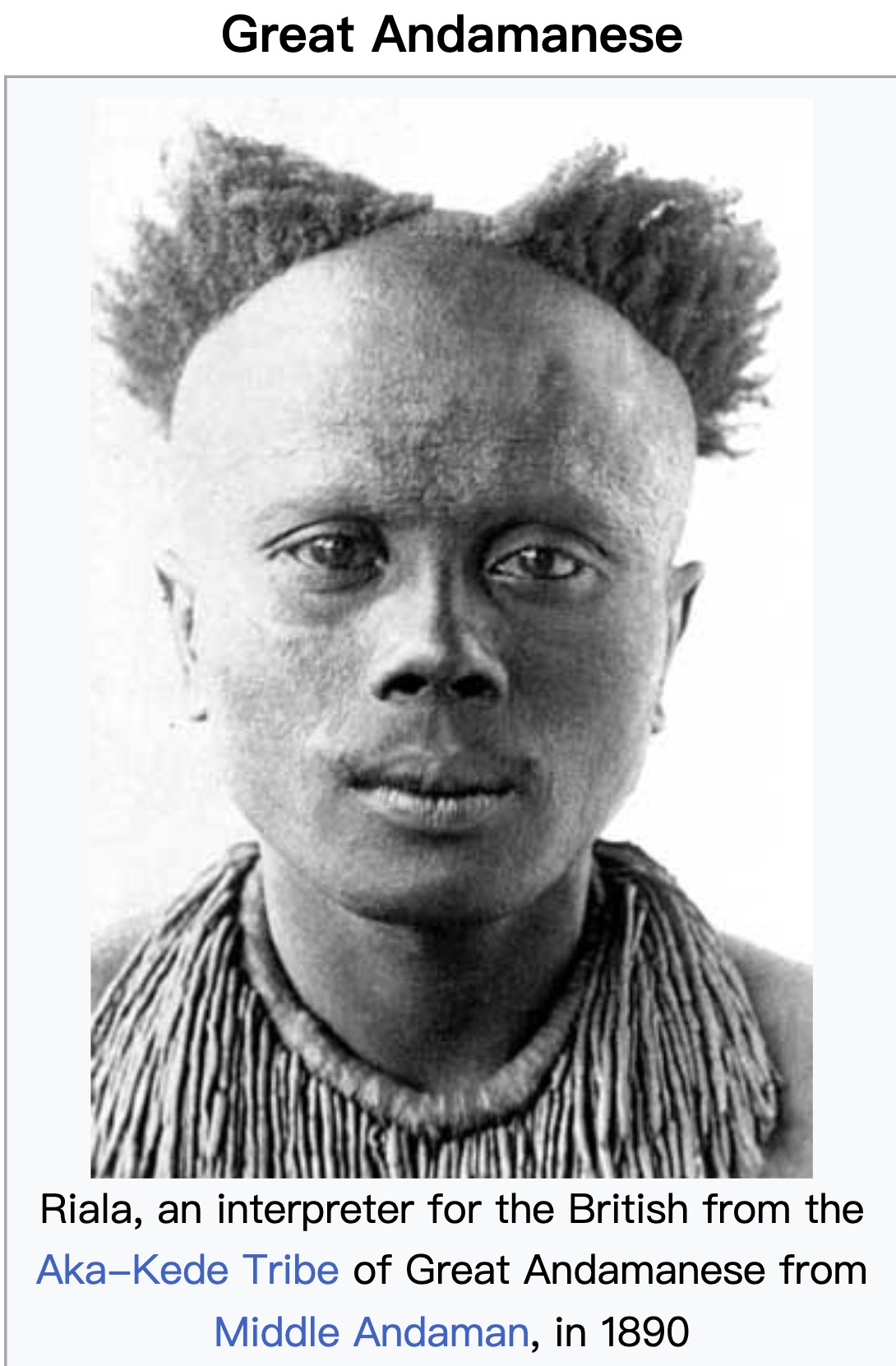
The Aka-Kede inhabited the central and northern Andaman Islands and became extinct shortly after 1931.
Paternal lineages: No specific data are available. Tests of surviving Great Andamanese descendants suggest possible P‑M45, K‑M9, L‑M20, O‑M122, and O‑M95 downstream of F‑M89.
By the same principle, the Aka-Kede are pure paternal F, G, I, J, H, K, L, T, R, Q, O, N, M, and S, since all belong to the major F‑M89 branch.
Aka-Kol People
The Aka-Kol inhabited the central and southeastern Andaman Islands and became extinct around 1921.
Paternal lineages: No specific data are available. Tests of surviving Great Andamanese descendants suggest possible P‑M45, K‑M9, L‑M20, O‑M122, and O‑M95 downstream of F‑M89.
By the same principle, the Aka-Kol are pure paternal F, G, I, J, H, K, L, T, R, Q, O, N, M, and S, since all belong to the major F‑M89 branch.
Oka-Juwoi People
The Oka-Juwoi inhabited the southwestern Andaman Islands and became extinct around 1931.
Paternal lineages: No specific data are available. Tests of surviving Great Andamanese descendants suggest possible P‑M45, K‑M9, L‑M20, O‑M122, and O‑M95 downstream of F‑M89.
By the same principle, the Oka-Juwoi are pure paternal F, G, I, J, H, K, L, T, R, Q, O, N, M, and S, since all belong to the major F‑M89 branch.
Aka-Pucikwar People
The Aka-Pucikwar inhabited southern Andaman and northeastern Baratang Island and may have become extinct around 1931.
Paternal lineages: No specific data are available. Tests of surviving Great Andamanese descendants indicate P‑M45, K‑M9, L‑M20, O‑M122, and O‑M95 downstream of F‑M89.
By the same principle, the Aka-Pucikwar are pure paternal F, G, I, J, H, K, L, T, R, Q, O, N, M, and S, since all belong to the major F‑M89 branch.
Aka-Bale People
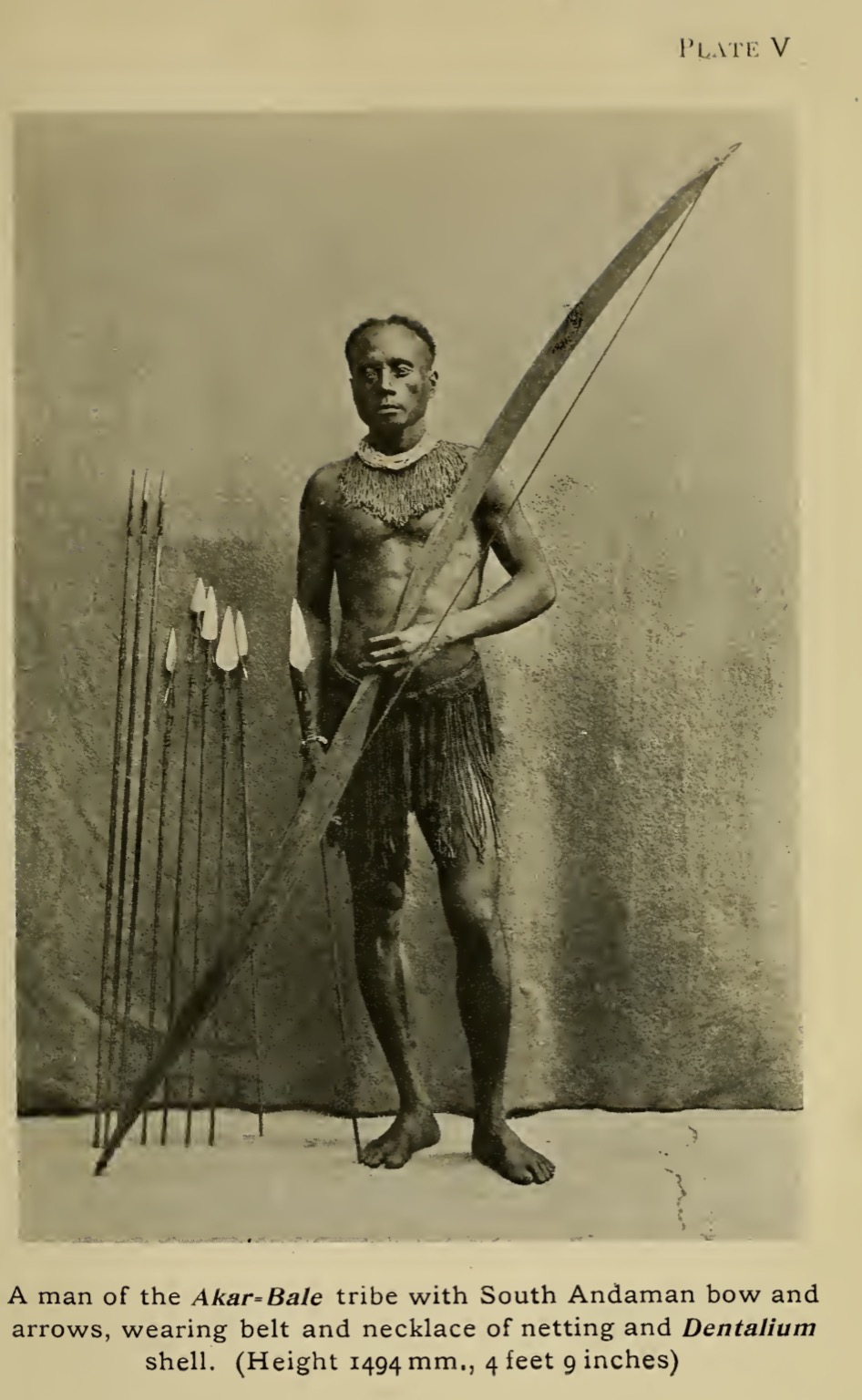
The Aka-Bale inhabited Ritchie’s Archipelago and became extinct shortly after 1931.
Paternal lineages: No specific data are available. Tests of surviving Great Andamanese descendants suggest possible P‑M45, K‑M9, L‑M20, O‑M122, and O‑M95 downstream of F‑M89.
By the same principle, the Aka-Bale are pure paternal F, G, I, J, H, K, L, T, R, Q, O, N, M, and S, since all belong to the major F‑M89 branch.
Aka-Bea People
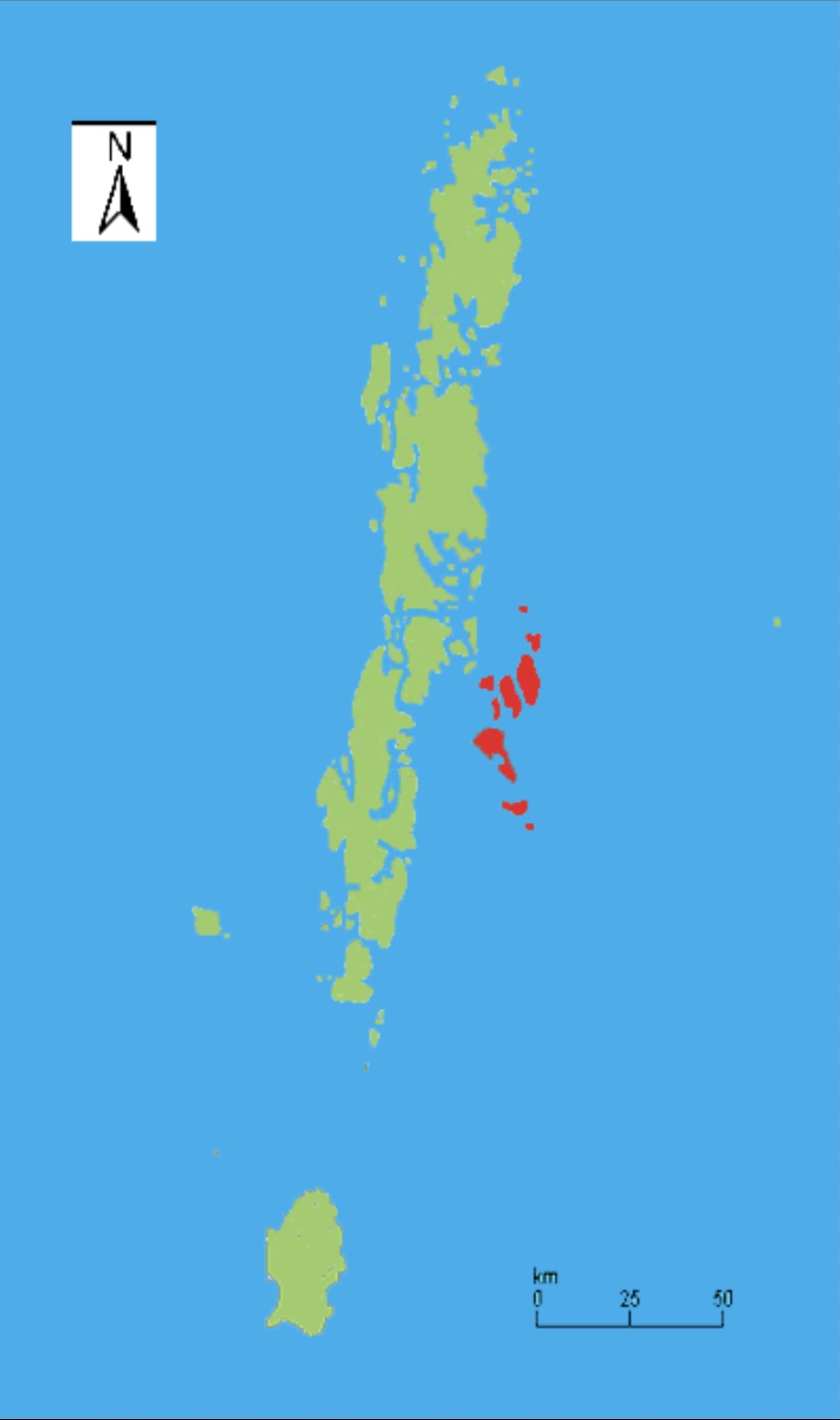
The Aka-Bea inhabited the coasts of South Andaman and Rutland Island and became extinct around 1931.
Paternal lineages: No specific data are available. Tests of surviving Great Andamanese descendants suggest possible P‑M45, K‑M9, L‑M20, O‑M122, and O‑M95 downstream of F‑M89.
By the same principle, the Aka-Bea are pure paternal F, G, I, J, H, K, L, T, R, Q, O, N, M, and S, since all belong to the major F‑M89 branch.
Ongan Peoples
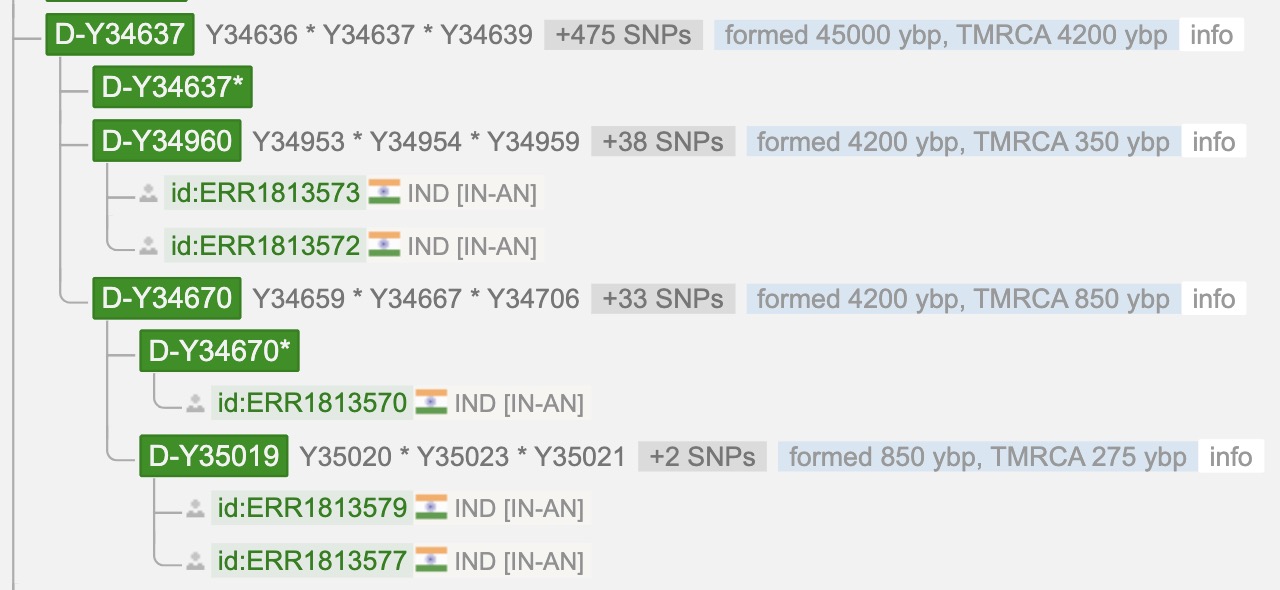
Among Ongan-speaking peoples, the Onge are currently the only single Andamanese tribe to have received genetic testing detailed to a specific paternal branch. Their paternal lineage is D1a2b-Y34637, with a common ancestor approximately 4,000 years ago.
Jangil People
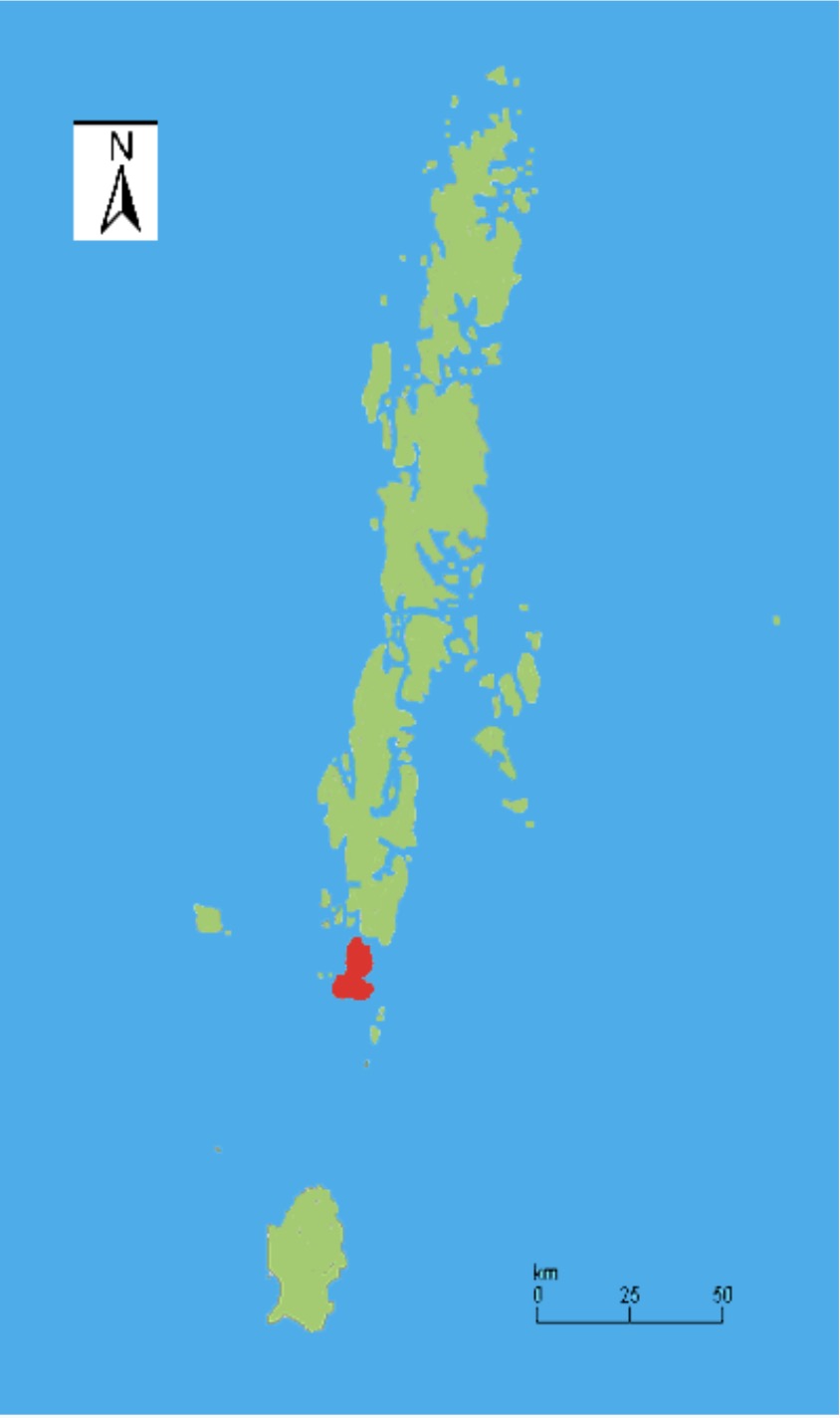
The now-extinct Jangil once inhabited the coast of Rutland Island in the southern Andamans.
Paternal lineages: No direct data are available. On the basis of Onge genetic results, D‑Y34637 may be inferred.
By the same principle, the Jangil Negritos of the Andaman Islands are pure paternal D and belong to the major D‑M174 branch.
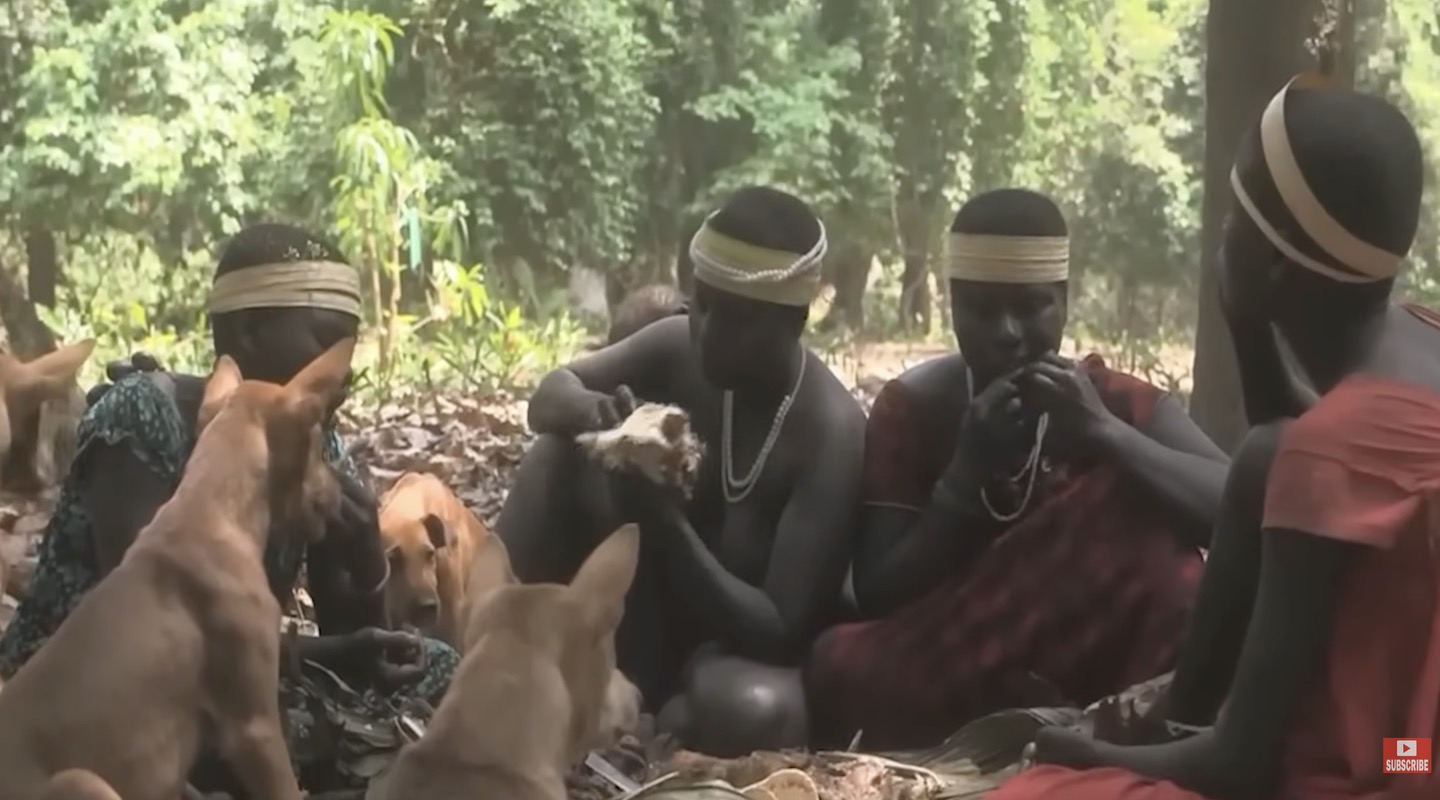
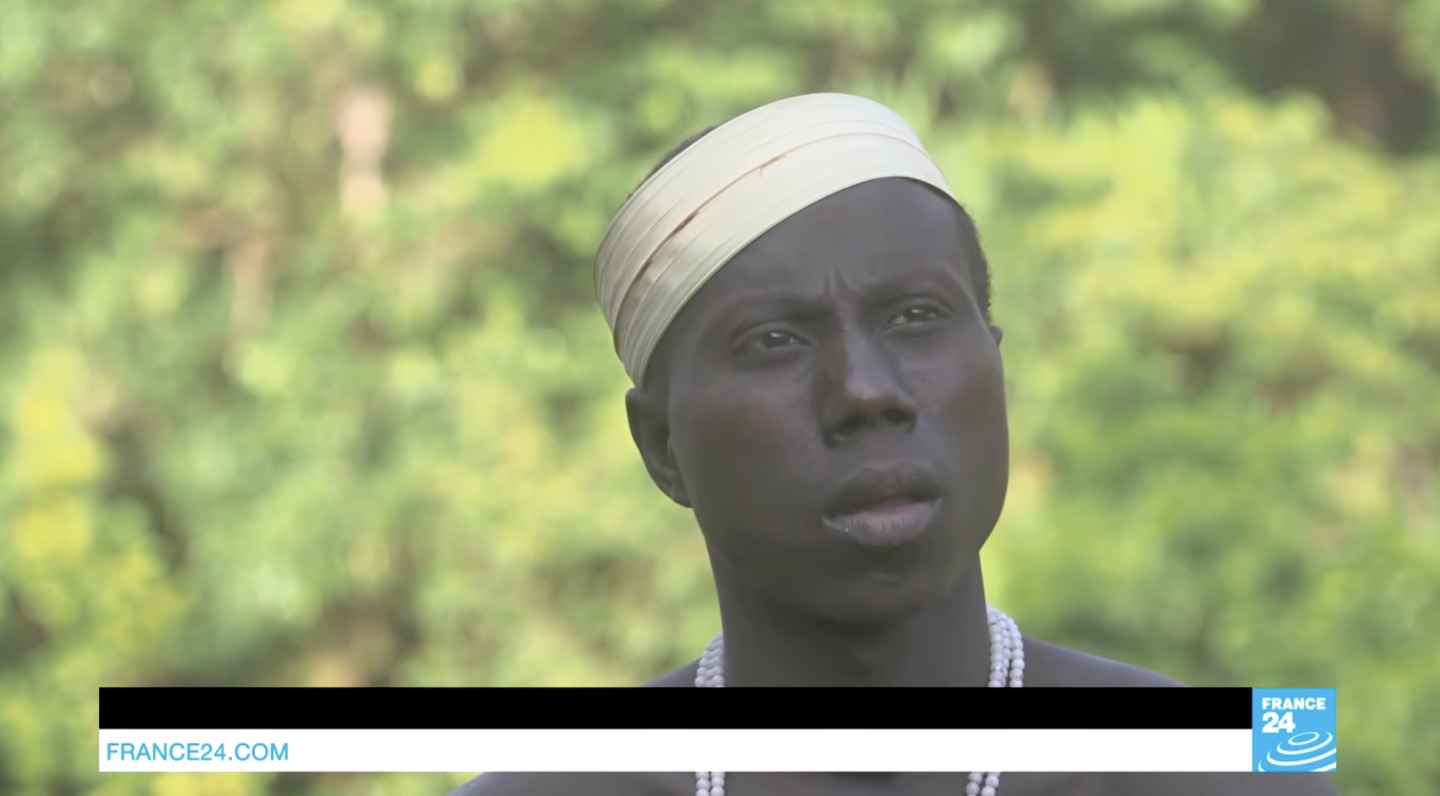
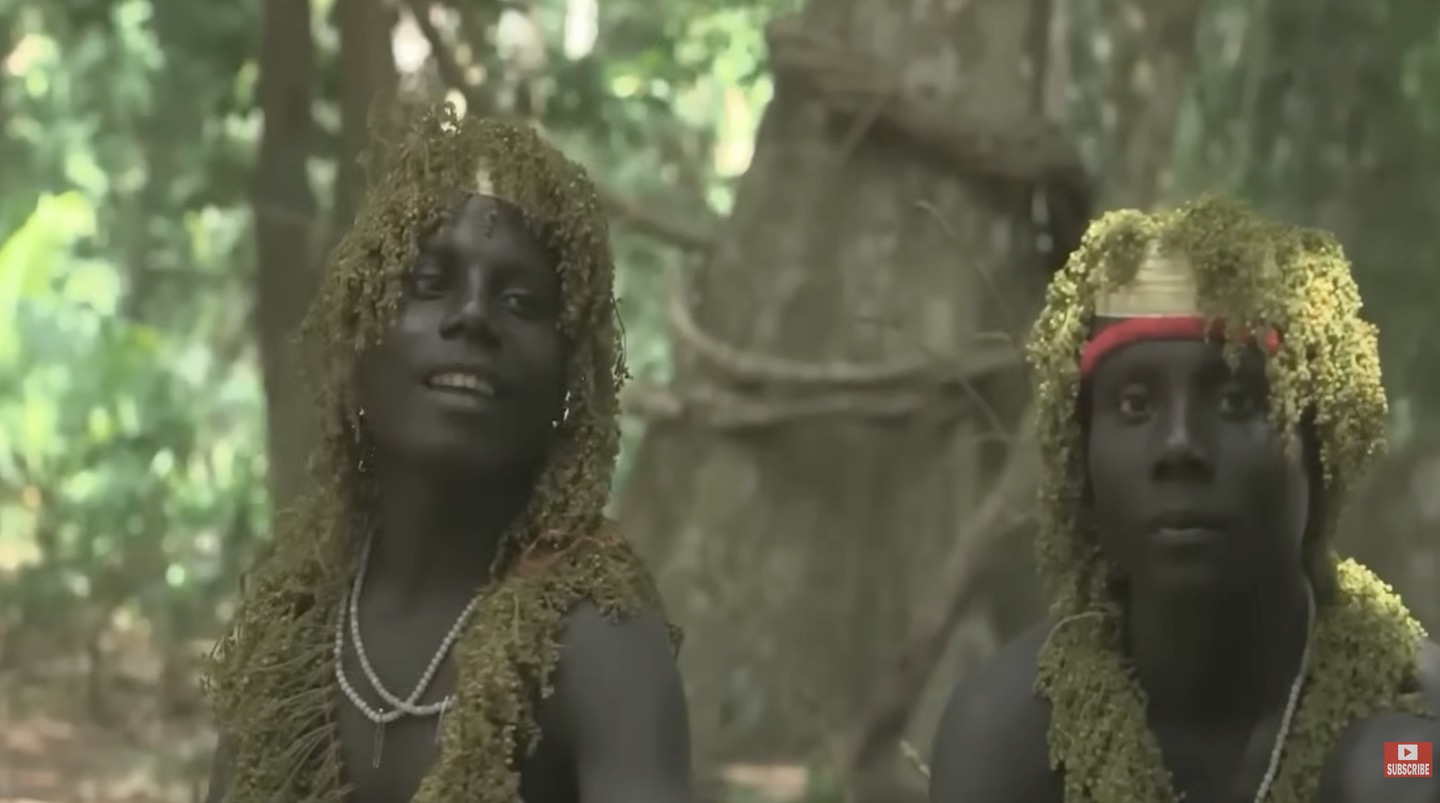
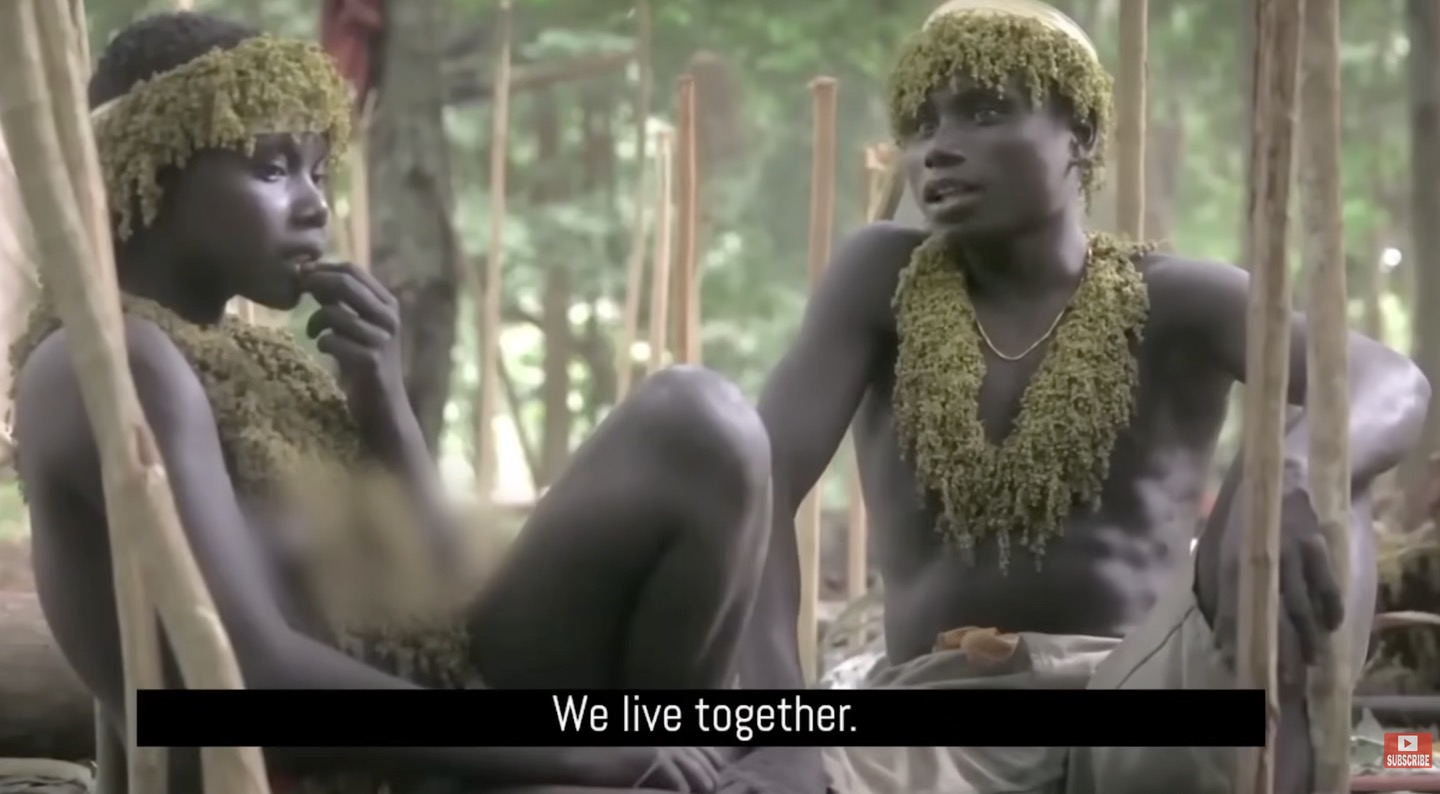
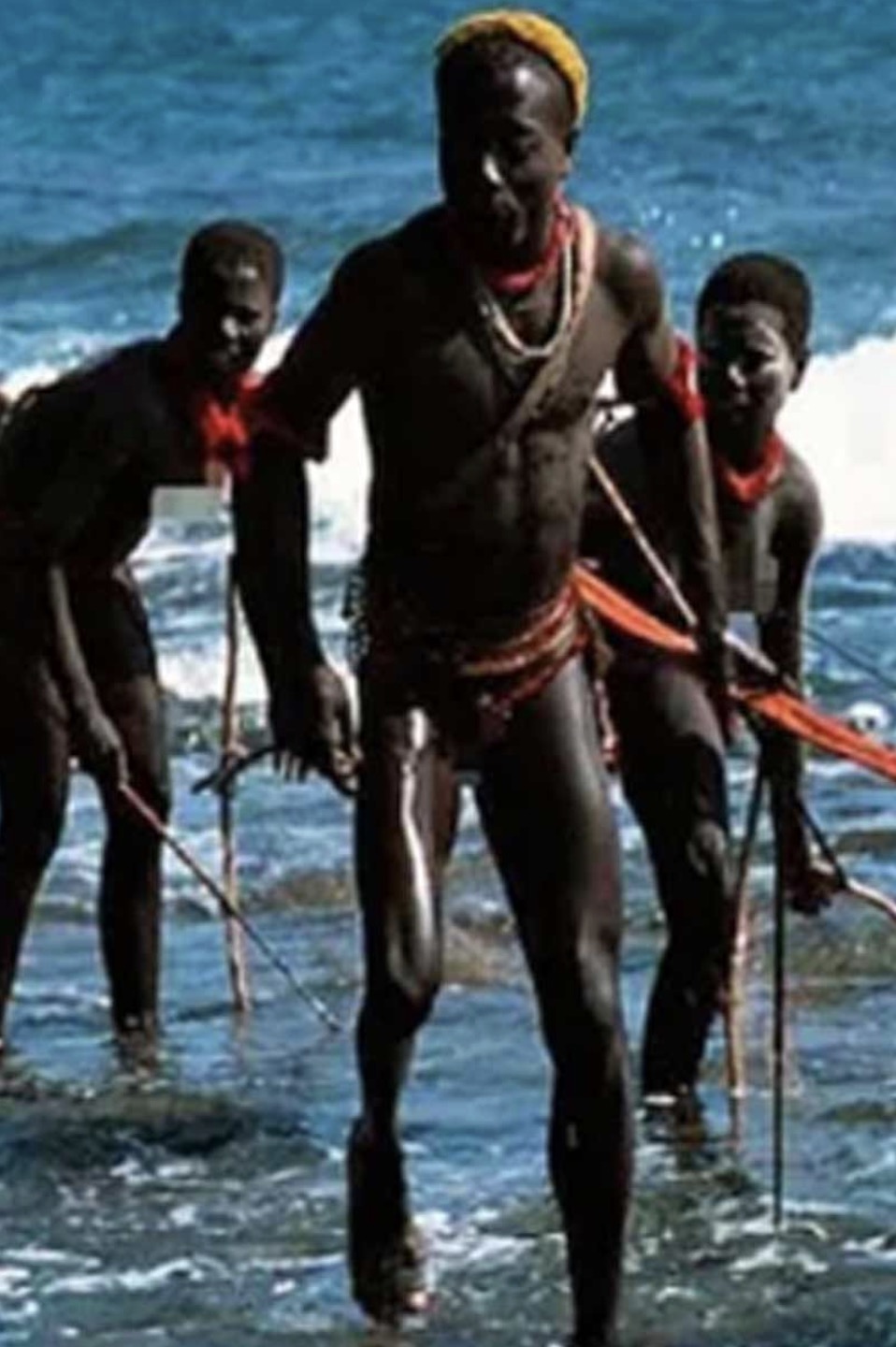
Jarawa People
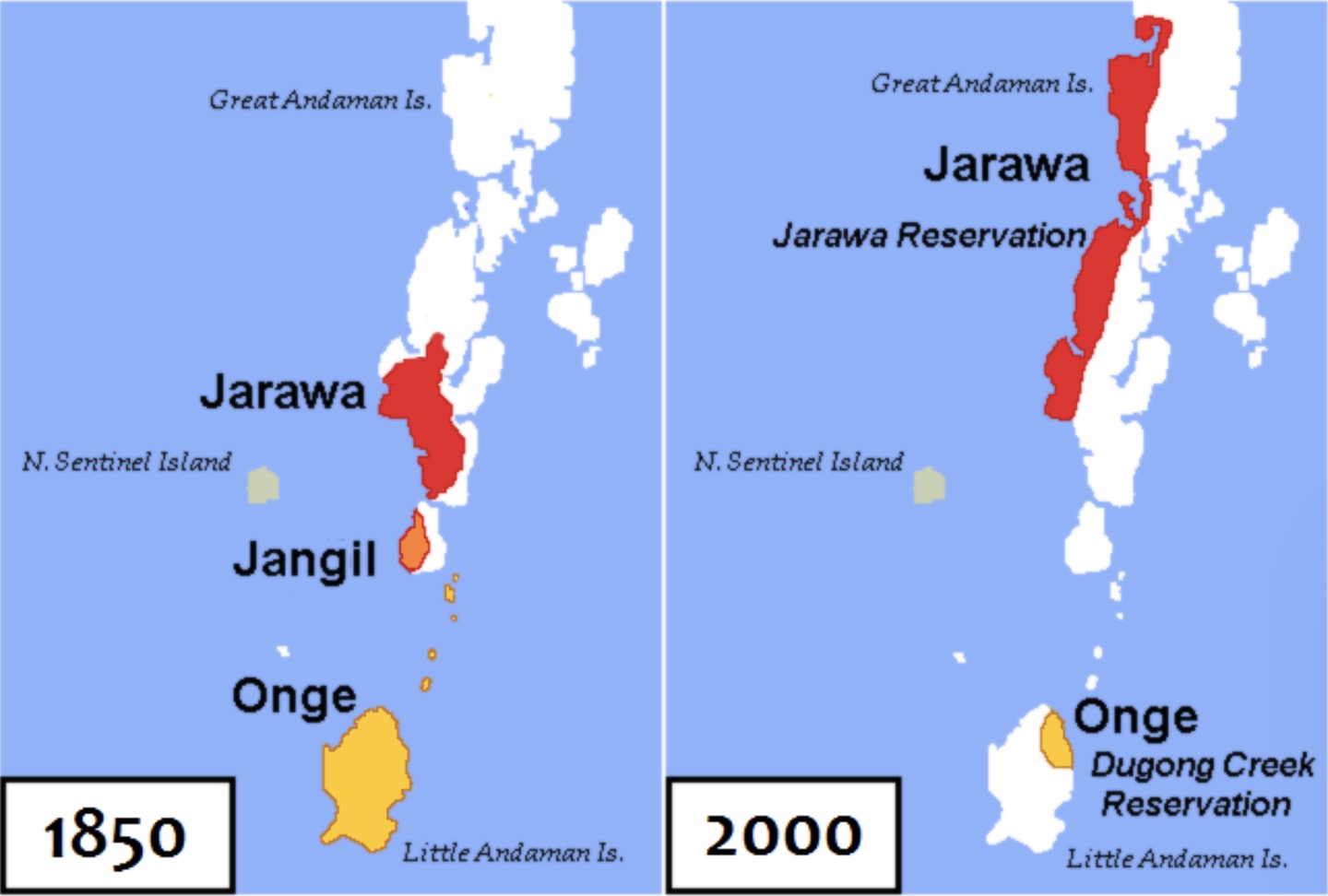
The Jarawa live in the southern Andaman Islands.
Paternal lineages: No direct data explicitly labelled as Jarawa were located, although many studies consider Jarawa paternal structure similar to that of the Onge. The Onge data therefore suggest D‑Y34637.
By the same principle, the Jarawa Negritos of the Andaman Islands are pure paternal D and belong to the major D‑M174 branch.
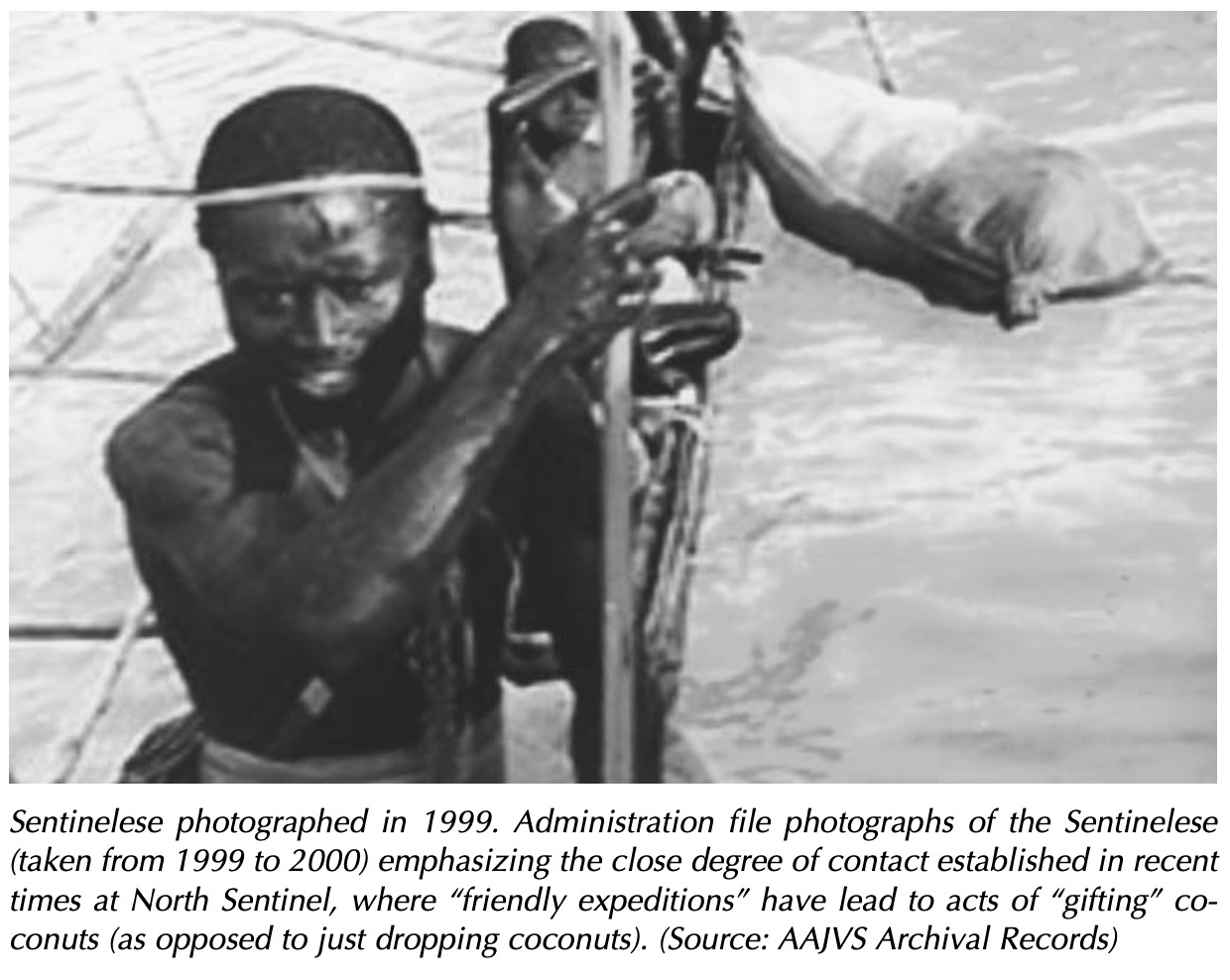
Many modern images of the Jarawa are available. Several of the following stills were taken directly from an Indian field interview conducted a few years ago.
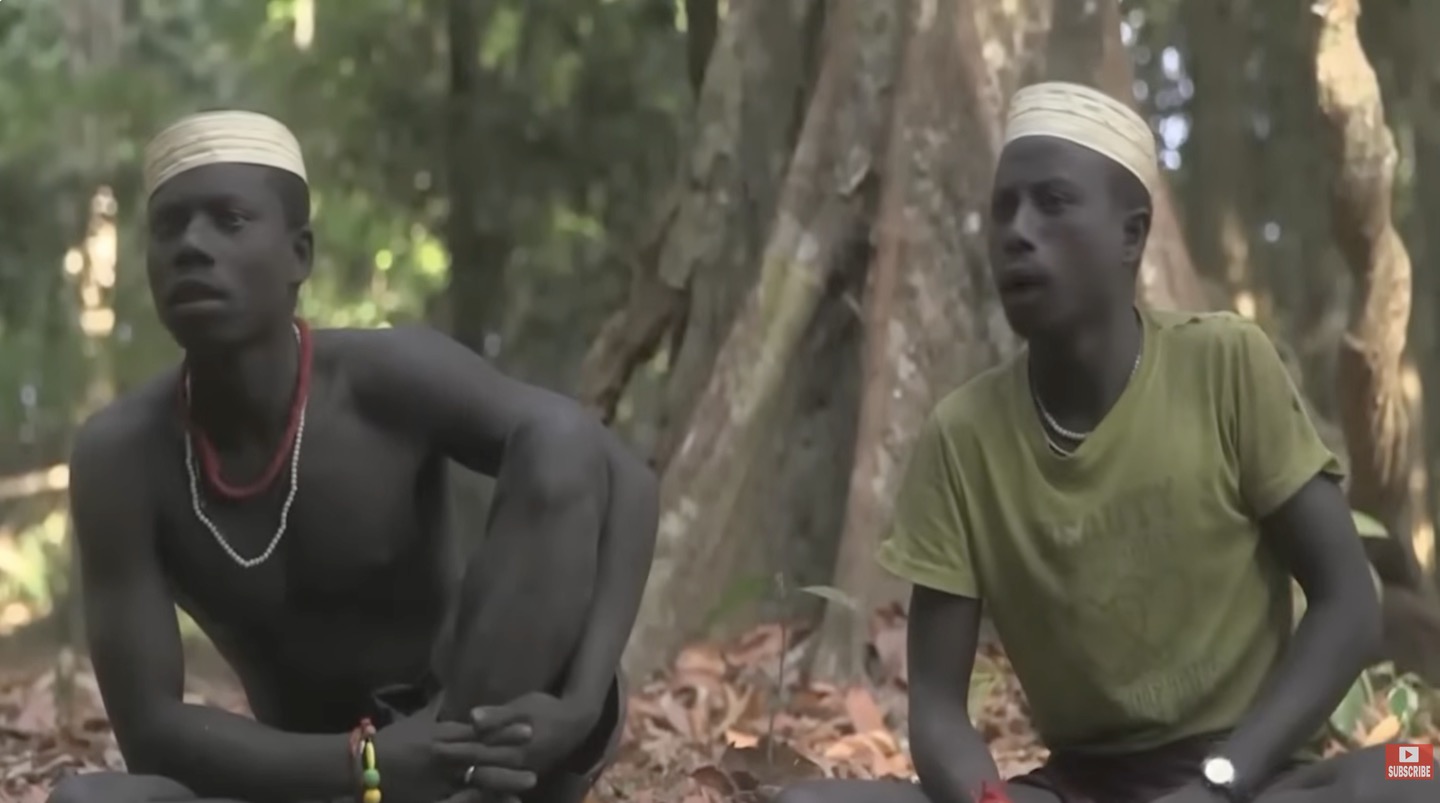
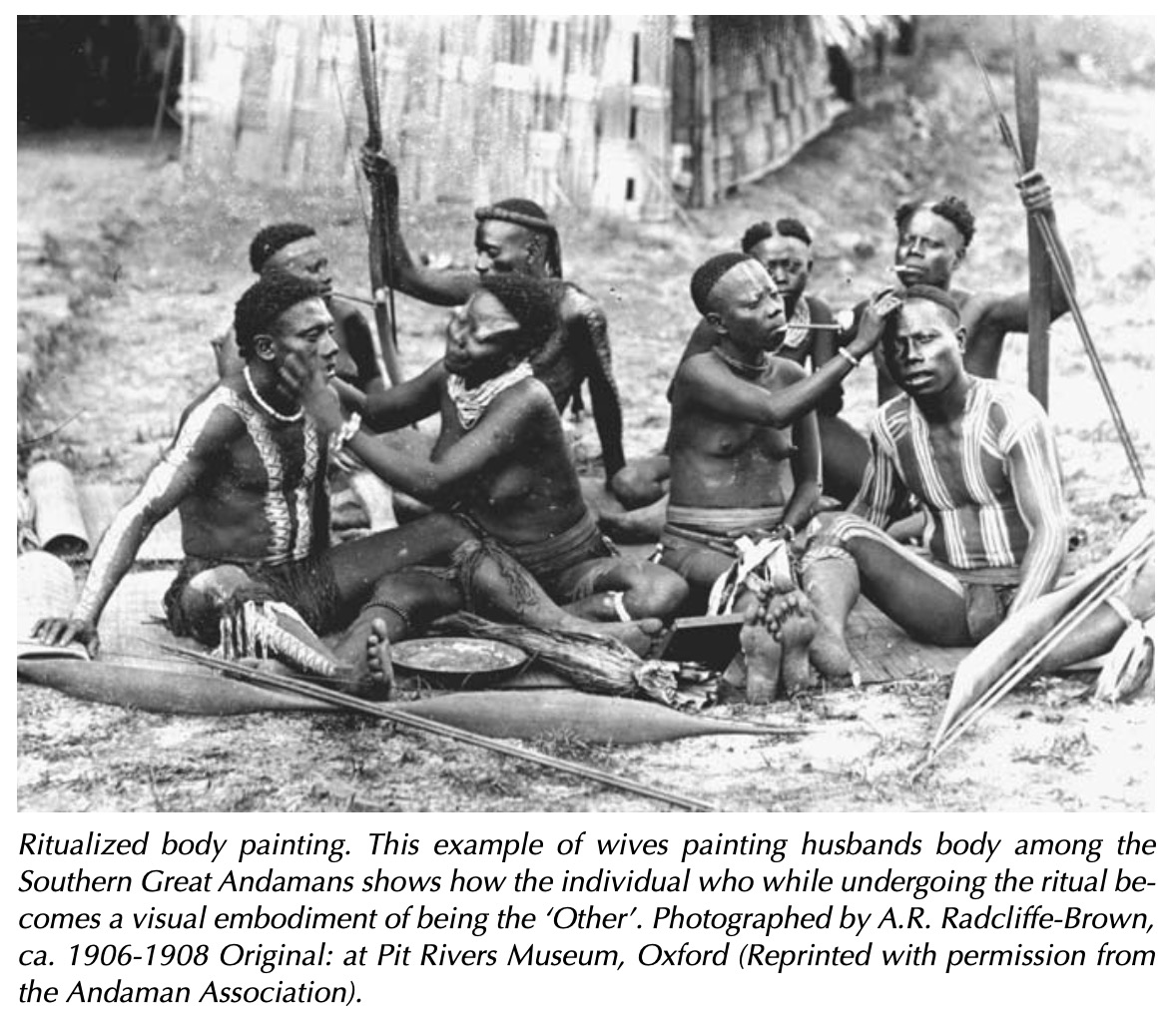
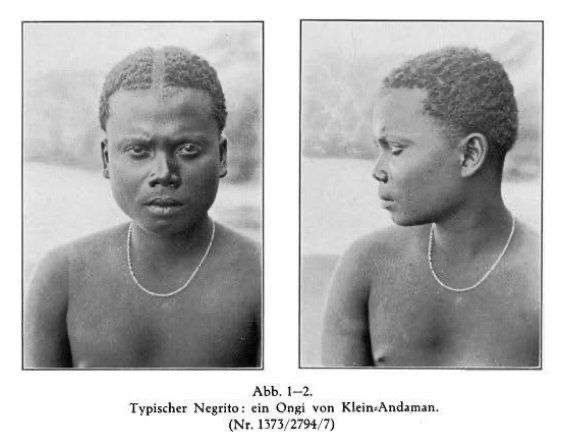
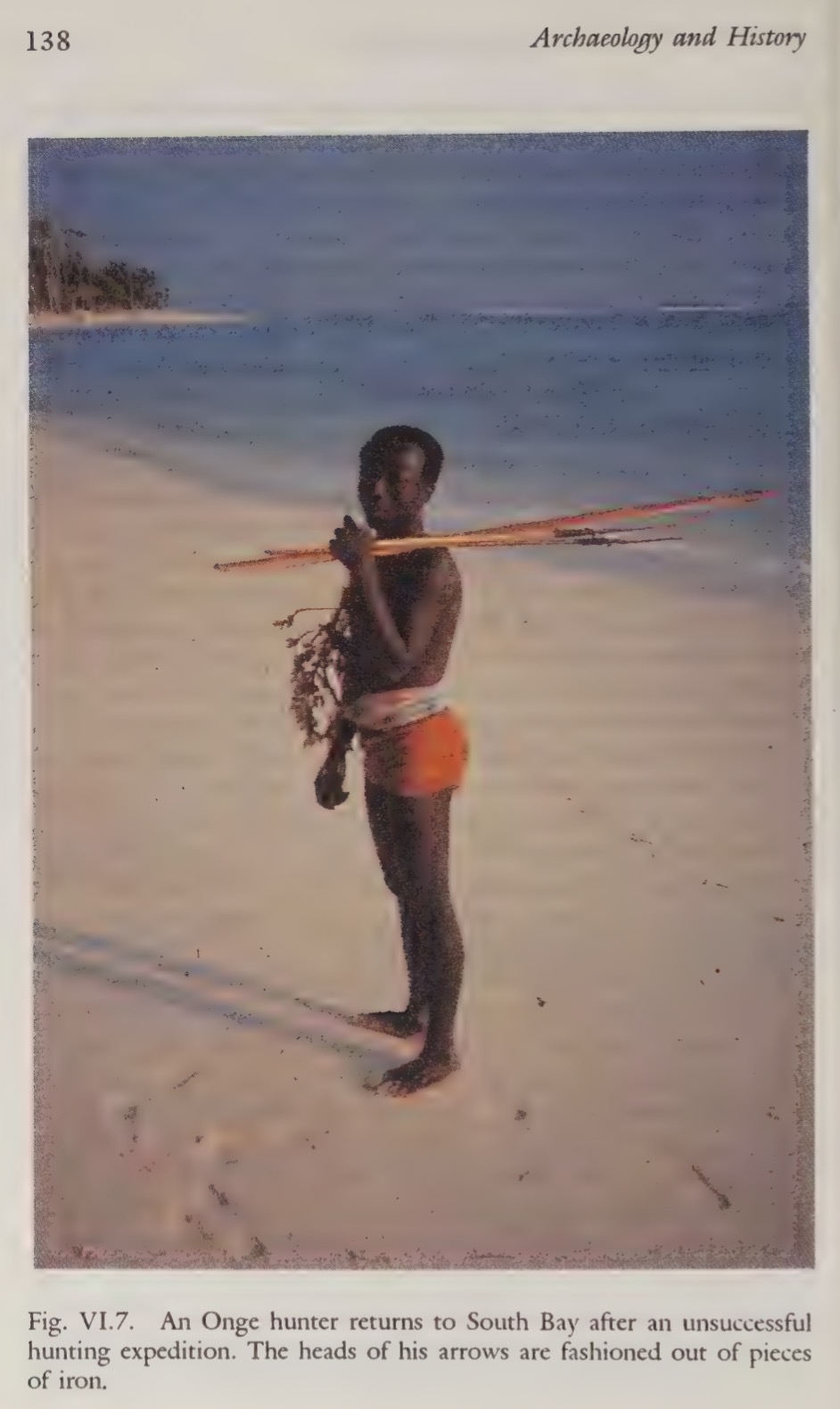
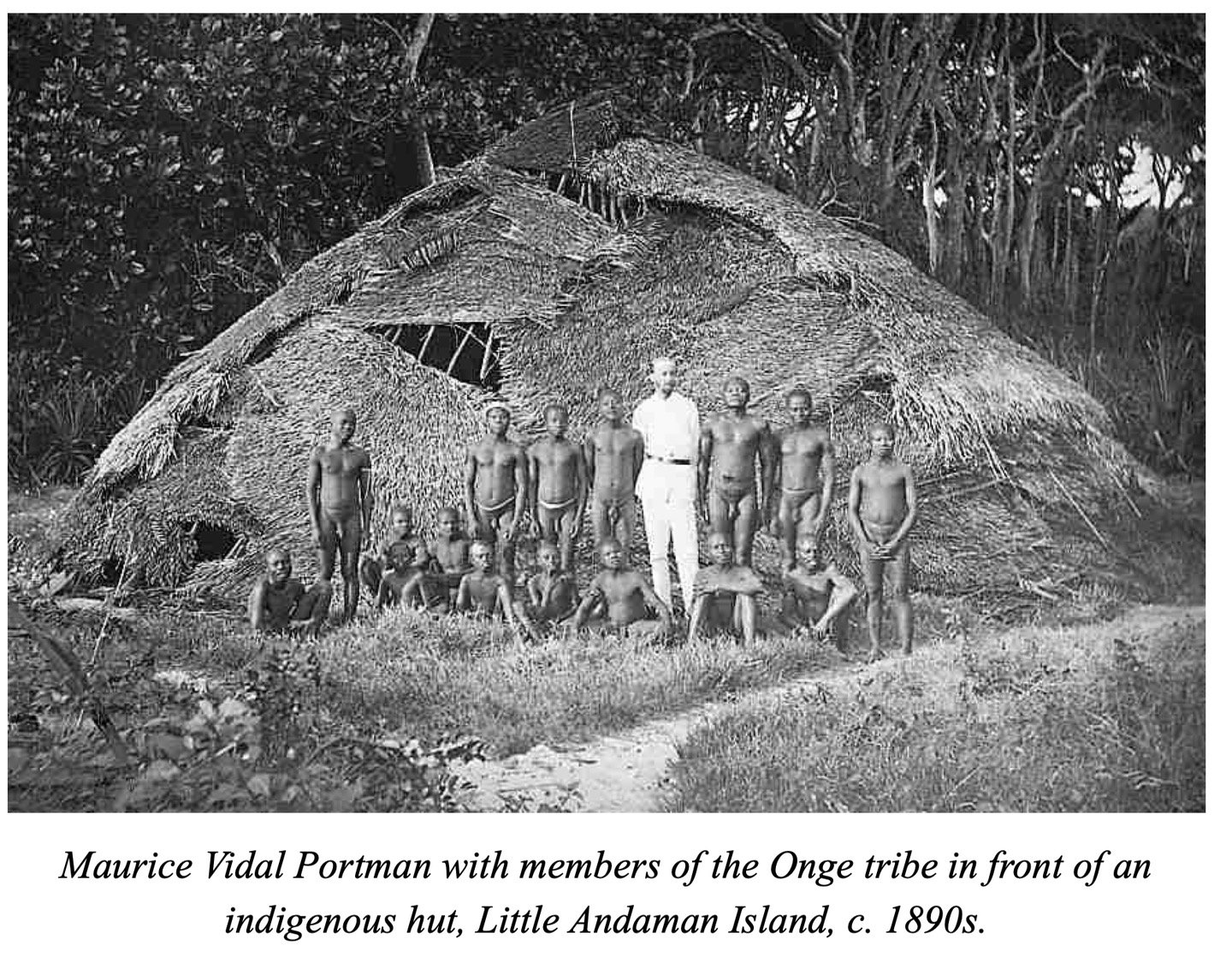
Onge People
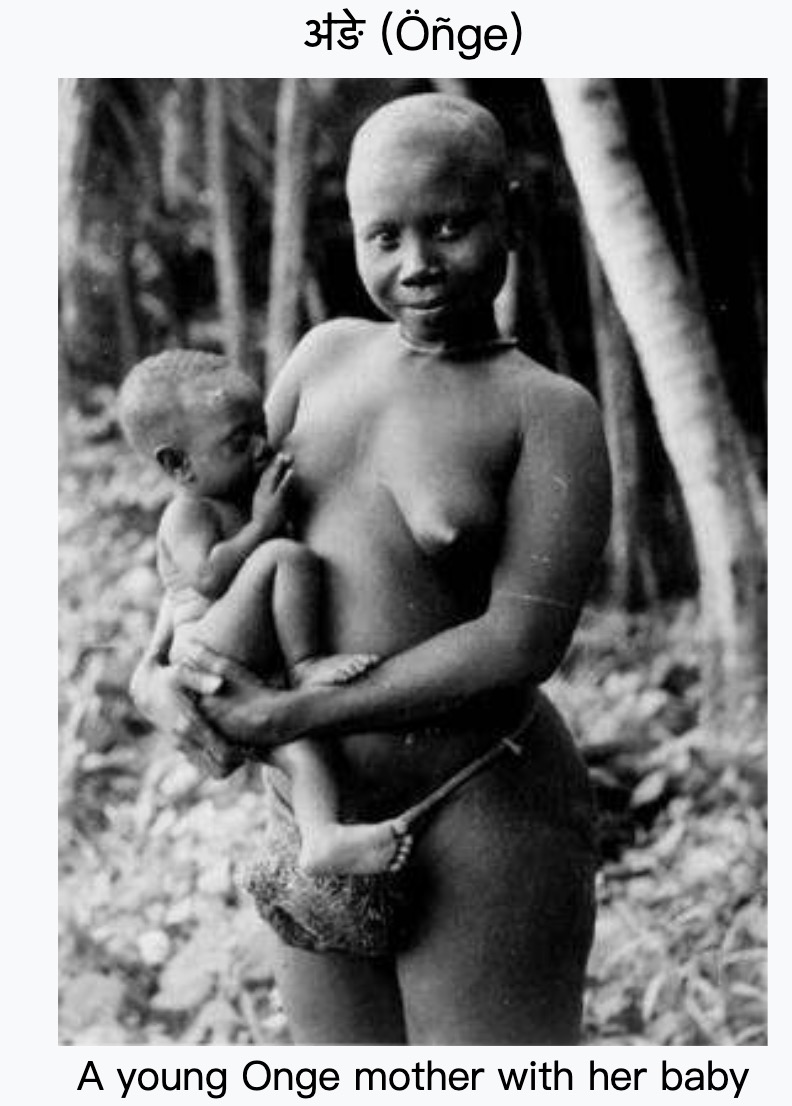
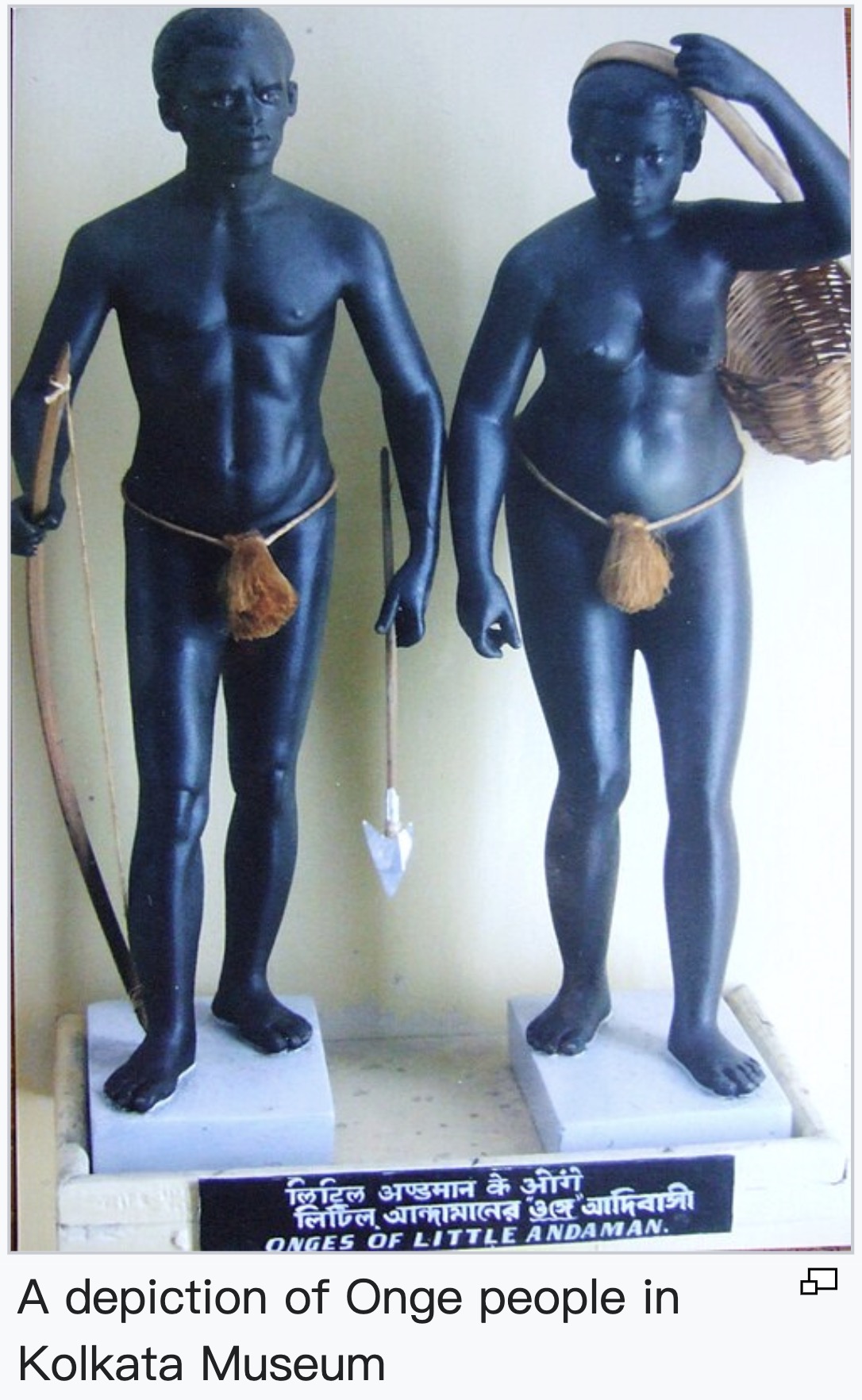
The Onge live on Little Andaman Island.
Paternal lineages: Direct data indicate that 100% belong to the D‑Y34637 branch.
By the same principle, the Onge Negritos of the Andaman Islands are pure paternal D and belong to the major D‑M174 branch.
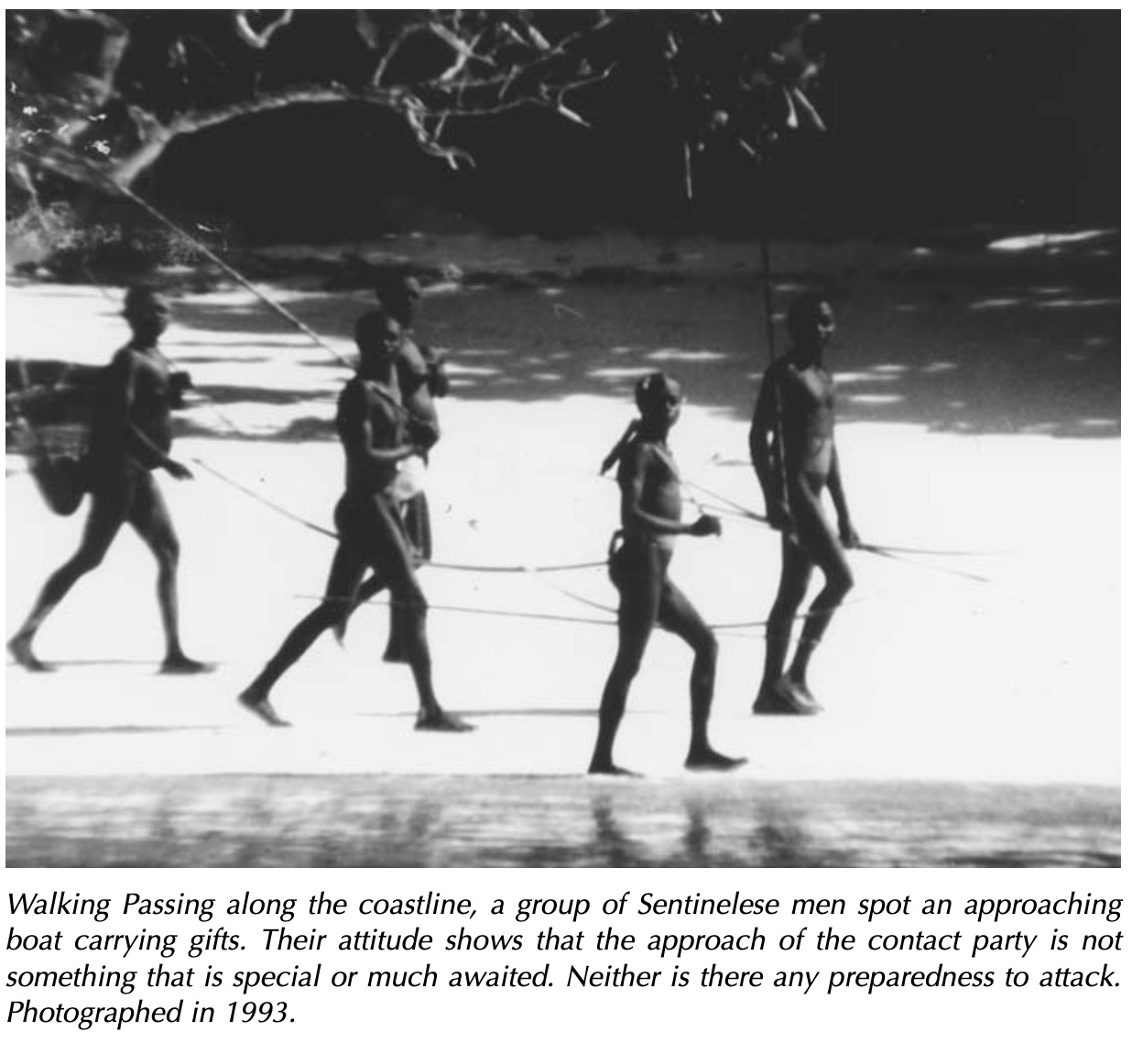
Sentinelese People
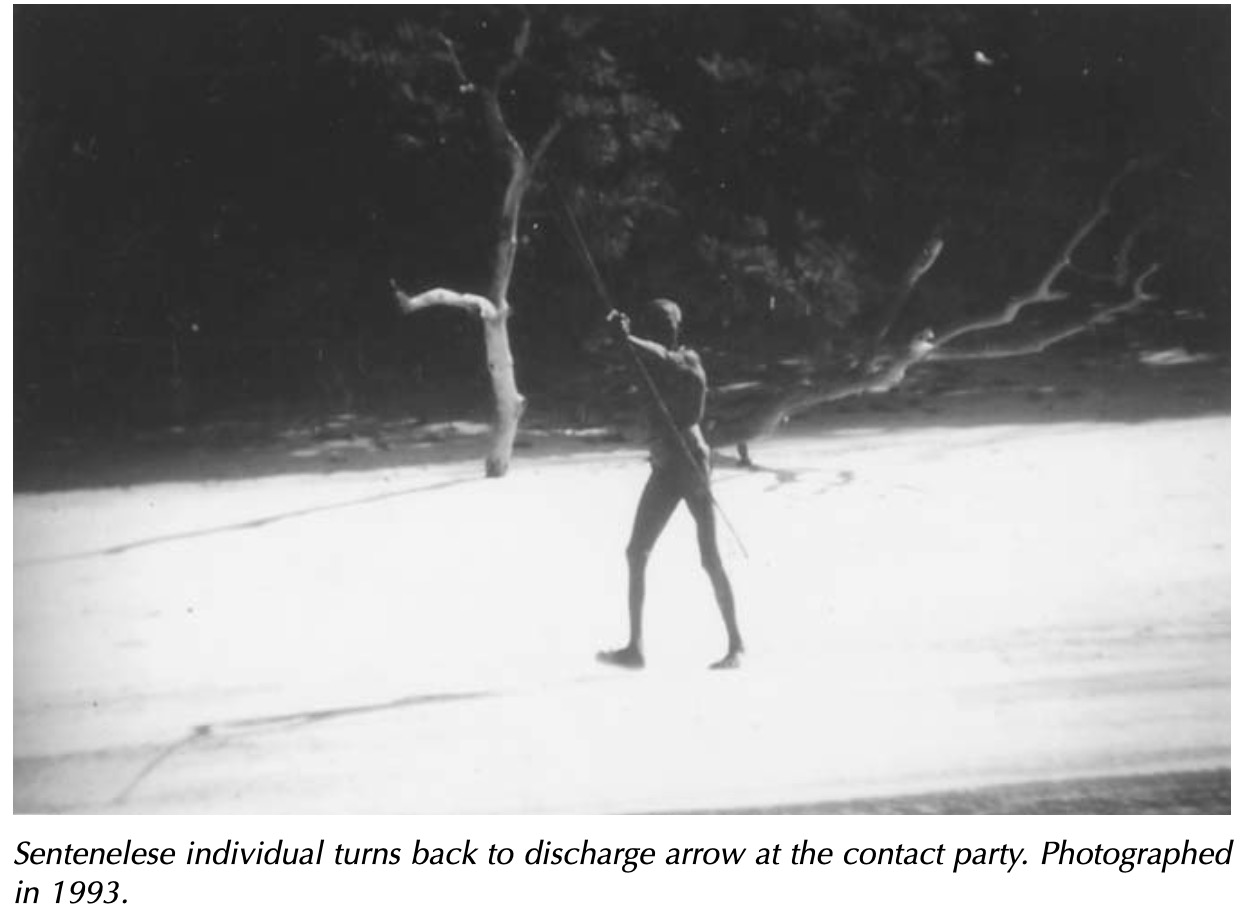
The Sentinelese live on North Sentinel Island, southwest of the main Andaman Islands.
Paternal lineages: No direct data are available. Landing on the island is difficult, and no direct genetic study has been conducted. Geographic, cultural, and physical characteristics are used to place them among the Ongan peoples; by reference to the Onge results, D‑Y34637 may be inferred.
By the same principle, the Sentinelese Negritos of the Andaman Islands are pure paternal D and belong to the major D‑M174 branch.
III. The Malay Peninsula
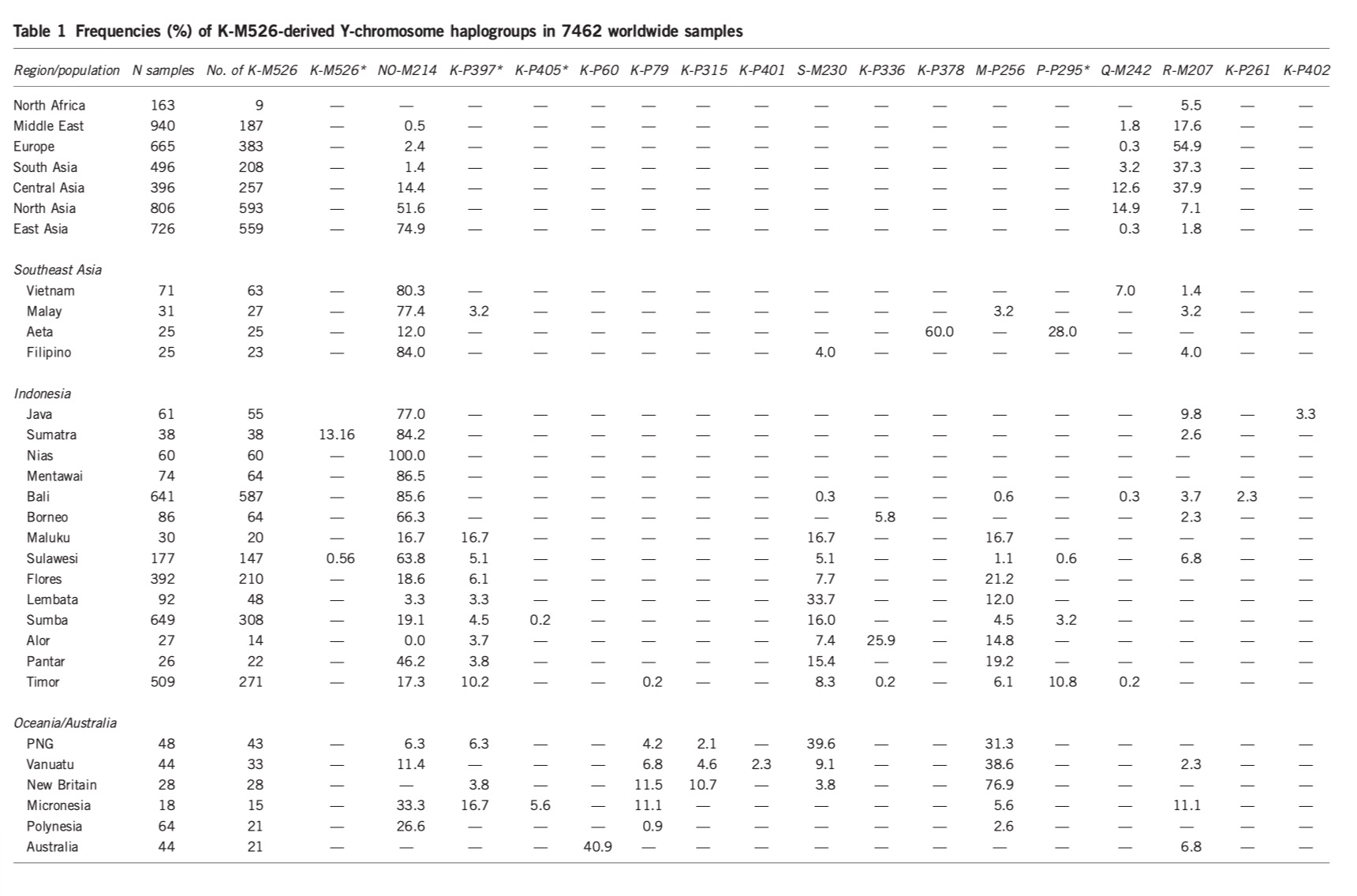
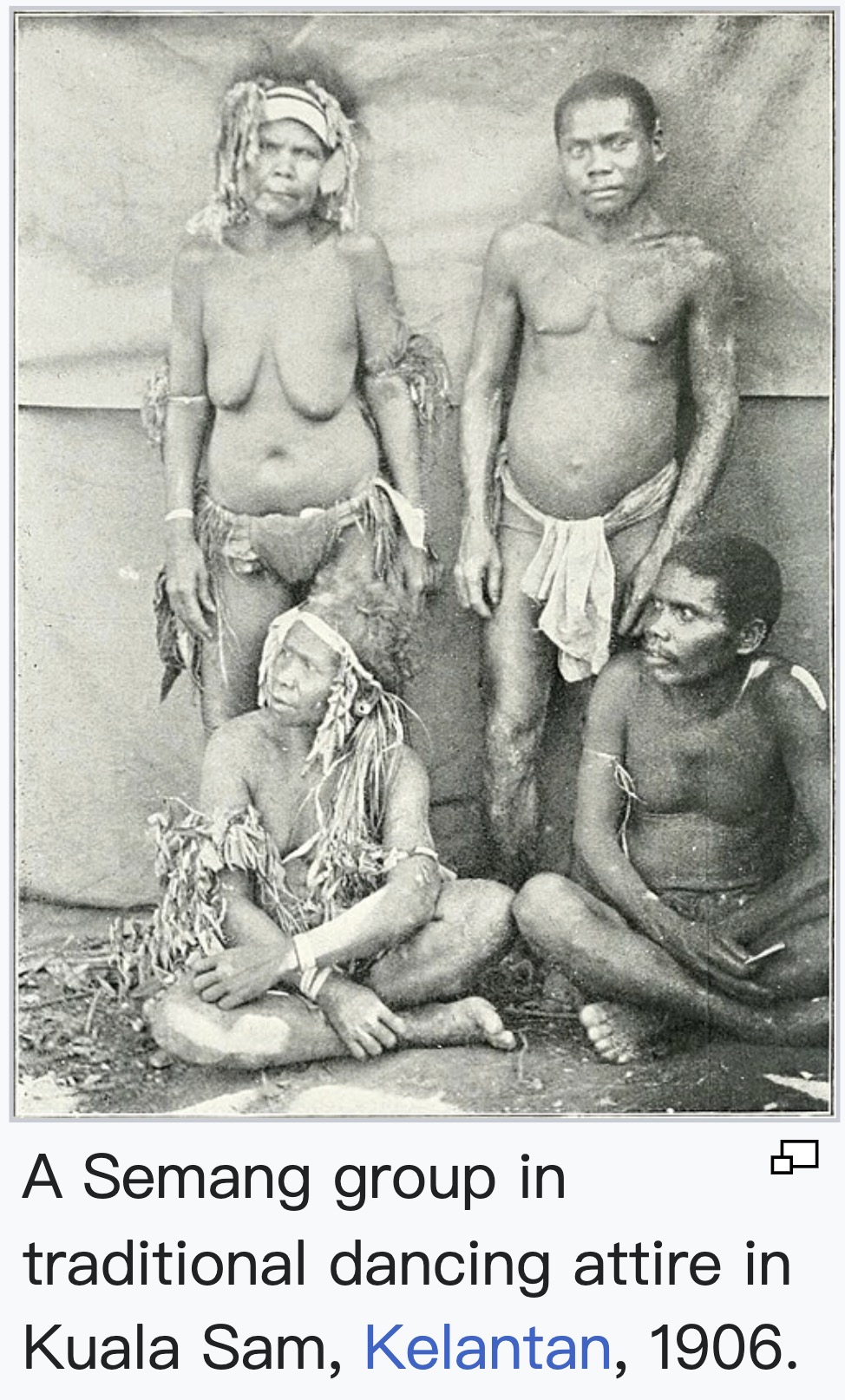
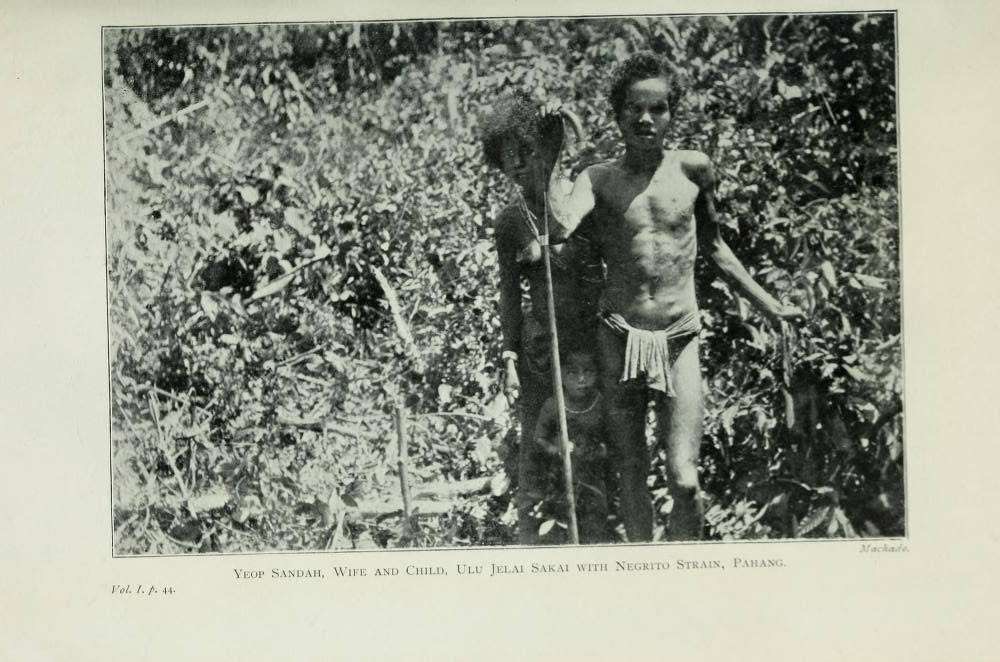
The Negrito populations of the Malay Peninsula consist principally of the Semang and their constituent tribes. Other indigenous populations are Proto-Malay peoples—that is, populations with a Negrito substrate but extensive additional admixture. I have not yet located a formal paper publishing paternal data for the Semang, although a great deal of maternal data exists. Because this answer is primarily concerned with paternal lineages, those maternal results are of limited relevance here. Scattered information supplied by online users, data on various English-language websites, browser search results, and other indirect channels suggest that Semang paternal lineages may be downstream of K‑M9—more specifically, perhaps predominantly O‑M175 with a small proportion of K2b-P331*.
Semang People
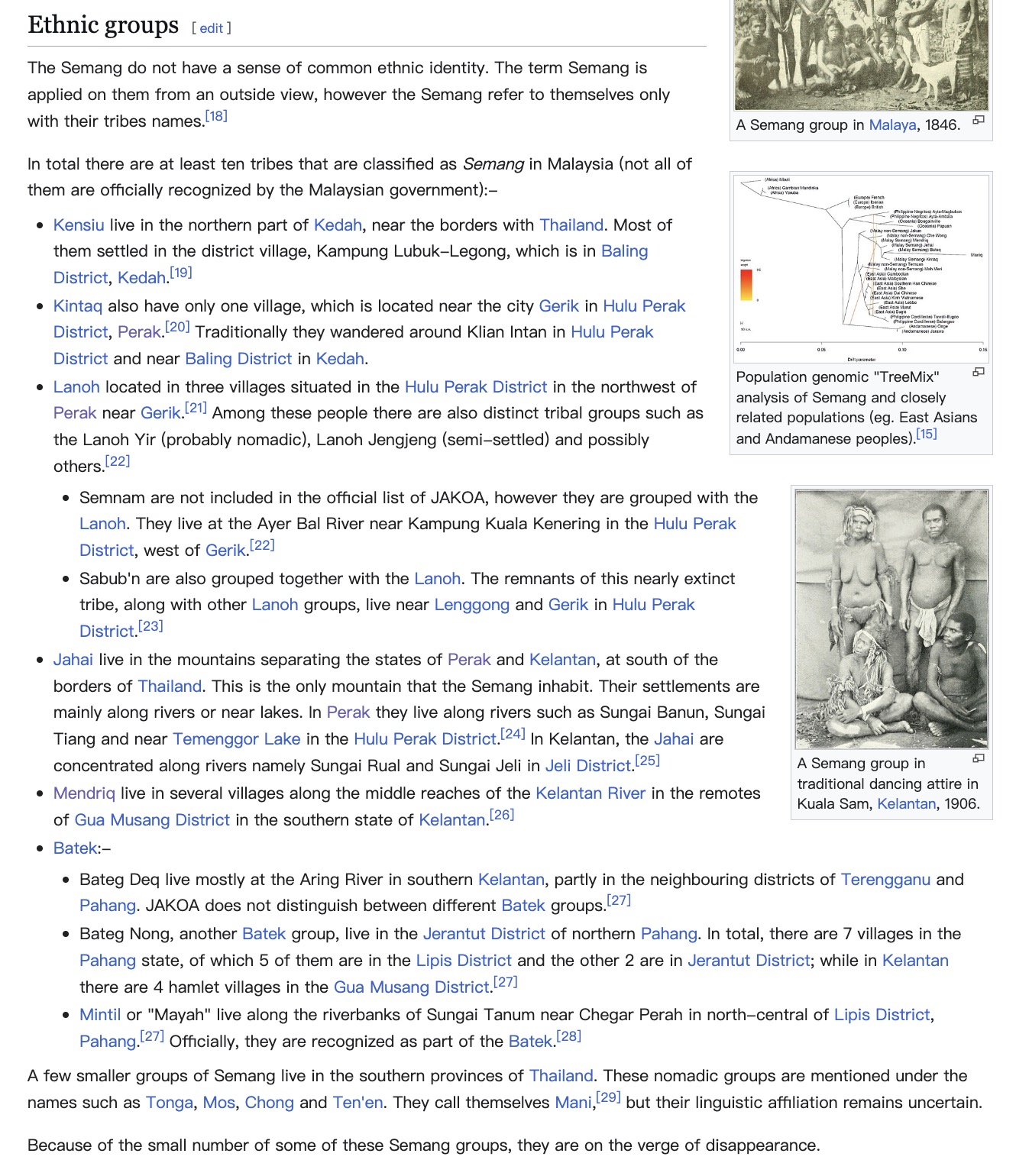
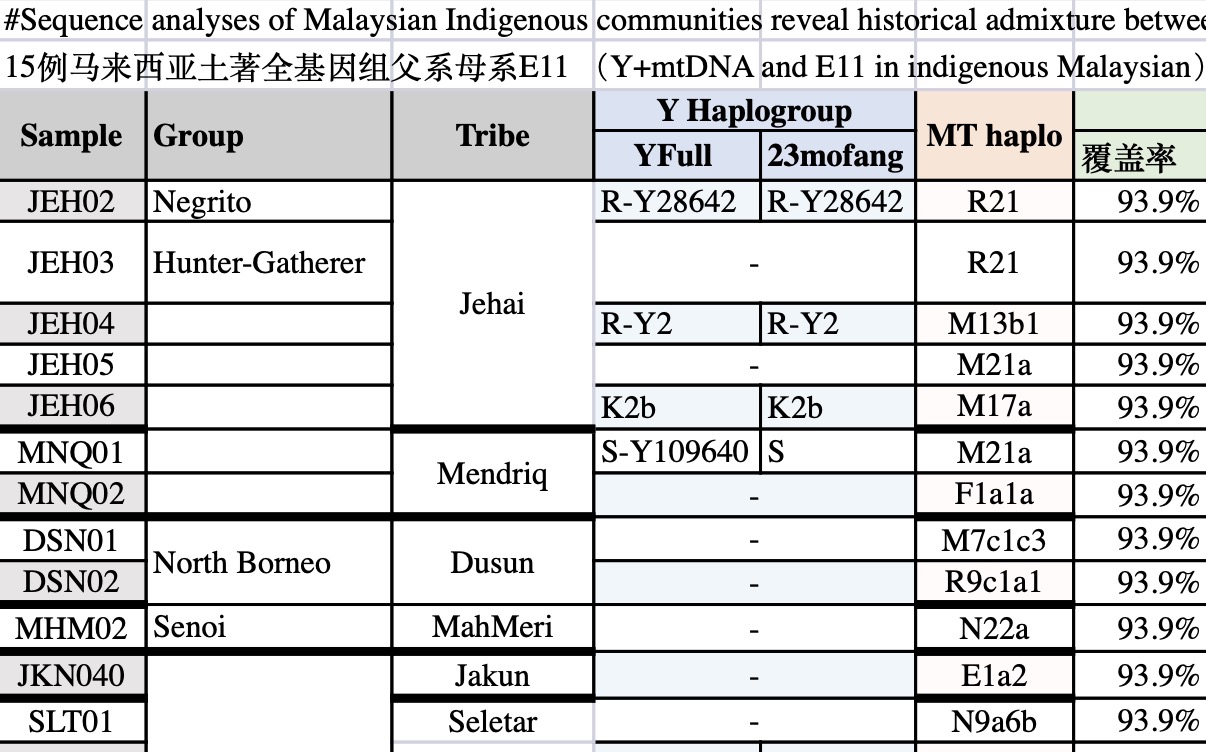
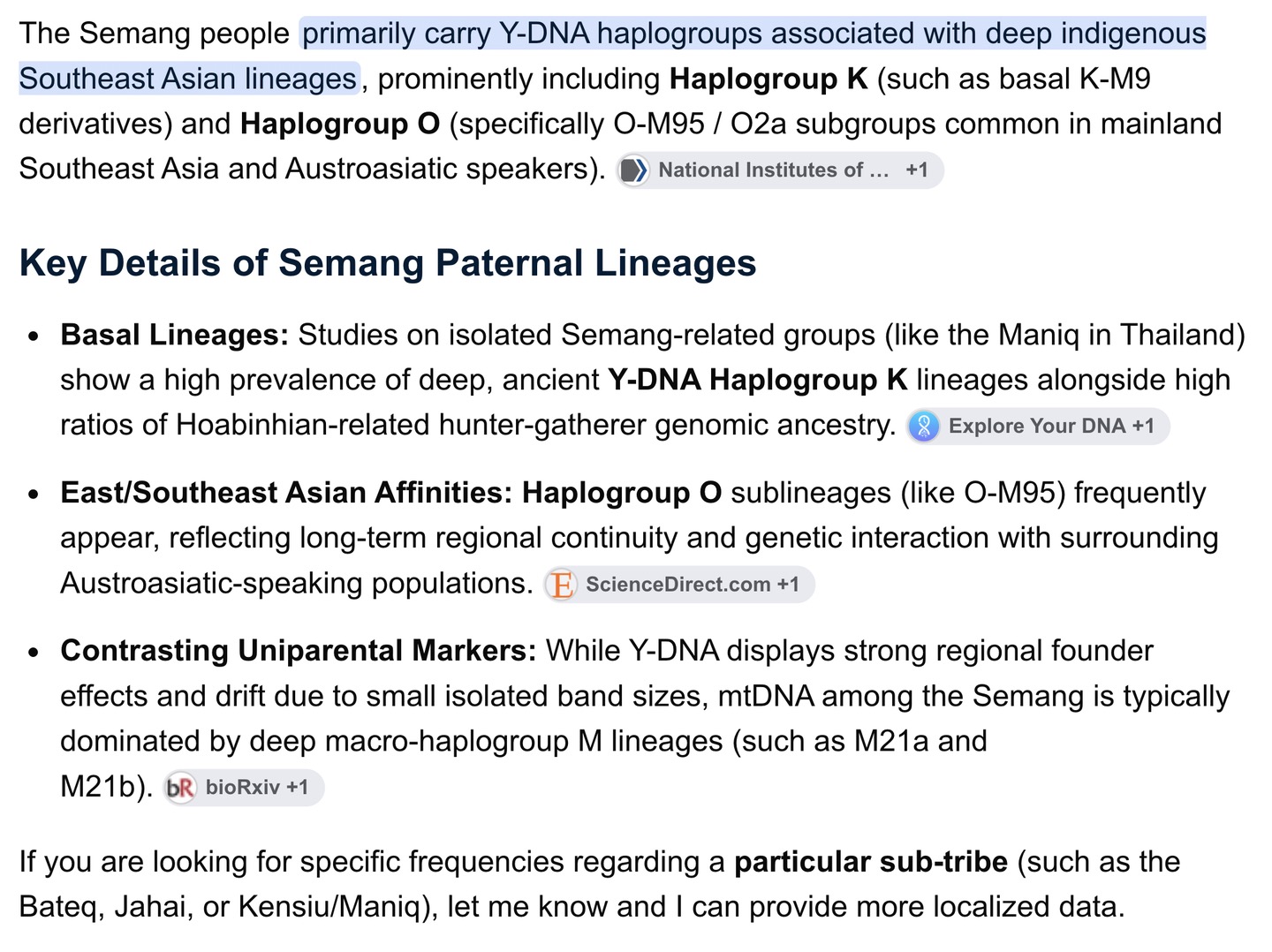
Portraits of Semang People
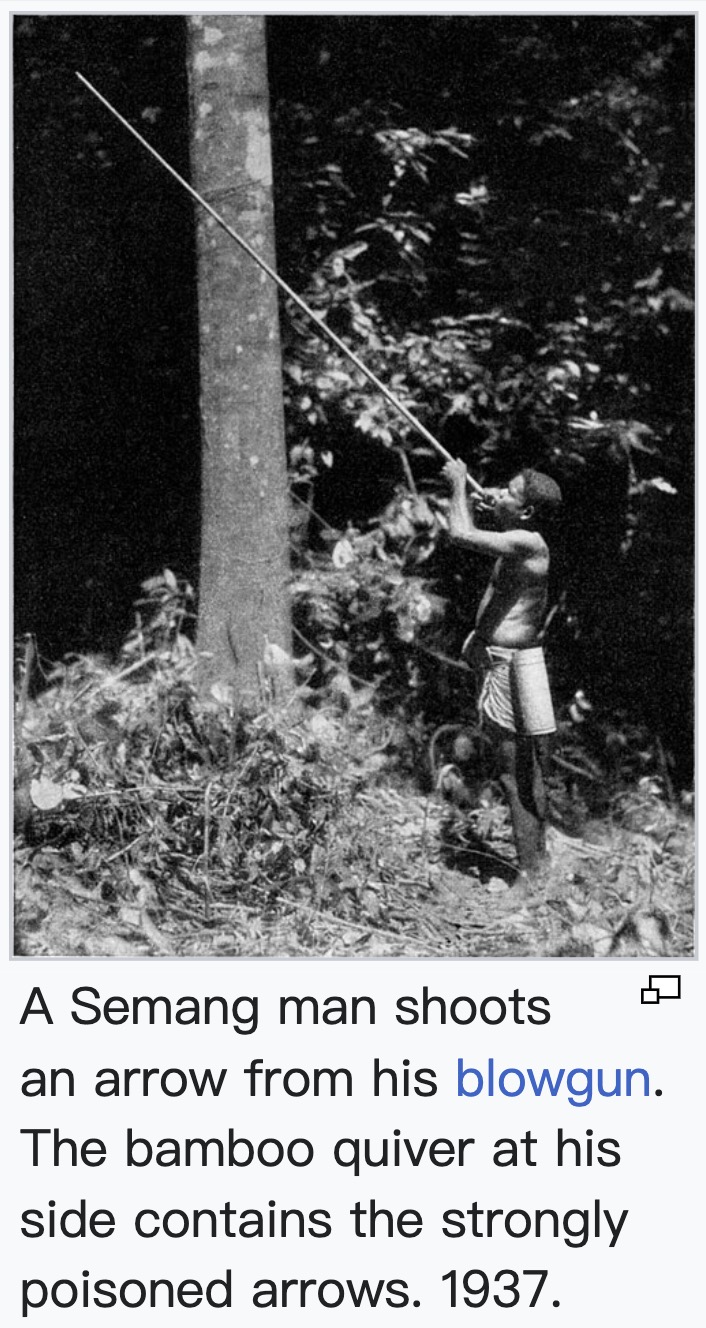
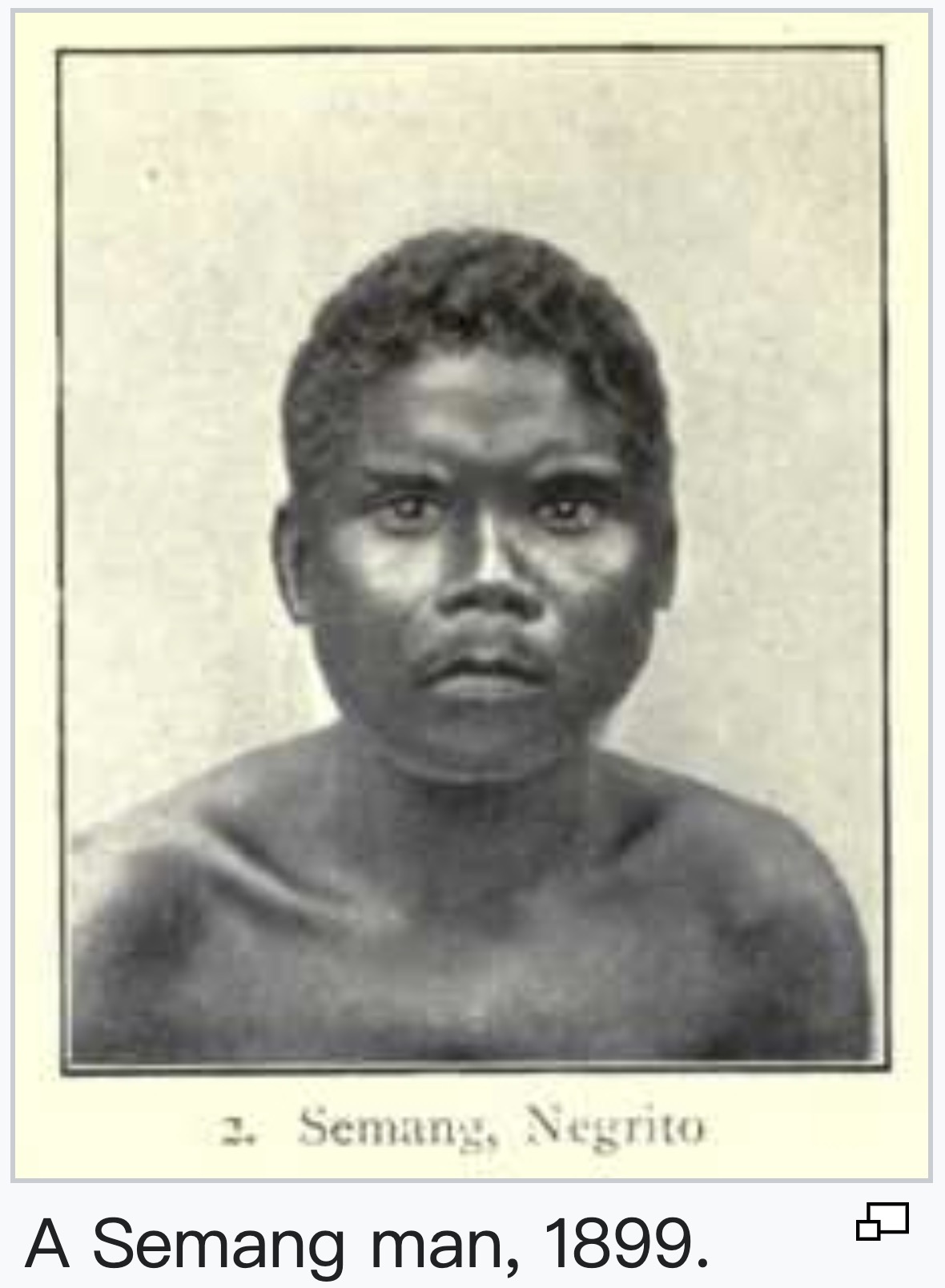
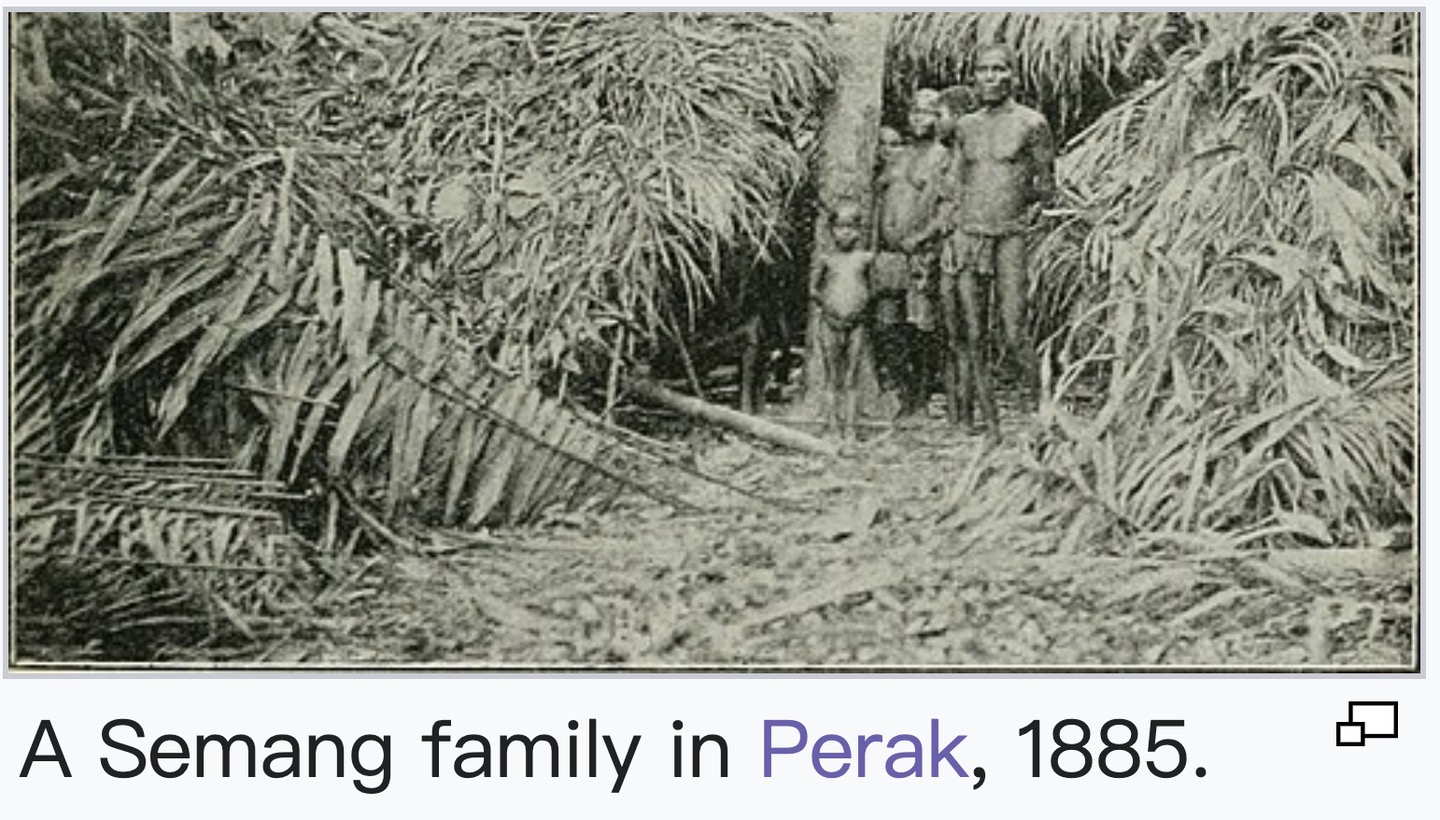
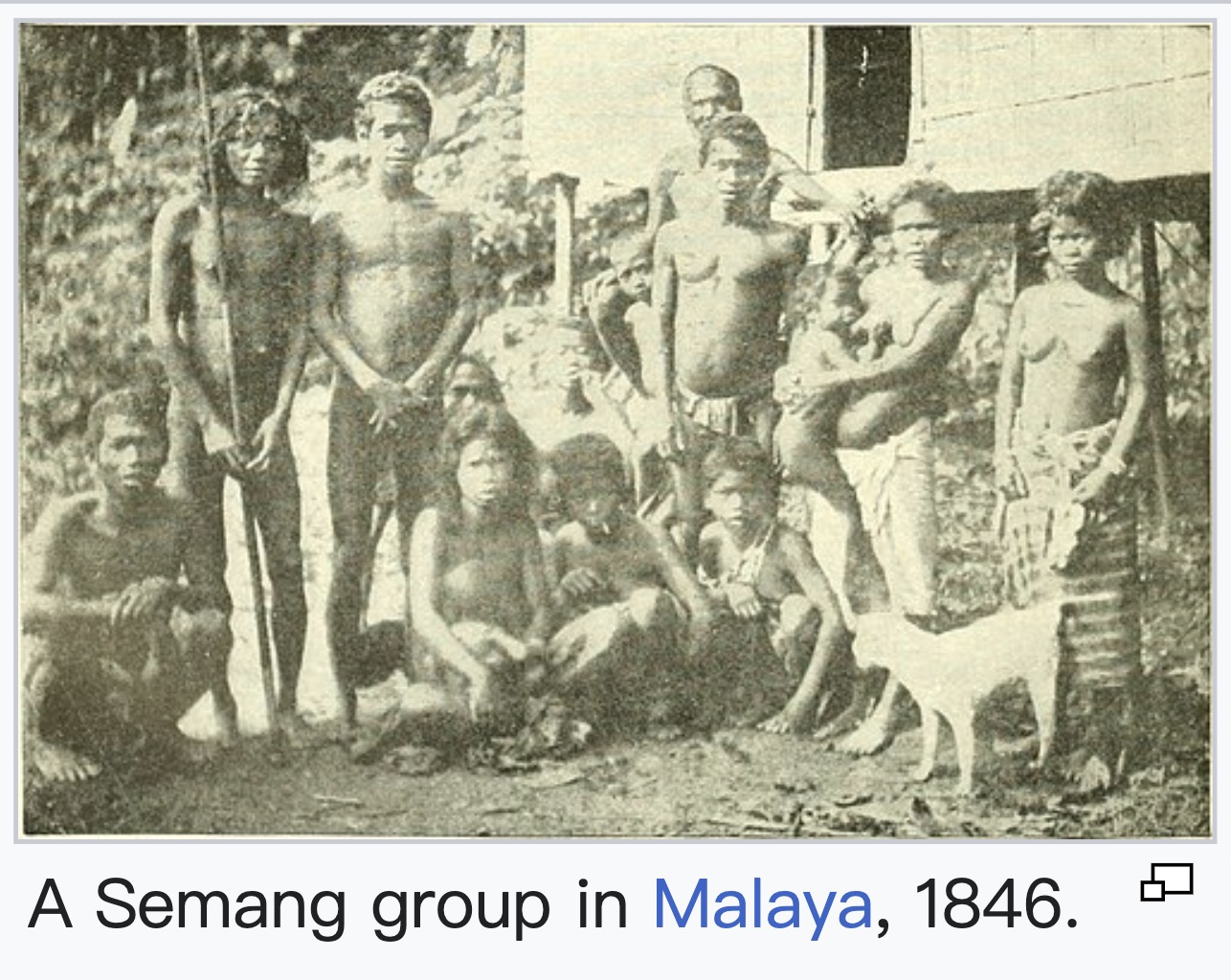
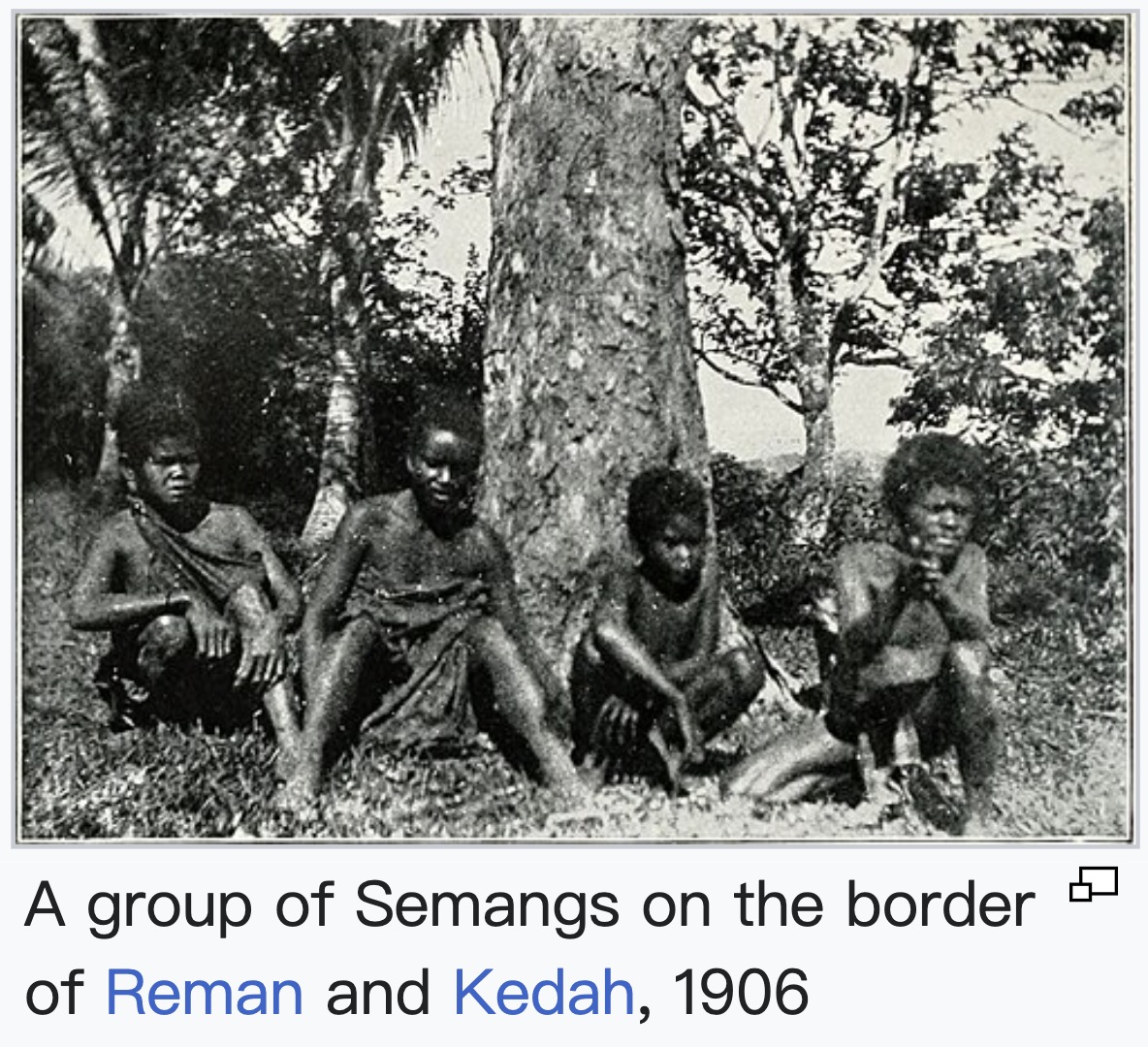
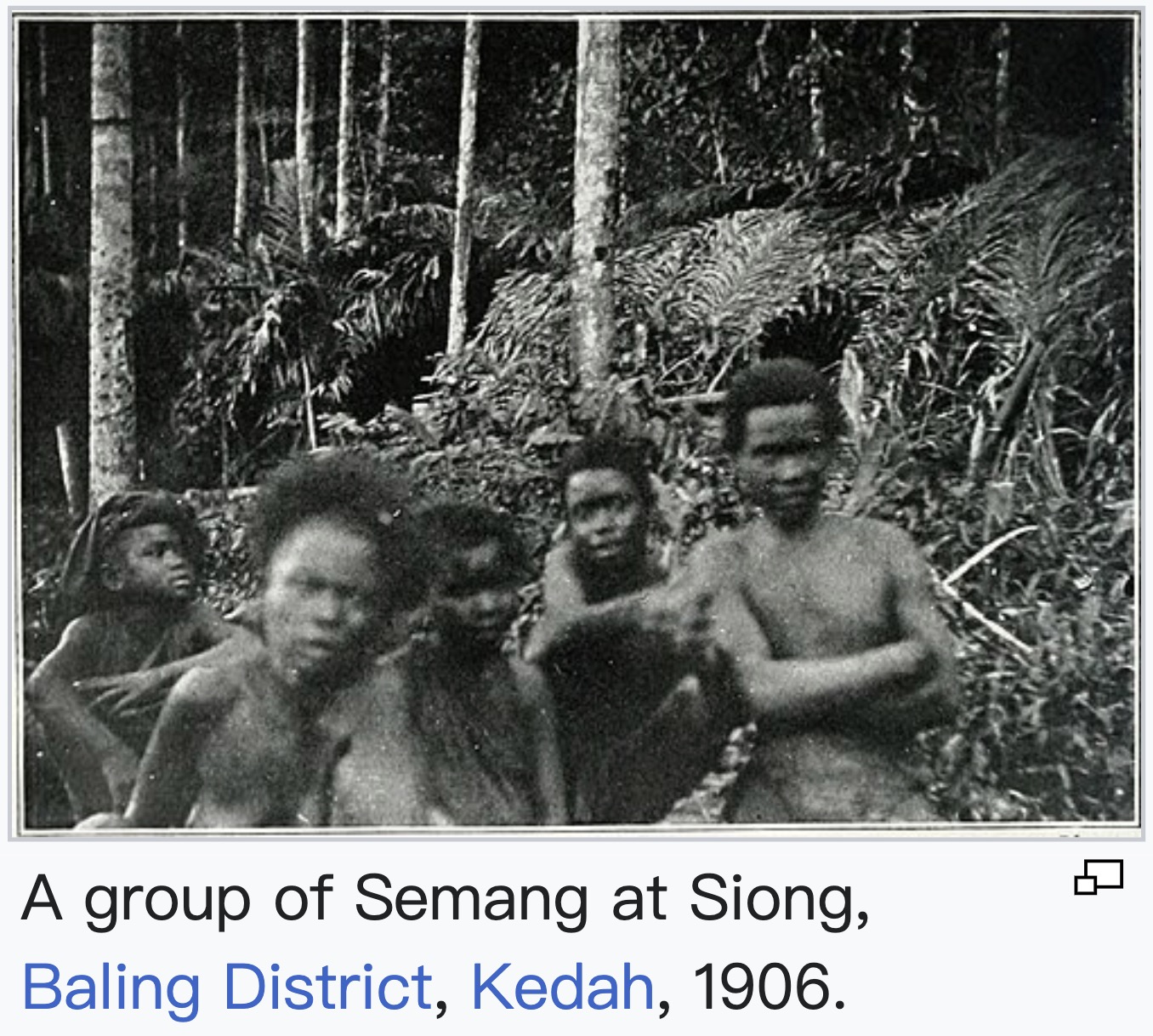
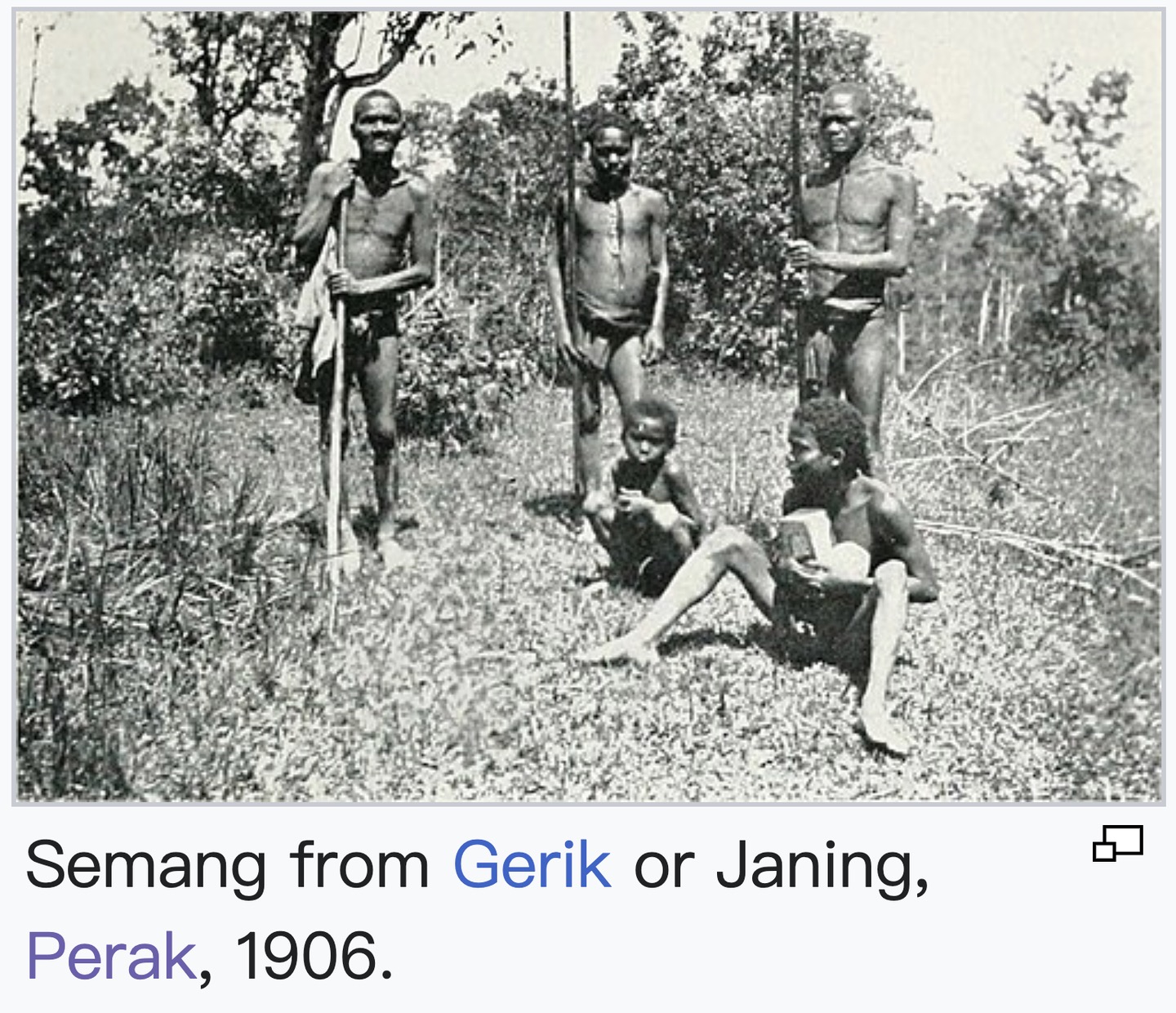
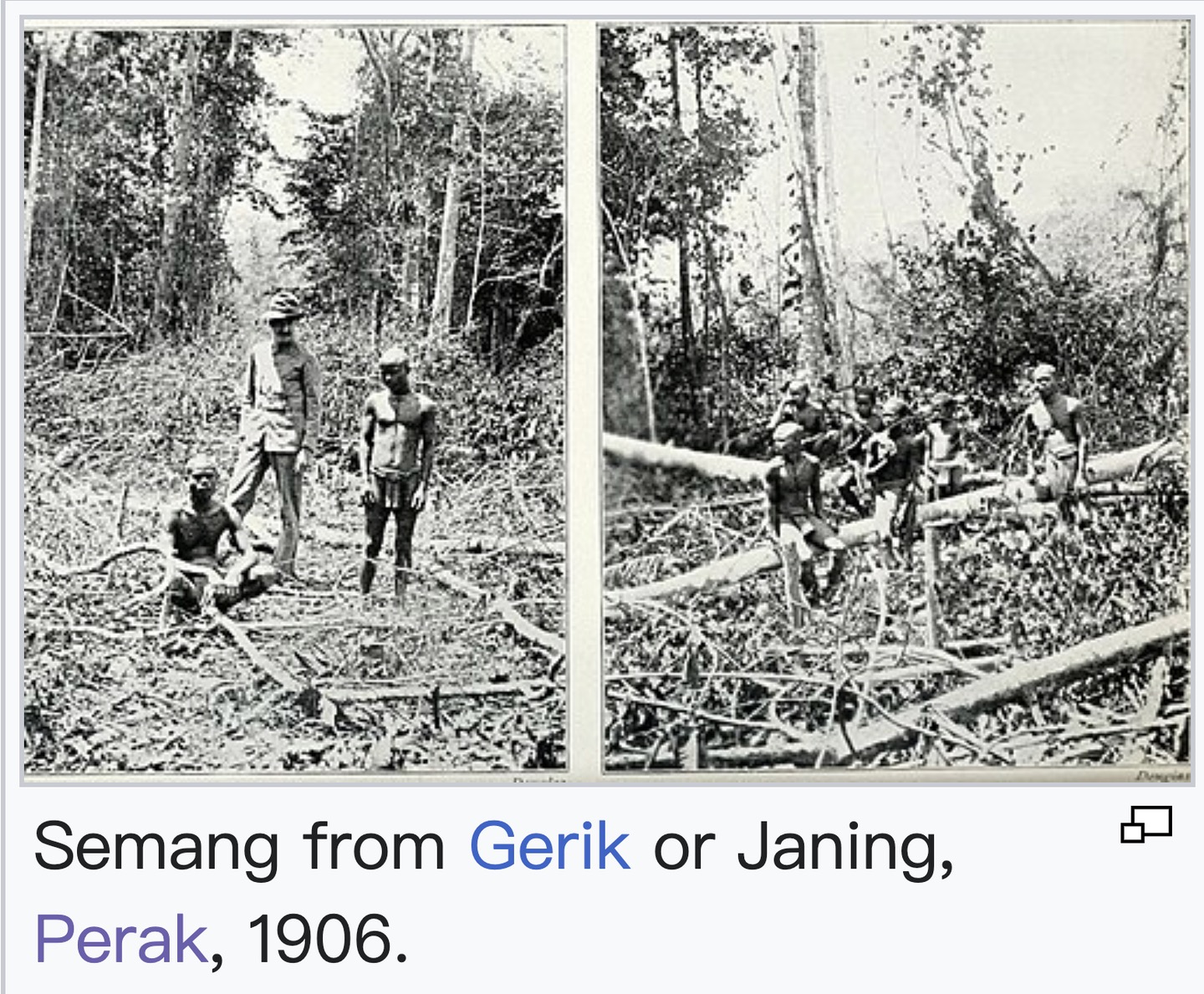
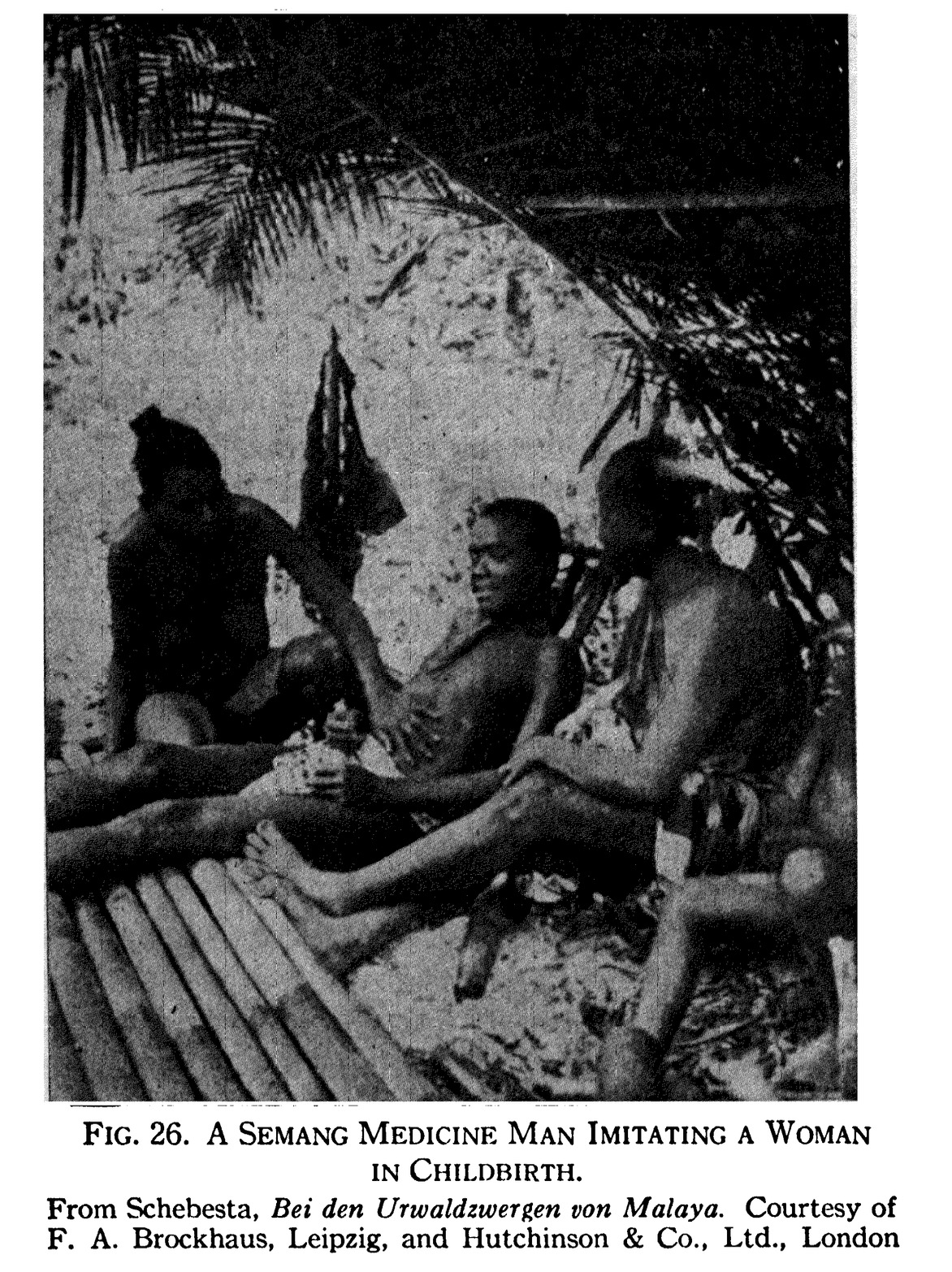
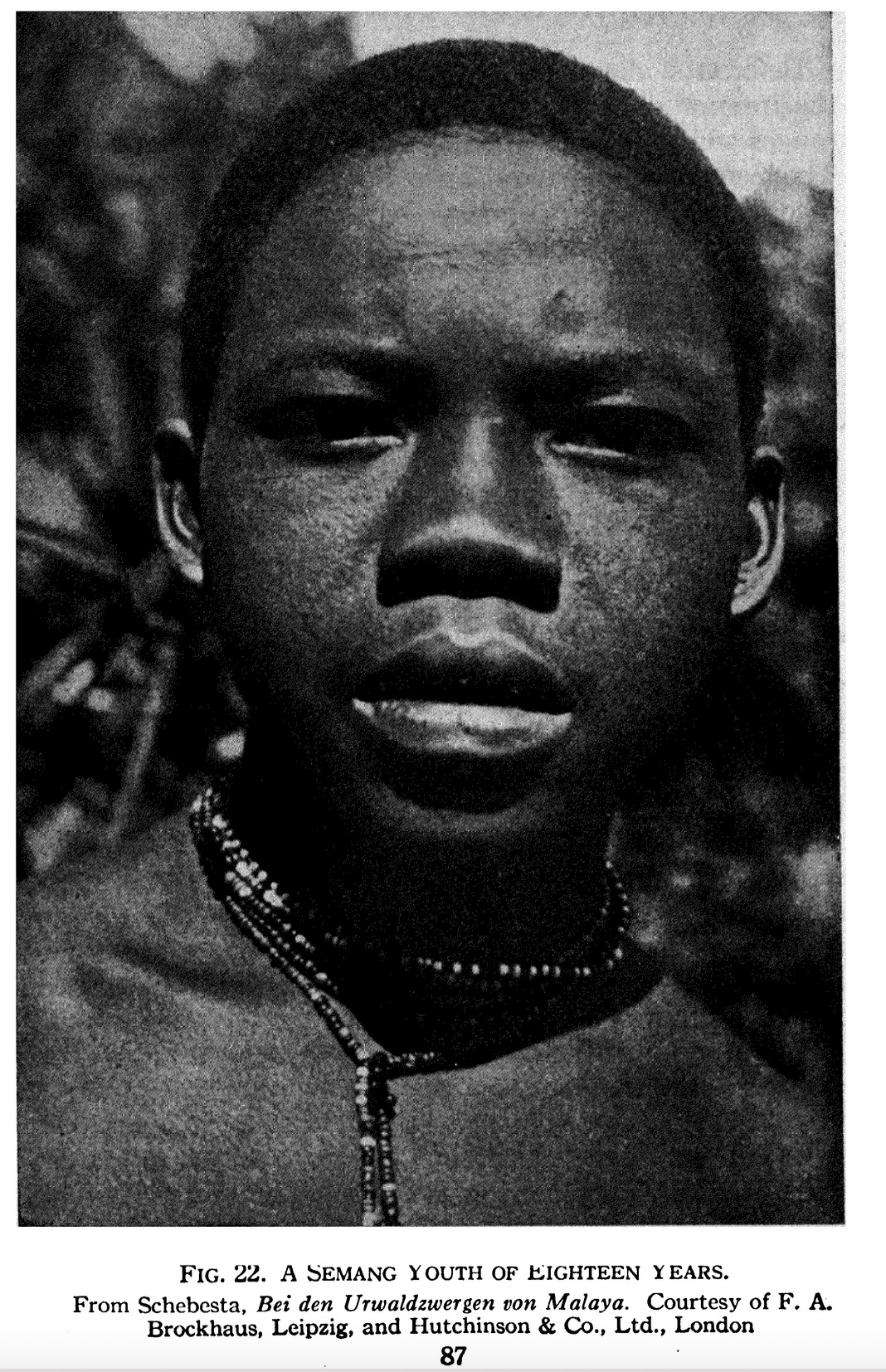
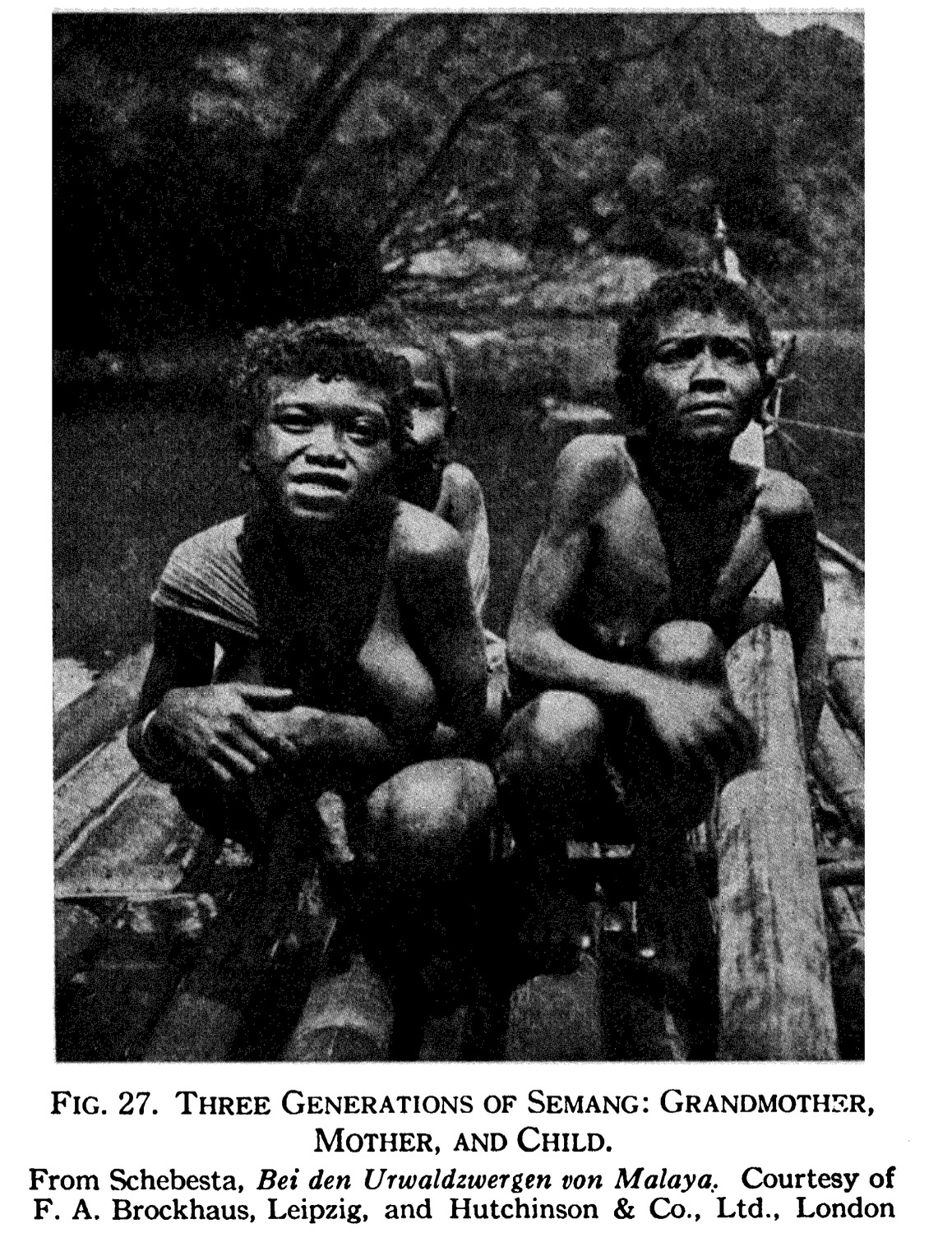
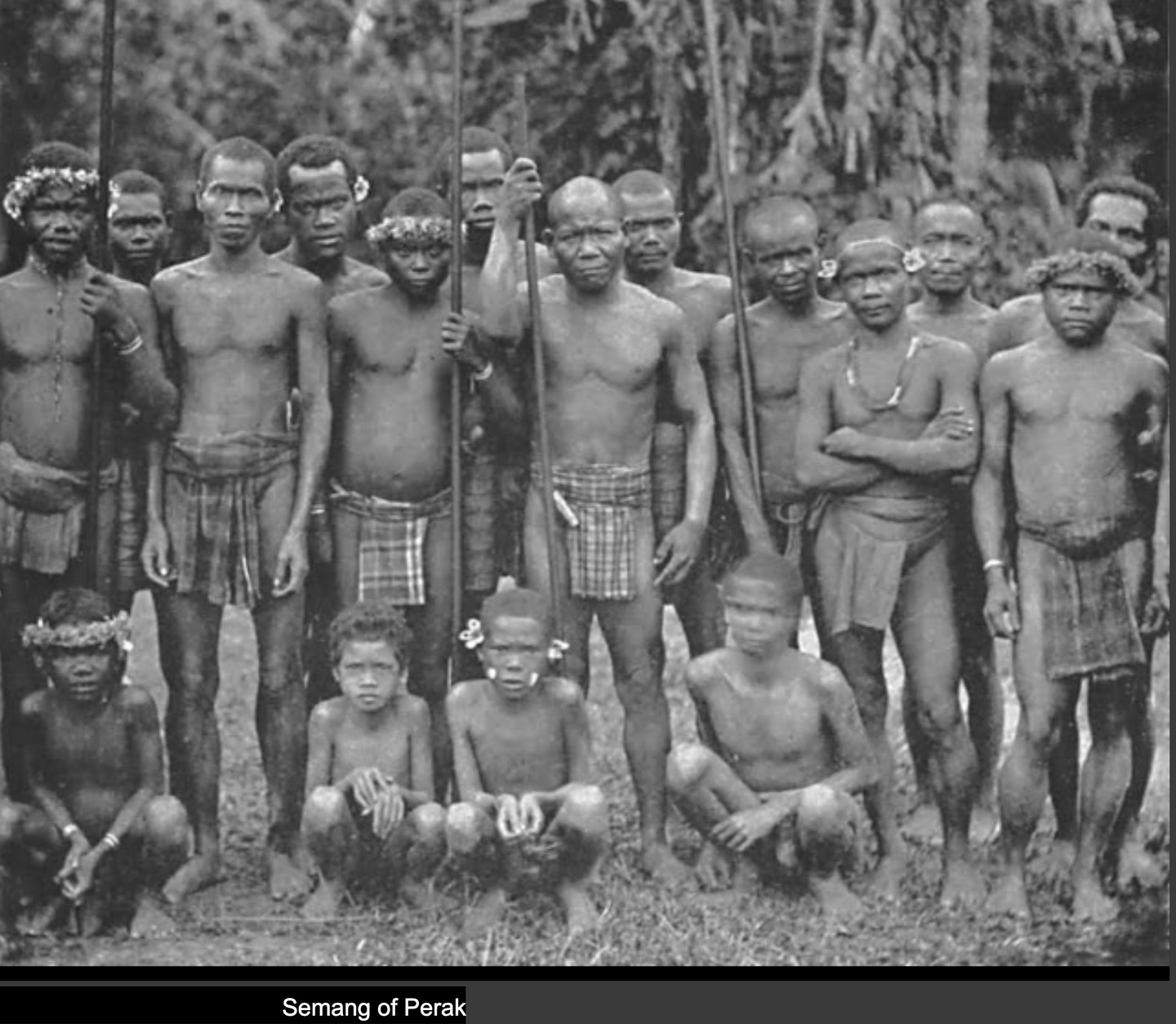
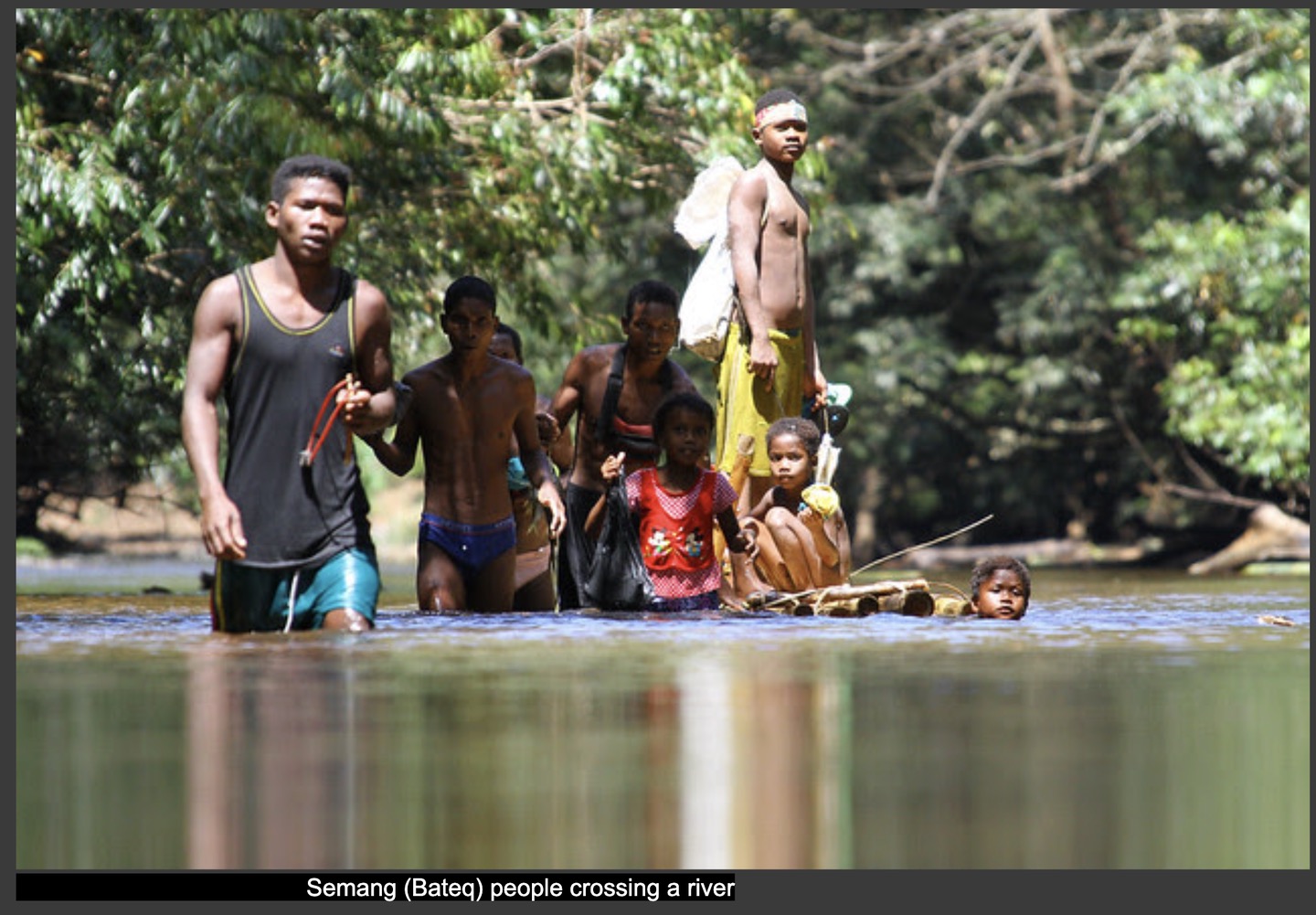
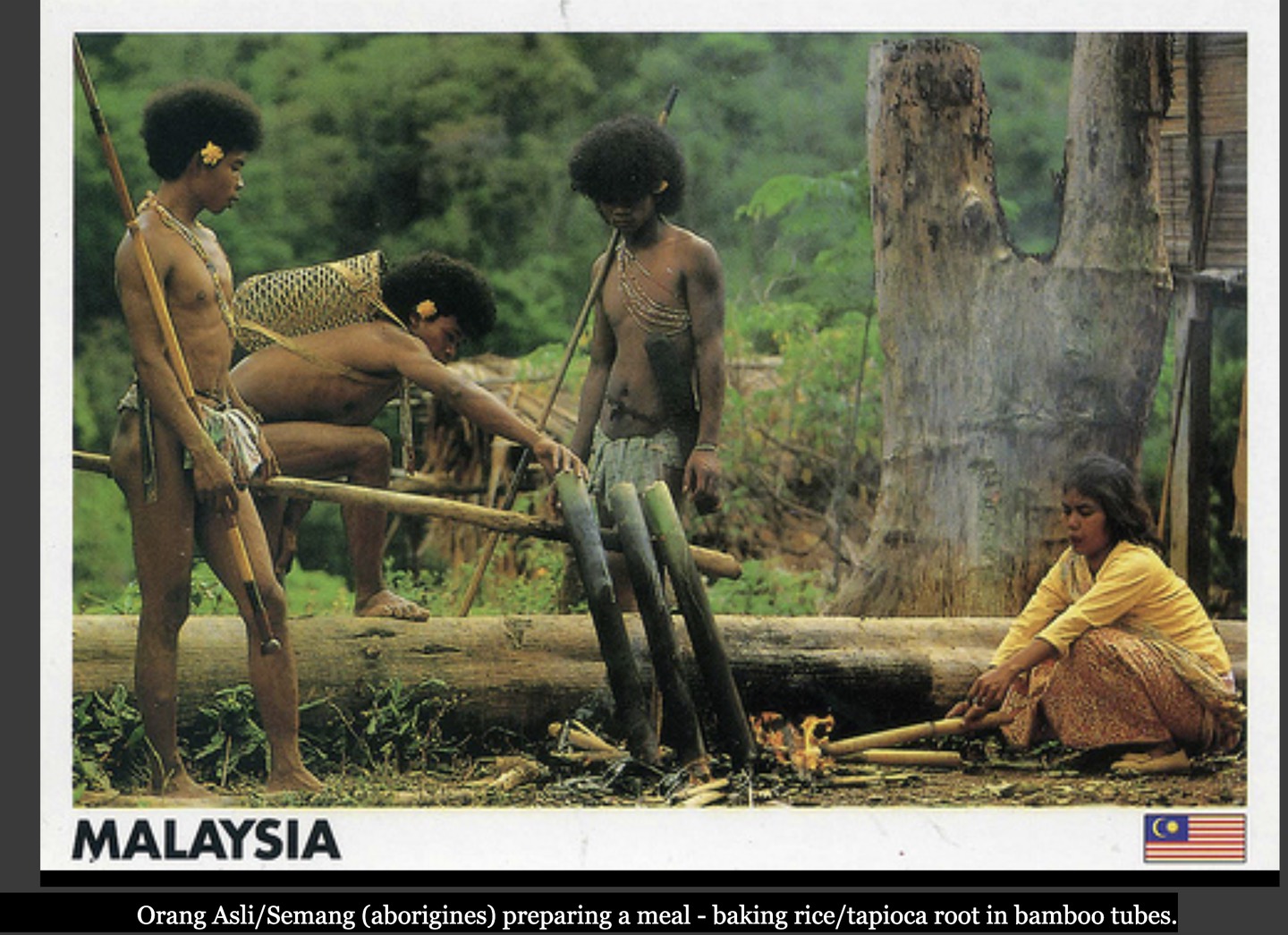
Batek People
Also known as the Bateq, the Batek are an indigenous people of the rainforests of Peninsular Malaysia and one of the Semang groups. Following outside encroachment, they now live mainly within Taman Negara National Park.
Paternal lineages: No direct data are available. Various online sources concerning Semang paternal genetics suggest lineages downstream of K‑M9.
By the same principle, the Batek are pure paternal F, G, I, J, H, K, L, T, R, Q, O, N, M, and S, since all belong to the major F‑M89 branch.
Jahai People
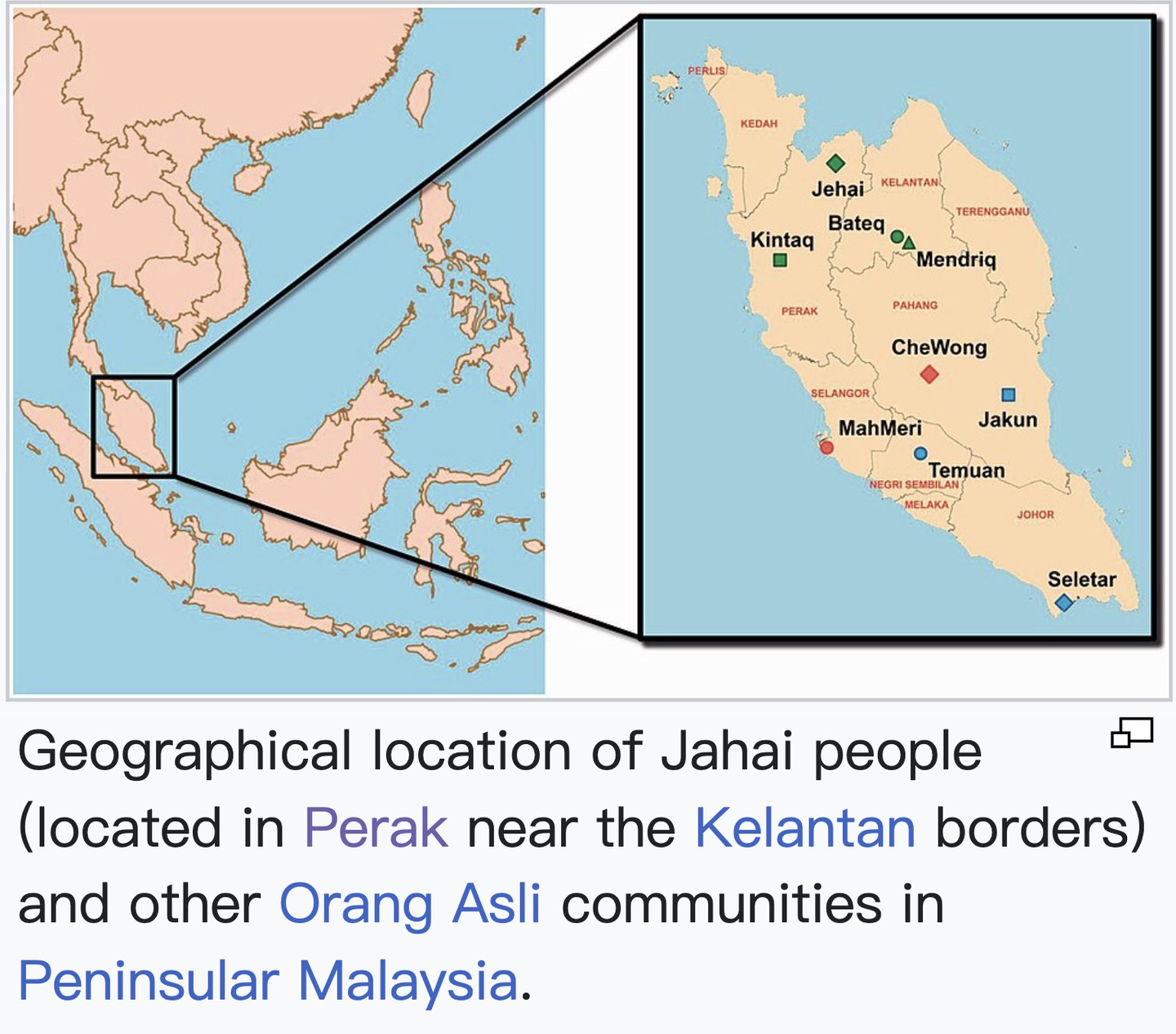
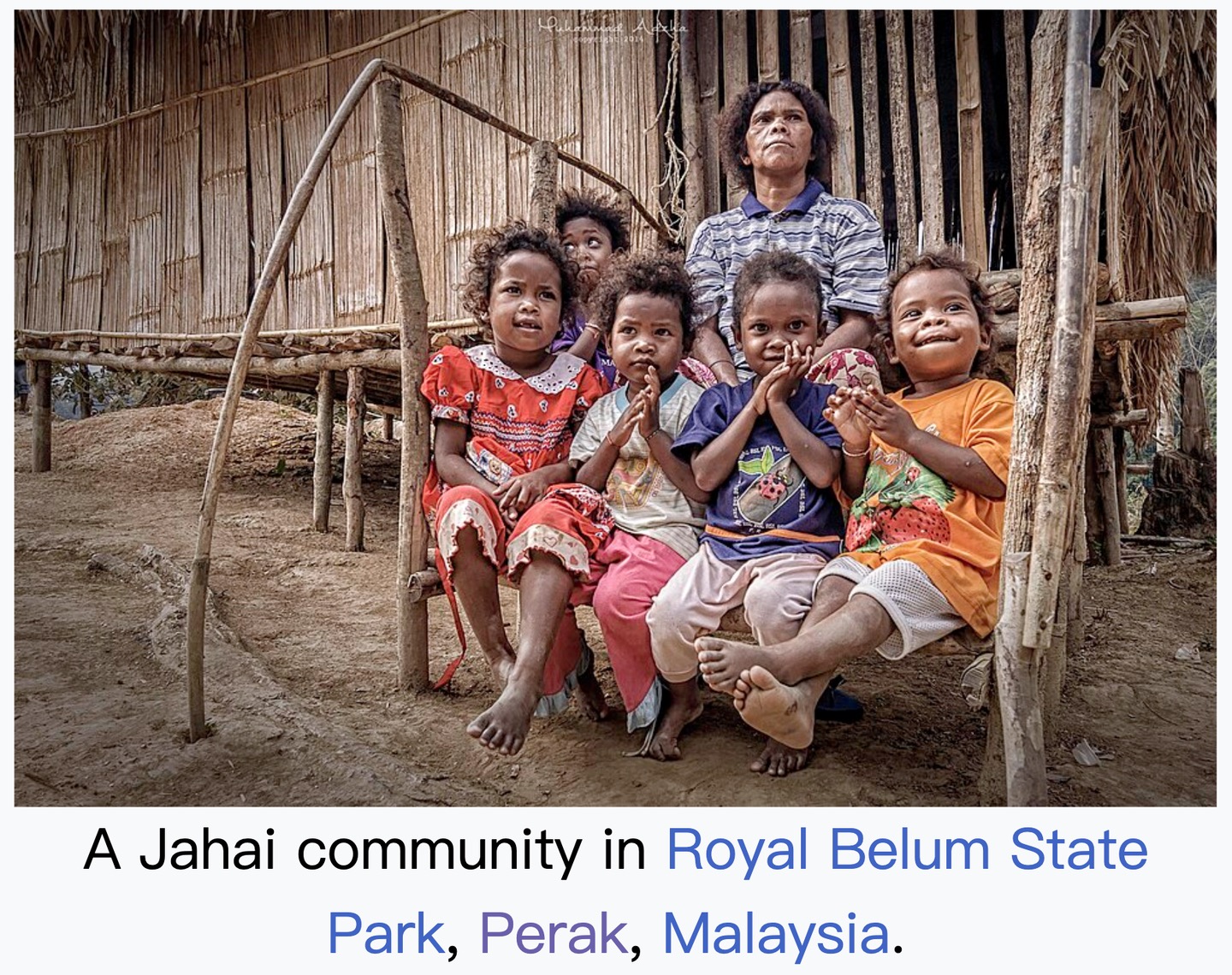
The Jahai live in the Malaysian states of Perak and Kelantan and in parts of Thailand. They are a Semang people traditionally practising hunting and gathering.
Paternal lineages: No direct data are available. Various online sources concerning Semang paternal genetics suggest lineages downstream of K‑M9.
By the same principle, the Jahai are pure paternal F, G, I, J, H, K, L, T, R, Q, O, N, M, and S, since all belong to the major F‑M89 branch.
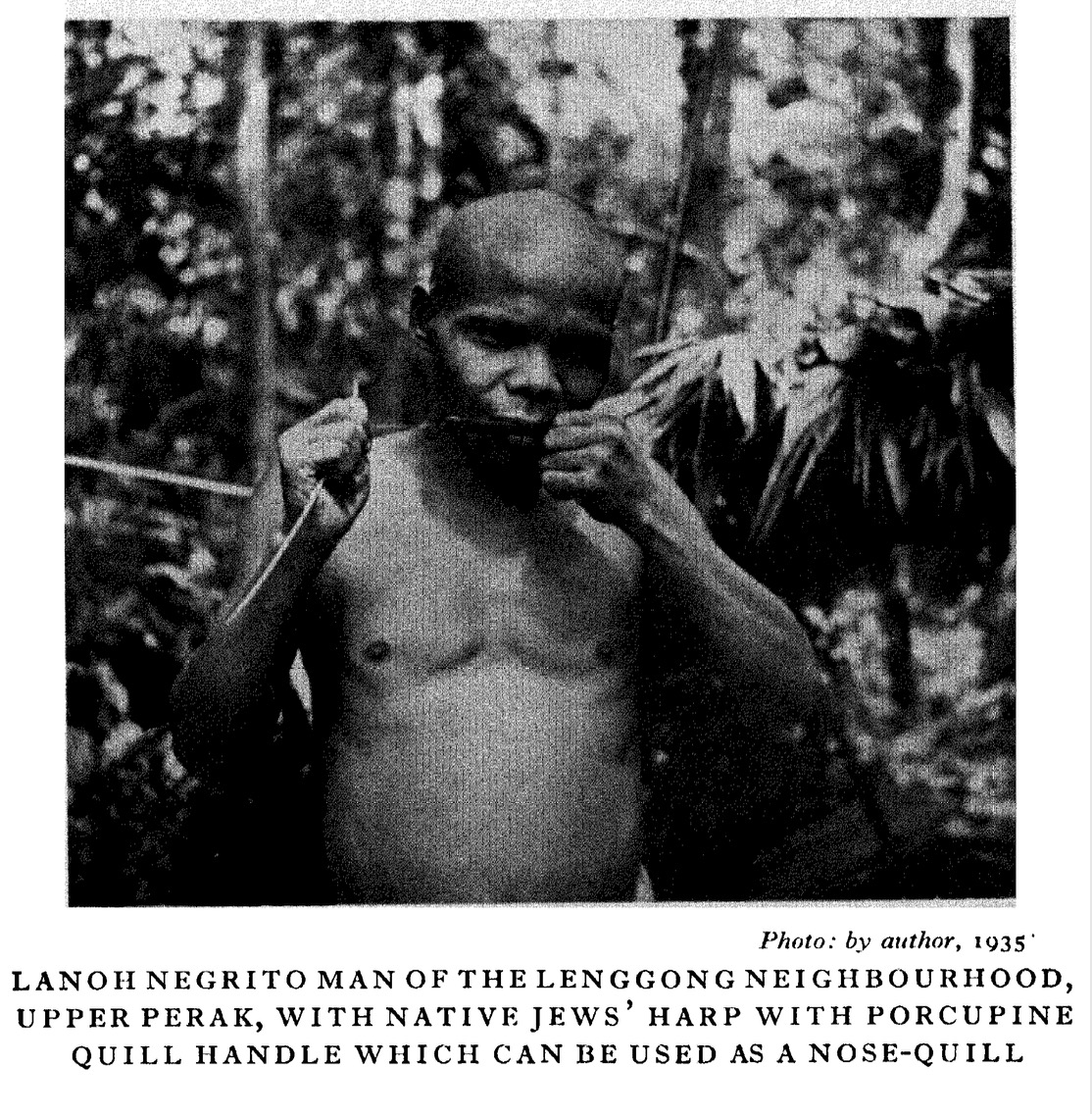
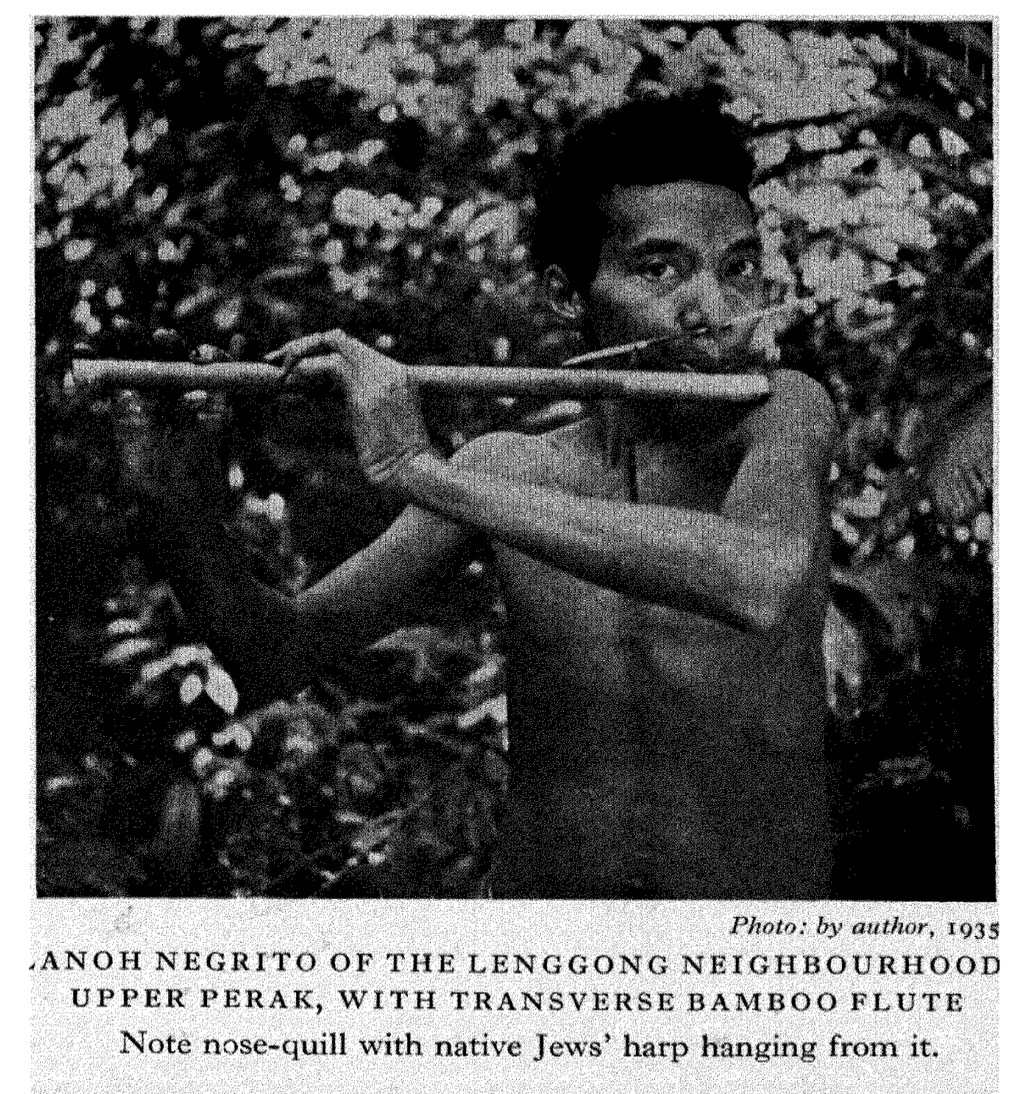
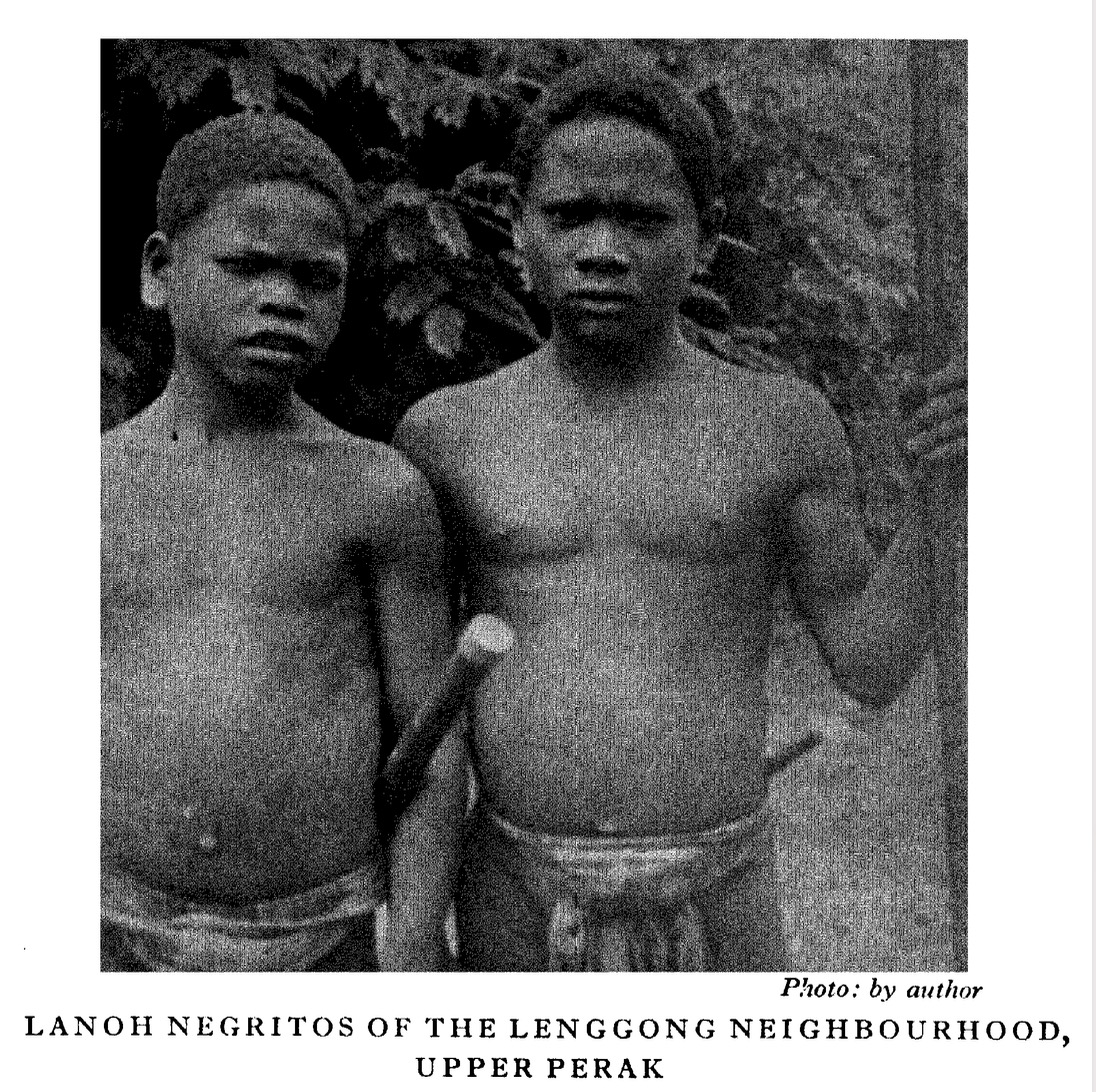
Lanoh People
The Lanoh live on the Malay Peninsula and are also known as Sabub’n or Lano. They are one of the Semang peoples. Within Lanoh communities they call themselves Menik Semnam, meaning “Semnam people” or “Orang Semnam” in Malay.
Paternal lineages: No direct data are available. Various online sources concerning Semang paternal genetics suggest lineages downstream of K‑M9.
By the same principle, the Lanoh are pure paternal F, G, I, J, H, K, L, T, R, Q, O, N, M, and S, since all belong to the major F‑M89 branch.
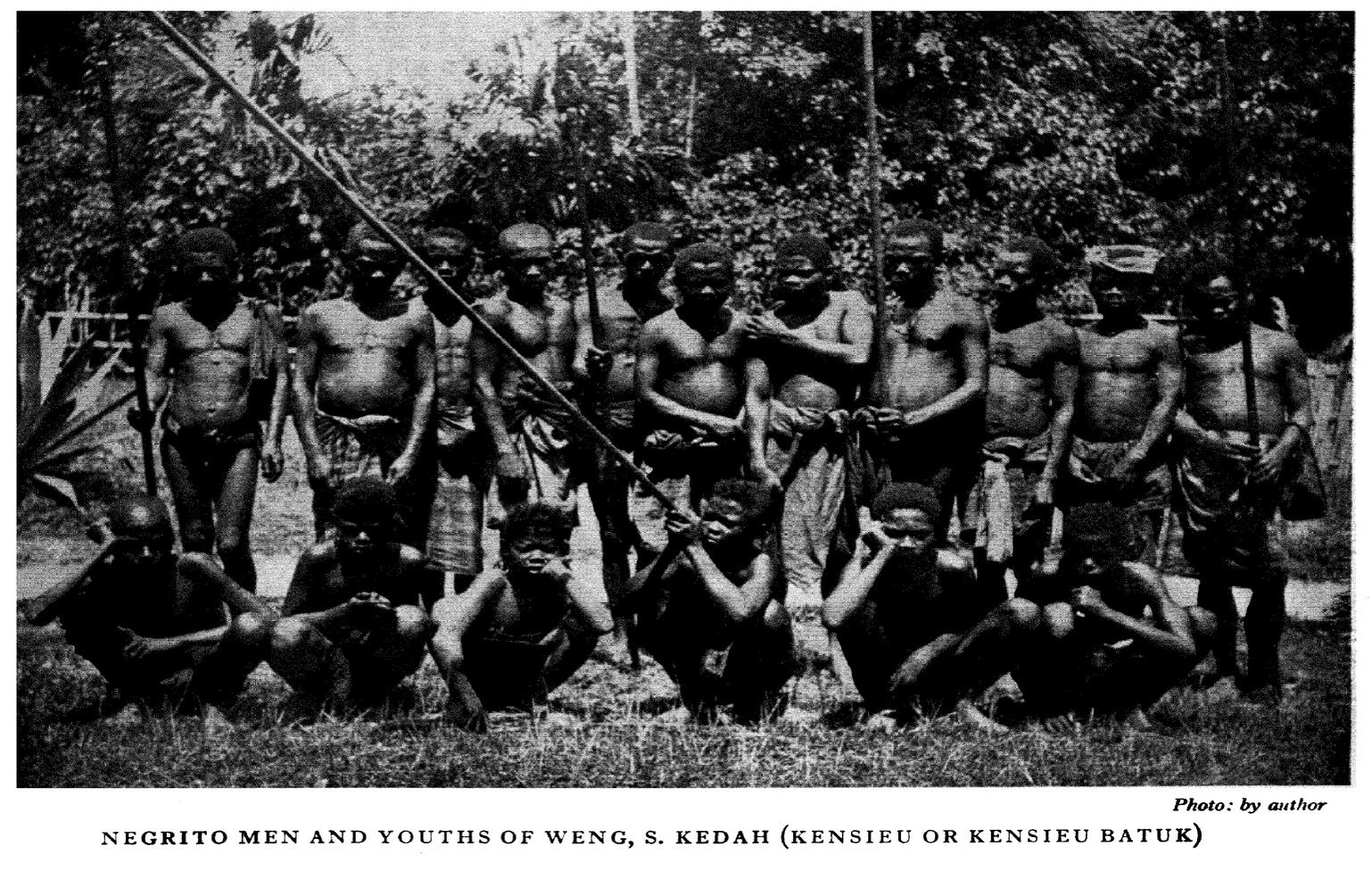
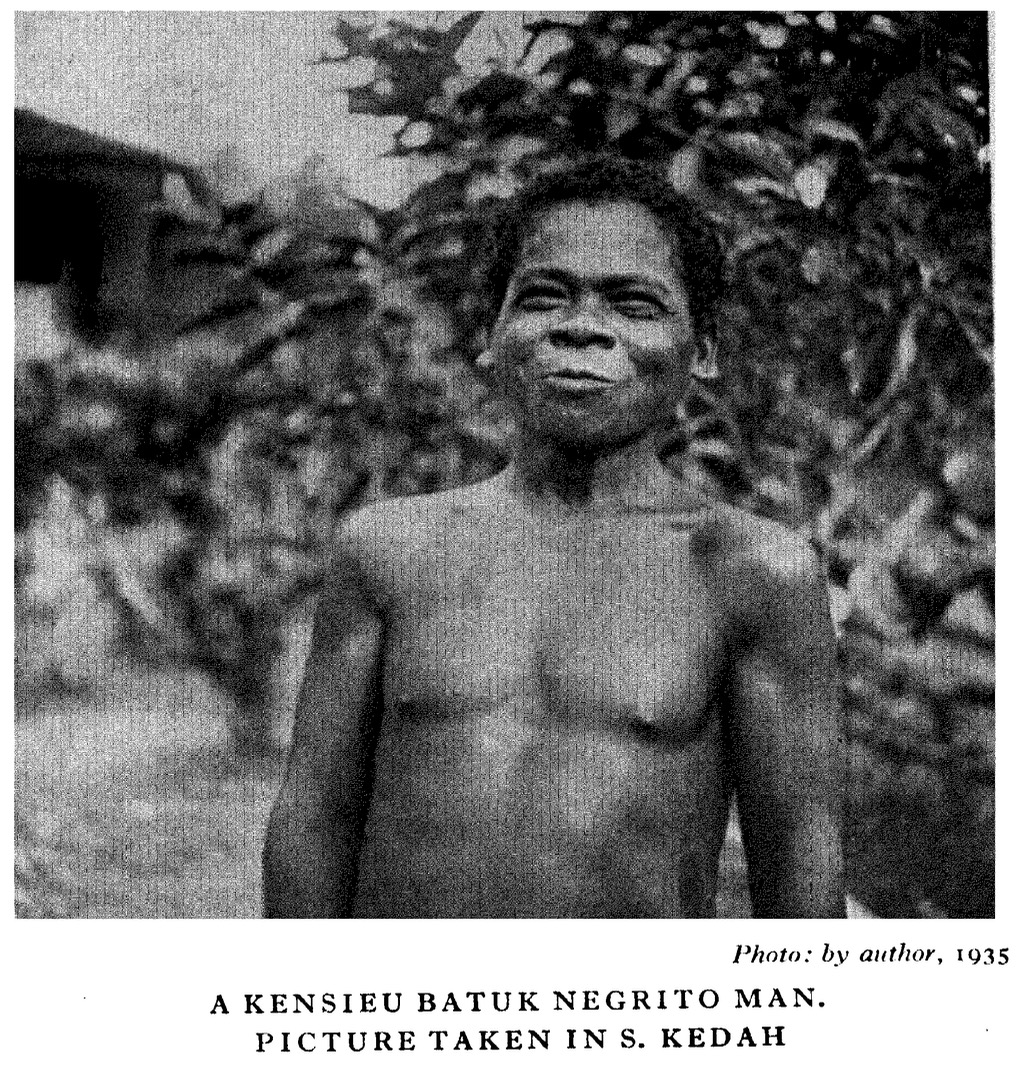
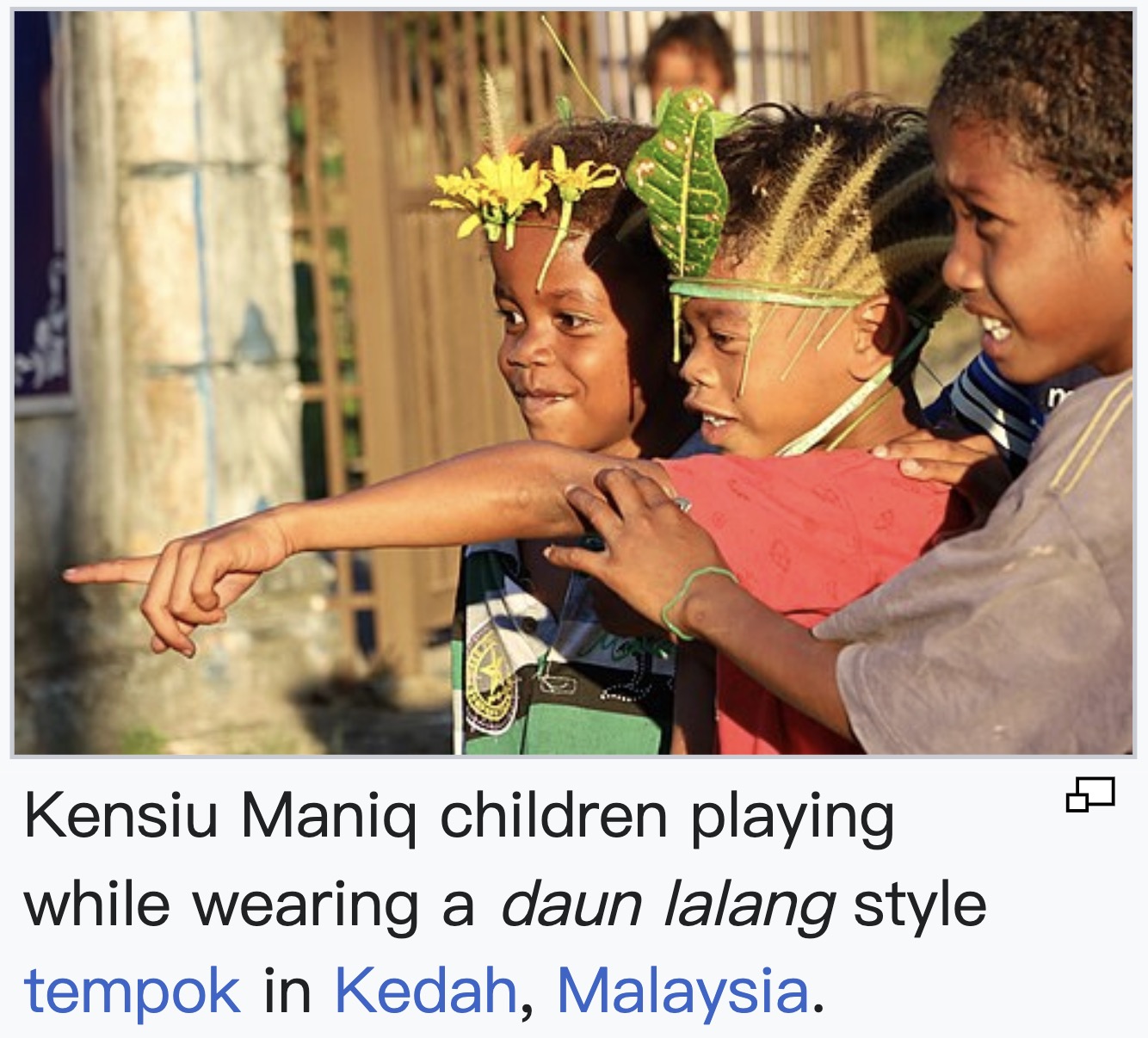
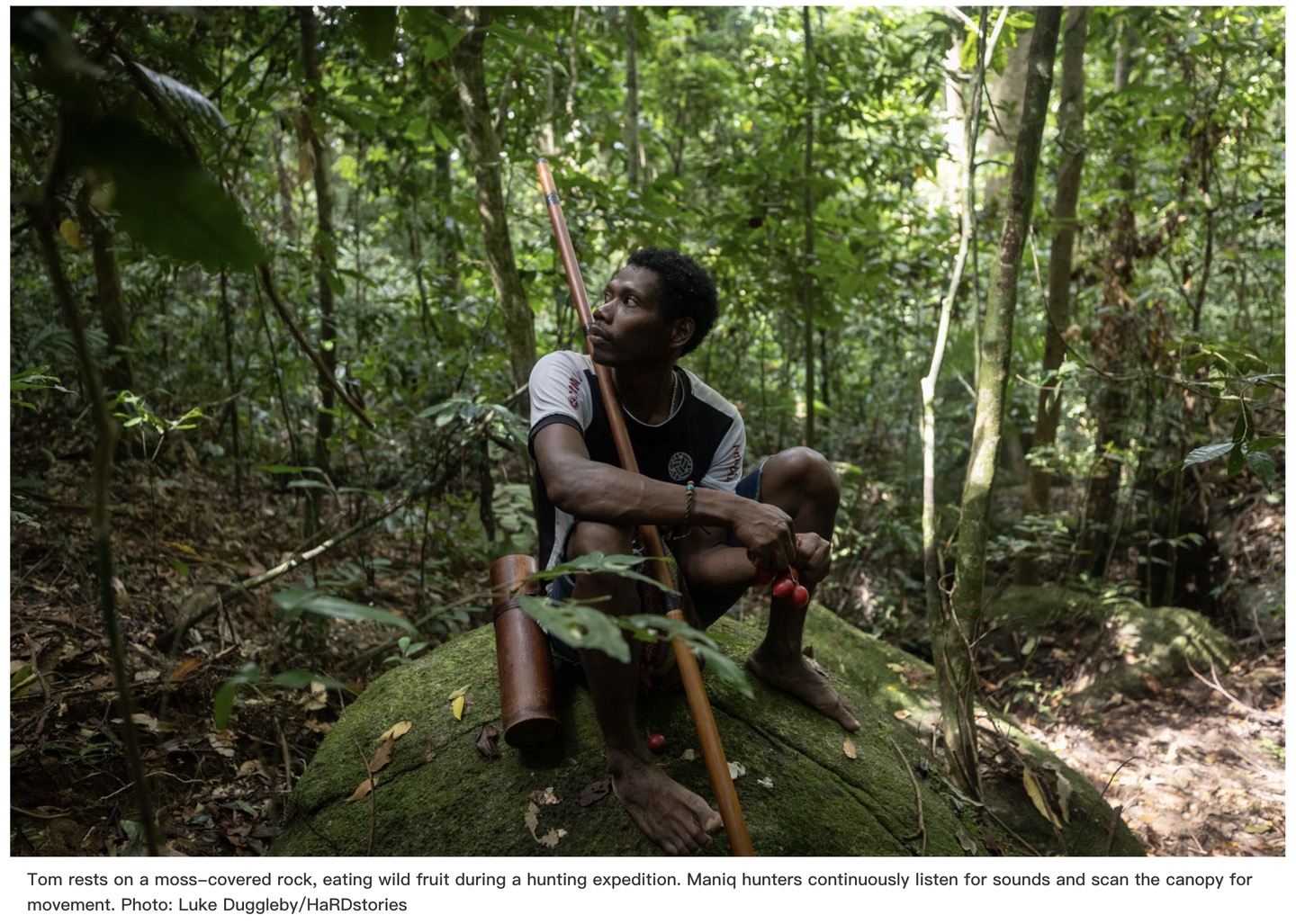
Maniq People
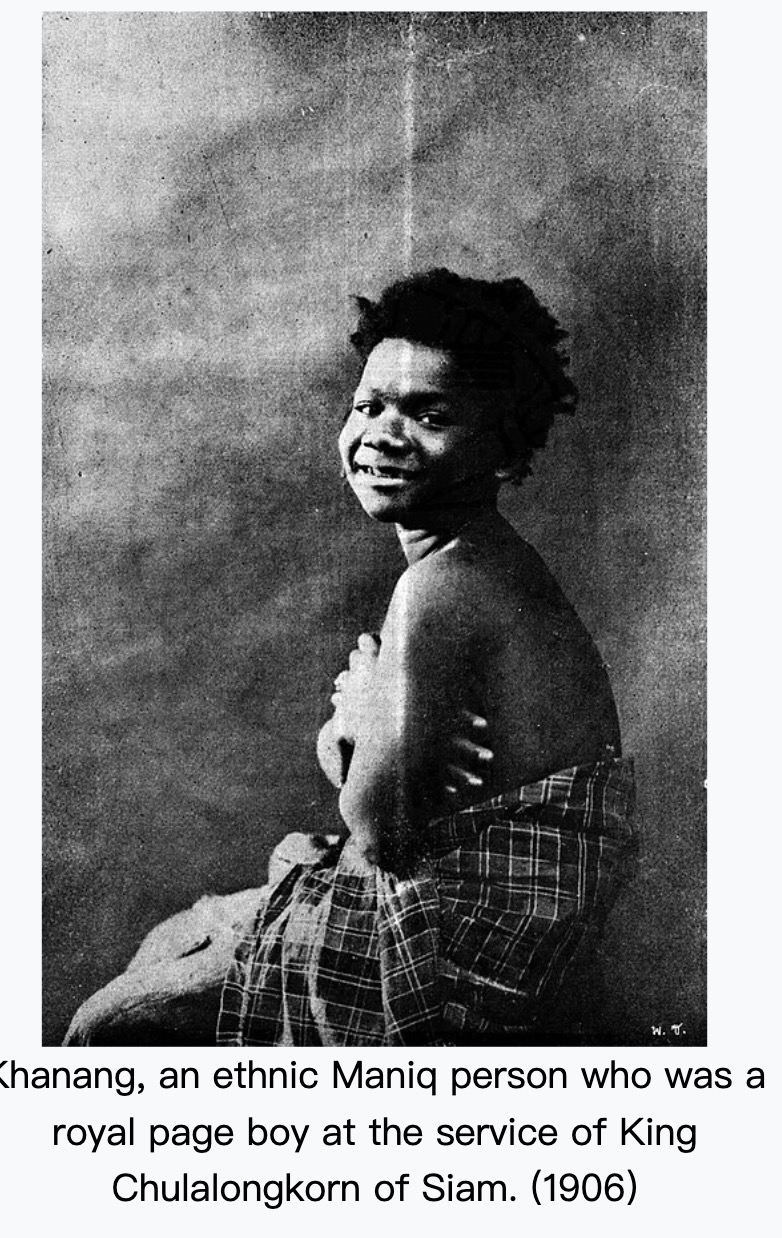
Called Kensiu in some places, the Maniq are a Negrito tribe of Thailand and are sometimes classified as a branch of the Semang.
Paternal lineages: No direct data are available. Various online sources concerning Semang paternal genetics suggest lineages downstream of K‑M9.
By the same principle, the Maniq are pure paternal F, G, I, J, H, K, L, T, R, Q, O, N, M, and S, since all belong to the major F‑M89 branch.
Mendriq People
The Mendriq are a Negrito population of the Malay Peninsula and one of the Semang groups.
Paternal lineages: No direct data are available. Various online sources concerning Semang paternal genetics suggest lineages downstream of K‑M9.
By the same principle, the Mendriq are pure paternal F, G, I, J, H, K, L, T, R, Q, O, N, M, and S, since all belong to the major F‑M89 branch.
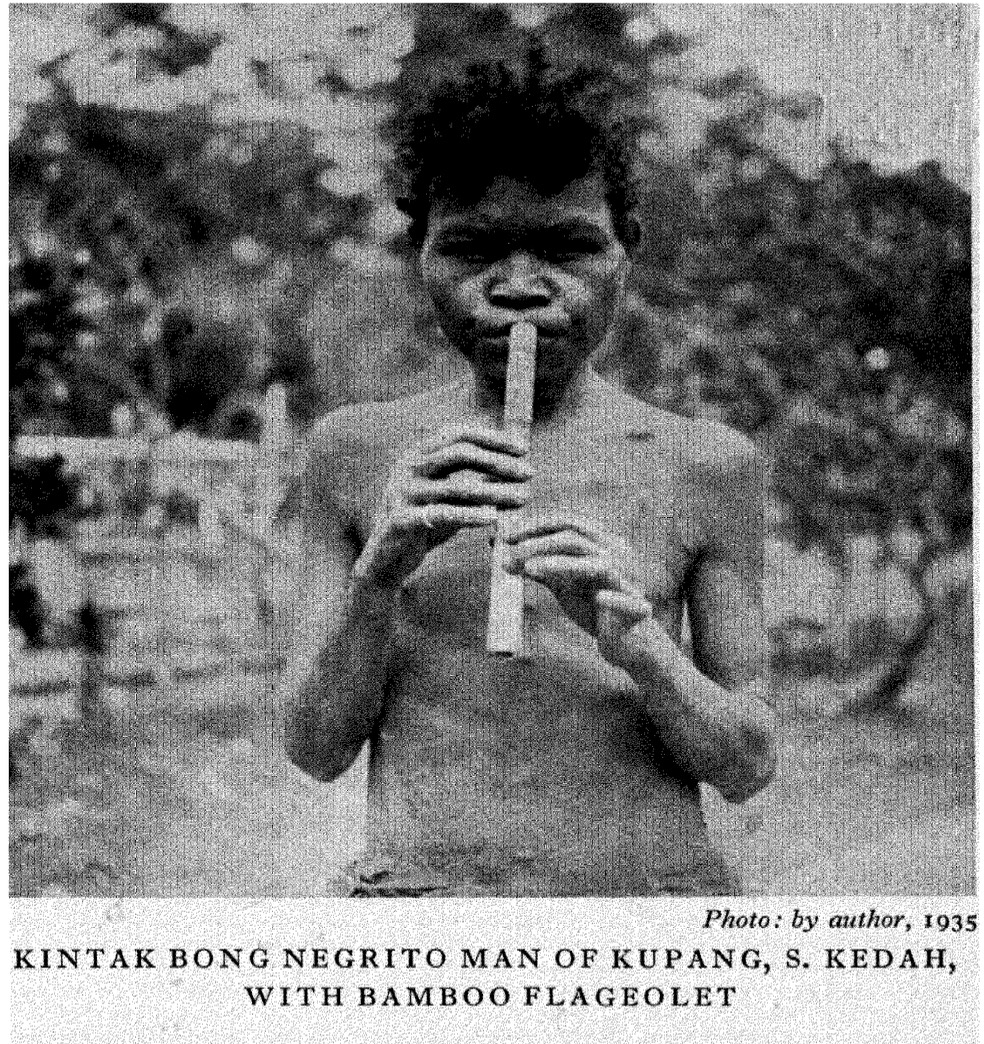
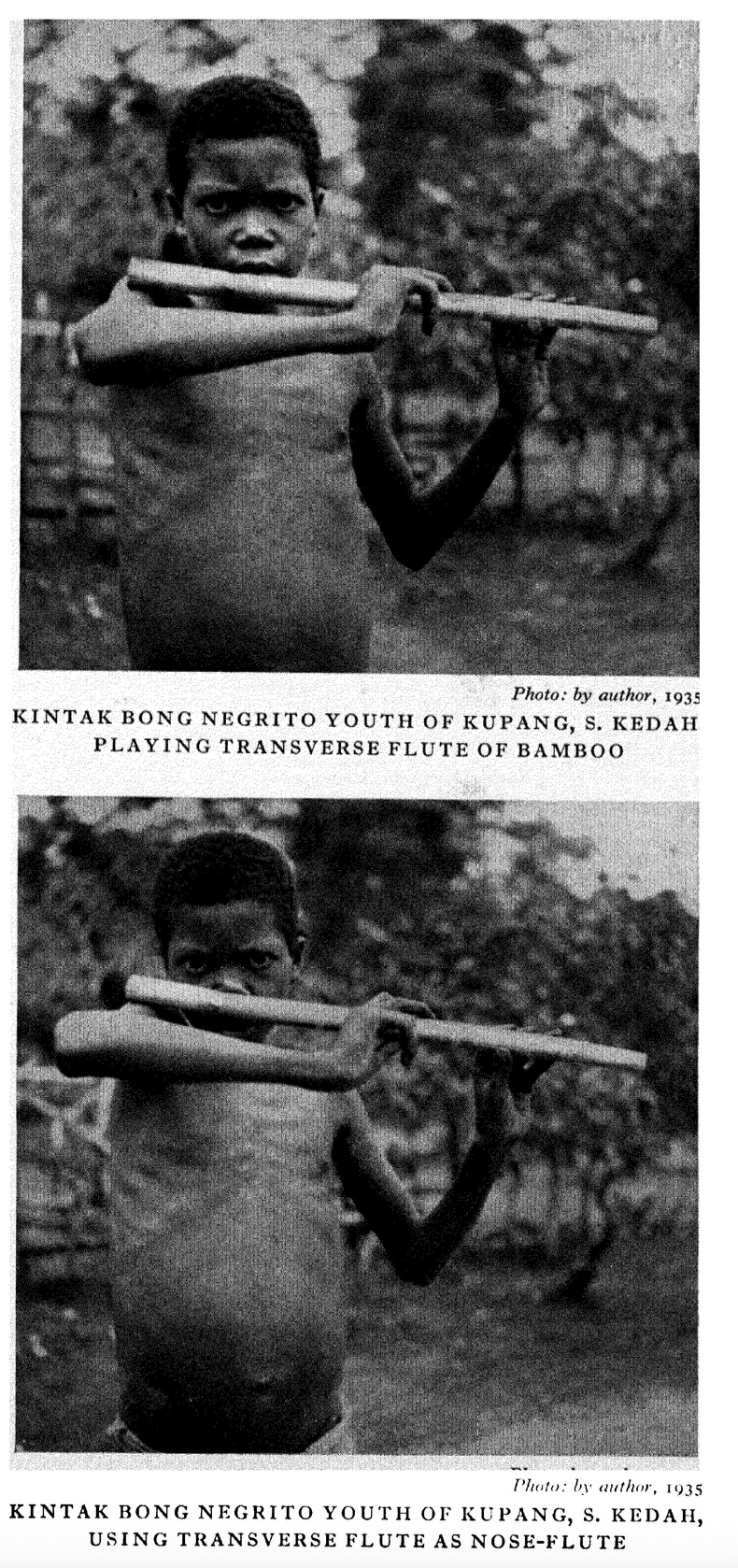
Kintak People
Also known as Kintaq, the Kintak are a Negrito people living in Peninsular Malaysia.
Paternal lineages: No direct data are available. Various online sources concerning Semang paternal genetics suggest lineages downstream of K‑M9.
By the same principle, the Kintak are pure paternal F, G, I, J, H, K, L, T, R, Q, O, N, M, and S, since all belong to the major F‑M89 branch.
IV. New Guinea
No people of New Guinea are conventionally listed in encyclopaedias as a typical Negrito tribe, but the history of anthropological research records many tribes with Negrito-like phenotypes. Unlike the Philippines, the Andaman Islands, and the Malay Peninsula, New Guinea has no official enumeration of Negrito groups. Its marginal communities are numerous and highly diverse. I therefore present only three tribes as examples. Interested readers can consult nineteenth- and twentieth-century anthropological books and papers, where many other populations with Negrito-like phenotypes can probably be found.
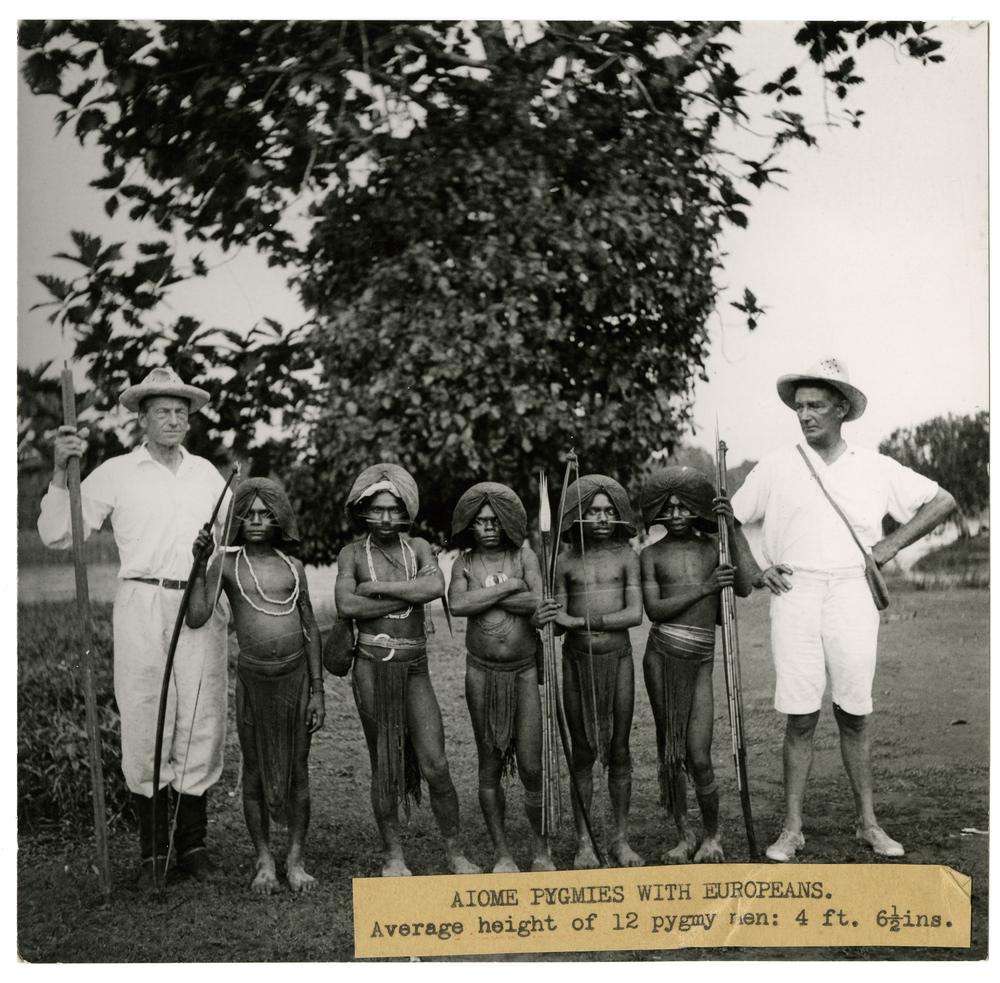
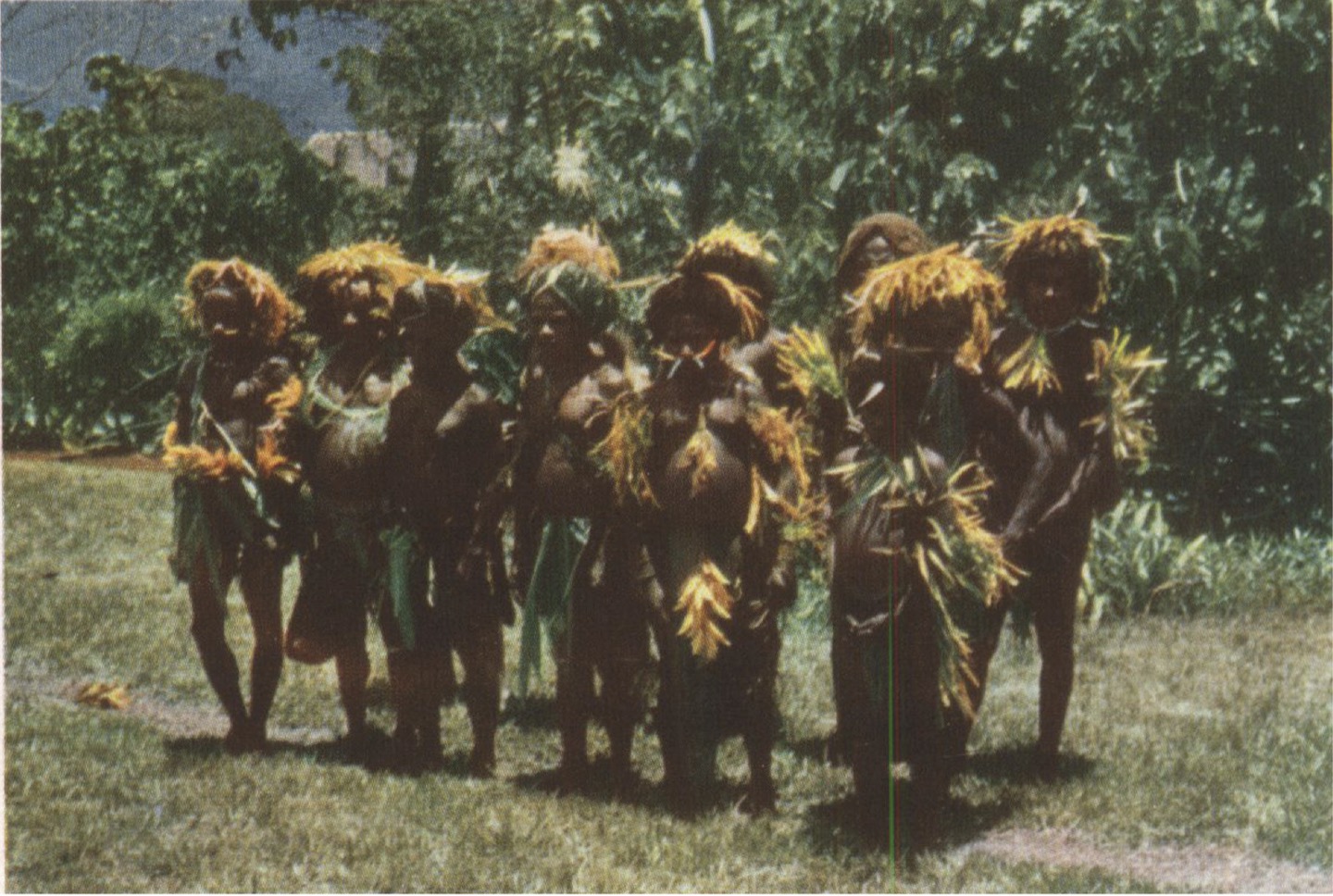
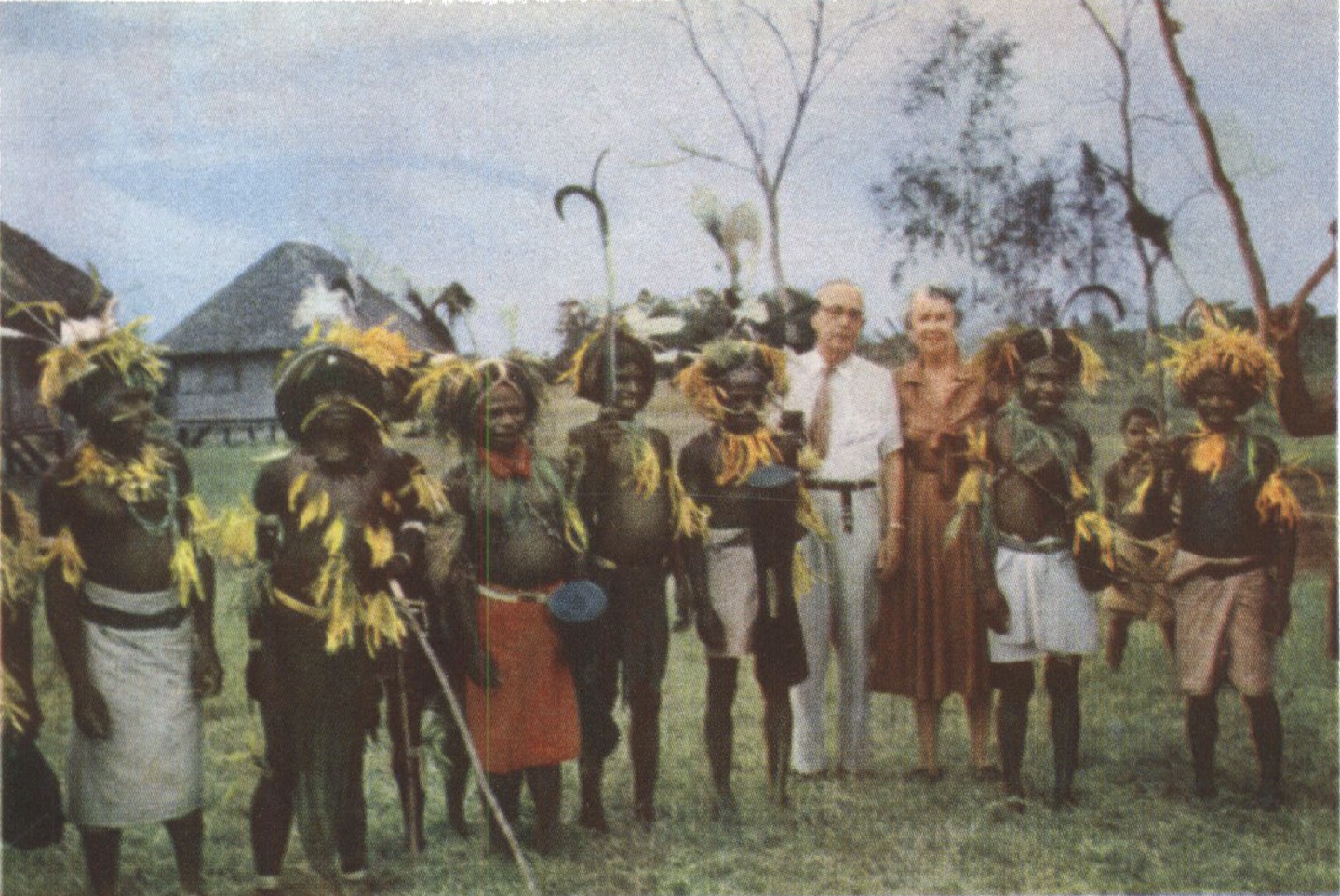
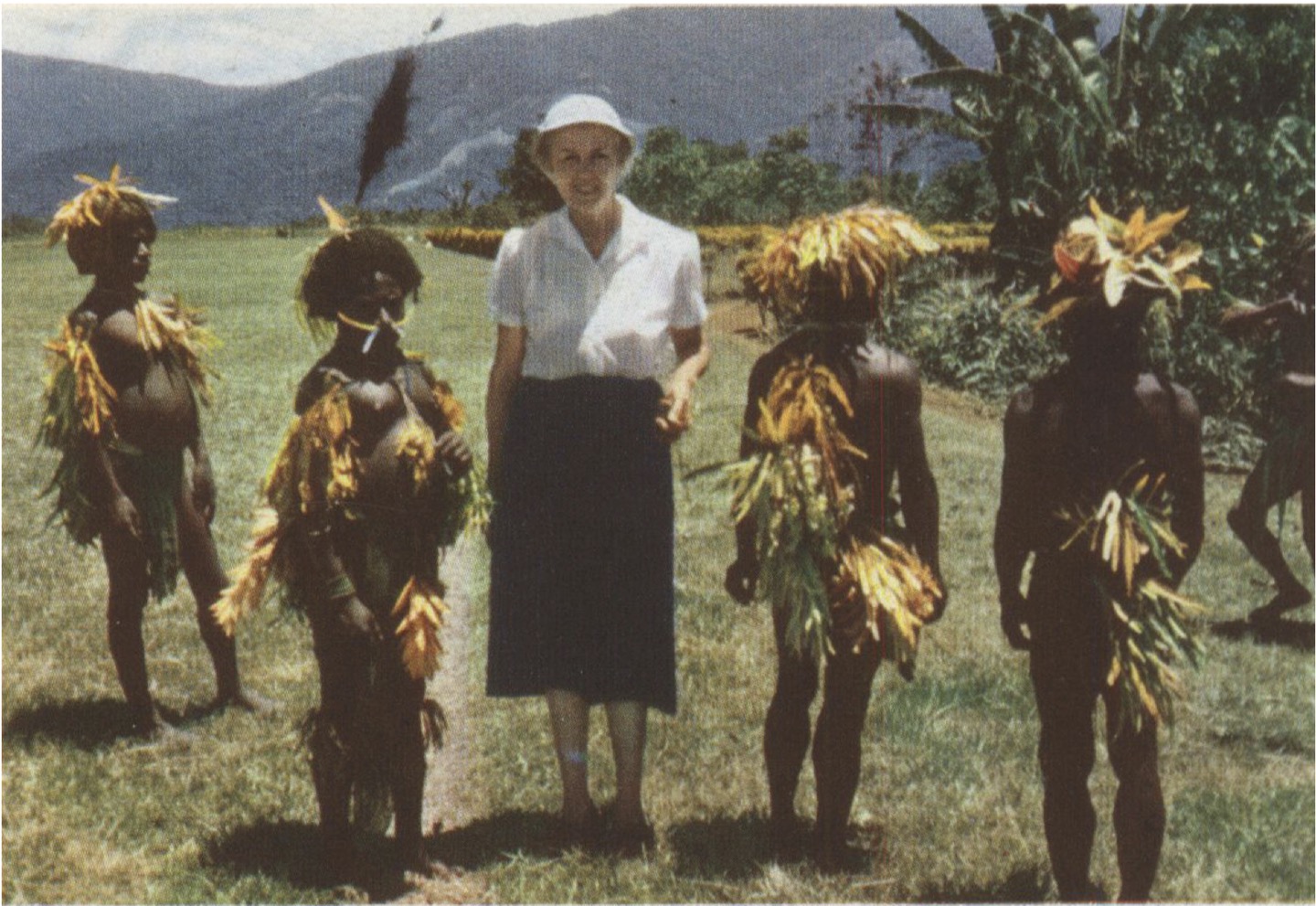
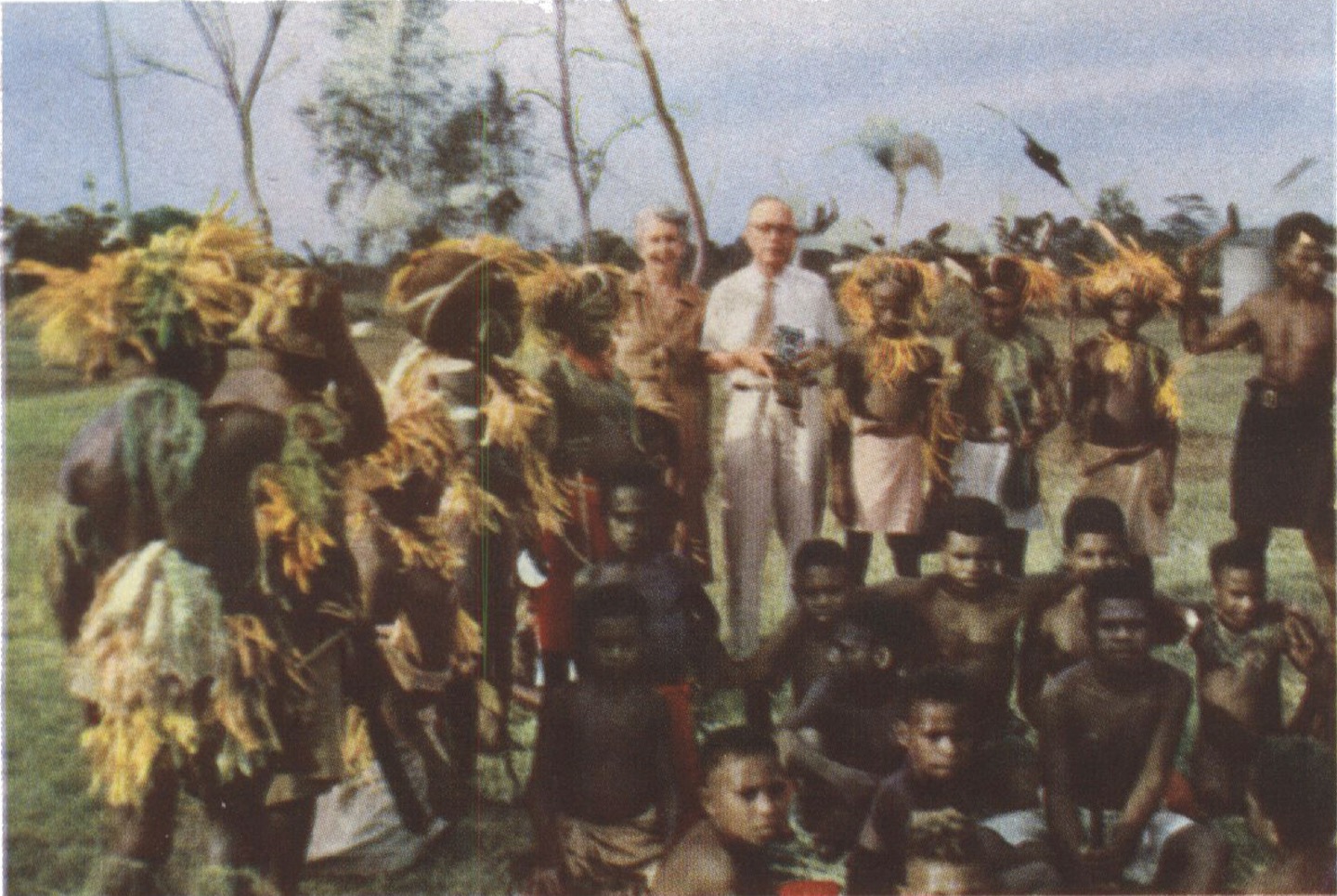
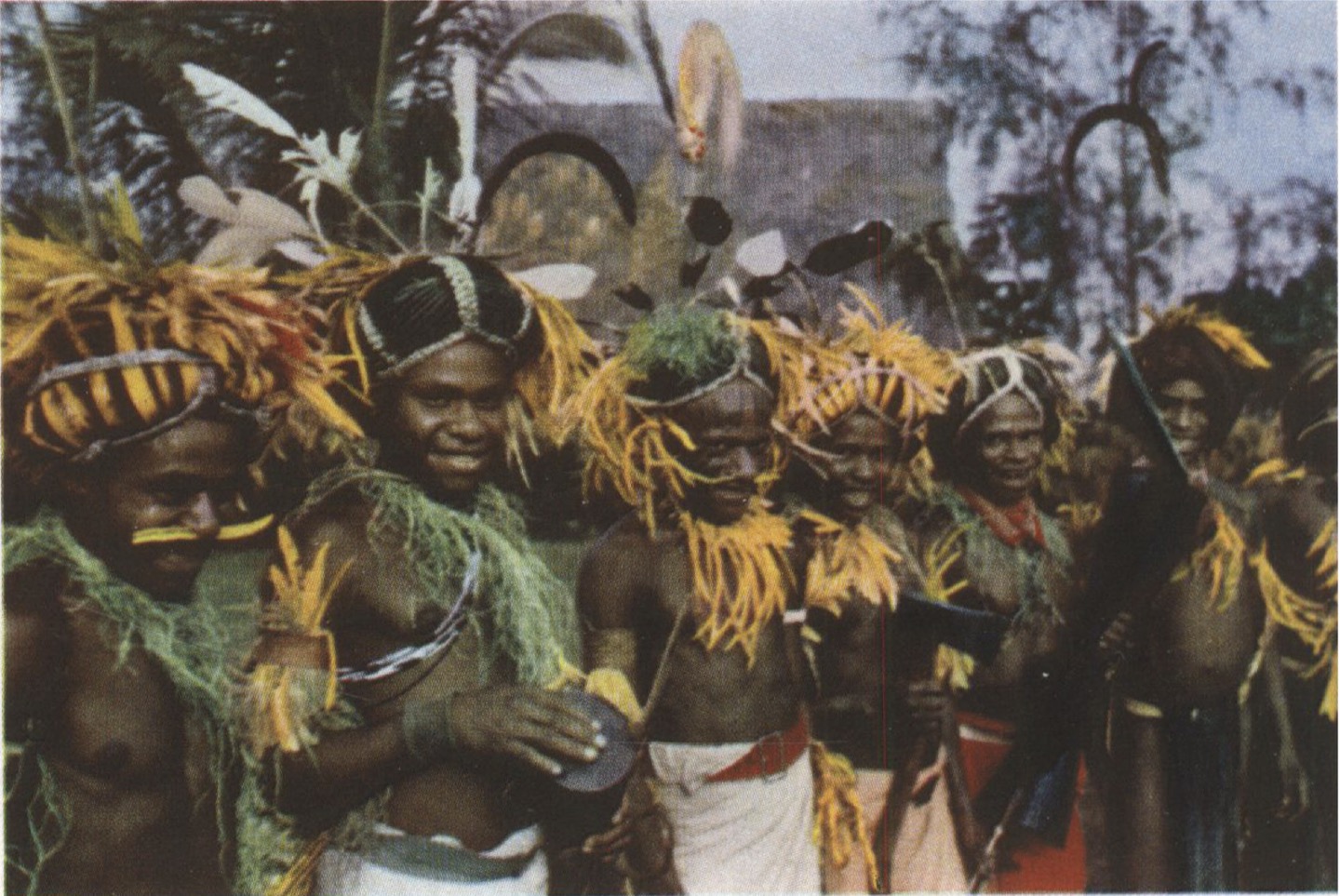
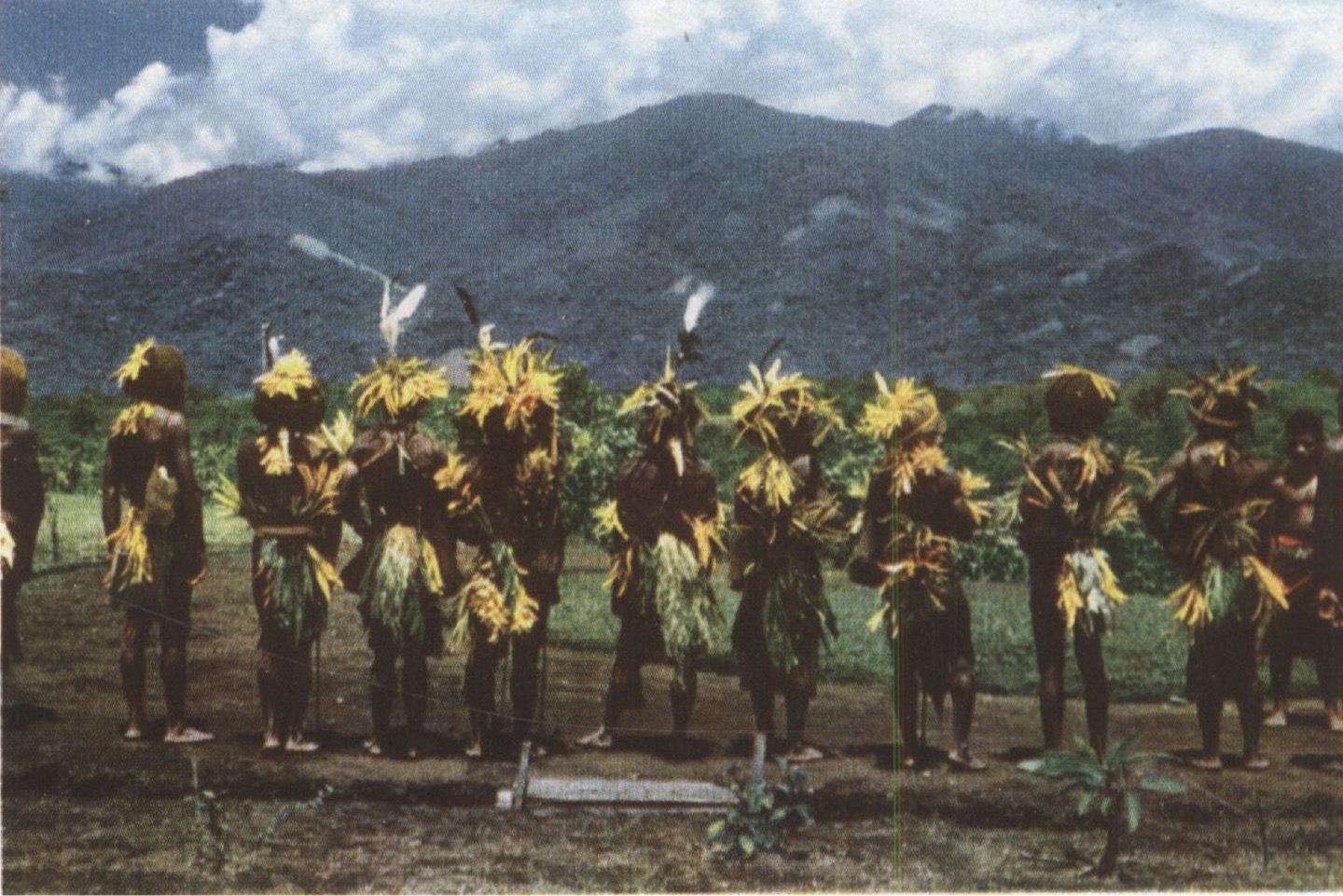
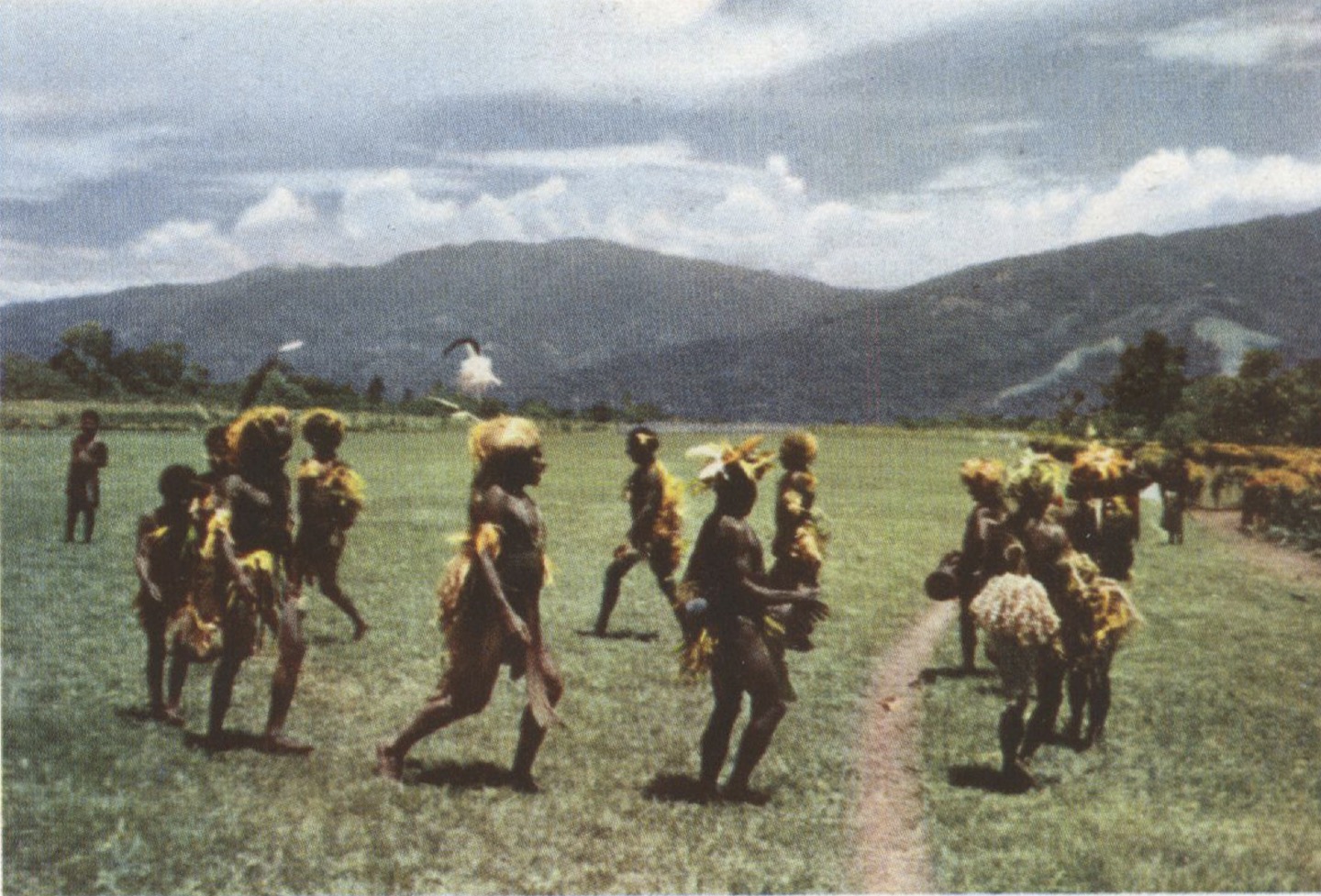
Aiome People
The Aiome live on remote plains in the Ramu Valley of Madang Province, Papua New Guinea.
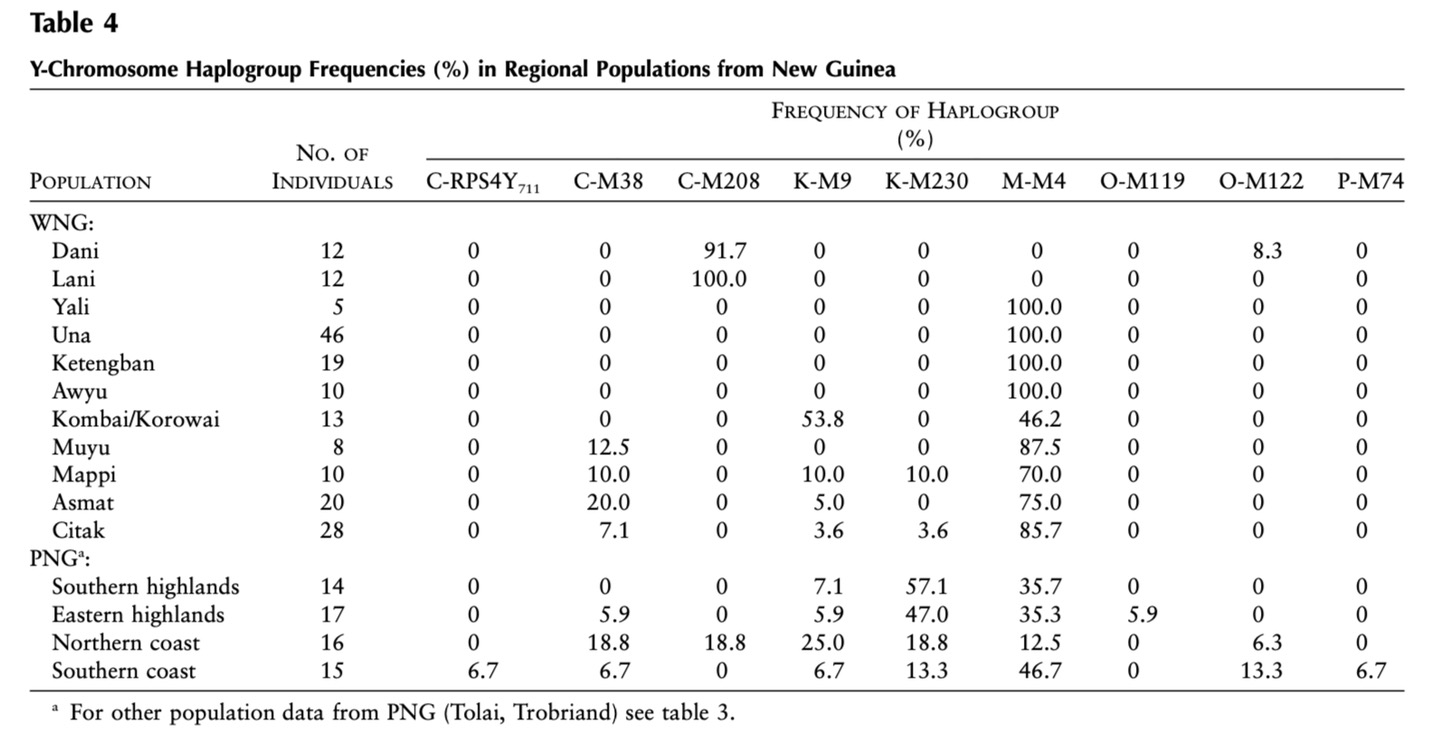
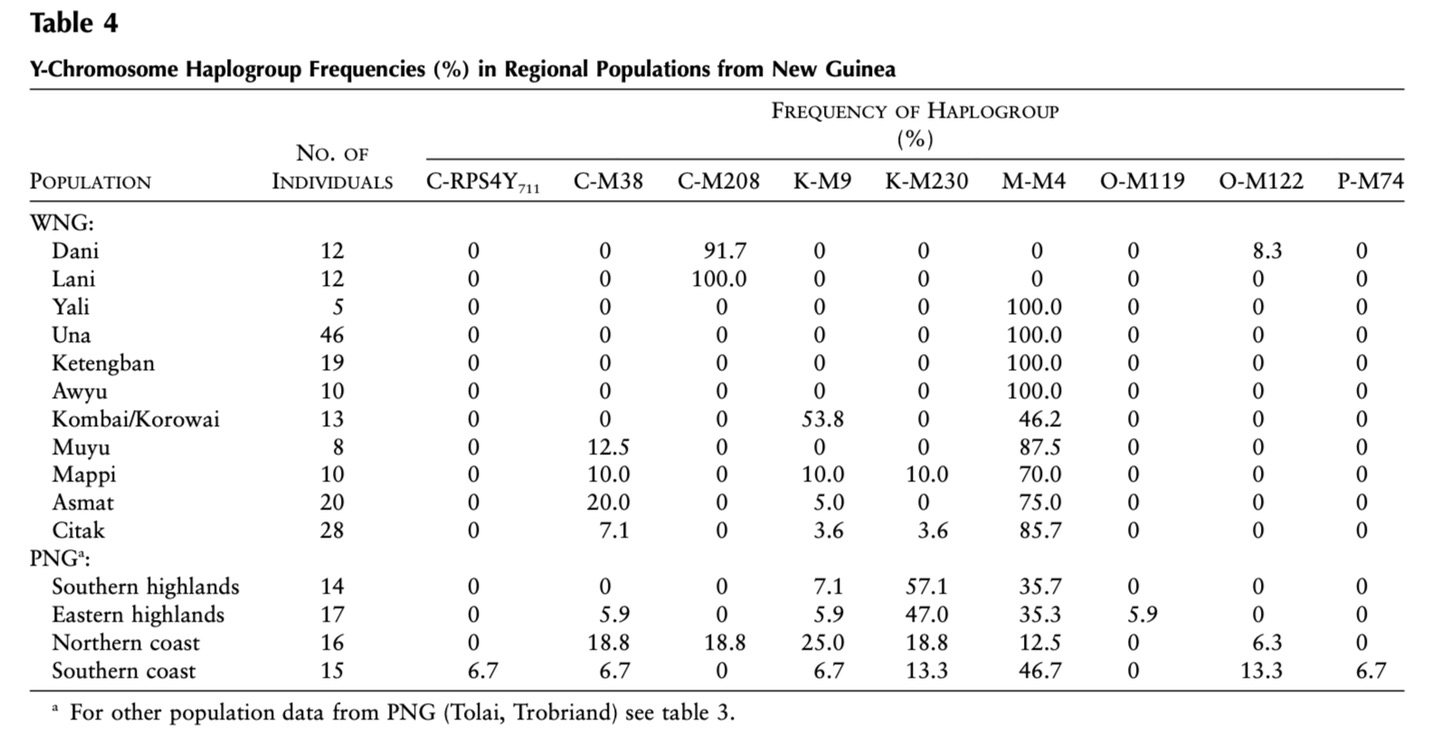
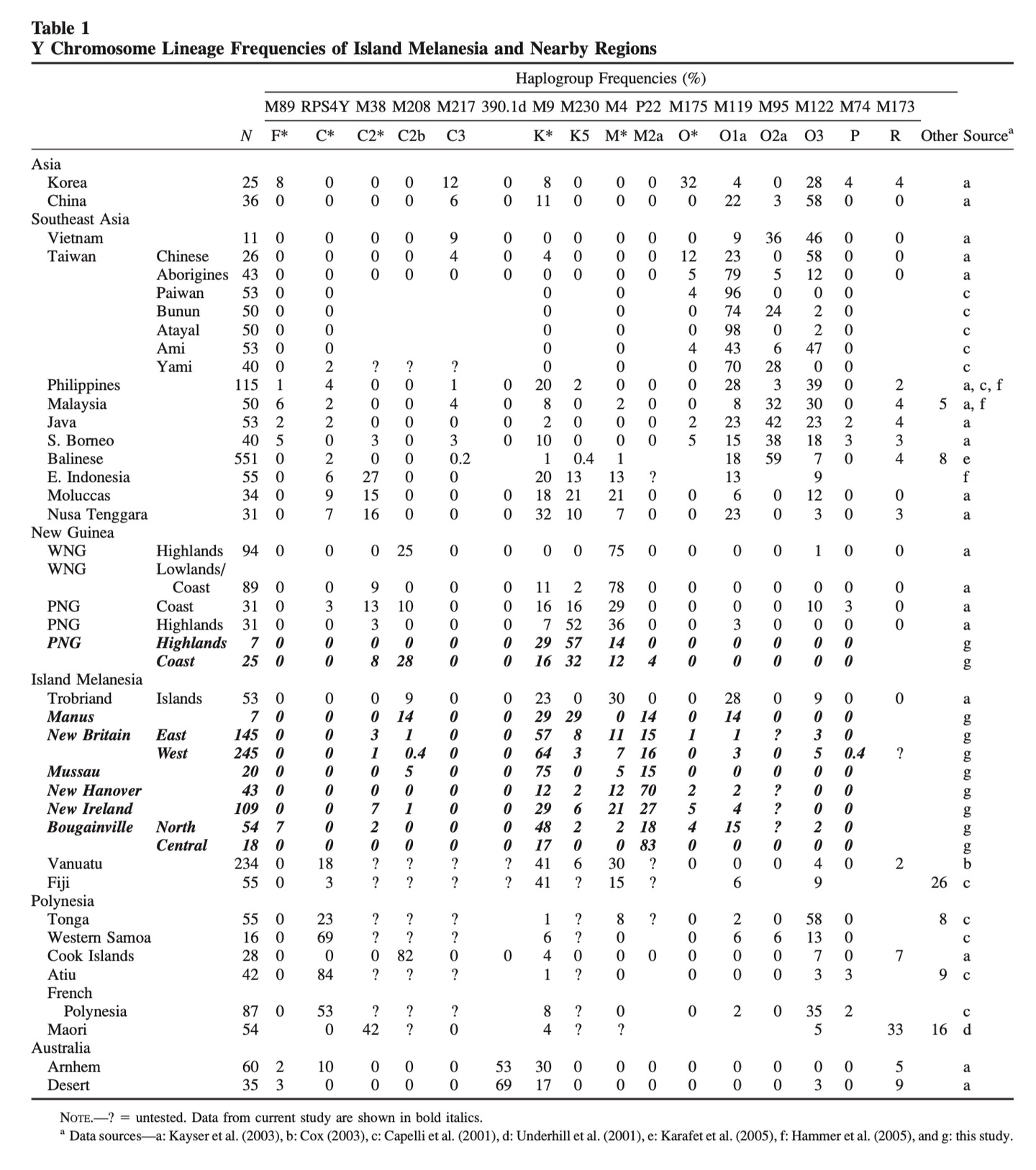
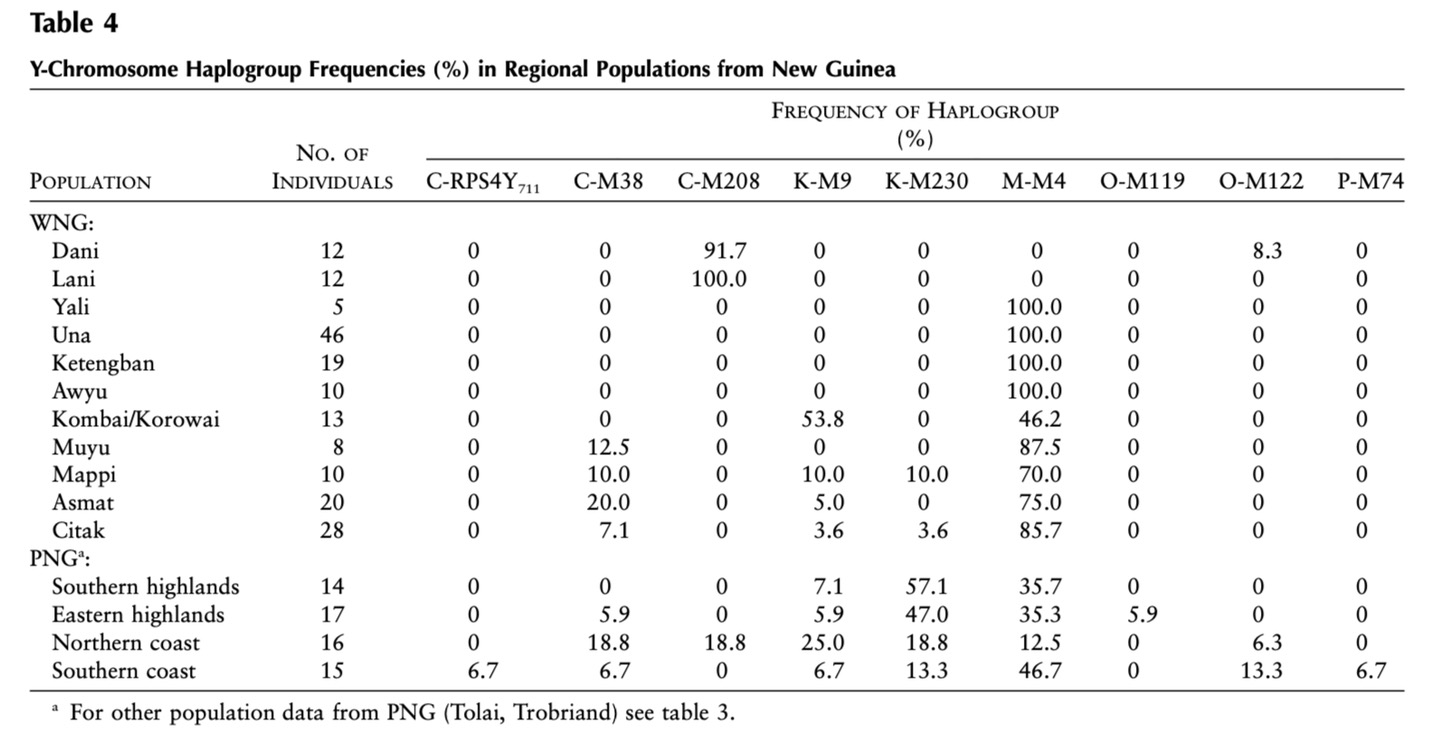
Paternal lineages: No direct data are available. Data from the northern coast of Papua New Guinea—the region in which Madang lies—suggest possible C‑M38, C‑M208, K‑M9, K‑M230, M‑M4, and O‑M122.
By the same principle, the Aiome are pure paternal F, G, I, J, H, K, L, T, R, Q, O, N, M, S, and C, since all of their possible paternal lineages belong to the major CF‑P143 branch.
Fore People
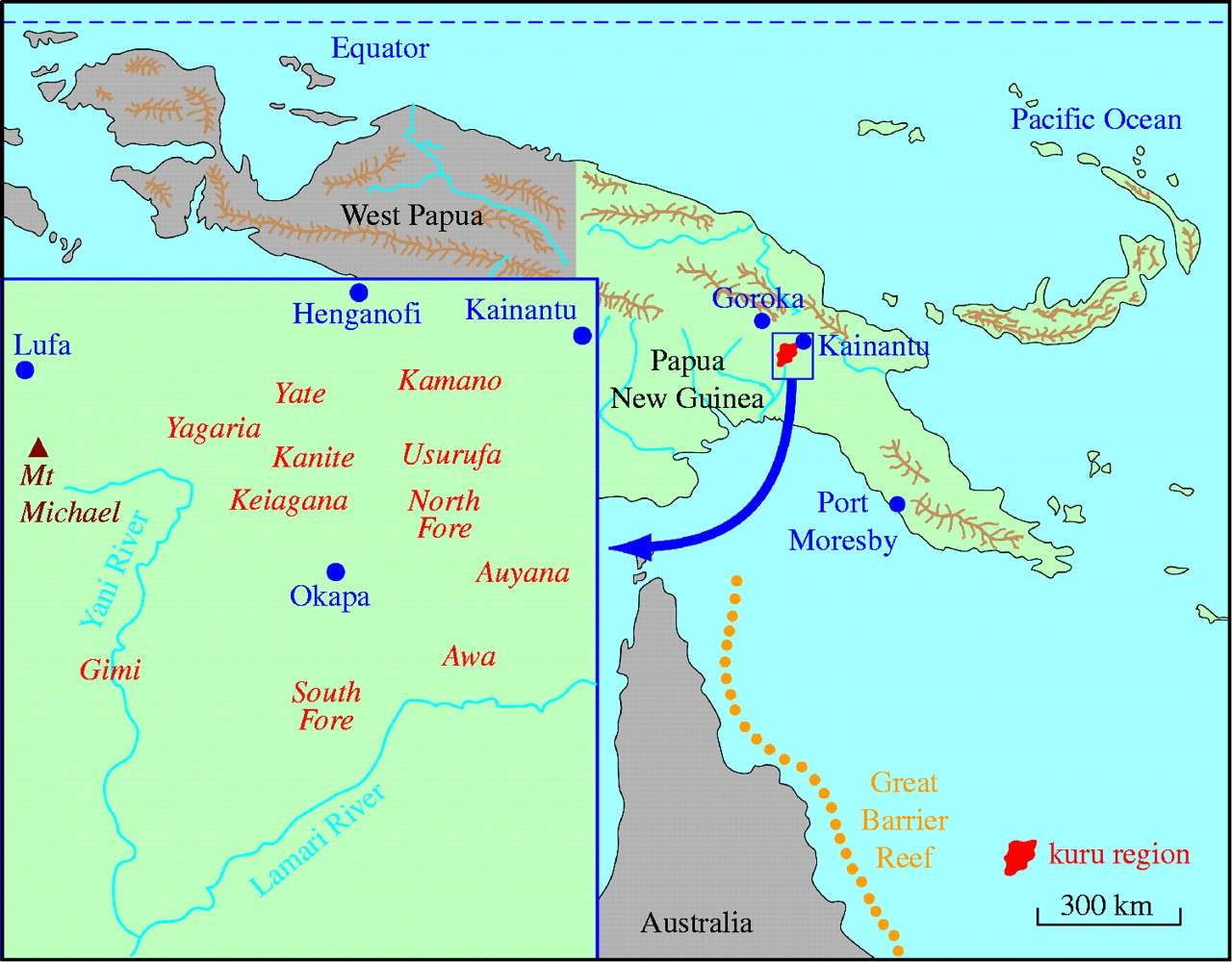
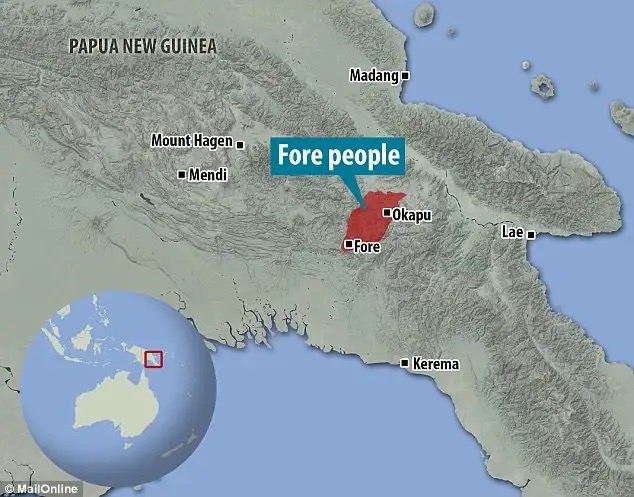
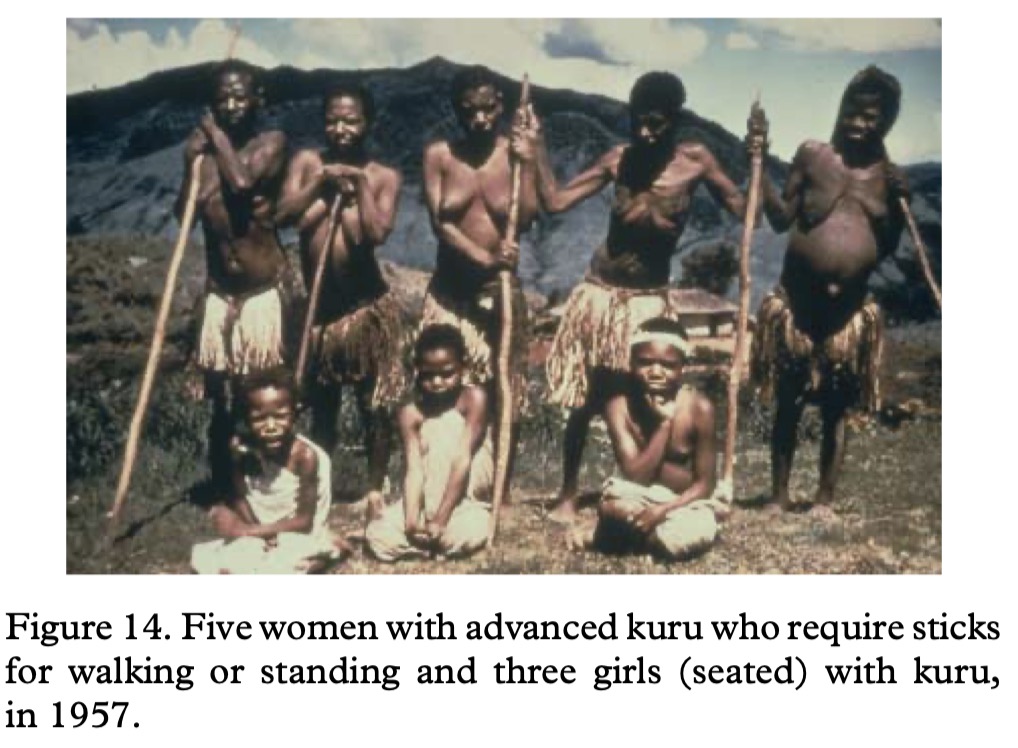
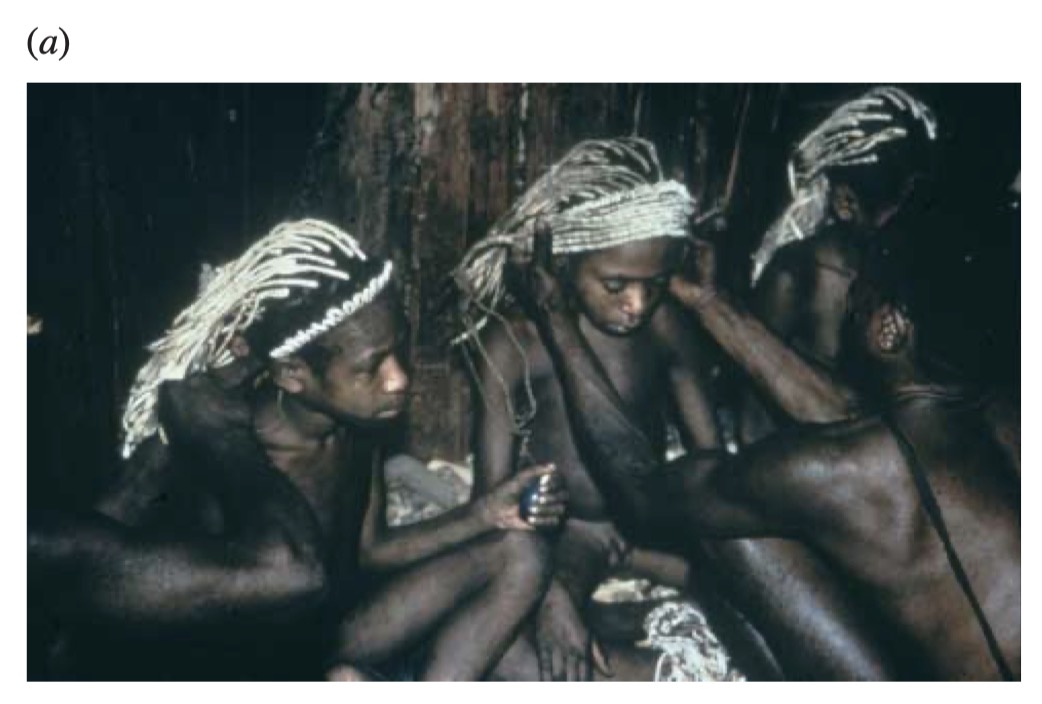
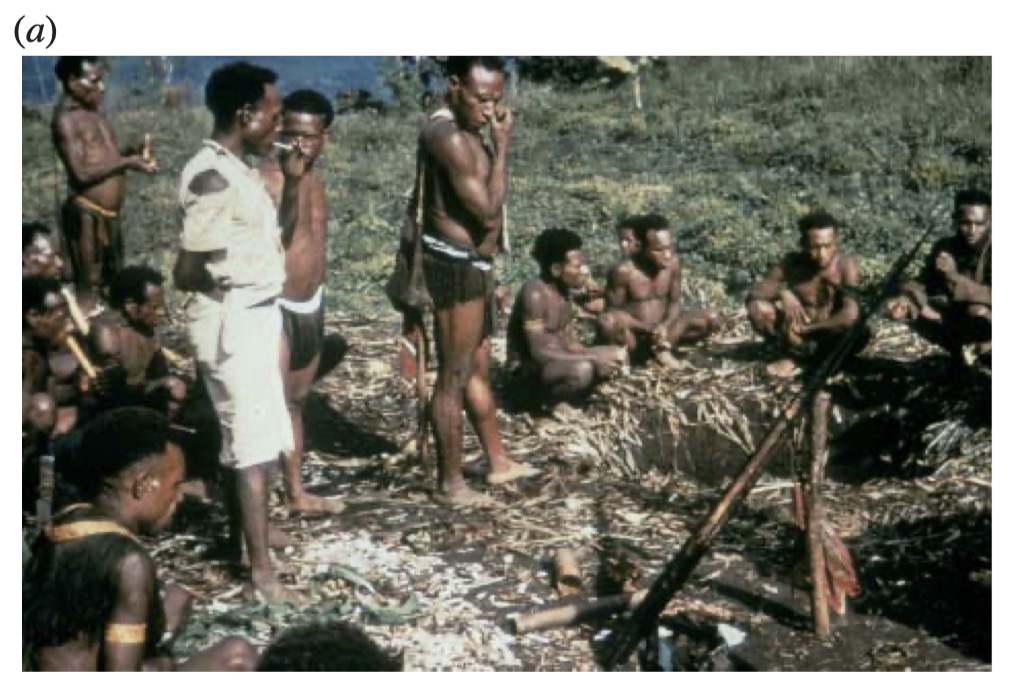
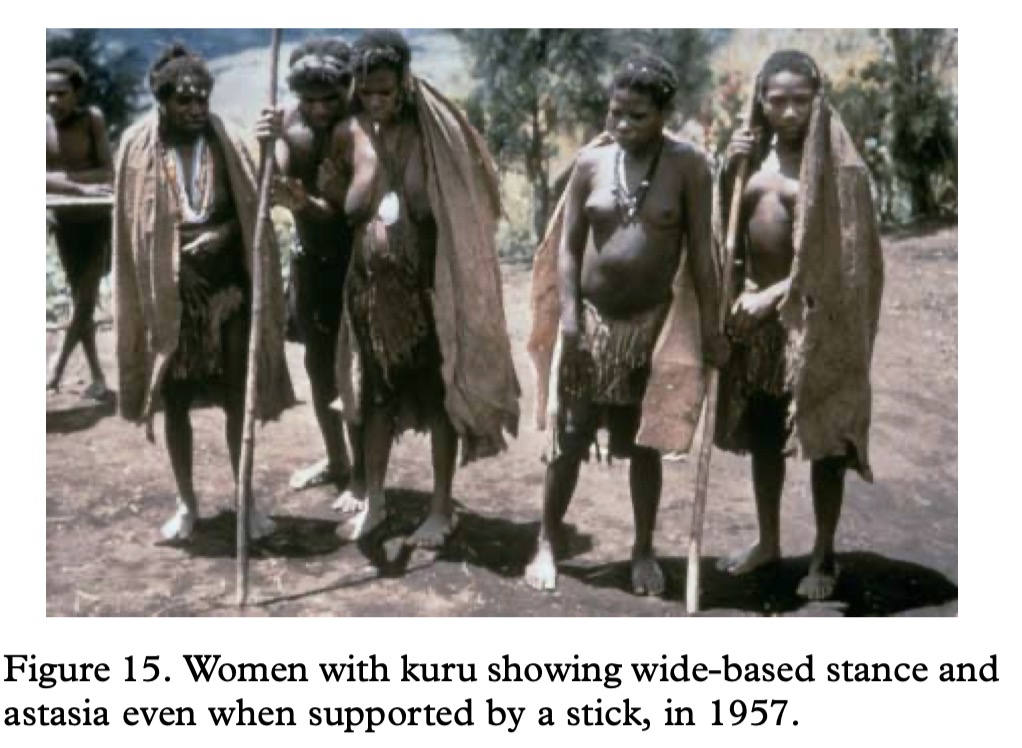
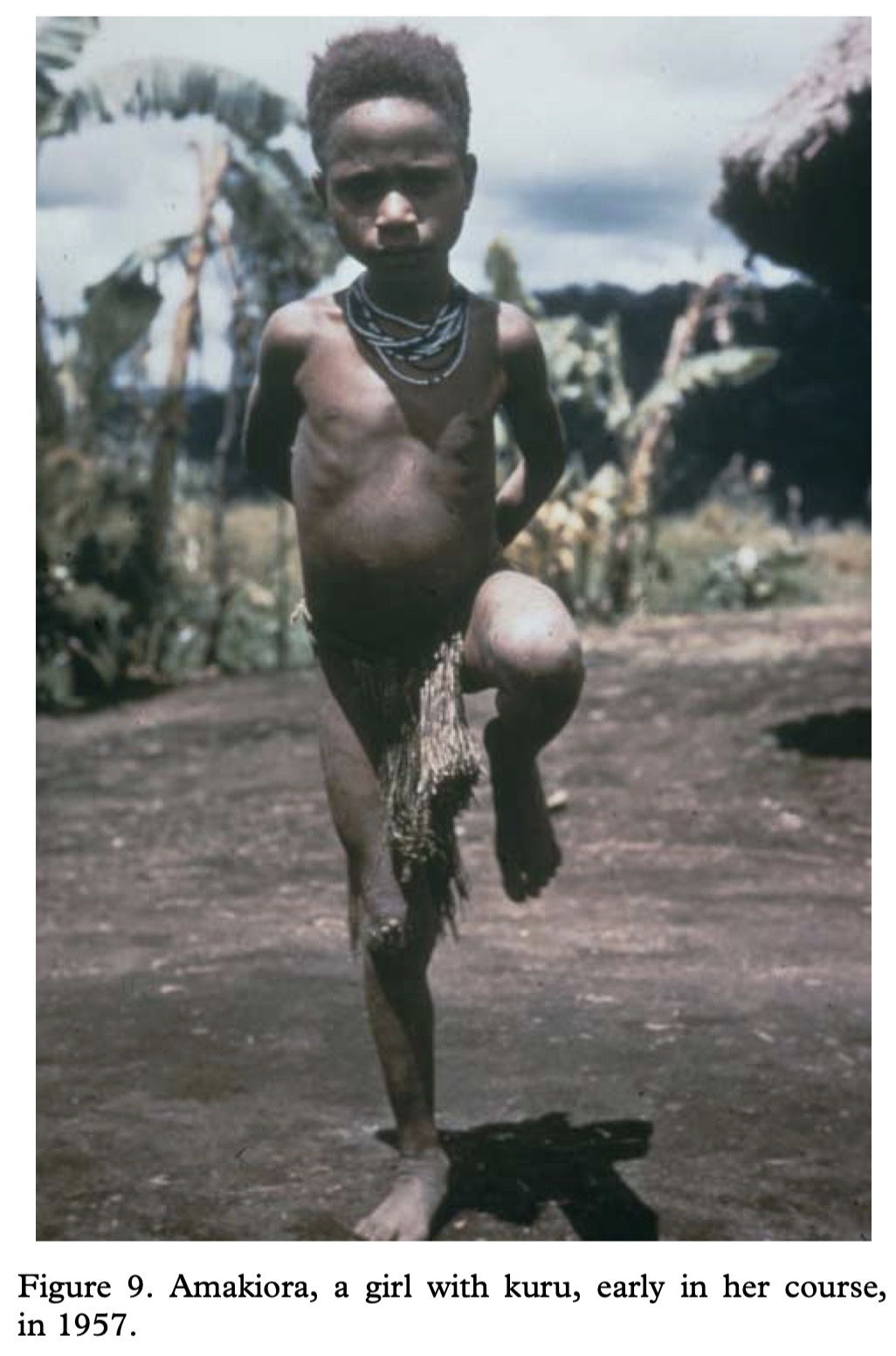
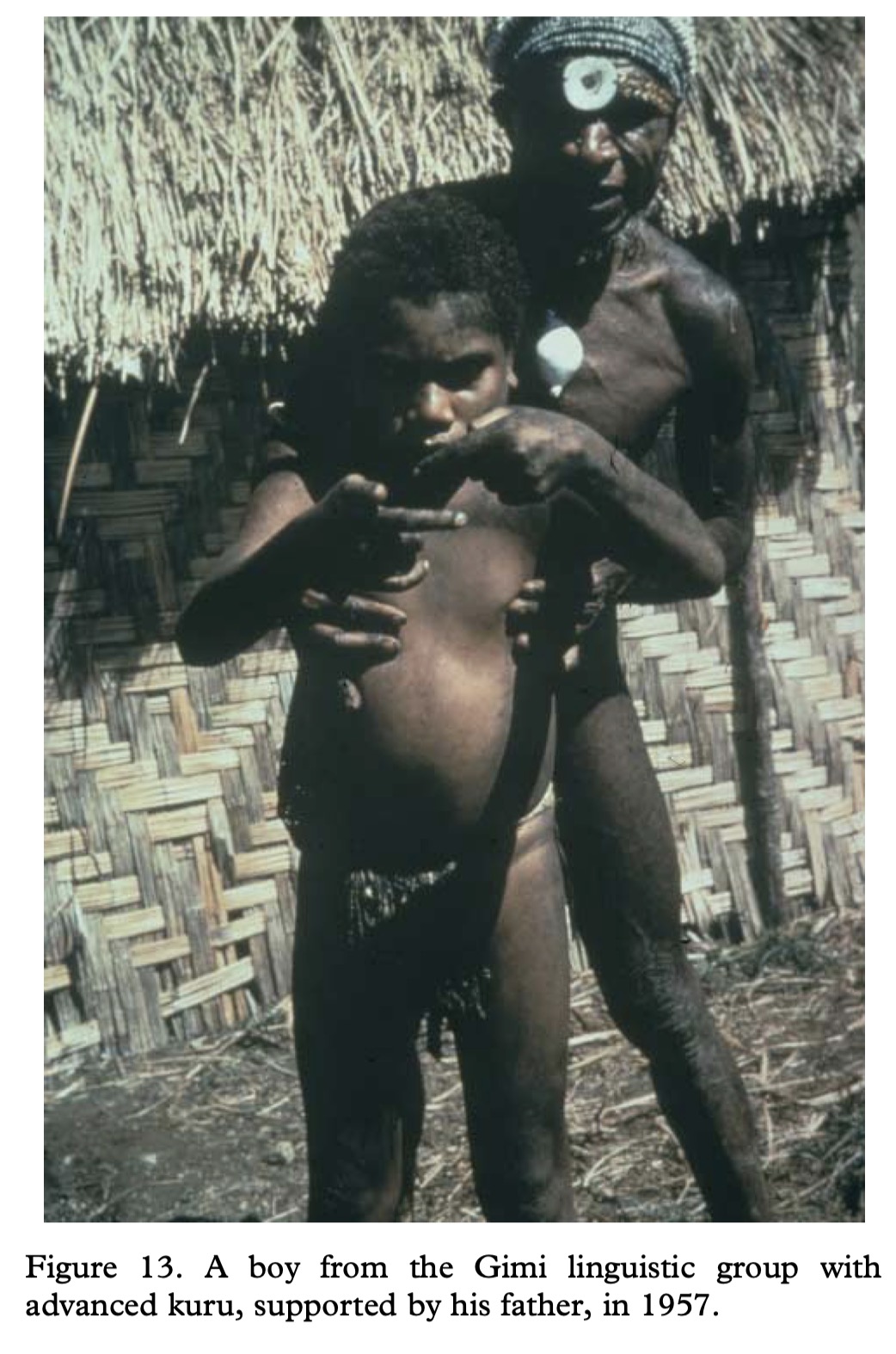
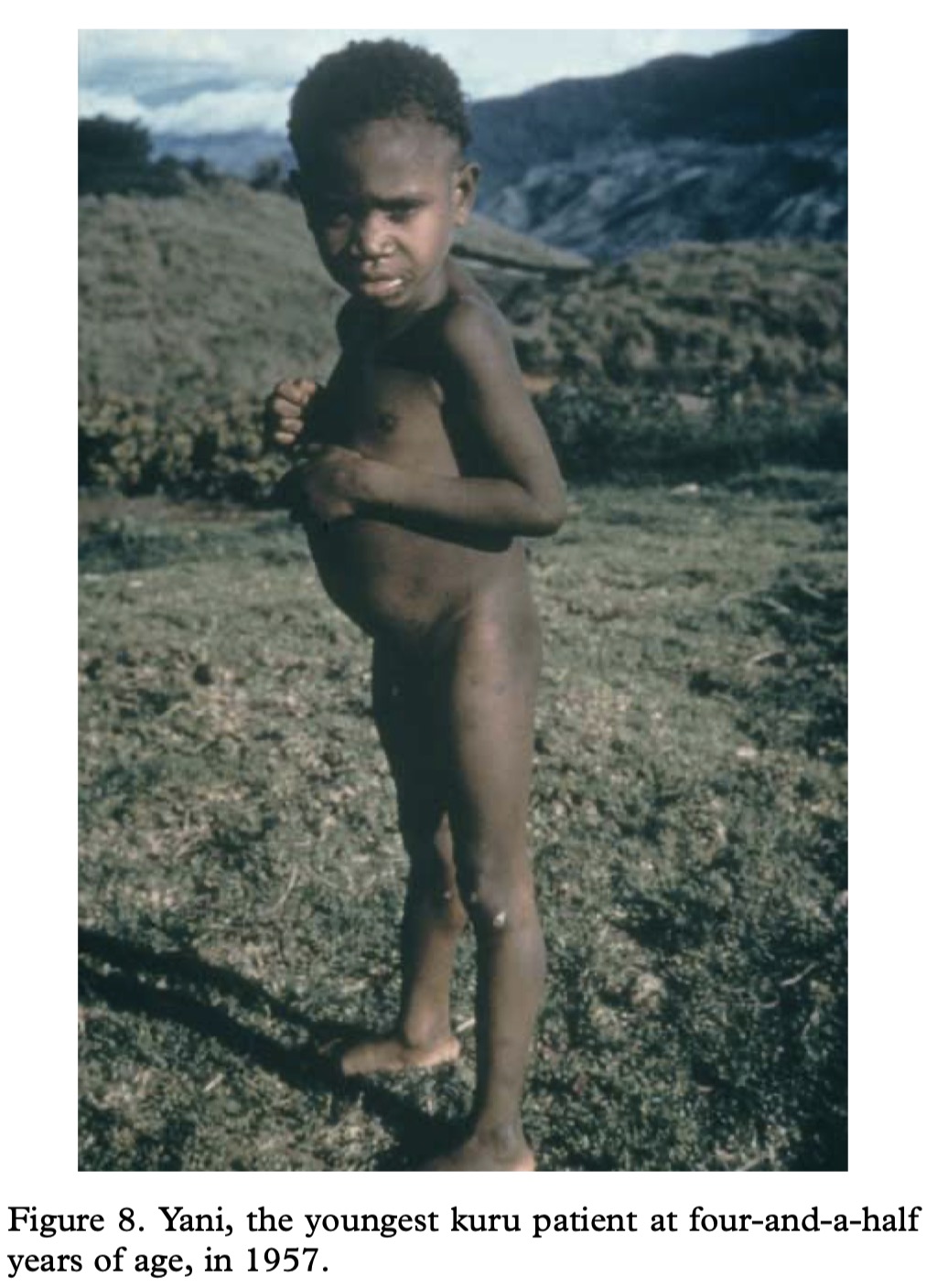
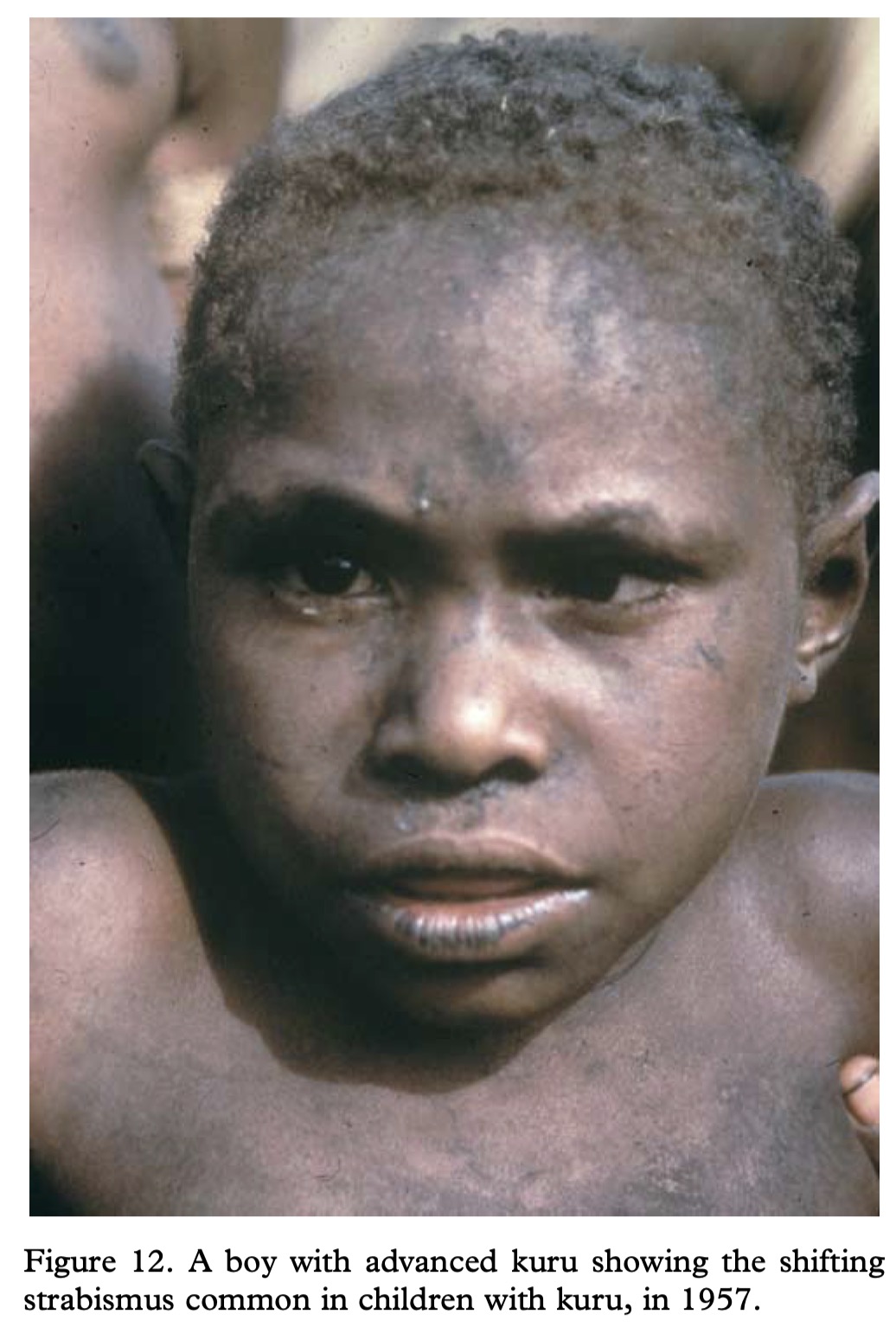
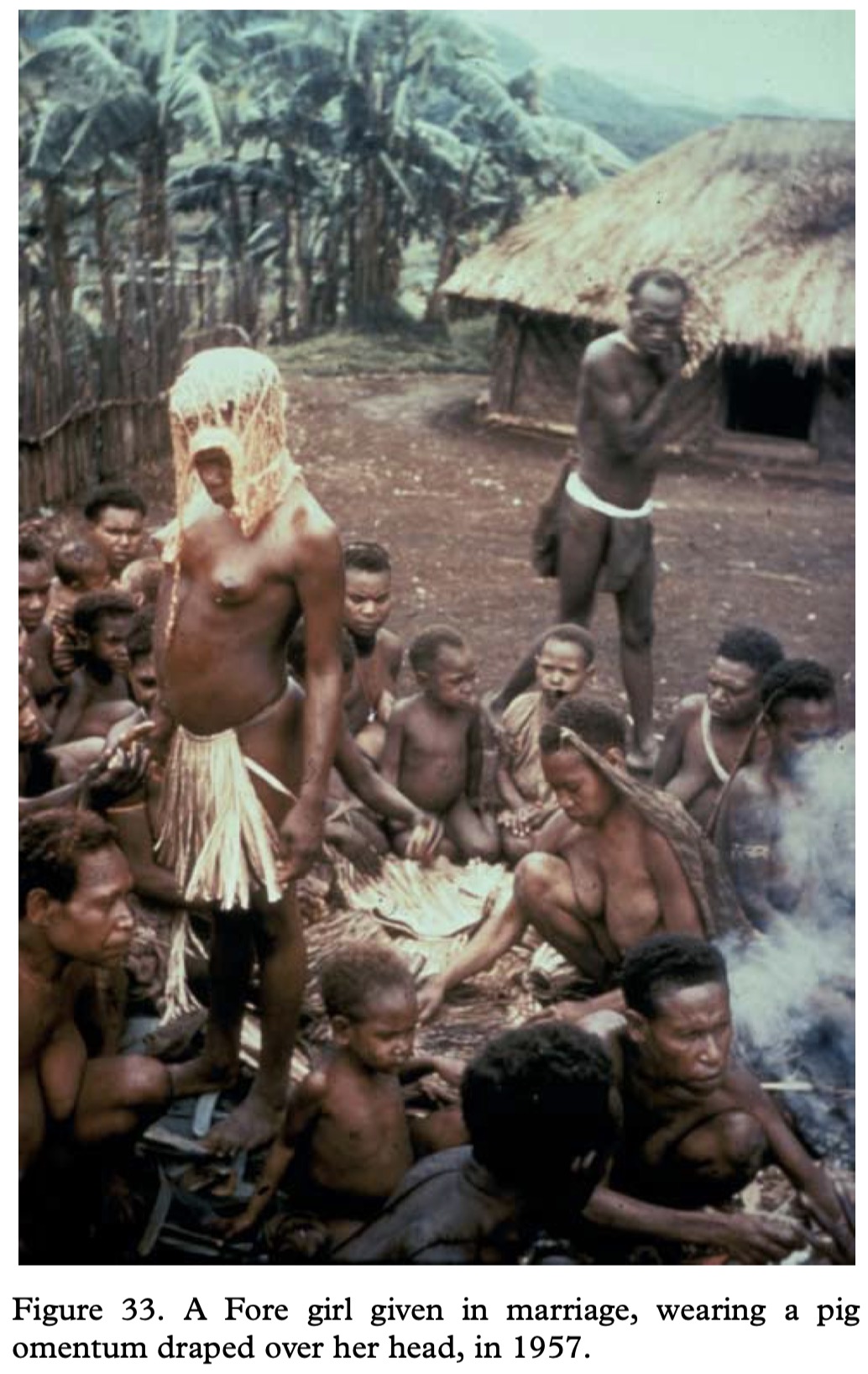
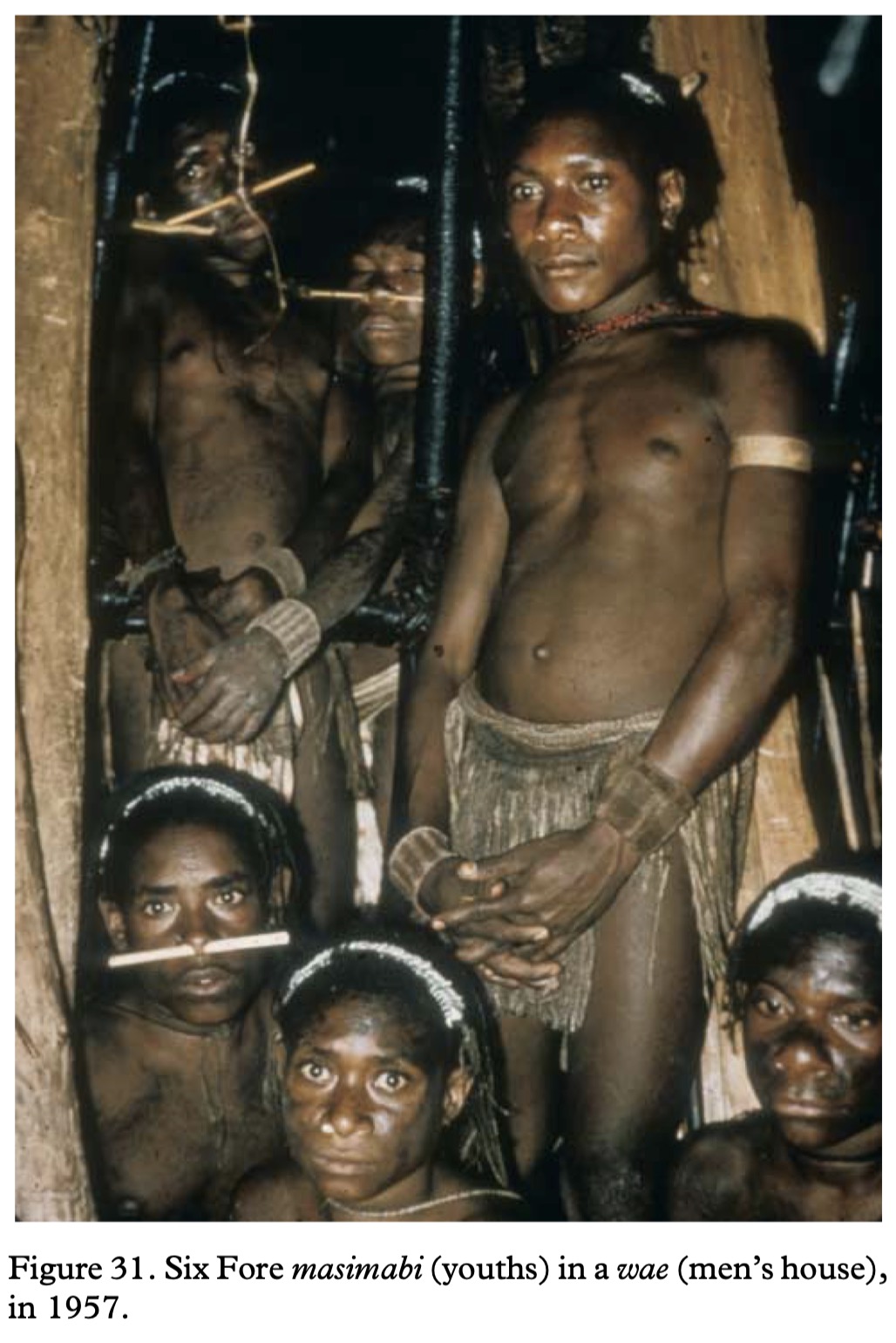
The Fore are an indigenous people of Okapa District in the Eastern Highlands of Papua New Guinea. They became famous in the last century because kuru was associated with their former mortuary cannibalism. Some individuals display Negrito-like phenotypic traits.
Paternal lineages: No direct data are available. Data from the Eastern Highlands of Papua New Guinea, where the Fore live, suggest possible C‑M38, K‑M9, K‑M230, M‑M4, and O‑M119.
By the same principle, the Fore are pure paternal F, G, I, J, H, K, L, T, R, Q, O, N, M, S, and C, since all of their possible paternal lineages belong to the major CF‑P143 branch.
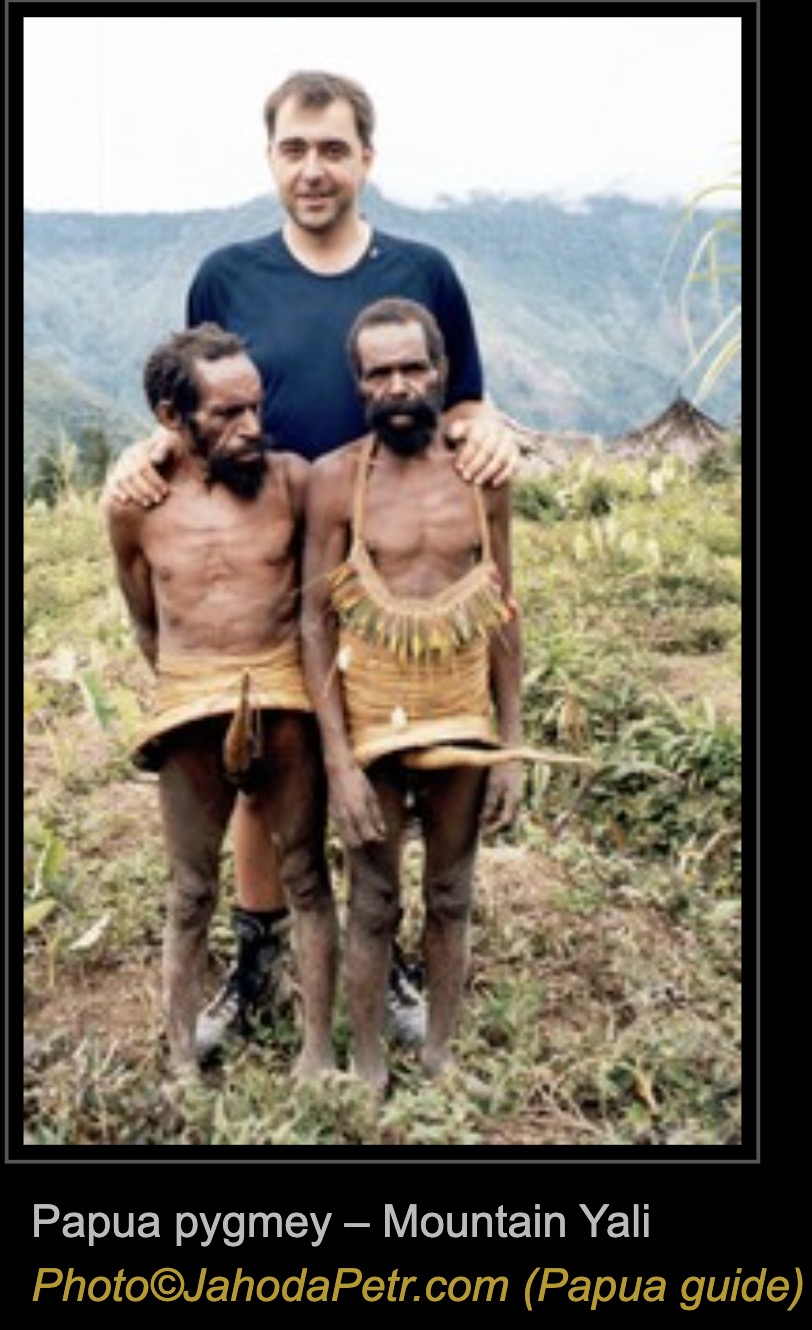
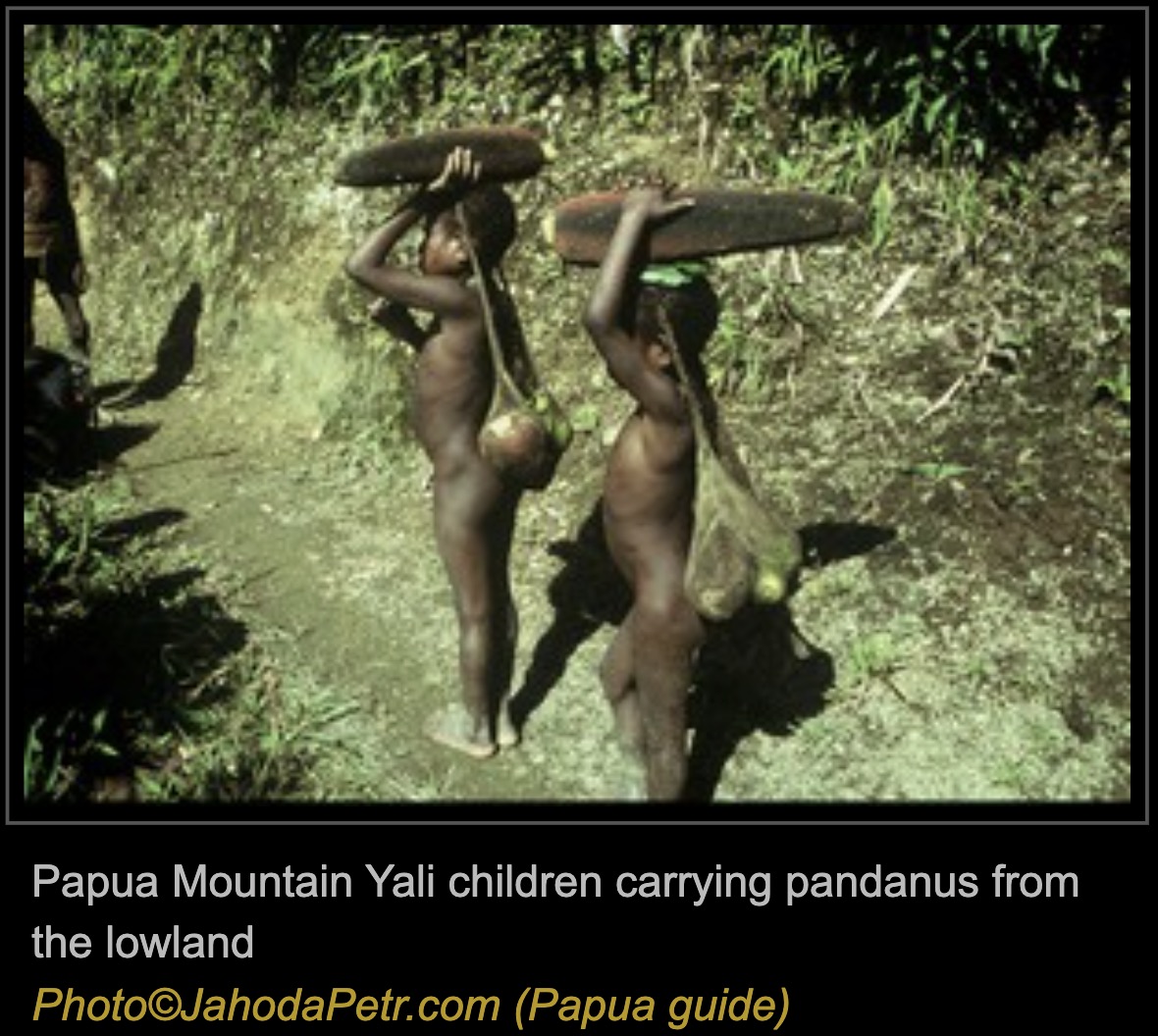
Yali People
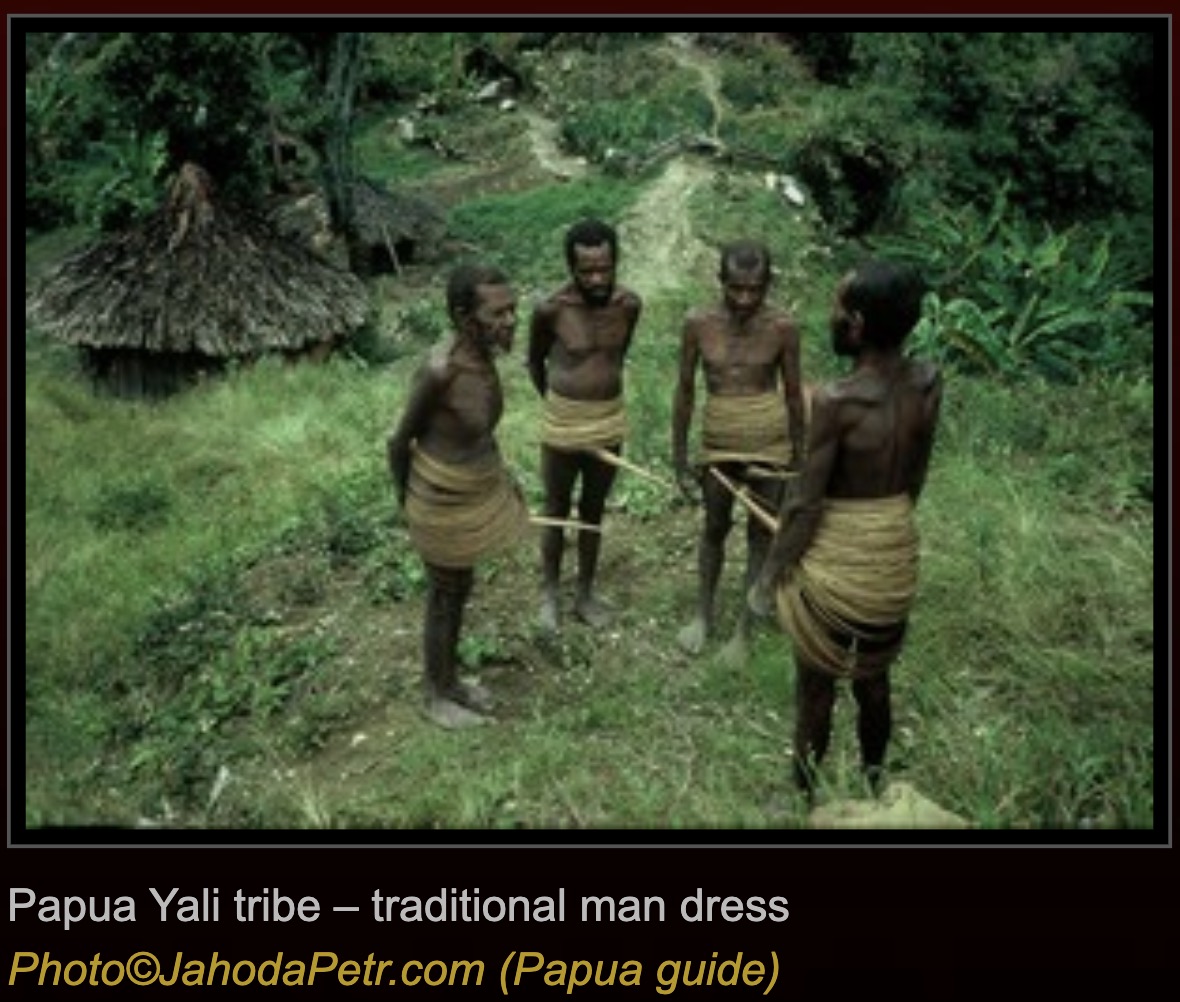
The Yali live east of the Baliem Valley in the highlands of New Guinea. Some display Negrito-like phenotypic traits.
Paternal lineages: Direct data report 100% M‑M4.
By the same principle, the Yali are pure paternal F, G, I, J, H, K, L, T, R, Q, O, N, M, and S, since these and the Yali lineage M‑M4 all belong to the major F‑M89 branch.
V. South Asia
No South Asian tribe is presently classified as typically Negrito, but anthropological research has historically identified many tribes with similar phenotypes. As in New Guinea, South Asia contains a large number of marginal tribes with complex and varied characteristics, and it lacks the relatively explicit official Negrito classifications found in the Philippines, the Andaman Islands, and the Malay Peninsula. I therefore give only three tribes as examples. Readers who are interested can consult nineteenth- and twentieth-century Indian anthropological books and papers, in which many more populations with Negrito-like phenotypes can probably be found.
Kadar People
The Kadar are distributed in the Indian states of Tamil Nadu, Karnataka, and Kerala.
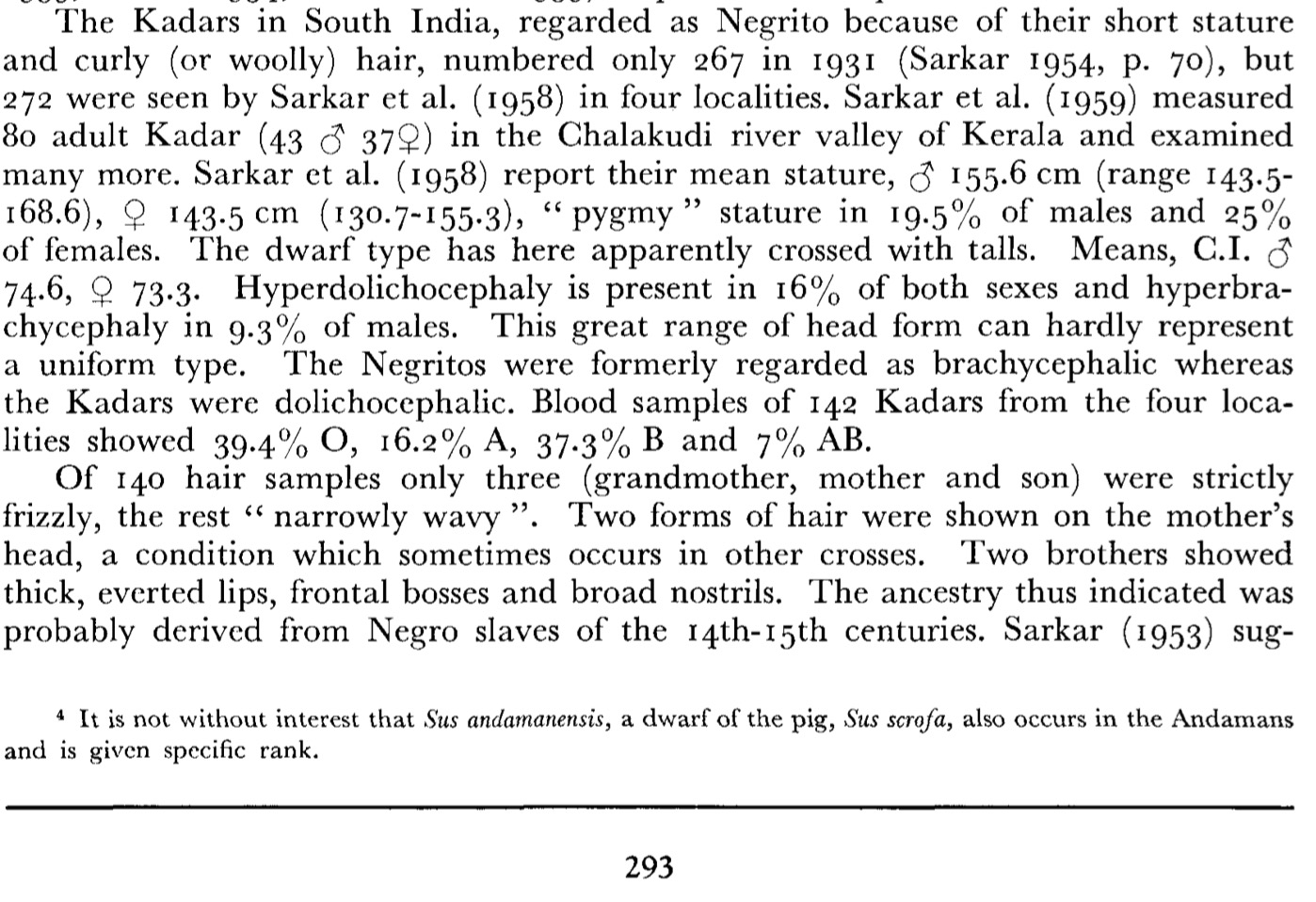
Paternal lineages: Direct data report H1-M52, F‑M89*, and C‑M130*.
By the same principle, the Kadar are pure paternal F, G, I, J, H, K, L, T, R, Q, O, N, M, S, and C, since all belong to the major CF‑P143 branch.
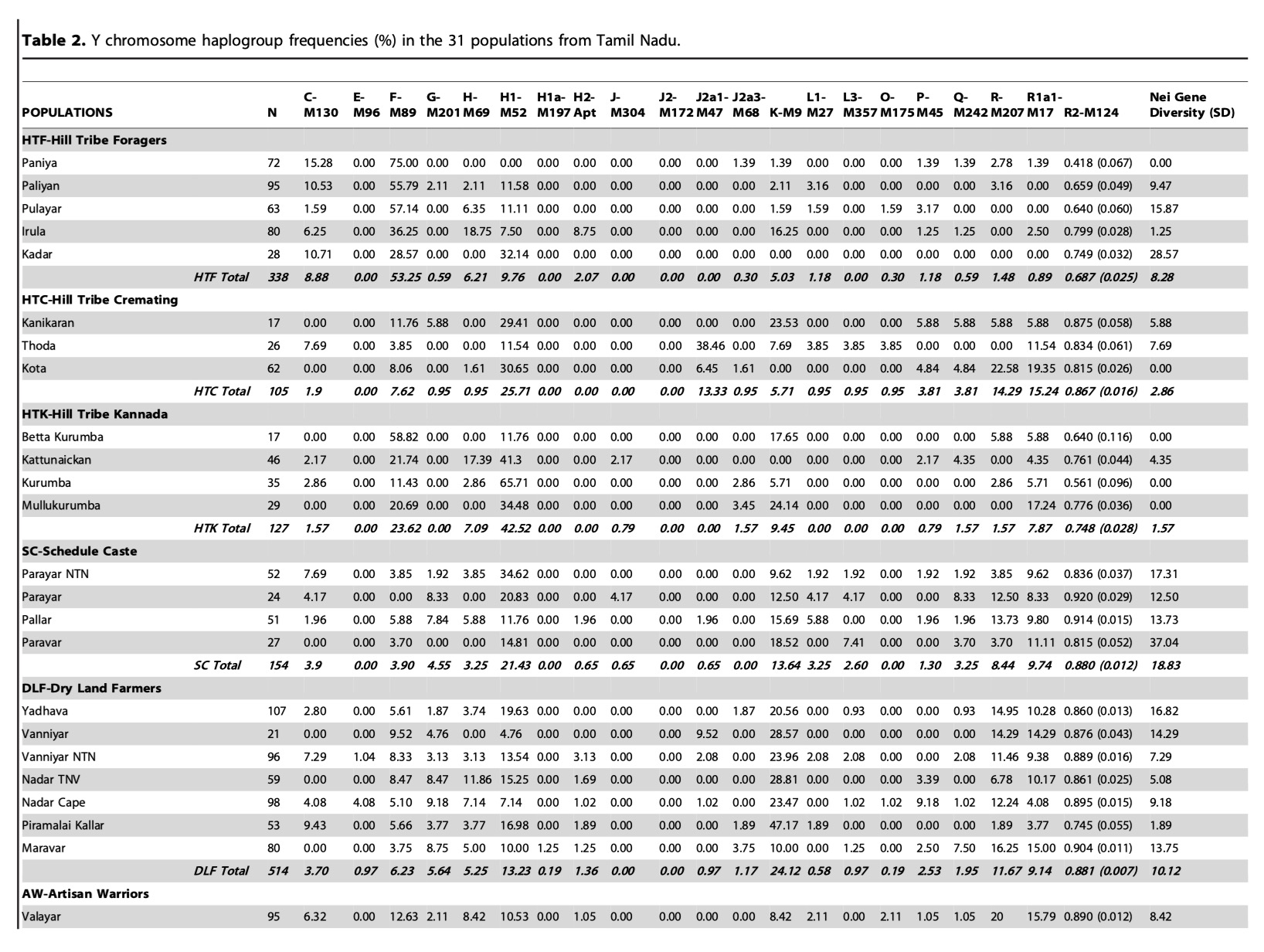
Paniya People
The Paniya are distributed in the Indian state of Karnataka.
Paternal lineages: Direct data report high-frequency F‑M89, a smaller C‑M130 component, and low-frequency J2a3-M68 and K‑M9.
By the same principle, the Paniya are pure paternal F, G, I, J, H, K, L, T, R, Q, O, N, M, S, and C, since all belong to the major CF‑P143 branch.
Kanikkaran People
The Kanikkaran live in Kerala and southern Tamil Nadu, India.
Paternal lineages: Direct data report F‑M89*, H‑M52, G‑M201, K‑M9, P‑M45, Q‑M242, and R‑M207.
By the same principle, the Kanikkaran are pure paternal F, G, I, J, H, K, L, T, R, Q, O, N, M, and S, since all belong to the major F‑M89 branch.
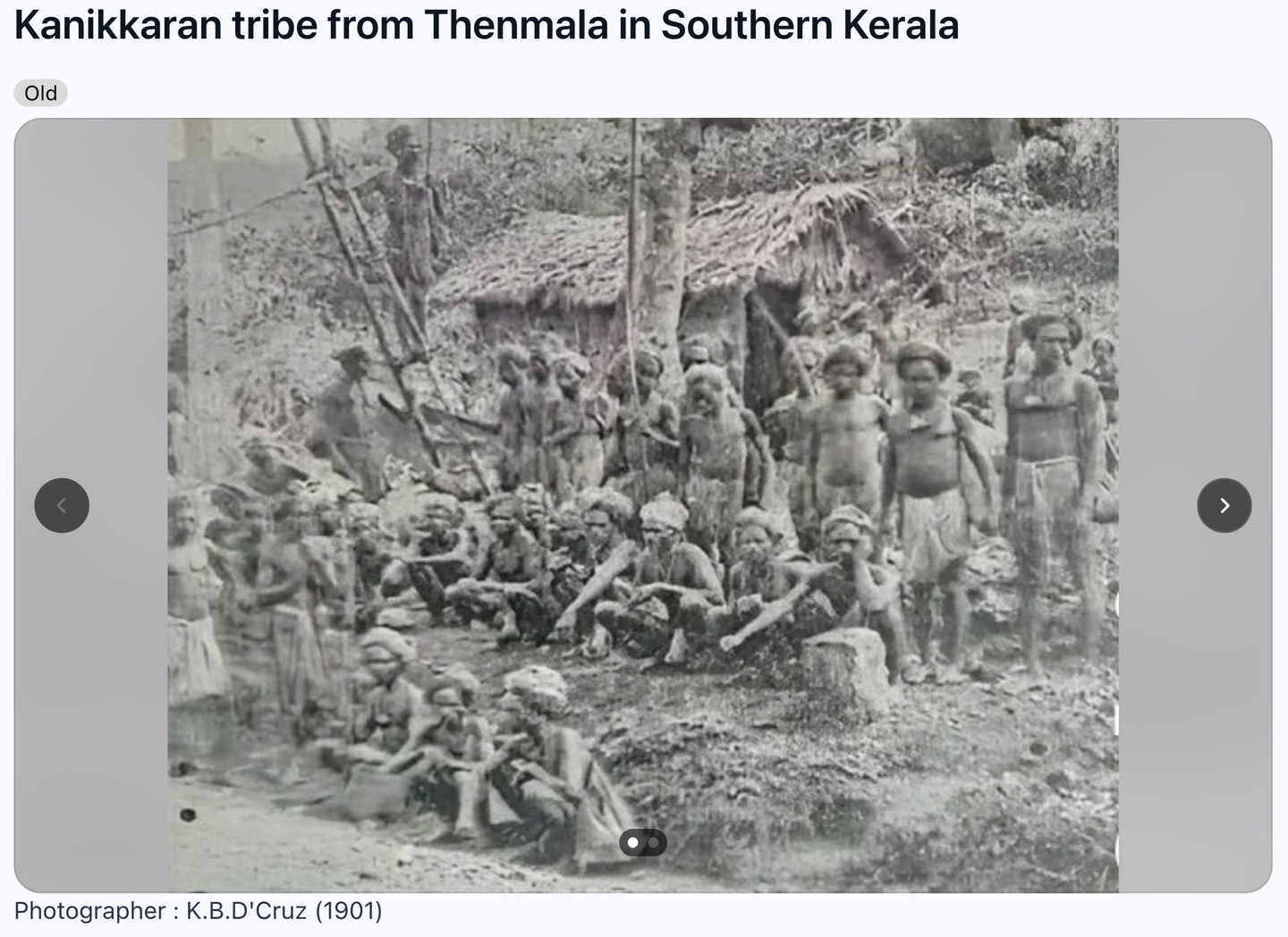
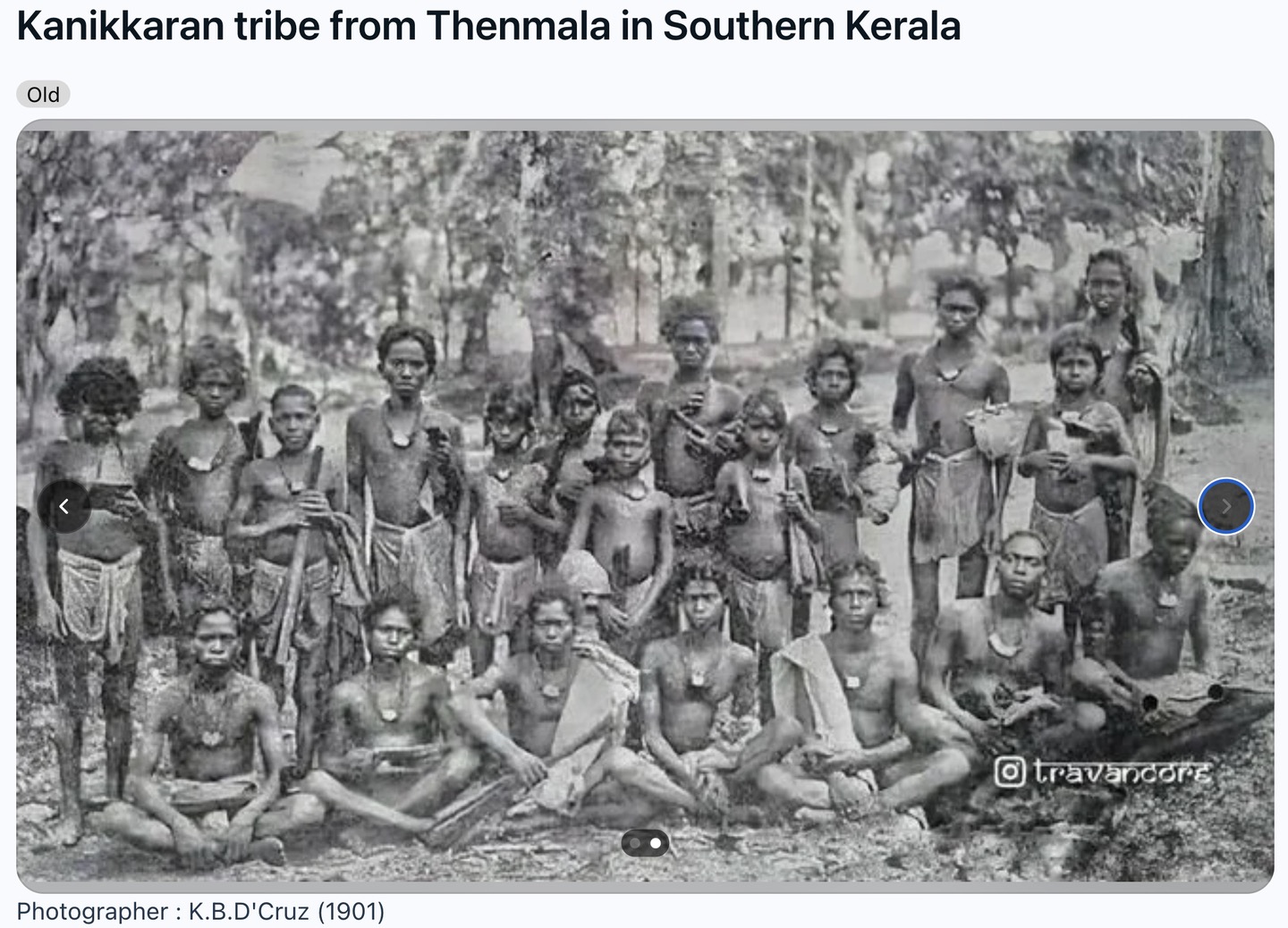
The game of “find the Negrito” is certainly entertaining, but it is time to return to the original question; otherwise, the search would never end, because one can always discover another “Negrito.” Readers capable of abstract induction—distinguishing essential from incidental traits (if every member of population A carries A1 but only some carry A2, then A1, rather than A2, better characterizes population A)—should now be able to combine this reasoning with the famous haplogroup homology-equivalence keyhole principle: if a population carries a downstream branch of a major haplogroup, bind that entire major haplogroup exclusively to the population.
The conclusion should then be obvious. Basques, Welsh, Scots, English, Bretons, Spaniards, Portuguese, Irish, Russians, Belarusians, and Ukrainians—all of whom carry high frequencies of F‑M89 and its downstream paternal branch P—are in fact the purer and more highly concentrated Negrito peoples. I recommend that a large-scale field investigation of the “Negrito” populations of every European country begin immediately.
References
Thangaraj K, Singh L, Reddy A G, et al. “Genetic Affinities of the Andaman Islanders, a Vanishing Human Population.” Current Biology 13, no. 2 (2003): 86–93.
Delfin F, Salvador J M, Calacal G C, et al. “The Y-chromosome Landscape of the Philippines: Extensive Heterogeneity and Varying Genetic Affinities of Negrito and Non-Negrito Groups.” European Journal of Human Genetics 19, no. 2 (2011): 224–230.
Scholes C, Siddle K, Ducourneau A, et al. “Genetic Diversity and Evidence for Population Admixture in Batak Negritos from Palawan.” American Journal of Physical Anthropology 146, no. 1 (2011): 62–72.
Heyer E, Georges M, Pachner M, et al. “Genetic Diversity of Four Filipino Negrito Populations from Luzon: Comparison of Male and Female Effective Population Sizes and Differential Integration of Immigrants into Aeta and Agta Communities.” Human Biology 85, nos. 1–3 (2013): 189–208.
Karafet T M, Mendez F L, Sudoyo H, et al. “Improved Phylogenetic Resolution and Rapid Diversification of Y-chromosome Haplogroup K‑M526 in Southeast Asia.” European Journal of Human Genetics 23, no. 3 (2015): 369–373.
ArunKumar G, Soria-Hernanz D F, Kavitha V J, et al. “Population Differentiation of Southern Indian Male Lineages Correlates with Agricultural Expansions Predating the Caste System.” PLoS ONE 7, no. 11 (2012): e50269.
Written: September 10, 2026
Original Chinese article: https://www.zhihu.com/question/567269256/answer/2081452967400584771