Cultural Anthropology of D‑M174
Is the Japanese Imperial Family Afraid to Test Its Y Chromosome?
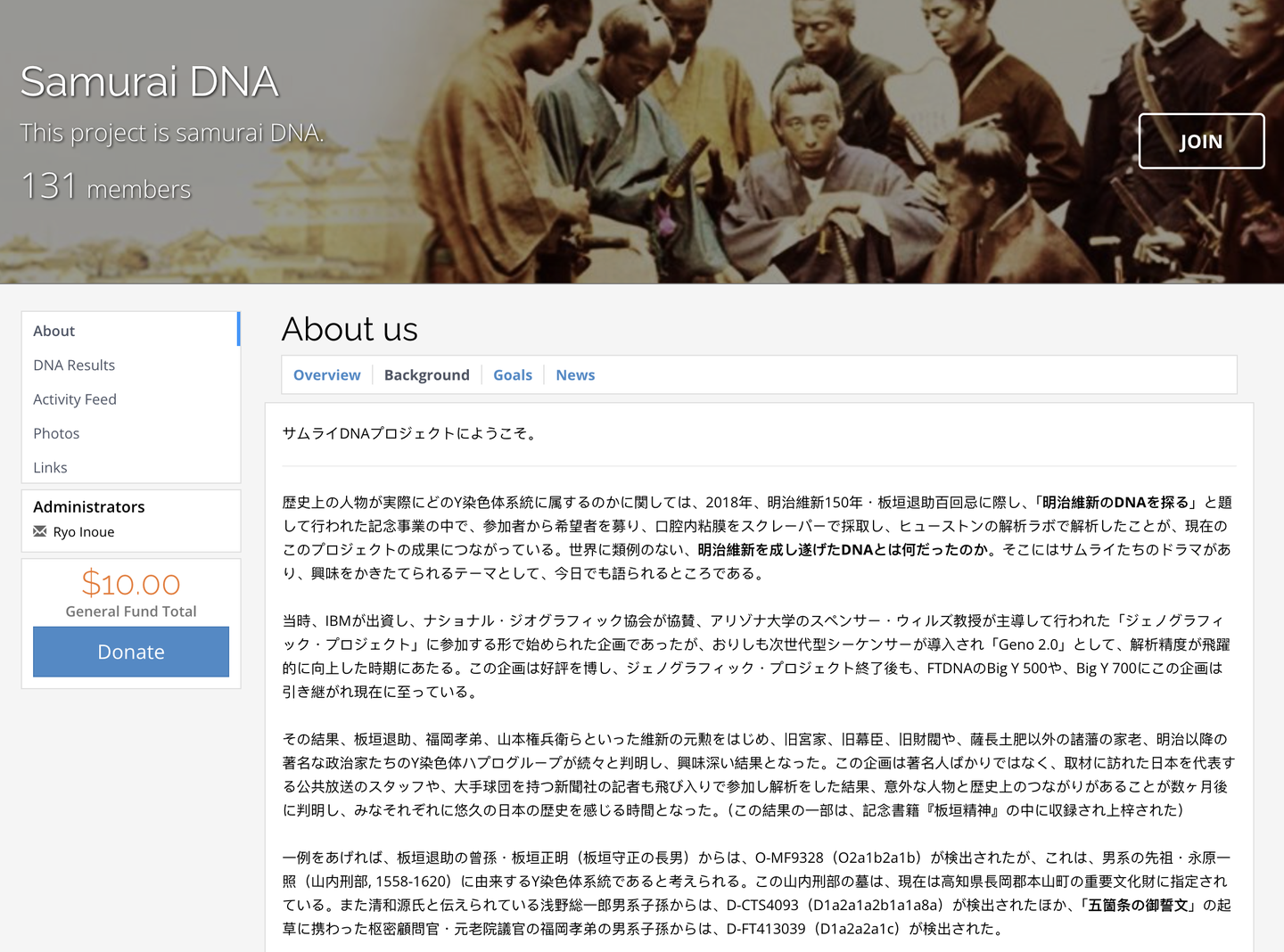
At present, no genetic data are available from modern members of the Japanese imperial family or from ancient remains belonging to the imperial house. There are, however, clear results from descendants of collateral branches. These data originated with samples collected from descendants of Japanese samurai during events commemorating the 150th anniversary of the Meiji Restoration in 2018. The work was funded by IBM and conducted within the Genographic Project under the guidance of Professor Spencer Wells of the University of Arizona. The samples were later incorporated into the database of the prominent American commercial genetic-testing company FamilyTreeDNA (FTDNA), after which the Samurai DNA Project was established.
In other words, genetic results are currently available for descendants of collateral branches associated with the Japanese imperial family. This differs fundamentally from earlier attempts to infer the imperial lineage purely from patterns of population expansion. Because these are modern samples from collateral branches, however, the conclusions remain open to interpretation. My purpose here is simply to present the original data that other answers to this question have not provided.
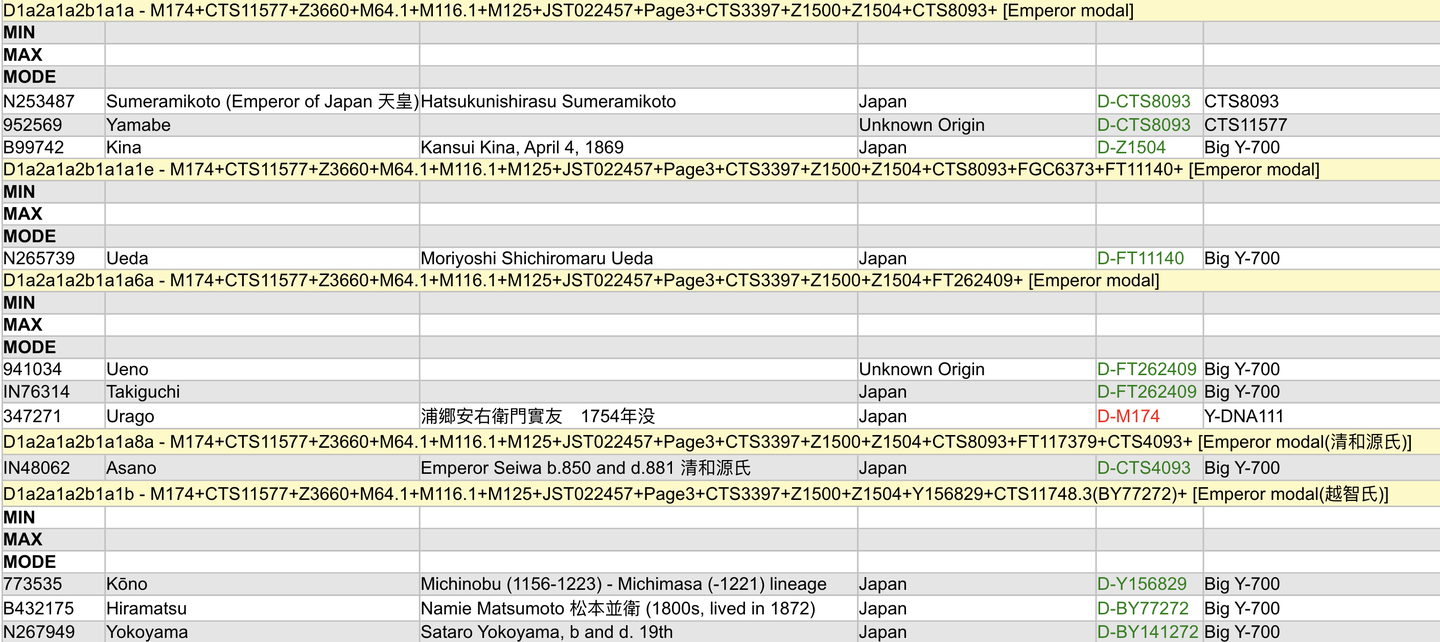
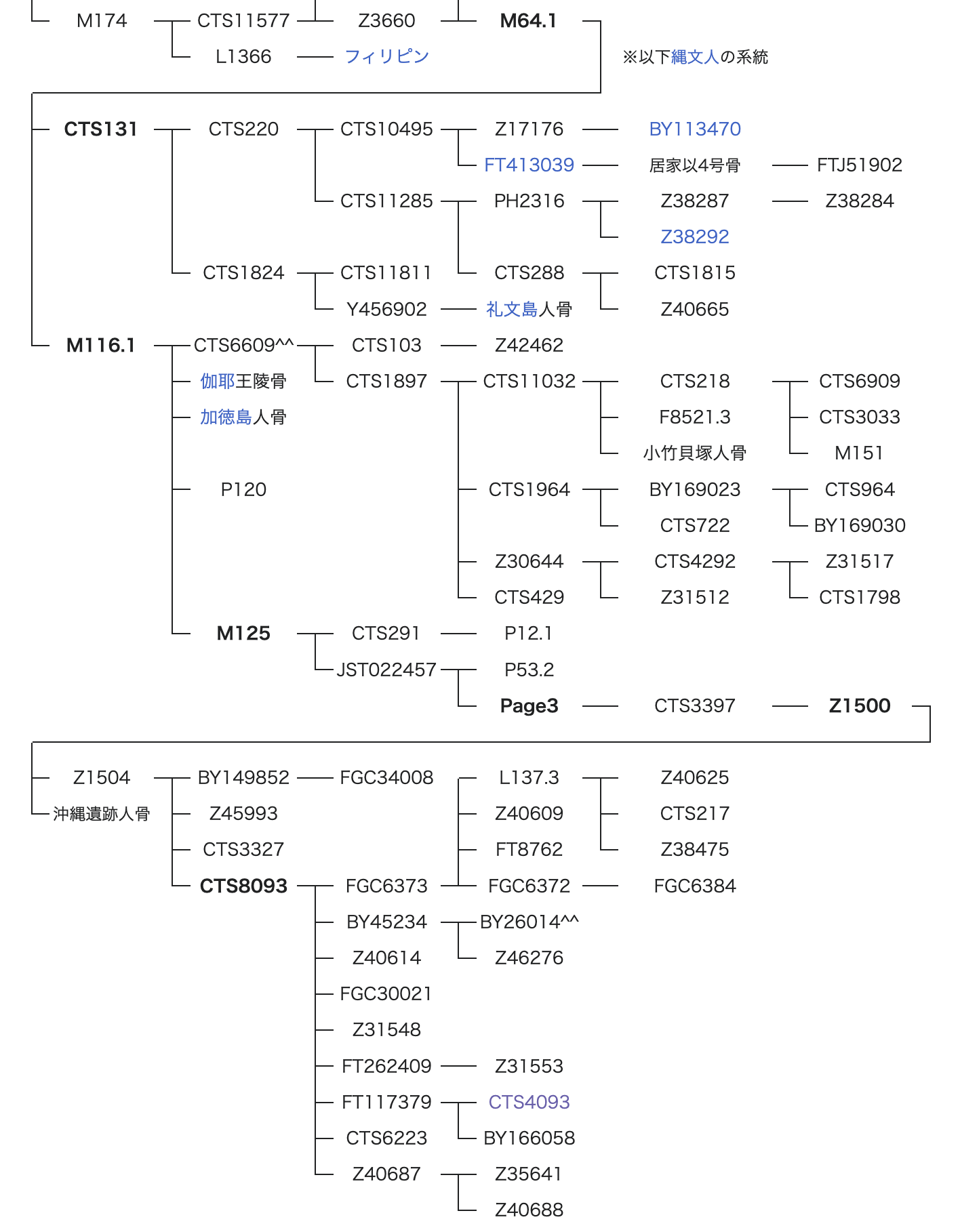
The FTDNA Samurai DNA Project lists all samples currently included in the project. “Emperor Modal” may be understood as FTDNA’s designation for the imperial lineage. Sample N253487 is labelled “Emperor of Japan 天皇” and belongs to the paternal lineage D‑CTS8093. The project also includes the famous Seiwa Genji, descendants of an emperor, whose paternal lineage is D‑CTS4093, a downstream branch of D‑CTS8093.
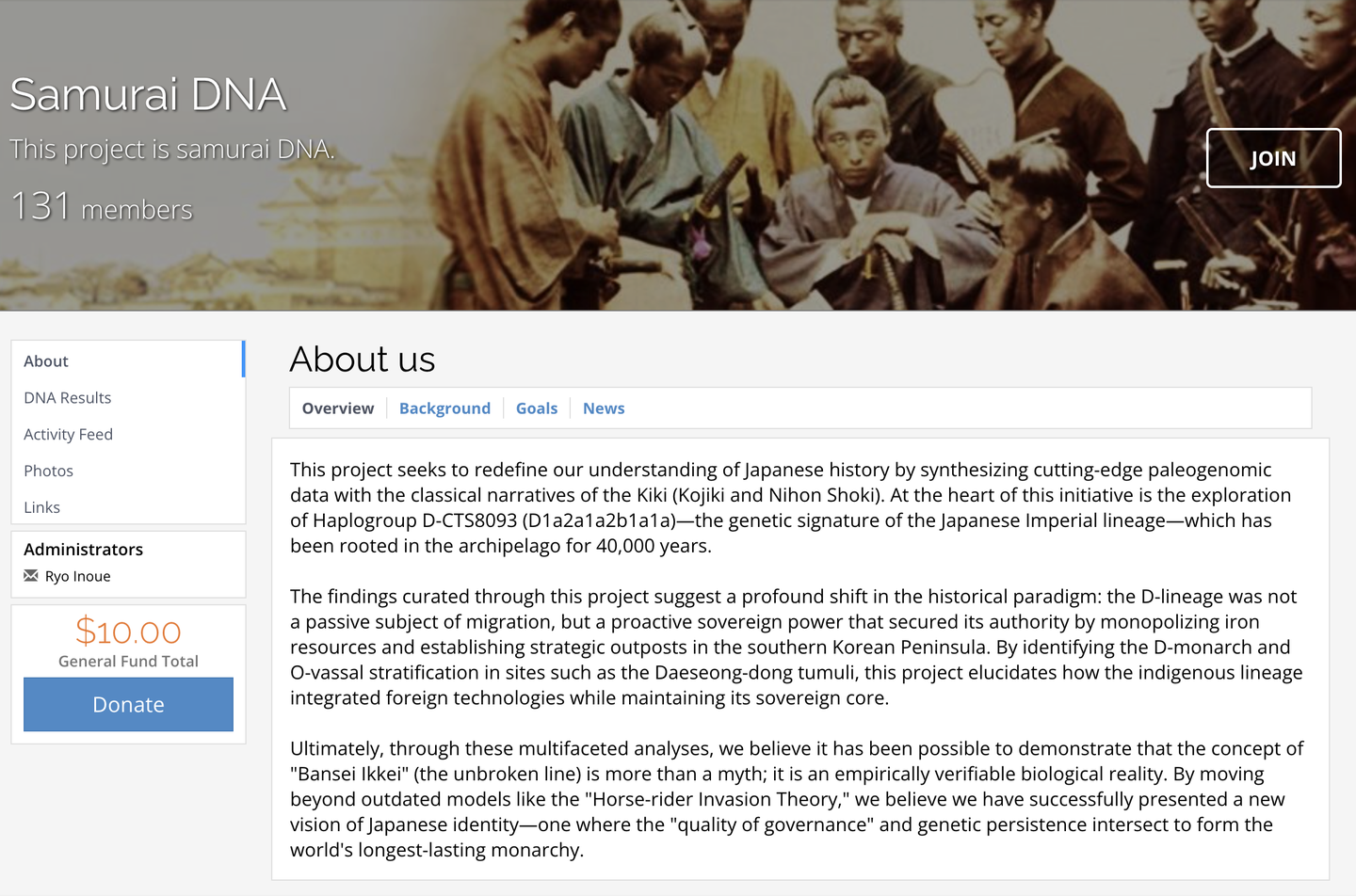
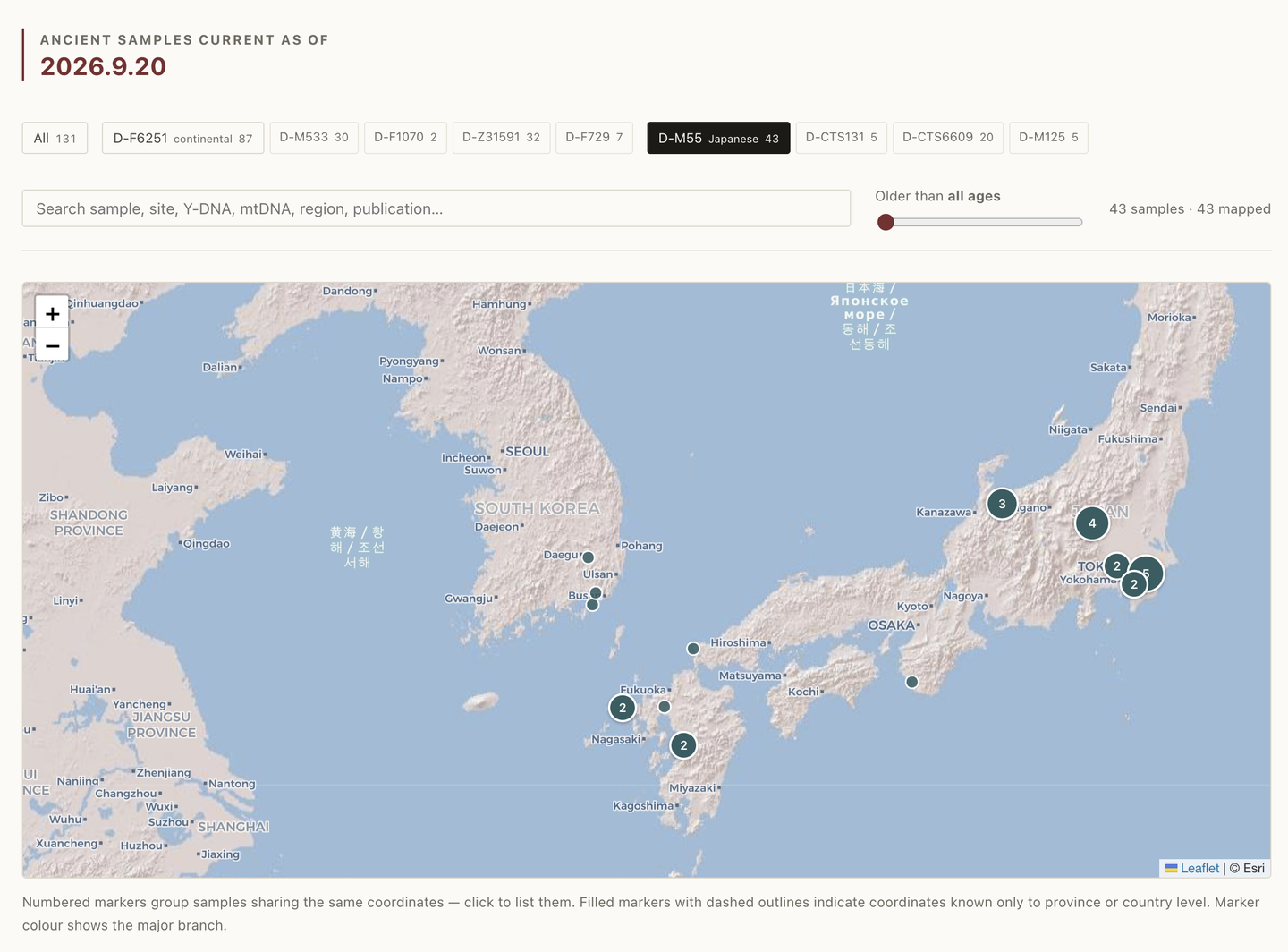
On the Samurai DNA Project overview page, the project administrator directly identifies D‑CTS8093 (D1a2a1a2b1a1a) as the genetic marker of the Japanese imperial family. This is consistent with the information presented in the project table.
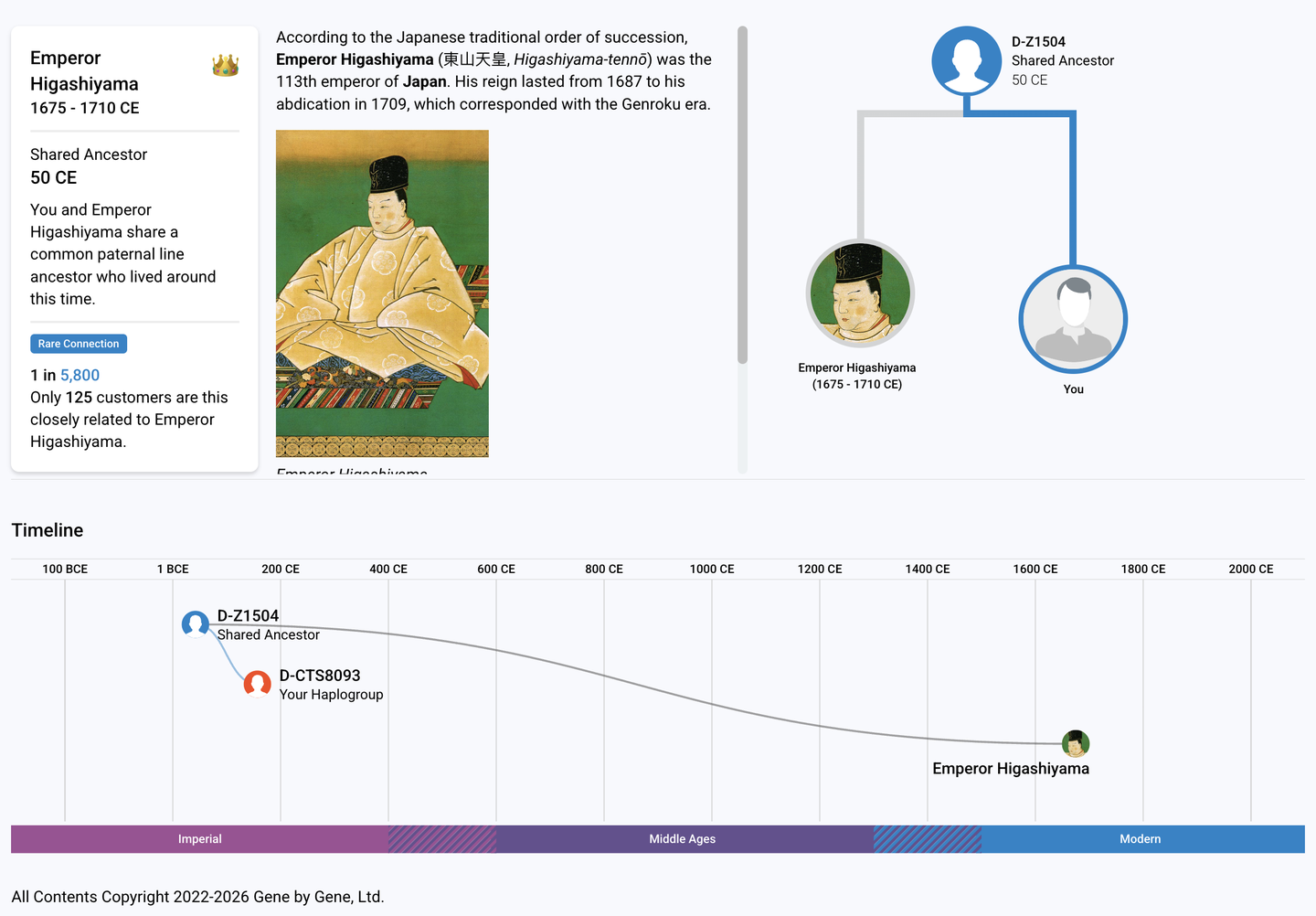
A search for D‑CTS8093 on FTDNA shows Emperor Higashiyama among its notable connections and assigns him to D‑Z1504, a downstream branch of D‑Z1500.
The YFull phylogenetic tree for D‑Z1500 places the imperial-family lineage at D‑CTS8093 and the Seiwa Genji lineage at D‑CTS4093.
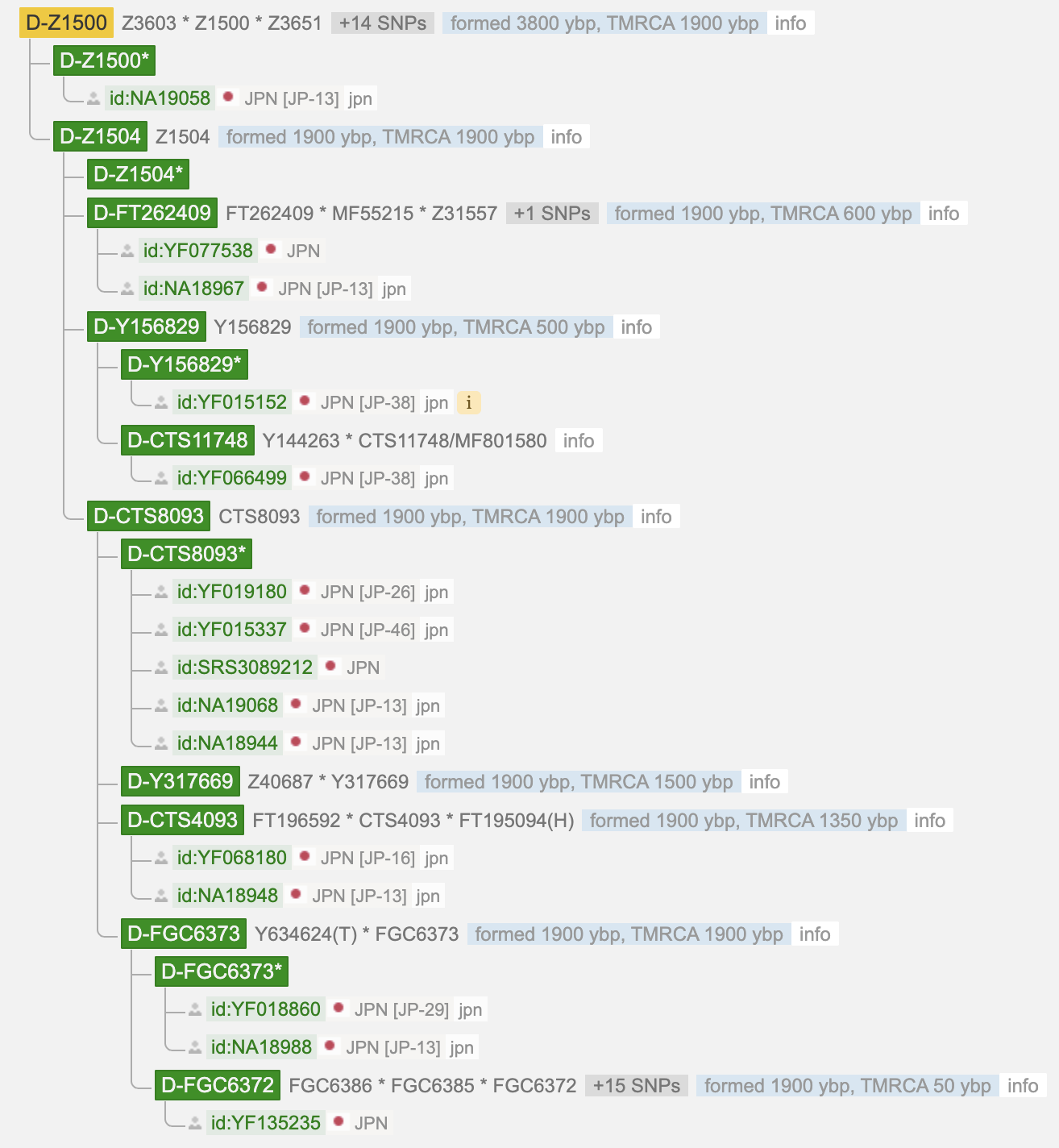
According to Japanese estimates, the imperial branch D‑CTS8093 accounts for approximately 11 percent of Japan’s total male population, while its upstream lineage D‑Z1500 accounts for approximately 13 percent.
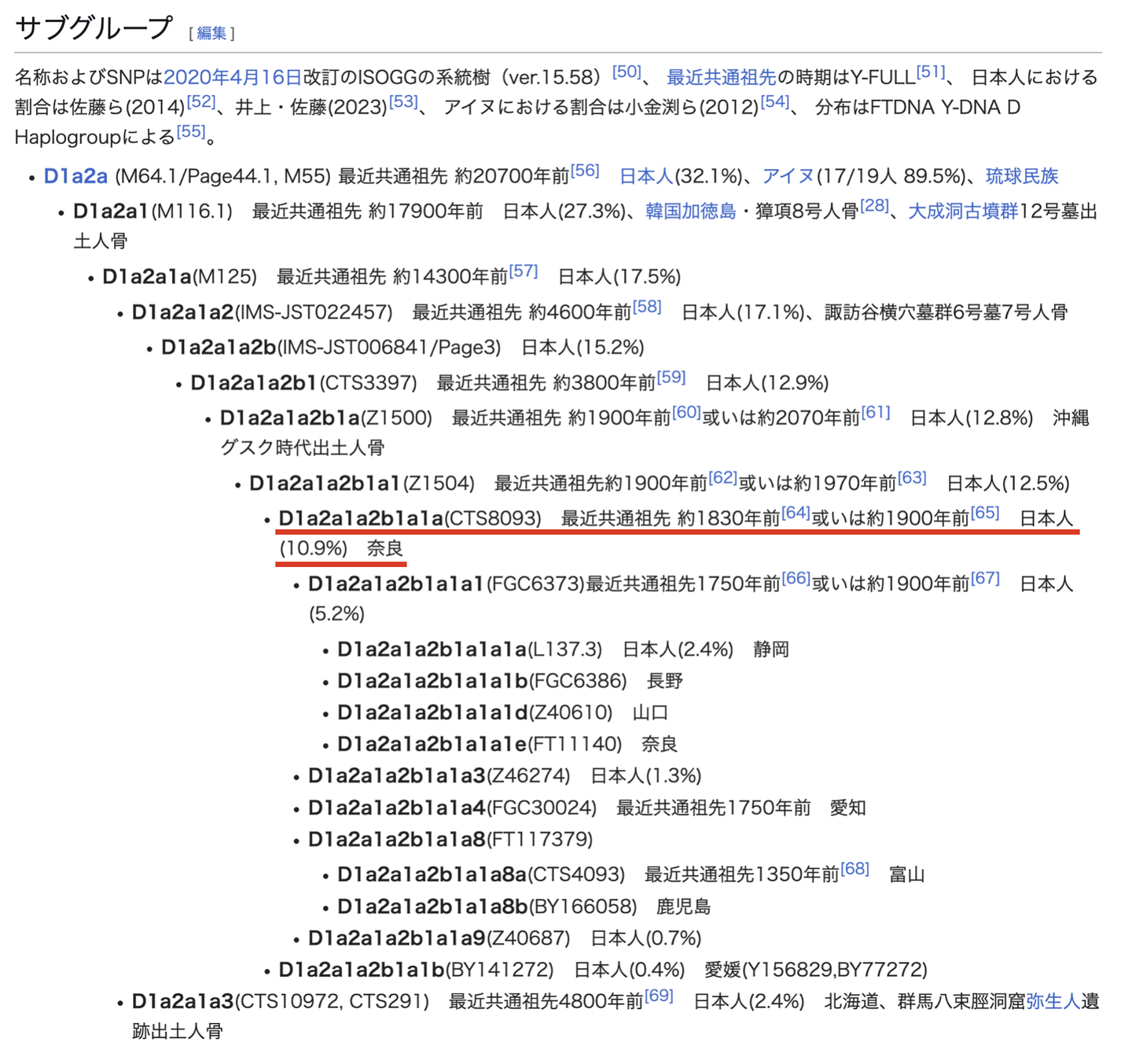
One might ask whether the strongly Japan-specific character of the imperial branch conflicts with a more recent continental migration into Japan. In fact, ancient samples belonging to D‑M55 have been found on the southern Korean Peninsula. They may represent remnants of a prehistoric population associated with the coastal plain that once connected the region, or they may reflect a later migration from Japan to Korea followed by a return movement. Whatever the explanation, these finds show at minimum that the prehistoric range of D‑M55 was not restricted to the Japanese archipelago and Sakhalin; it also extended to the southern edge of the Korean Peninsula.
The three currently known D‑M55 samples from southern Korea are Changhang8 from Gadeokdo, Busan, dating to approximately 6,300 years ago; AKG_10203 from Gimhae, South Gyeongsang Province, dating to the Gaya period approximately 1,600 years ago; and JOY083 from Gyeongsan, North Gyeongsang Province, also dating to approximately 1,600 years ago. All three can be viewed on the Ancient DNA page of my website.
More importantly, there is not yet sufficient evidence to demonstrate that the Japanese imperial family originated on the Korean Peninsula. Japanese archaeology generally locates the emergence of the Japanese sovereign in the Kinai region. By this period, the Yayoi population from which the imperial institution emerged was already heavily admixed with Jōmon ancestry.
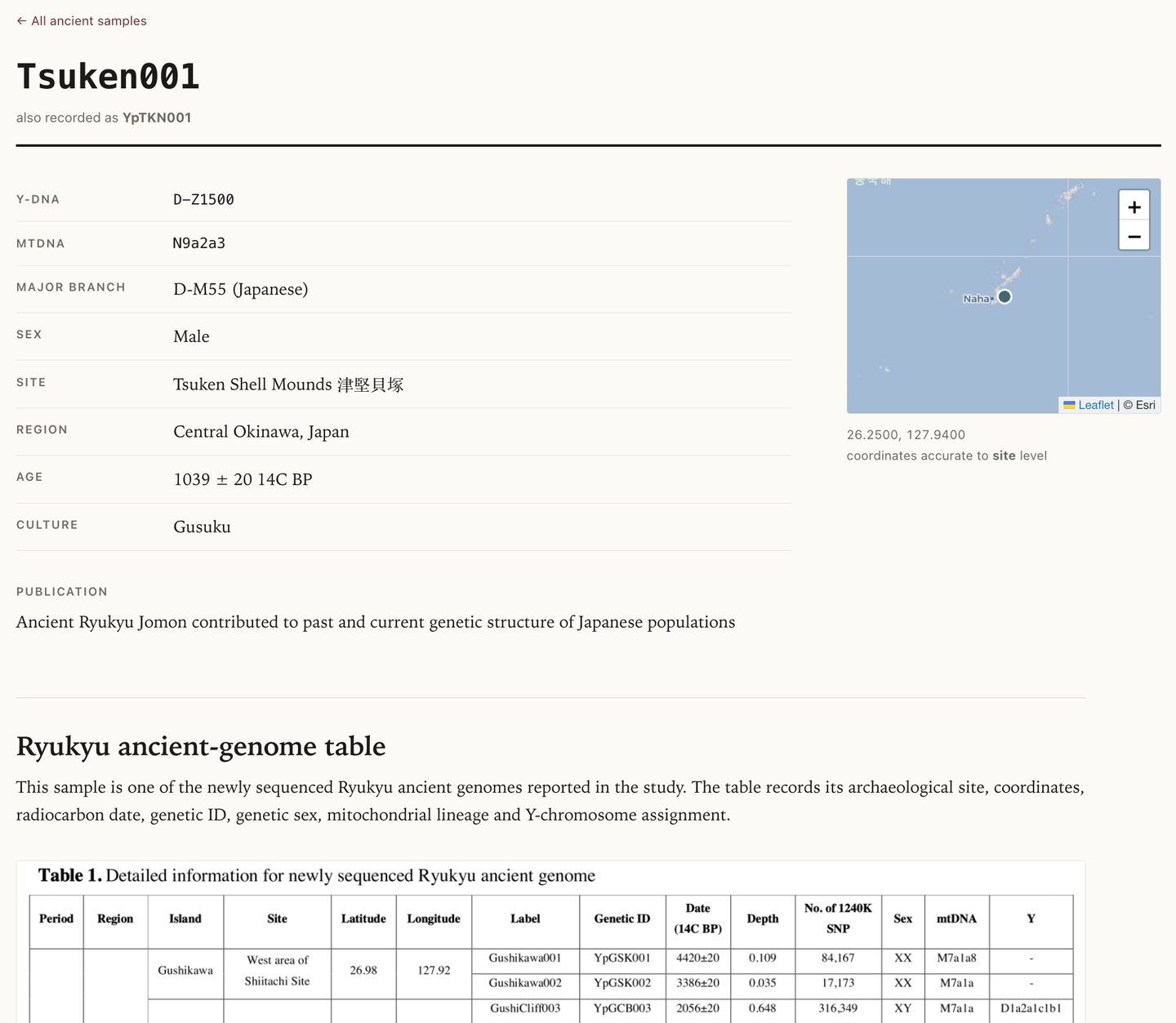
At the time of writing, only one ancient sample has been identified upstream of the imperial branch D‑CTS8093 within D‑Z1500. Tsuken001, dating to approximately 1,000 years ago, was excavated from the Tsuken Shell Mounds on Tsuken Island in central Okinawa. Its paternal lineage is D‑Z1500 and its maternal lineage is N9a2a3.
All currently identified ancient samples belonging to D‑M125, the upstream branch of D‑Z1500, have been found in the Japanese archipelago.
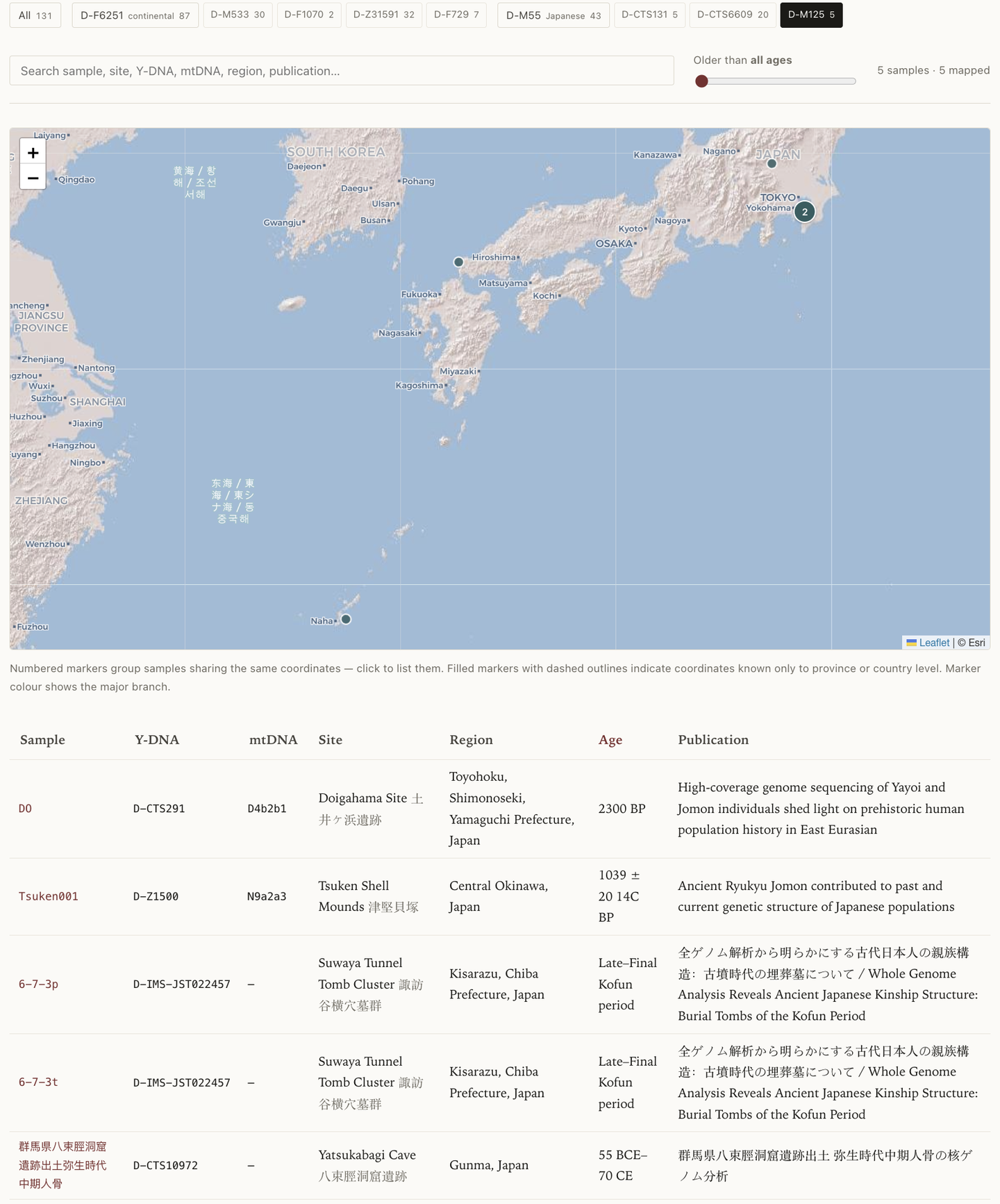
The D1a2a-M55 phylogenetic tree on Japanese Wikipedia shows that the Okinawan sample Tsuken001 belongs to a sister branch of D‑Z1504.
Written on September 20, 2026.