zhaoguoM2
also recorded as ZG2
- Y-DNA
- D-F1070
- mtDNA
- F1-a
- Major branch
- D-F6251 (continental)
- Sex
- Male
- Site
- Zhaoguo Cave 招果洞遗址
- Region
- Gaofeng Town, Gui'an New Area, Guizhou, China
- Age
- 11000–10000 BP
- Culture
- Early Holocene
Publication
Paleogenomics retraces the ancient population history of Southwestern East Asia for the past 12 000 years
Zhaoguo Cave, Tomb M2
zhaoguoM2 (published as ZG2) was a male individual excavated from Tomb M2 at Zhaoguo Cave, Gaofeng Town, Gui’an New Area, Guizhou. The individual is dated to 11,000–10,000 BP. The study reports mitochondrial haplogroup F1+16189 and Y-chromosome haplogroup D; this database records the maternal lineage as F1 and the paternal lineage at the currently supported level D‑F6251.
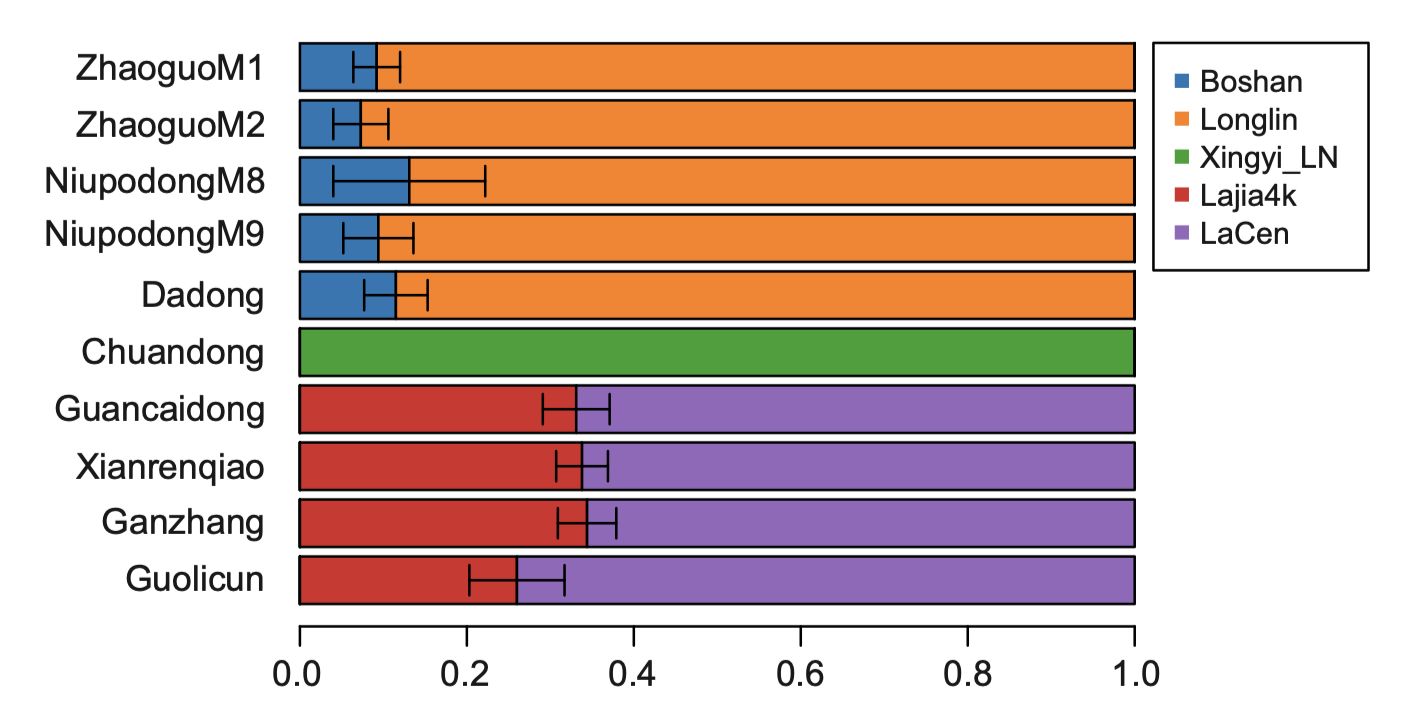
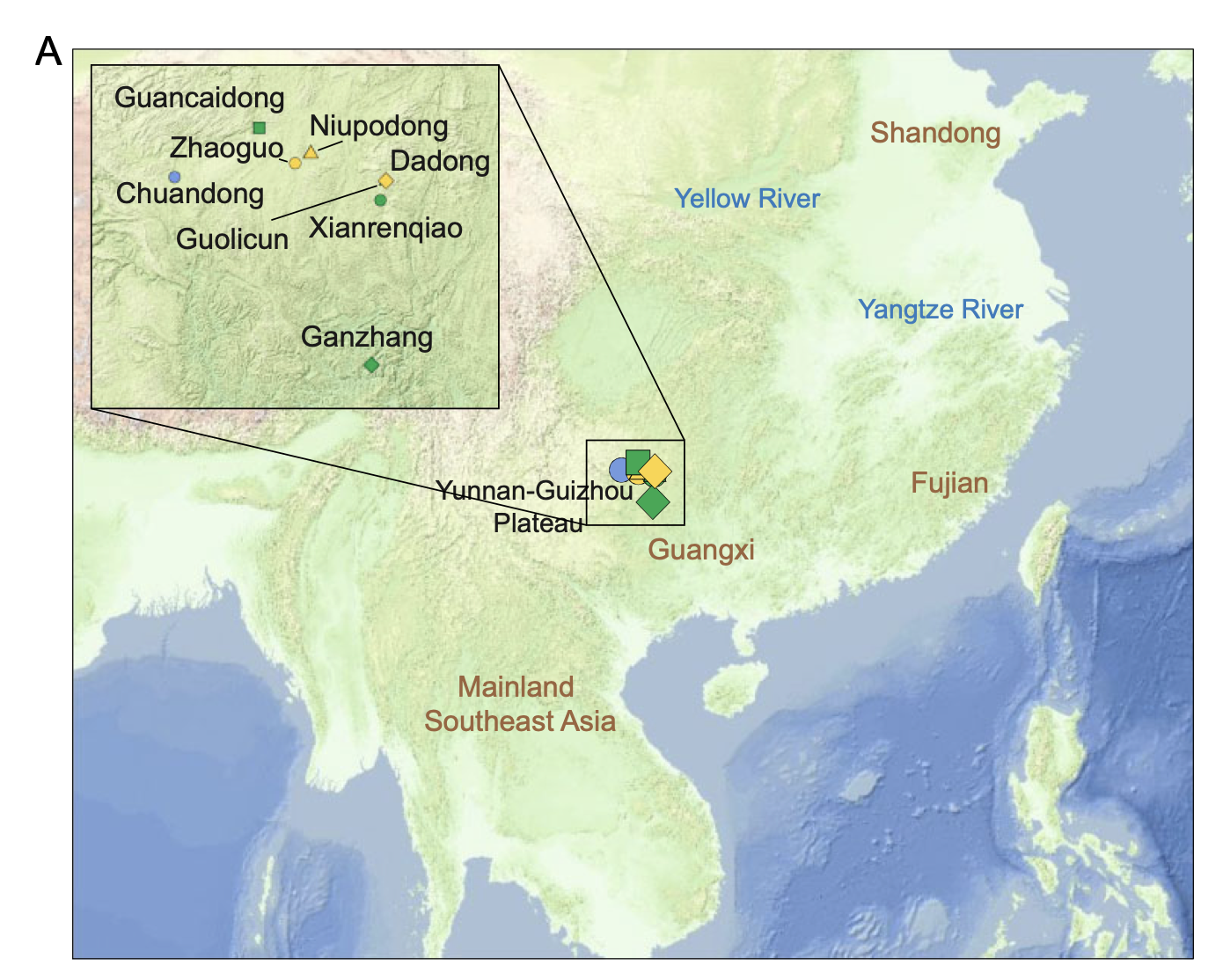
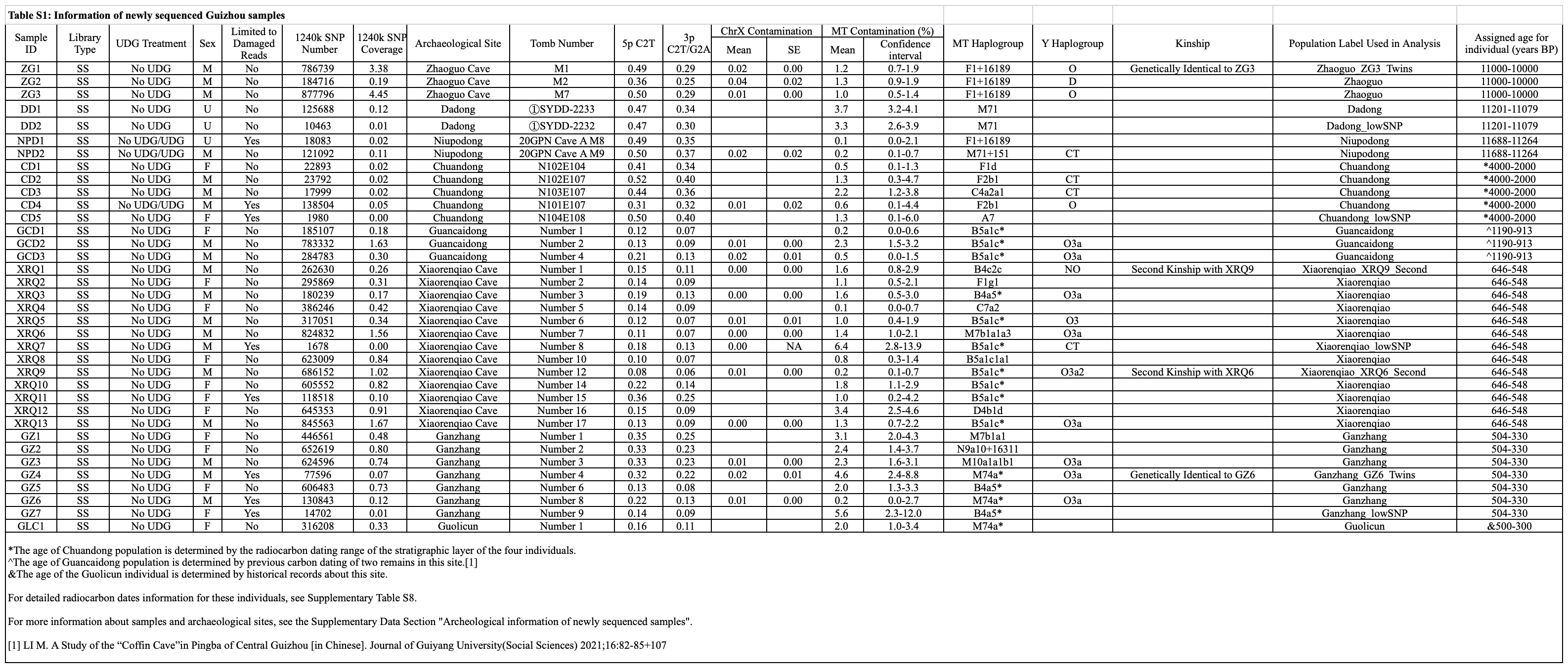
Source: Paleogenomics retraces the ancient population history of Southwestern East Asia for the past 12 000 years.