Funadomari5
- Y-DNA
- D-CTS1824
- mtDNA
- N9b1
- Major branch
- D-M55 (Japanese)
- Sex
- Male
- Site
- Funadomari 船泊遗址
- Region
- Rebun Island, Hokkaido, Japan
- Age
- 4250 ybp
- Culture
- Jomon
Publication
Late Jomon male and female genome sequences from the Funadomari site in Hokkaido, Japan
F23, a female individual from the same site
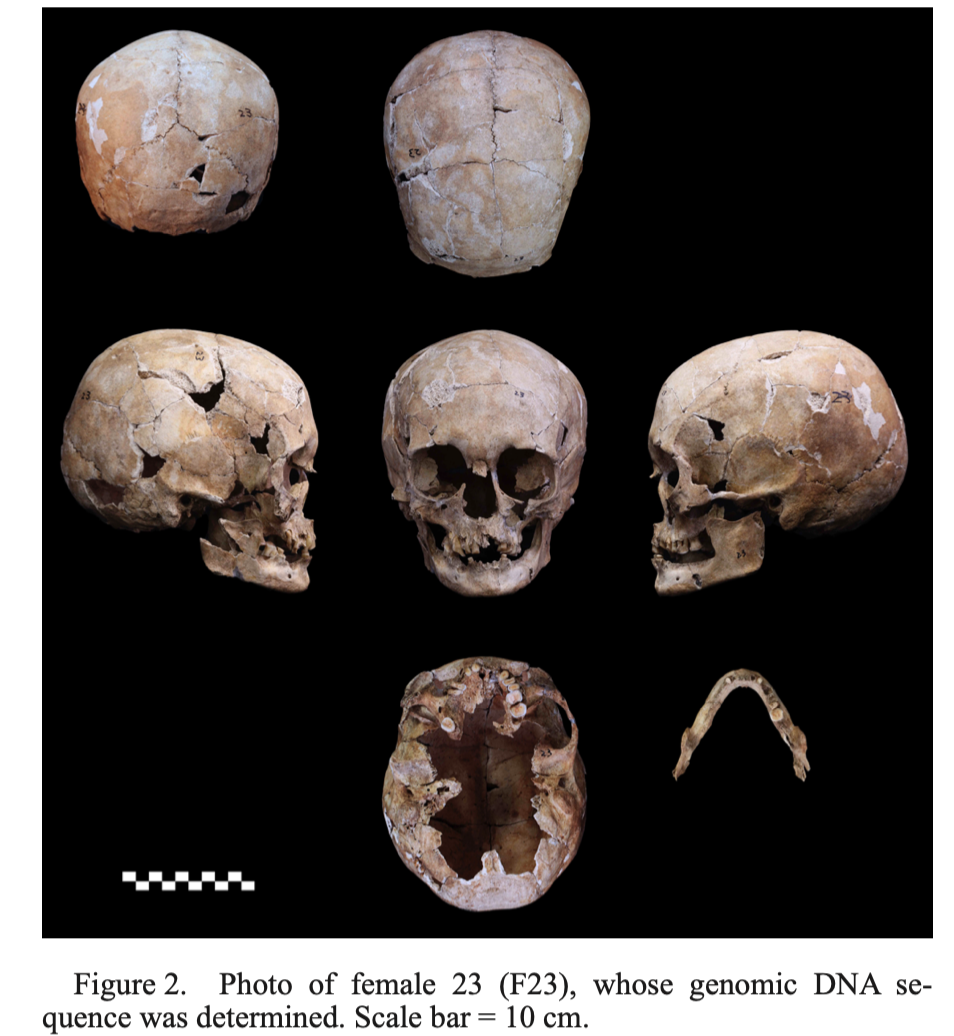
F23 is not the male individual represented by this page. She is another Late Jōmon individual—a female—excavated from the same Funadomari site on Rebun Island, Hokkaido. She is included here because her comparatively high-coverage genome allowed the study to infer a detailed set of phenotypic traits. Both F23 and the male Funadomari5 (F5) carried mitochondrial haplogroup N9b1.
Genotype-based phenotype profile
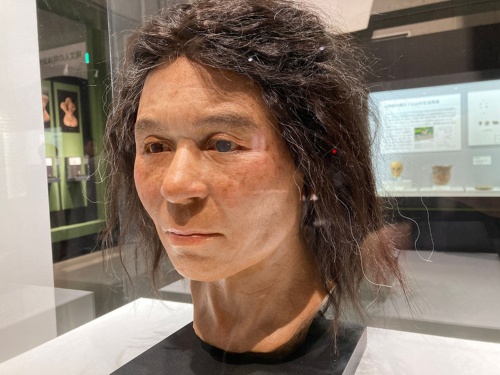
These characteristics are genetic inferences rather than direct observations of the individual in life.
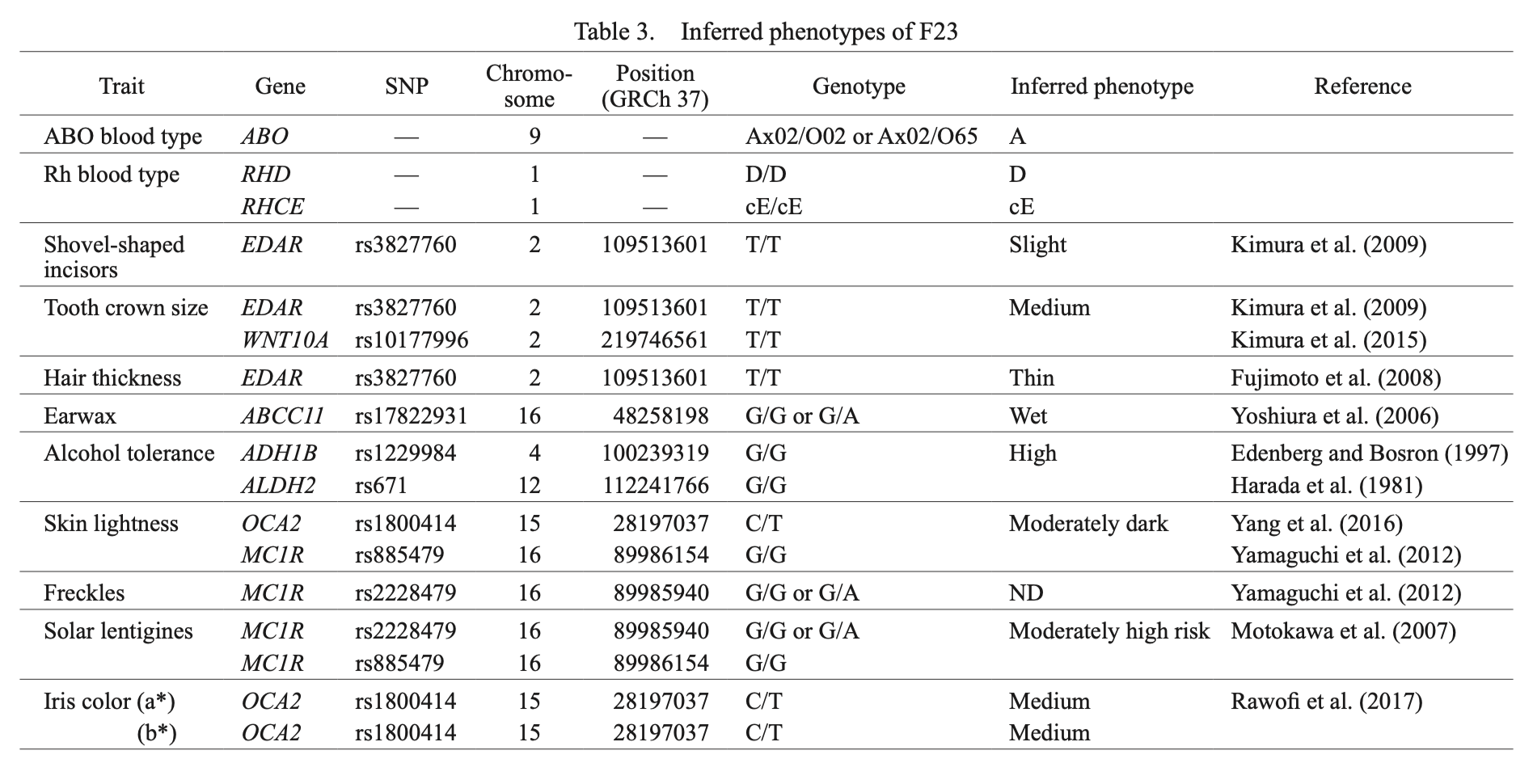
- Blood group. F23 was inferred to have type A blood, to be RhD positive, and to carry the cE/cE RHCE subtype.
- Dental, hair and earwax traits. Her marker profile indicates slightly shovel-shaped incisors, medium-sized tooth crowns, thin hair, and wet earwax.
- Alcohol metabolism. The reported ADH1B rs1229984 G/G and ALDH2 rs671 G/G genotypes were interpreted as high alcohol tolerance, with no ALDH2-associated facial flushing response.
- Pigmentation. F23 carried the heterozygous OCA2 rs1800414 C/T genotype. The study inferred medium to moderately dark skin pigmentation and medium-brown irises. Her profile did not indicate a strong tendency to freckle, although the inferred risk of developing solar lentigines with age and sun exposure was moderately high.