The Genetic History of D‑M174

← All ancient samples

DO

also recorded as DO Yayoi

Y-DNA
D-CTS291
mtDNA
D4b2b1
Major branch
D-M55 (Japanese)
Sex
Male
Site
Doigahama Site 土井ヶ浜遺跡
Region
Toyohoku, Shimonoseki, Yamaguchi Prefecture, Japan
Age
2300 BP
Culture
Early Yayoi

Publication

High-coverage genome sequencing of Yayoi and Jomon individuals shed light on prehistoric human population history in East Eurasian

Doigahama Yayoi

DO is a male Yayoi-period individual from the Doigahama Site (土井ヶ浜遺跡), Shimonoseki, Yamaguchi Prefecture. The study reports maternal haplogroup D4b2b1; this database records the paternal lineage as D‑CTS291.
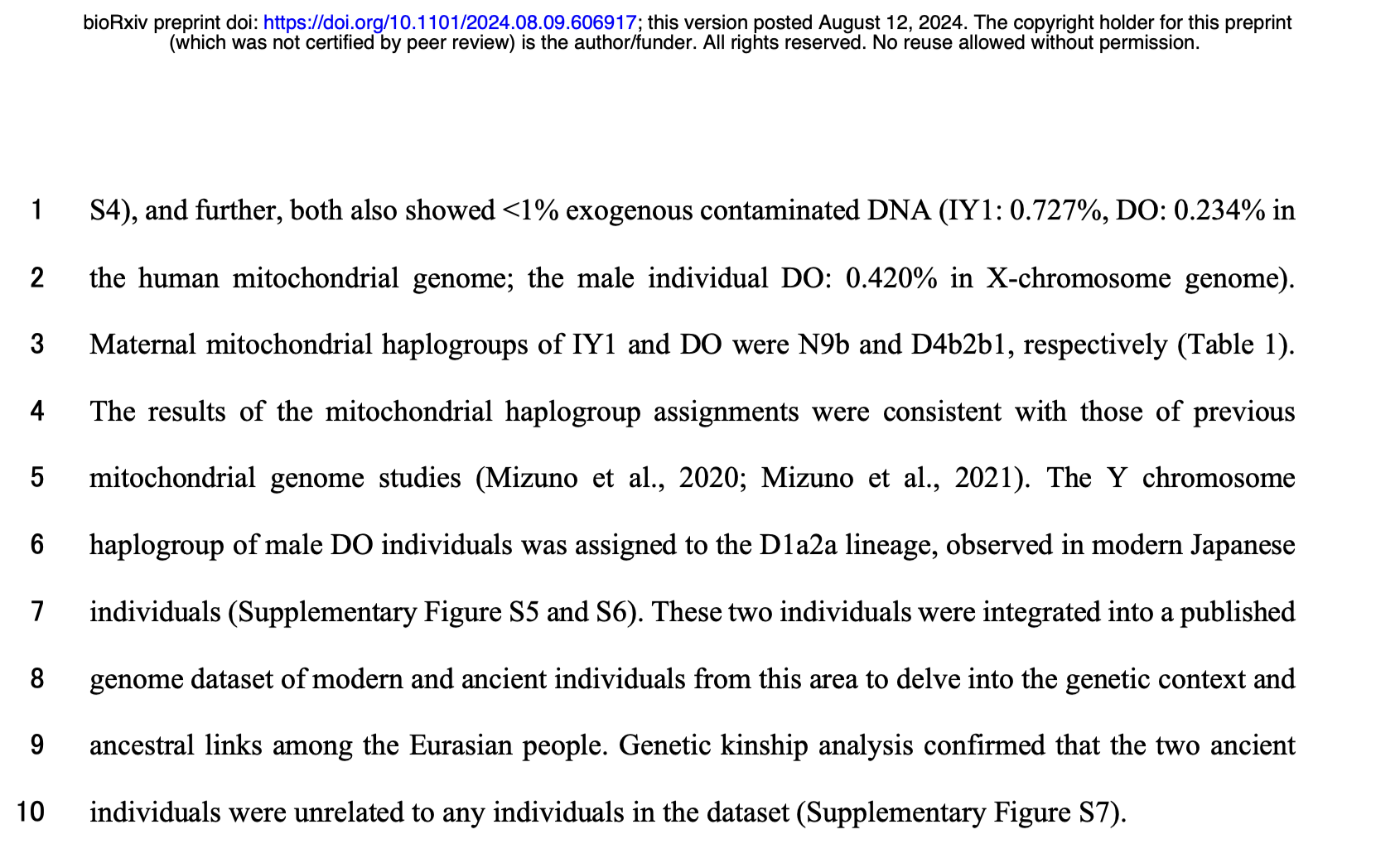
Paper excerpt reporting DO maternal and paternal haplogroups
Paper excerpt reporting the maternal and paternal haplogroup assignments for the male DO individual.
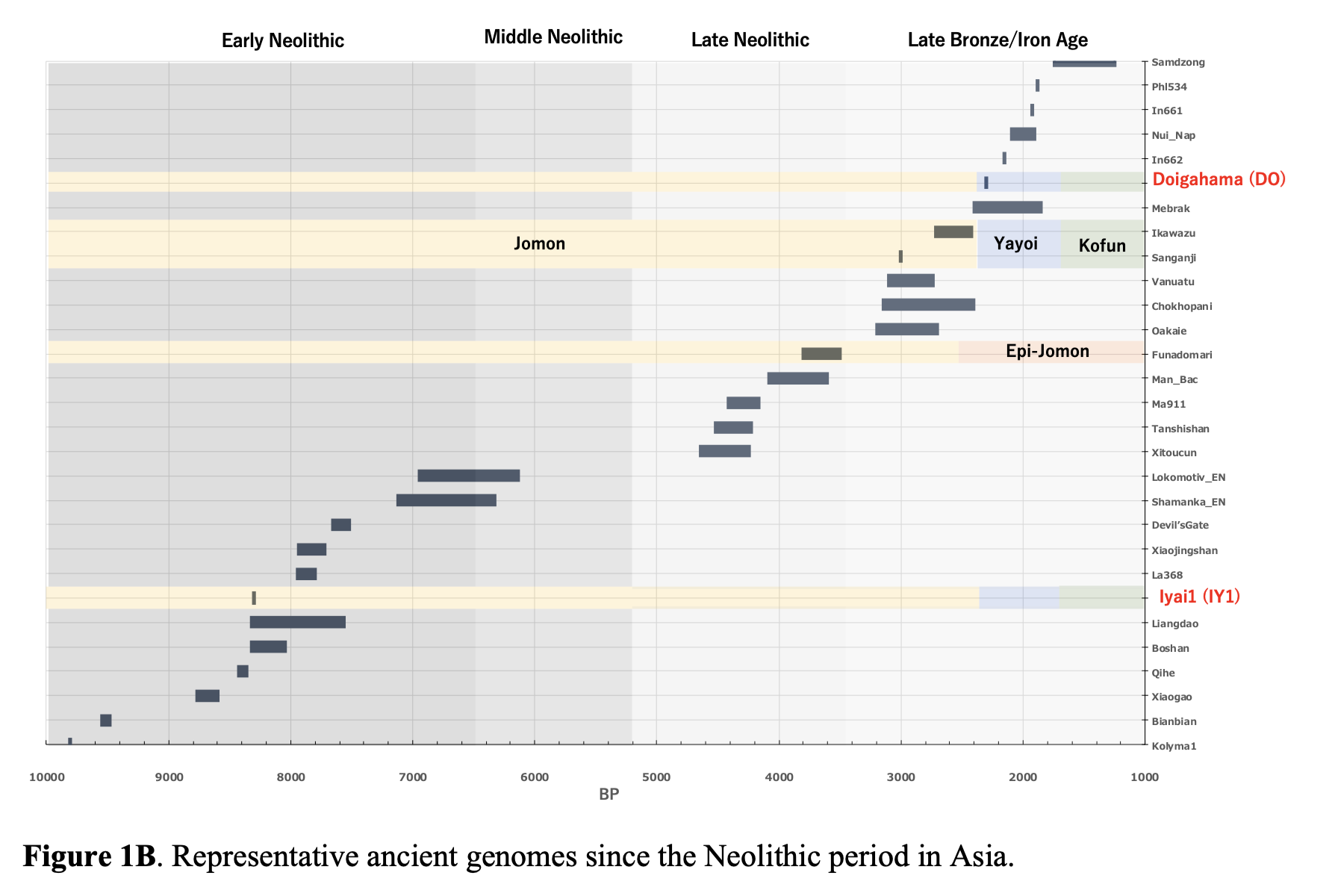
Timeline of representative ancient genomes in Asia including Doigahama DO
Chronological placement of representative ancient Asian genomes. Doigahama (DO) is marked in the Yayoi period.
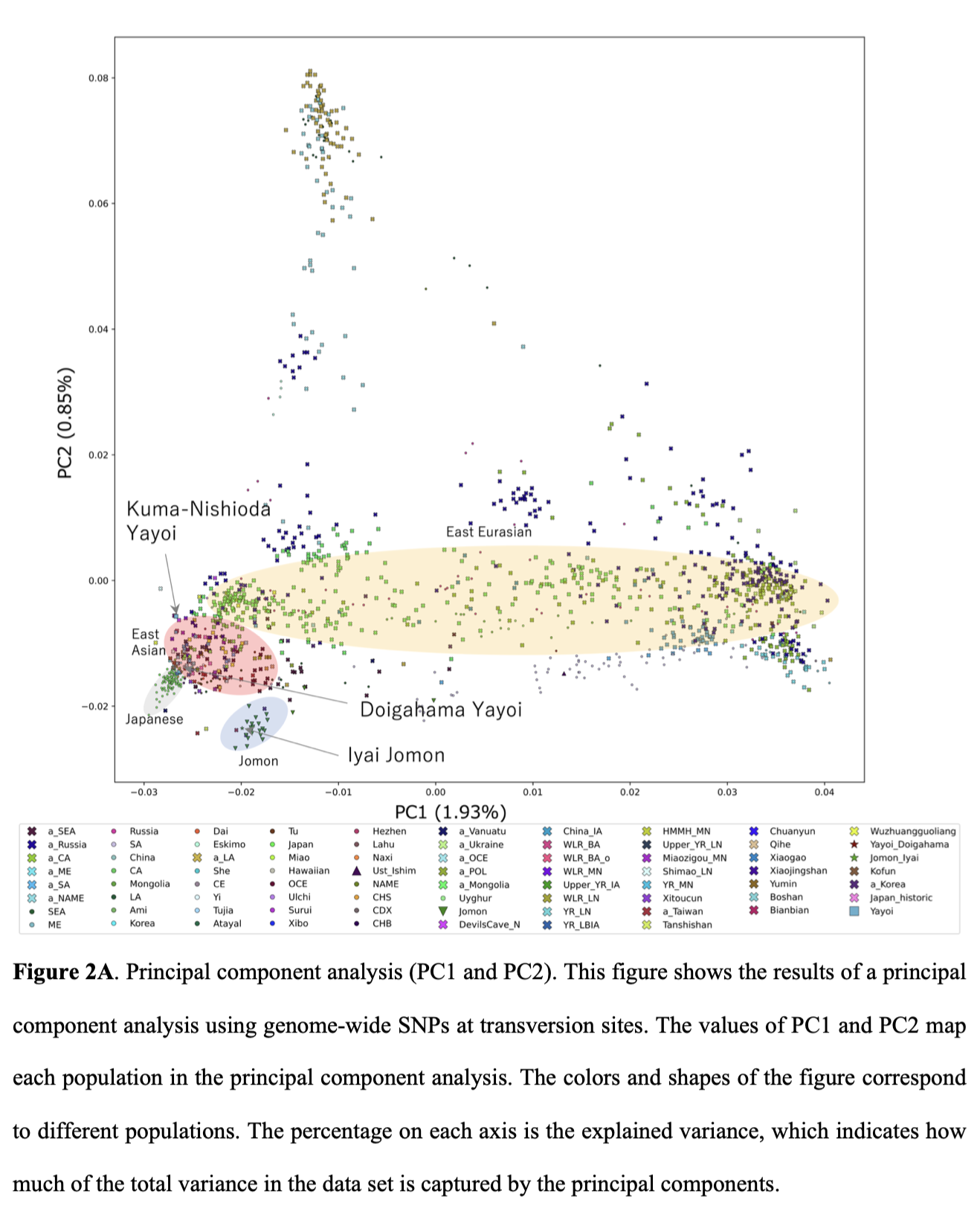
Principal component analysis including Doigahama Yayoi and Iyai Jomon
Principal-component analysis based on genome-wide transversion SNPs, showing the positions of Doigahama Yayoi and Iyai Jomon among ancient and present-day Eurasian populations.
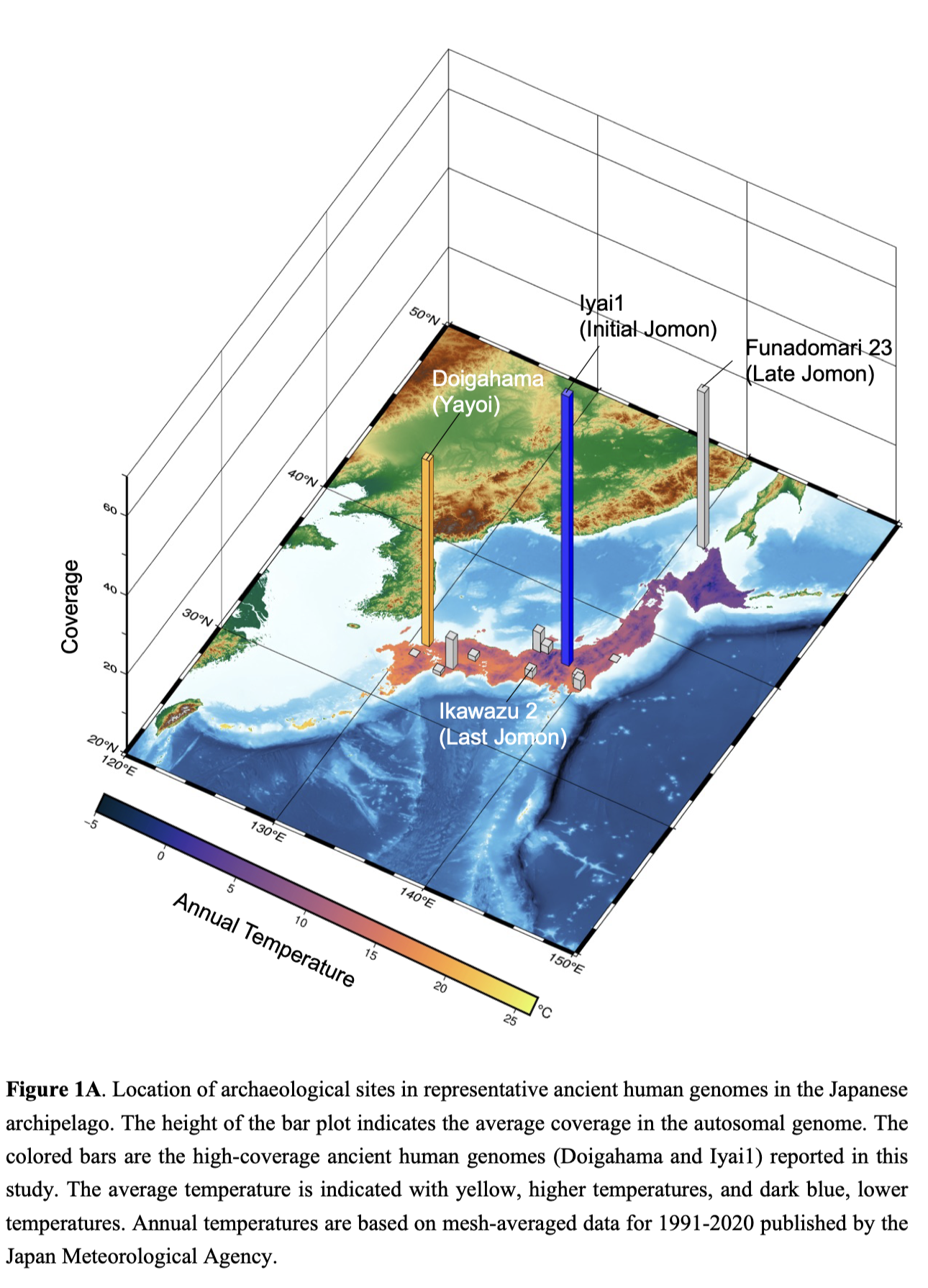
Map locating Doigahama and other representative Japanese ancient genomes
Locations and genomic coverage of representative ancient genomes in the Japanese archipelago. The colored bars identify the high-coverage DO and Iyai1 genomes reported by the study.

Source: High-coverage genome sequencing of Yayoi and Jomon individuals shed light on prehistoric human population history in East Eurasian.